Day: November 13, 2021

  • Early detection only prevention for breast cancer

    Early detection only prevention for breast cancer

    KARACHI: The First Lady of Pakistan Samina Arif Alvi has stressed that early detection is the only prevention for dealing with the life-threatening disease of breast cancer as 98 percent of the women survive when they are diagnosed with breast cancer earlier but unfortunately, majority of the breast cancer patients in Pakistan are diagnosed belatedly when cancer reaches third stage, resulting in a death rate in between 40 to 45 percent.

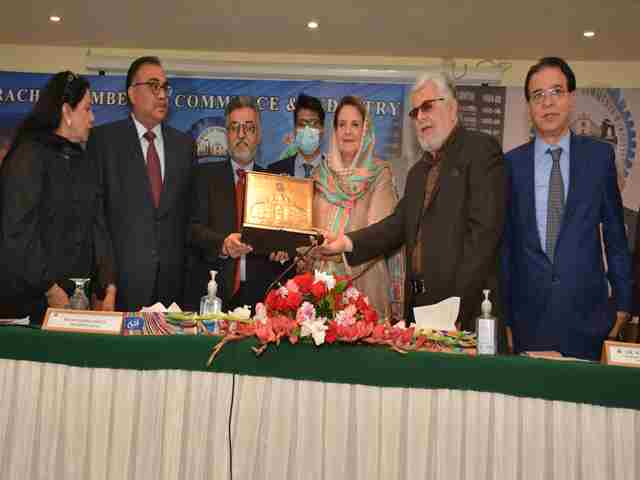
    Speaking at a seminar organized at the Karachi Chamber of Commerce & Industry (KCCI) on Women Empowerment & Breast Cancer on Saturday, Samina Arif Alvi added that keeping in view the limited number of mammogram facilities available in the country, it was better for women to carry out self-examination for five minutes and if they feel anything unusual or any symptom or any change, they must immediately seek medical assistance.

    Chairman Businessmen Group & Former President KCCI Zubair Motiwala, Vice Chairman BMG Anjum Nisar, General Secretary BMG AQ Khalil, President KCCI Muhammad Idrees, Senior Vice President Abdul Rehman Naqi, Chairperson of KCCI’s Women Entrepreneurs Subcommittee Durre Shahwar Nisar, President Pink Ribbon Trust Dr. Zubaida Qazi, Associate Professor IBA Huma Baqai, KCCI Managing Committee Members and a large number of women entrepreneurs attended the seminar.

    First Lady Samina Alvi, while appreciating KCCI’s efforts to raise awareness about breast cancer, stated that it was very important that the business community of Chamber of Commerce, which plays the role of a backbone in the economy, comes forward to raise awareness about this disease being suffered by many women. “We need to sensitize our brothers, husbands and sons about this serious disease so that women should feel strong and boldly come forward for checkups. We have to ensure that women are empowered and encouraged to come out in every field as women are no less than anyone and they are capable of carrying out all types of tasks if they are strong and healthier.”

    She also stressed the need for collective efforts by all segments of society, particularly the business community and media which can play an instrumental role in raising awareness about breast cancer and women empowerment. The awareness campaigns should not remain confined to the month of October only but it should be an ongoing exercise and the media must televise awareness program at least once a month, she added.

    Chairman BMG Zubair Motiwala, in his remarks, said, “Today is an important day which would open a new chapter in the history of KCCI as for the very first time, KCCI has staged a seminar on breast cancer which was not given importance in the past.”

    Referring to Dr. Zubaida Qazi’s remarks, he said that it was really alarming to see that breast cancer cases have gone up to 23.8 percent which were likely to rise further to 60 percent in few years if not promptly addressed. The government must prioritize this serious issue and an effective strategy has to be devised so that the breast cancer cases could be controlled and gradually brought down instead of upsurging.

    He was of the view that the government must make screening and check-ups for breast cancer mandatory for every woman who reaches the age of 40 years which would certainly result in early diagnosis of this life-threatening disease and save many precious lives. “The strategy pursued to get the population vaccinated for COVID-19 pandemic proved very fruitful. Hence, a similar strategy must also be adopted for dealing with breast cancer by taking penal actions, imposing travel restrictions and barring women to avail other essential services on their failure to get the screening done for breast cancer”, he suggested, adding that it was also the responsibility of every male individual to ensure that his wife, sister or daughter have been screened.

    While commending the efforts being made by First Lady, Zubair Motiwala extended Karachi Chamber’s full support and cooperation to all the initiatives being taken by the government for women empowerment and rights. “Empowerment comes when women get education and skills, hence it has to be ensured that women have access to education otherwise, the problems being suffered by our women would never minimize”, he added.

    Vice Chairman BMG Anjum Nisar, while underscoring the need to change perception and mentally about women, said, “Unfortunately, we live in a society where it is widely believed that women will not be able to carry out several types of jobs which is untrue as women can do wonders if they are fully supported and empowered.”

    He was of the opinion that rural women must also be given equal attention in all the awareness campaigns about breast cancer while opportunities must be provided to differently abled women in public and private sector organizations.   

    General Secretary AQ Khalil, while praising the role being played by the first lady for the betterment of women, said that as women represent more than 50 percent of the population, they must be provided equal opportunities and all their problems must also be treated equally. Moreover, the reserved seats at the National and Provincial Assemblies for women must also be raised according to their population.

    President KCCI Muhammad Idrees, while warmly welcoming the First Lady, stated that the empowerment and autonomy of women and the improvement of their political, social, economic and health status was a highly important which would help in achieving sustainable development. “Education is also one of the most important means of empowering women with the knowledge, skills and self-confidence necessary to fully participate in the development process.”

    He was of the opinion that entrepreneurship was becoming an increasingly significant source of employment for women across many countries. Nowadays women perform an important role in building the real backbone of a nation’s economy. However, the number of Women entrepreneurs was quite less and they often face gender-based barriers to starting and growing their businesses which needs to be tackled, he said.

    “As a nation, I would like everyone to spread the awareness on Breast Cancer so that we could collectively fight for this noble cause”, Muhammad Idrees added while extending full support and cooperation to the government in all its endeavors to create a better society for women.
  • State Bank enhances CRR 6% to ease pressure on PKR

    State Bank enhances CRR 6% to ease pressure on PKR

    KARACHI: State Bank of Pakistan (SBP) on Saturday enhanced the cash reserves requirement (CRR) for banks to 6 per cent in order to ease pressure on Pak Rupee (PKR).

    The SBP decided to increase the average (CRR), to be maintained during a period of two weeks by scheduled banks, from 5 percent to 6 percent and minimum CRR to be maintained each day from 3 percent to 4 percent.

    CRR is the amount of money that banks are required to keep with State Bank of Pakistan and is applicable on demand liabilities and time liabilities with tenor of less than a year.

    Time liabilities with tenor of more than one year shall continue to be exempted from maintenance of cash reserves.

    With the economy recovering briskly from last year’s acute Covid shock, there is a need to gradually normalize policy settings, including the growth of monetary aggregates.

    In recent months, real money supply growth has drifted above its trend. Today’s measure will moderate this growth as well as domestic demand, thereby helping to sustain the current economic recovery, achieve the government’s medium-term inflation target, and reduce pressures on the Pak Rupee (PKR). 

    In addition, this measure is likely to have positive impact on deposit mobilization as the banks would be encouraged to generate more deposits to cope with additional liquidity requirements for their operations.

    This would incentivize banks to offer better returns on deposits to attract these funds; thus serving the SBP objective of encouraging savings.

    It may also be highlighted that waiver of CRR on Time liabilities with tenor more than a year will encourage banks to raise more long-term deposits, which will facilitate asset-liability matching and enable banks to extend long term loans for construction and housing financing.

  • Computation of income tax for builders and developers

    Computation of income tax for builders and developers

    ISLAMABAD, Monday – The Federal Board of Revenue (FBR) has released comprehensive guidelines, outlined in the Eleventh Schedule of the Income Tax Ordinance, 2001, for the computation of income tax specifically tailored for builders and developers.

    (more…)
  • Weekly Review: market to eye IMF package

    Weekly Review: market to eye IMF package

    KARACHI: The stock market to wait for the IMF package during the next week, which is current stalled. Analysts at Arif Habib Limited said that despite noise gaining traction on the economic front, they believe there is some silver lining; 1QFY22 fiscal deficit declined by 9.2 per cent YoY whereas local production also appears under control (auto sales went up by 49 per cent YoY and Fertilizer – Urea – offtake went up by 23 per cent YoY in October 2021).

    (more…)
  • Today’s currency exchange rates in PKR – Nov 13, 2021

    Today’s currency exchange rates in PKR – Nov 13, 2021

    KARACHI: Following are the open market exchange rates of foreign currencies in Pak Rupee (PKR) in Pakistan on November 13, 2021 (The rates are updated at 09:50 AM Pakistan Standard Time):

    CurrencyBuyingSelling
    Australian Dollar (AUD)127129
     Bahrain Dinar (BHD)386.75388.50
     Canadian Dollar (CAD)139141
     China Yuan (CNY)23.7523.90
     Danish Krone (DNK)23.4523.75
     Euro (EUR)200.50202.50
     Hong Kong Dollar (HKD)16.7016.95
     Indian Rupee (INR)2.032.10
     Japanese Yen (JPY)1.411.44
     Kuwaiti Dinar (KWD)481.70484.20
     Malaysian Ringgit (MYR)36.4536.80
     NewZealand $ (NZD)96.4597.15
     Norwegians Krone (NOK)17.5017.75
     Omani Riyal (OMR)392.70394.70
     Qatari Riyal (QAR)39.9040.50
     Saudi Riyal (SAR)46.7547.30
     Singapore Dollar (SGD)128129.50
     Swedish Korona (SEK)18.5018.75
     Swiss Franc (CHF)159.90160.80
     Thai Bhat (THB)4.804.90
     U.A.E Dirham (AED)48.5049
     UK Pound Sterling (GBP)236238.50
     US Dollar (USD)177178.75

    Disclaimer: Team PKRevenue.com provides the available rates of the open market, which are subject to change every hour. Team PKRevenue.com provides the available exchange rates at the time of posting the story. So the team is not responsible for any inaccuracy of the data.

  • Pakistan sees 70% rise in diabetes cases in two years

    Pakistan sees 70% rise in diabetes cases in two years

    KARACHI: Ahead of World Diabetes Day, the International Diabetes Federation (IDF) has released new figures showing that the prevalence of diabetes in Pakistan has increased significantly as 33 million adults in Pakistan are now living with diabetes – a 70 per cent increase in past two years or since 2019.

    According to IDF, in 2021, diabetes will be responsible for 400,000 deaths in the country– the highest number in the Middle-East and North Africa Region.

    These findings from the 10th Edition of the IDF Diabetes Atlas, which will be published on December 6th, report that one in four adults (26.7 per cent) in Pakistan are living with diabetes – the highest national prevalence in the world.

    Pakistan now has the third highest number of people living with diabetes in the world, after China (141 million) and India (74 million). An additional 11 million adults in Pakistan have Impaired Glucose Tolerance (IGT), which places them at high risk of developing type 2 diabetes.

    More than quarters (26.9 per cent) of adults living with diabetes in Pakistan are undiagnosed. When diabetes is undetected or inadequately treated, people with diabetes are at risk of serious and life-threatening complications, such as heart attack, stroke, kidney failure, blindness and lower-limb amputation. These result in reduced quality of life and higher healthcare costs.

    IDF says that 537 million adults are now living with diabetes worldwide — a rise of 16 per cent (74 million) since the previous IDF estimates in 2019. “The rapidly rising level of diabetes in Pakistan presents a significant challenge to the health and wellbeing of individuals and families in the country,” says Professor Abdul Basit, Director, Baqai Institute of Diabetology and Endocrinology, Baqai Medical University.

    This year marks 100 years since the discovery of insulin. This milestone presents a unique opportunity to reflect on the impact of diabetes and highlights the urgent need to improve access to care for the millions affected. An estimated 1 in 2 people with diabetes across the world who need insulin cannot access or afford it.

    “We must do more to provide affordable and uninterrupted access to diabetes care for all in Pakistan, and around the world. Policy makers and health decision-makers must turn words into action to improve the lives of people with diabetes and prevent the condition in those at high risk of developing it,” concludes Basit.

    Globally, 90 per cent of people with diabetes have type 2 diabetes. The rise in the number of people with type 2 is driven by a complex interplay of socio-economic, demographic, environmental and genetic factors. Key contributors include urbanisation, an ageing population, decreasing levels of physical activity and increasing levels of overweight and obesity.

    Much can be done to reduce the impact of diabetes. Evidence suggests that type 2 diabetes can often be prevented, while early diagnosis and access to appropriate care for all types of diabetes can avoid or delay complications in people living with the condition.

    In Pakistan, the Diabetic Association of Pakistan has initiated the Diabetes Registry of Pakistan (DROP) and signed MOUs with a selection of provincial ministries and private organizations to ensure the accessibility, affordability and standardization of diabetes care in the country.

    Key global and regional findings from the IDF Diabetes Atlas 10th Edition include:

    One in ten (10.5 per cent) adults around the world are currently living with diabetes. The total number is predicted to rise to 643 million (11.3 per cent) by 2030 and to 783 million (12.2 per cent) by 2045.

    1 in 6 adults (73 million) are living with diabetes in the Middle-East and North Africa Region.

    An estimated 240 million people are living with undiagnosed diabetes worldwide – 27 million in the Middle-East and North Africa Region.

    Diabetes was responsible for an estimated USD 966 billion in global health expenditure in 2021. This represents a 316 per cent increase over 15 years. The Middle-East and North Africa Region accounts for 3 per cent (33 billion USD) of the global expenditure.

    Excluding the mortality risks associated with the COVID-19 pandemic, approximately 6.7 million adults are estimated to have died as a result of diabetes, or its complications, in 2021. That’s more than one in ten (12.2 per cent) of global deaths from all causes. The Middle-East and North Africa Region accounts for 12 per cent (796,000) of total diabetes-related deaths.

    Around 541 million adults, or 10.6 per cent of adults worldwide, have impaired glucose tolerance (IGT), placing them at high risk of developing type 2 diabetes. Almost one in nine (48 million) people affected by IGT live in the Middle-East and North Africa Region.

    The theme selected by IDF for World Diabetes Day – 14 November – is Access to Diabetes Care. IDF is calling on national governments to provide the best possible care for people living with diabetes and develop policies to improve diabetes screening and type 2 diabetes prevention, especially among young people.

  • President Alvi orders two banks to pay victims of fraud

    President Alvi orders two banks to pay victims of fraud

    ISLAMABAD: Pakistan President Dr. Arif Alvi has ordered two banks i.e. Al Baraka Bank Ltd (ABBL) and Habib Bank Ltd (HBL) to pay their customers in order to provide relief in fraud cases.

    President Dr Arif Alvi has upheld two different decisions of the Banking Mohtasib (BM) ordering Al Baraka Bank Ltd (ABBL) and Habib Bank Ltd (HBL) to pay Rs9.145 million to Mrs. Zahida Naseem and Rs 5 million to Mushtaq Ahmed Bajwa, respectively, who had been swindled out of their money by the management of the banks.

    The President rejected the appeals of both the banks against the decisions of the Banking Mohtasib.

    He regretted that the victims of fraud, including an Overseas Pakistani, suffered a lot at the hands of the banks’ management and no relief was provided to them.

    He urged the public to avail the services of the Banking Mohtasib to seek relief in fraud cases as well as against the maladministration of bank officials/officers.

    According to details of both the cases, Mrs Zahida Naseem (complainant) opened her PKR Account on 03-03-2017 and British Pound Sterling on 28-03-2017 with Al Baraka Bank, at DHA Branch, Lahore. She applied for Term Deposit for an amount of Rs 10.7 million for one year after signing her cheque and TDR Application Form.

    The then Branch Manager, Omer Ikram, provided her fake and fabricated Account Statement and TDR Certificates on bank’s Letter Head.

    However, in July, she came to know that the given account statement and TDR certificates were fake and fabricated.

    The Bank Manger had fraudulently used her cheque and requested for Real Time Gross Settlement instead of TDR. It was later revealed that Ikram had allegedly committed fraud of huge amount of Rs 125 million and was an expert in making and providing tampered and fake bank statements to his clients.

    This was admitted by the bank which had cancelled the policies of clients and had refunded money to respective accounts in different cases. In this case, an amount of Rs 9 million was transferred to the bank account of Mr Ikram’s personal driver.

    Mrs. Naseem requested ABBL to credit the lost funds to her account but without any result. Subsequently, she approached the Banking Mohtasib for the redressal of her grievance.

    In a similar case, Mushtaq Ahmed Bajwa (complainant), an Overseas Pakistani living in Holland, was maintaining a PLS Saving Account with Habib Bank Ltd’s branch in Faisalabad.

    He handed over cash of Rs 5 million to the then branch manager, Akhtar Hussain, on 14-04-2017.

    Hussain filled in the deposit slip, and after signing and stamping it, handed over the counterfoil to the complainant. Later on, his brother informed him in Holland that an internal fraud had been perpetrated and funds deposited by several depositors had been embezzled by the ex-Branch Manager.

    The manager had deceitfully mentioned some imaginary cheque numbers on his deposit slip instead of cash amount personally handed over to him.

    Further, the bank lodged an FIR with FIA Faisalabad against the main accused and his accomplices. The bank did not pay Bajwa his claim despite acknowledging his complaint, after which, the complainant approached the Banking Mohtasib to seek justice.

    The Banking Mohtasib investigated both the cases and, after perusal of facts, ordered that the complainants may be refunded their lost money by the respective banks.

    Wafaqi Mohtasib held that the complainants had entrusted their hard earned money to the concerned banks and it was fiduciary duty of the banks to protect their customers.

    It noted that the appointment of vigilant bank officials, honest and professional staff was the responsibility of the bank and not of the complainants.

    The Ombudsman noted that the bank officials had been duly posted by the management of the banks and they were performing the employer’s business, when the complainants had suffered financial losses due to the unethical and fraudulent activities of the authorized bank officers.

    The bank cannot escape the liability in such cases when the commission of fraud with the accountholder by its management is established and admitted, the BM held.

    The Mohtasib ordered that both the banks were responsible to make good the loss of the complainants without further delay. Subsequently, the banks filed separate appeals against the decisions of the BM.

    President Dr Arif Alvi upheld both the decisions of the Mohtasib on the grounds that banks were given ample opportunity by the Mohtasib to defend and controvert the claims of the complainants, however, banks had failed to discharge the burden and statutory liability cast upon them under the law.

    “No justification has been made to upset the order of the learned Banking Mohtasib”, the President wrote while rejecting the representations of the banks.