
KARACHI: Following are the exchange rates of foreign currencies in Pak Rupee (PKR) on August 25, 2021:
(more…)Author: Hamza Shahnawaz
-
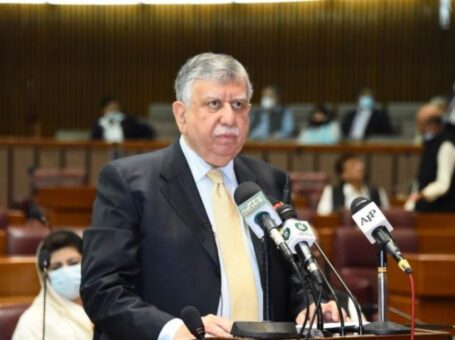
Finance minister asks cement producers to reduce prices
ISLAMABAD: Finance Minister Shaukat Tarin has emphasized to reduce the prices of cement as the industry is of paramount importance due to its backward and forward integration with the construction sector as a whole.
The finance minister held a meeting with the representatives of cement manufacturers at the Finance Division on Tuesday.
Federal Minister for Industries and Production Makhdum Khusro Bakhtiar, Secretary Ministry of Industries & Production, Secretary Finance Division and other senior officers participated in the meeting.
Secretary, Ministry of Industries and Production briefed the participants about the prevailing cement prices.
He also drew a comparison about changes in the price of cement per bag over the last three years particularly amid COVID-19 pandemic.
He highlighted the important role being played by the cement industry in stimulating economic growth during testing times.
In his remarks, the Finance Minister underscored the importance of cement as a building block of the Construction Industry.
He lauded the valuable contribution of the cement industry which has triggered a V-shape economic recovery during Coronavirus pandemic in the country.
He underlined various stimulus measures taken by the Government to support the construction industry that led to a strong rebound in economic activity during the ongoing pandemic, he added.
While speaking on the occasion, the Finance Minister stressed the need to provide industrial inputs such as Cement and Steel at affordable prices to carry forward the momentum of economic recovery amid COVID-19 as well as in post-COVID-19 scenario.
He emphasized to reduce the prices of Cement as the cement industry is of paramount importance due to its backward and forward integration with the Construction sector as a whole.
The representatives of cement manufacturers also presented their perspective on the occasion. They were of the view that the recent escalation in the prices of cement are driven by the rise in input costs.
Also the overall profitability in the cement sector is still the lowest as compared to other countries in the region.
In his concluding remarks, the Finance Minister urged the representatives of the Cement Manufacturers to hold a consultative session with relevant stakeholders and present a firmed-up proposal regarding sustainable pricing mechanism for cement sector in order to boost the overall Construction Industry by providing industrial inputs at a reasonable cost.
The Finance Minister affirmed full support and facilitation to the cement industry on the occasion.
-
Input tax claim procedure for AJK, GB persons
The Federal Board of Revenue (FBR) has laid out the procedure for claiming input tax credit against supplies made by individuals registered in Azad Jammu and Kashmir (AJK) and Gilgit Baltistan (GB).
(more…) -
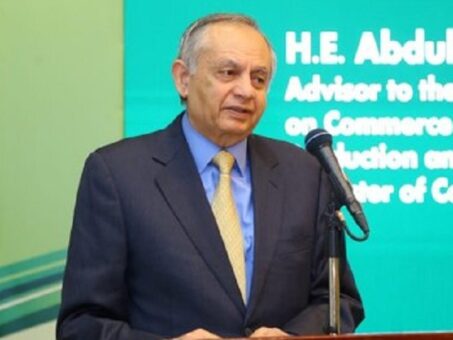
Industries given Rs6 billion under DLTL schemes
Industries in Pakistan have been granted a total sum of Rs 6 billion under the Drawback on Local Taxes and Levies (DLTL) schemes, announced Abdul Razak Dawood, the adviser to the prime minister on Commerce and Investment, on Tuesday.
(more…) -
SBP issues customers exchange rates on August 24
KARACHI, August 24, 2021: The State Bank of Pakistan (SBP) has released the most recent exchange rates for customers on Tuesday, August 24, 2021.
(more…) -
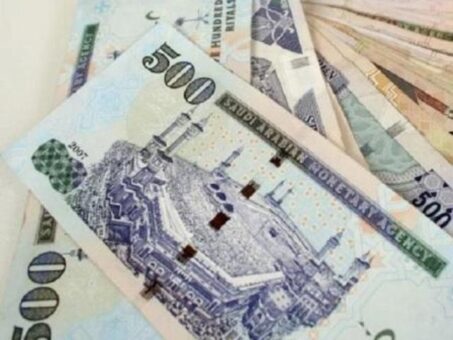
Pak Rupee to Saudi Riyal on August 24, 2021
KARACHI: Following are the rates of buying and selling of one Saudi Riyal (SAR) in Pakistani Rupee (PKR) in the open market on August 24, 2021:
Buying: Rs 43.50 to the Saudi Riyal
Selling: Rs 44.00 to the Saudi Riyal
We update rates hourly so we can offer you the best SAR to PKR.
The Saudi Riyal /PKR parity depends on open market rates, they are set by the market forces based on foreign currency demand.
Disclaimer: Team PKRevenue.com provides the available rates of the open market, which are subject to change every hour. Team PKRevenue.com provides the available exchange rates at the time of posting the story. So the team is not responsible for any inaccuracy of the data.
-
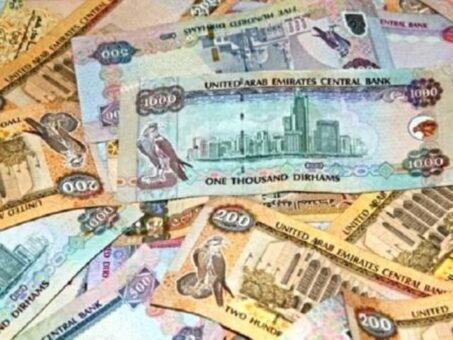
Pak Rupee to UAE Dirham on August 24, 2021
KARACHI: Following are the rates of buying and selling of one UAE Dirham (AED) in Pakistani Rupee (PKR) in the open market on August 24, 2021:
Buying: Rs 44.55 to the UAE Dirham
Selling: Rs 45.05 to the UAE Dirham
We update rates hourly so we can offer you the best AED to PKR.
The UAE Dirham /PKR parity depends on open market rates, they are set by the market forces based on foreign currency demand.
Disclaimer: Team PKRevenue.com provides the available rates of the open market, which are subject to change every hour. Team PKRevenue.com provides the available exchange rates at the time of posting the story. So the team is not responsible for any inaccuracy of the data.
-

Pak Rupee to Euro on August 24, 2021
KARACHI: Following are the rates of buying and selling of one Euro (EUR) in Pakistani Rupee (PKR) in the open market on August 24, 2021:
Buying: Rs 190.70 to the Euro
Selling: Rs 192.70 to the Euro
We update rates hourly so we can offer you the best EUR to PKR.
The Euro /PKR parity depends on open market rates, they are set by the market forces based on foreign currency demand.
Disclaimer: Team PKRevenue.com provides the available rates of the open market, which are subject to change every hour. Team PKRevenue.com provides the available exchange rates at the time of posting the story. So the team is not responsible for any inaccuracy of the data.
-

Pak Rupee to UK Pound on August 24, 2021
KARACHI: Following are the rates of buying and selling of one UK Pound Sterling (GBP) in Pakistani Rupee (PKR) in the open market on August 24, 2021:
Buying: Rs 222.65 to the UK Pound Sterling
Selling: Rs 225.15 to the UK Pound Sterling
We update rates hourly so we can offer you the best GBP to PKR.
The UK Pound Sterling /PKR parity depends on open market rates, they are set by the market forces based on foreign currency demand.
Disclaimer: Team PKRevenue.com provides the available rates of the open market, which are subject to change every hour. Team PKRevenue.com provides the available exchange rates at the time of posting the story. So the team is not responsible for any inaccuracy of the data.
-
PSO posts highest ever annual net profit of Rs29.1bn
KARACHI: Pakistan State Oil (PSO) has announced a record breaking gross revenue of Rs1.4 trillion and highest ever profit after tax of Rs29.1 billion for the financial year 2020-2021 (FY21) after a loss after tax of Rs6.5 billion in the preceding year.
The net profit translated into a healthy earning per share of Rs62.07 vs. loss per share of Rs13.77 in the preceding fiscal year.
The announcement came after PSO’s Board of Management (BoM) reviewed the performance of the company together with its subsidiary Pakistan Refinery Limited (PRL) for the financial year 2020-21, ended on June 30, 2021, during the meeting held on August 23, 2021 in Islamabad.
Based on the outstanding financial and operational performance of the company, the Board of Management has announced a final dividend of Rs 10/- per share (100 per cent) which is in addition to the interim cash dividend of Rs 5/- per share (50 per cent) for financial year 2020-21.
The dividend for the financial year stands at Rs 15/- per share (150 per cent).
PRL, a subsidiary of PSO, also reported a profit after tax of Rs 0.94 billion during the year compared to a loss of Rs 7.6 billion in the previous year. On a consolidated basis, the group achieved a profit after tax of Rs 29.6 billion in FY21 compared to loss after tax of Rs 14.8 billion in FY20.
The board noted that these results have demonstrated PSO’s agility and strength across its diverse portfolio despite the challenging economic scenario and recurrent waves of the pandemic. PSO is leading the market by a large margin, delivering a phenomenal performance over and above the industry average.
The company exhibited an outstanding growth of 21.9 per cent in liquid fuels over last year with volumes reaching 9.2 million tons, attaining a market share of 46.3 per cent in FY21 compared to 44.3 per cent in FY20. PSO also achieved its highest ever volume of 7.6 million tons in the white oil segment despite the shrinking jet fuel and kerosene oil industry, with a market share of 45.2 per cent in FY21 vs. 44 per cent in FY20 i.e. a growth of 120 basis points (bps).
PSO set an all-time high record in Motor Gasoline (MoGas) achieving volumes of 3.5 million tons, an increase of 21.2 per cent from FY20, translating into market share of 41.3 per cent vs. 38.7 per cent last year – an increase of 260 bps.
The company made a strong closing in Hi-Cetane Diesel as well, achieving a volumetric growth of 21.1 per cent vs. industry growth of 17.5 per cent, translating into volumes of 3.7 million tons in FY21. The volumes contributed in regaining market share, bringing it to 47.2 per cent vs. 45.8 per cent in the preceding year i.e. an increase of 140 bps. PSO attained a volumetric growth of 53.2 per cent in black oil with volumes of 1.7 million tons and a market share of 51.7 per cent vs. 46 per cent in FY20.
In line with GOP’s clean and green initiative, PSO was the first OMC to upgrade the country’s fuel standard from Euro 2 to Euro 5. The launch of Hi-Octane 97 Euro 5, Premier Euro 5 and Hi-Cetane Diesel Euro 5 proved to be game changers in the industry, bolstering customer’s confidence in PSO’s products.
Building on its value creation model, the company prioritized high margin products i.e. High-Octane 97 Euro 5 and lubricants adding significant revenues with a volumetric growth of 177.6 per cent and 11.3 per cent respectively compared to last year. PSO’s first EV charging facility – Electro was also launched in Islamabad.
This performance is also a strong indicator of the change and transformation going on within PSO. With a focus on innovation and technology, PSO continued to enhance its digital capabilities to drive growth and enhance efficiency.
The company made significant strides on its journey of digital transformation with the launch of Pakistan’s first digitally integrated oil storage & dispatch terminal in Karachi. PSO also became the first public sector entity to launch e-procurement through SAP Ariba. Other automation initiatives included the launch of PSO Sahulat – an online order management system for dealers, Automated Queue Management System for tank-lorries and internal applications for fund management and employees leave management.
The company fast tracked infrastructural projects to gain operational efficiency. 174,000 tons of new and rehabilitated storages were added which significantly increase the number of day’s cover of petroleum products. Pipeline links have been completed to connect operational locations with White Oil Pipeline to make product movement safer and more efficient. 71 new vision retail outlets were also added to the company’s footprint.
Living up to its promise of keeping the wheels of the nation’s economy in motion and ensuring a seamless supply of fuel, the company imported 4.9 million tons of white oil products, an all-time high since the inception of the company. PSO has also played a pivotal role in the LNG sector. The company entered into another agreement with Qatar Petroleum under G2G arrangement to supply an additional 3 million tons of LNG for a period of 10 years. This contract shall add additional volumes to an already executed 15-year long term sales purchase agreement (SPA), making PSO the largest supplier of LNG in the country with a supply base of 6.75 million tons per annum.
With the burden of circular debt still large, to improve its balance sheet further, PSO recovered Rs 25.8 billion from the Power Sector along with late payment surcharge income. Reduction in finance cost by Rs. 3.2 billion. (24 per cent) further complemented the profitability of the company.