Author: Mrs. Anjum Shahnawaz

  • Global trade restrictions rising amid economic uncertainty, Ukraine War: WTO

    Global trade restrictions rising amid economic uncertainty, Ukraine War: WTO

    A report released by World Trade Organization (WTO) on Tuesday showed that trade restrictions are increasing in a context of economic uncertainty exacerbated by the COVID-19 pandemic, the war in Ukraine and the food security crisis.

    According to the latest WTO Trade Monitoring Report presented at a meeting of the Trade Policy Review Body, WTO members are introducing restrictions at an increased pace, particularly on food, feed and fertilizers. The stockpile of import restrictions in force also continues to grow.

    WTO Director-General Ngozi Okonjo-Iweala called on WTO members to refrain from adopting new trade-restrictive measures, particularly export restrictions, that can further contribute to a worsening of the global economic outlook and urged them to cooperate to keep markets open and predictable in order to allow goods to move around the world to where they are needed.

    “Members have increasingly implemented new trade restrictions, in particular on the export side, first in the context of the pandemic and more recently in the context of the war in Ukraine and the food security crisis. Although some of these export restrictions have been lifted, many others persist,” she said.

    “Out of the 78 export restrictive measures on food, feed, and fertilizers introduced since the start of the war in late February, 57 are still in place, covering roughly USD 56.6 billion of trade. These numbers have increased since mid-October, which should be a cause for concern.”

    “As I told G20 Leaders at their summit in Indonesia a few weeks ago, lifting those export restrictions is fundamental to reduce price spikes and volatility and to allow goods to flow to where they are urgently needed,” she added.

    During the review period for the report, from mid-October 2021 to mid-October 2022, WTO members introduced more trade-facilitating (376) than trade-restrictive (214) measures on goods (unrelated to the pandemic), with the average number of trade-facilitating measures per month at its highest since 2012.

    Most of the facilitation happened on the import side while most of the restrictions were on the export side. For the first time since the beginning of the monitoring exercise in 2009, the number of export restrictions outpaced that of import restrictions.

    The trade coverage of the trade-facilitating measures was estimated at USD 1,160.5 billion, and that of the trade-restrictive measures at USD 278.0 billion. The stockpile of import restrictions in force also continued to grow. By mid-October 2022, over 9 per cent of global imports continue to be affected by import restrictions implemented since 2009 and which are still in force.

    Initiations of trade remedy investigations declined sharply during the review period (10.9 initiations per month, the lowest since 2012) after reaching its highest peak in 2020 (36.1 initiations per month).

    These actions remain an important trade policy tool for many members, accounting for 37.4 per cent of all non-COVID-19-related trade measures on goods recorded. Anti-dumping continues to be the most frequent trade remedy action in terms of initiations and terminations.

    The implementation of new COVID-19-related trade measures decelerated over the past 12 months, with 45 such measures recorded on goods and four on services. Additional information communicated by WTO members mainly consisted of termination of existing measures or amendments of others.

    The number of new COVID-19-related support measures by WTO members and observers to mitigate the social and economic impacts of the pandemic fell sharply over the review period.

    Since the outbreak of the pandemic, 443 COVID-19-related trade and trade-related measures in the area of goods have been introduced. Most were trade-facilitating (246 or 56 per cent), while the rest were trade-restrictive (197 or 44 per cent). During the review period, members continued to phase out the pandemic-related measurers, and in particular the restrictive ones.

    According to information received by the WTO Secretariat, as of mid-October 2022, 79.2 per cent of the COVID-19-related trade restrictions have been repealed, leaving 27 export restrictions and 14 import restrictions in place. Although the number of the pandemic-related trade restrictions still in place has decreased, their trade coverage remains important at USD 134.6 billion.

    Since the outbreak of the pandemic, a consistent feature of the trade and trade-related measures taken in response to the COVID-19 crisis has been the frequent changes, adjustments and gradual roll-back of such measures to reflect the evolving situation.

    The updated lists of measures implemented in the context of the current pandemic are available on the COVID-19 page of the WTO website and cover the areas of goods, services and intellectual property as well as measures communicated by members on general economic support.
  • Finance Division rebuts economic emergency report

    Finance Division rebuts economic emergency report

    ISLAMABAD: Finance Division on Tuesday strongly rebutted the reports regarding proposals under consideration for imposing economic emergency.

    According to a statement issued by the finance division, a false message on supposed economic emergency proposals has been circulating on the social media in recent days.

    READ MORE: Pakistan purchases 450,000 metric tons wheat from Russia

    The finance division not only strongly rebuts the assertions made in the said message and but also categorically denies it and that there is no planning to impose economic emergency.

    The message is unfortunately aimed at creating uncertainty about the economic situation in the country and can only spread by those who do not want to see Pakistan prosper.

    Creation and spread of such false messages is against national interest in these times of economic hardship. A mere reading of the nine points mentioned in the message indicates how far-fetched those suggestions are.

    READ MORE: Saudi Arabia extends term of $3 billion deposit for Pakistan

    It is also quite inappropriate to equate Pakistan with Sri Lanka, given inherent strength and diversity in Pakistan’s economy.

    The present difficult economic situation is mainly the result of exogenous factors like commodity super-cycle, Russia-Ukraine war, global recession, trade headwinds, Fed’s increase in policy rates and devastation wreaked by unprecedented floods.

    The government has been making utmost efforts to minimize the impact of such external factors, even when faced with the economic consequences of unprecedented floods and having to meet IMF conditionalities.

    READ MORE: Pakistan exports plunge 18.34pc in November 2021

    The authorities are committed to completing the IMF program while meeting all external debt repayments on time. In this challenging economic situation, the government has put in place a number of austerity measures with the approval of the Federal Cabinet.

    Such measures are in public knowledge and are aimed at eliminating non-essential expenditures. Similarly, the Government has been deliberating energy conservation mainly aimed at reducing the import bill.

    Such deliberations will continue in the Cabinet and all decisions will be taken in consultation with all stakeholders and in the best national interest. With the efforts of the current government, the IMF program has come back on track and negotiations leading to 9th Review are now at an advanced stage. Government’s recent efforts have resulted, amongst others, in lower current account deficits in recent months and achievement of FBR revenue targets.

    READ MORE: SBP foreign exchange reserves fall to $7.5 billion

    Easing up of pressure on external account is also foreseen in the near future. While there remains the need to make structural adjustments in the mid-term, the economic situation of the country is now moving towards stability.

    Finance Division urges the people of Pakistan to contribute towards economic betterment and stability and not to pay heed to malicious rumors mongering which is against the national interest of Pakistan.

  • FBR directs BS-21 officers to submit declaration of assets

    FBR directs BS-21 officers to submit declaration of assets

    ISLAMABAD: Federal Board of Revenue (FBR) has directed BS-21 officers to submit their declaration of assets otherwise their names will not be considered for promotion to next grade.

    In an official communication issued on Monday, the FBR directed BS-21 officers of Inland Revenue Service (IRS) and Pakistan Customs Service (PCS), who are in promotion zone, to ensure completion of their Performance Evaluation Reports (PERs) and Declaration of Assets.

    READ MORE: Customs Intelligence Gwadar auctions motor vehicles on December 12

    The FBR said the Establishment Division has informed that a meeting of high powered selection board (HPSB) for promotion to BS-22, is scheduled to be held shortly and cases for the promotion shall be submitted to the Establishment Division for HPSB by December 10, 2022.

    All the BS-21 officers of IRS and PCS in the promotion zone are directed to ensure that their PERs and Declaration of Assets up to June 30, 2022 are submitted to the Board latest by December 09, 2022, positively.

    READ MORE: Separate property declaration under Section 7E only for returns already filed

    Completion of PERs and submission of Declaration of Assets are the pre-requisites for promotion to selection grades under Civil Servants (Promotion to the post of Secretary BS-22 and equivalent) Rules, 2010.

    READ MORE: Tax on deemed income from immovable property under Section 7E

    The FBR is trying hard to ensure that all eligible officers should be considered for promotion in the forthcoming HPSB meeting. However, cooperation from the officers in timely completion of service record is equally essential.

    The revenue body warned that any officer who fails to furnish the documents by due date of December 09, 2022 will himself/herself be responsible for non-consideration / deferment / supersession.

    READ MORE: Supreme Court discourages taxpayers seeking relief in show cause notices

  • Russia agrees to provide oil at discounted rate to Pakistan: minister

    Russia agrees to provide oil at discounted rate to Pakistan: minister

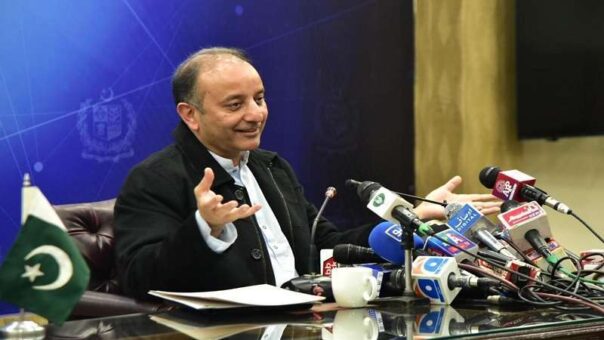
    ISLAMABAD: Russia has agreed to provide oil at discounted rate to Pakistan, said Minister of State for Petroleum Dr Musadik Malik on Monday.

    He termed his recent visit to Russia ‘very successful’ as the host country, in principle, had decided to provide crude oil, refined petrol and diesel to Pakistan at a discounted rate.

    READ MORE: Pakistan unable to bear heavy energy import bill amid challenges to economy: PM

    “In addition, negotiations with private sector companies of Russia have been initiated for procurement of Liquefied Natural Gas (LNG), while talks for long term contracts with public sector companies of Russia have also been initiated to get LNG from their new plants,” he said at a press conference.

    During the visit, he said fruitful discussions were also held on gas pipeline projects including establishing of Pakistan Stream Gas Pipeline, commonly known North-South (Lahore-Karachi) Gas Pipeline, and another a ‘big gas pipeline’ to get the commodity from Russian hydrocarbon deposits.

    READ MORE: SBP denies restricting import payment for petroleum products

    Musadik Malik said an inter-governmental delegation of Russia, led by its Energy Minister, would visit Pakistan by January-mid [next month] to make progress on oil and gas sale-purchase agreements between the two countries.

    Commenting on the current gas supply situation in the country, the minister said the local gas production was witnessing around 8-10 per cent decline annually and despite all these odds, the government had arranged extra gas for months of November, December and January as compared to the same months of the last year.

    He said an effective monitoring system of gas supply to domestic consumers was in place, under which the Petroleum Division kept a vigil eye on the demand and supply of the commodity.

    READ MORE: New petroleum prices in Pakistan effective from December 01, 2022

    Musadik Malik said the gas companies had been directed to ensure gas supply, especially during ‘breakfast, lunch and dinner’ preparation timings i.e. 6-9 a.m., 12-2 p.m. and 6-9 p.m.

    “The incumbent government is providing extra gas as compared to the last year, and monitoring the supply situation regularly,” he added.

    However, he said there was a problem of poor infrastructure which created a gas pressure issue for the remote areas, which was being rectified on priority basis.

    To bridge the demand and supply gap, the minister said the gas companies were providing more than 20,000 tons Liquefied Petroleum Gas (LPG) per month in the areas where gas-pressure issue and shortage prevailed.

    READ MORE: Shell Pakistan signs ABHI for voluntary carbon compensation offer

    He disclosed that Iran had announced to give Pakistan LPG worth two million pounds as ‘assistance,’ for which all formalities have been completed. He said the additional LPG would help ensure better gas supply to domestic consumers in December.

    The minister was of the view that the government believed in providing sufficient energy to the industrial sector as it would help move the economic wheel at a fast pace, thus generating employment opportunities for youth and increasing the country’s exports.

    Accordingly, he said the government was utilizing all available options and contacting different countries including Central Asian States to meet its energy requirements.

    He highlighted the importance of exploiting the country’s indigenous oil and gas potential, saying that two new policies related to tight gas and revival of old hydrocarbon wells, were being worked out.

    Musadik Malik said the country needed 8-10 per cent addition in energy efficiency, if it wanted to improve Gross Domestic Product (GDP) at the rate of 5-6 per cent annually.

  • Pakistan unable to bear heavy energy import bill amid challenges to economy: PM

    Pakistan unable to bear heavy energy import bill amid challenges to economy: PM

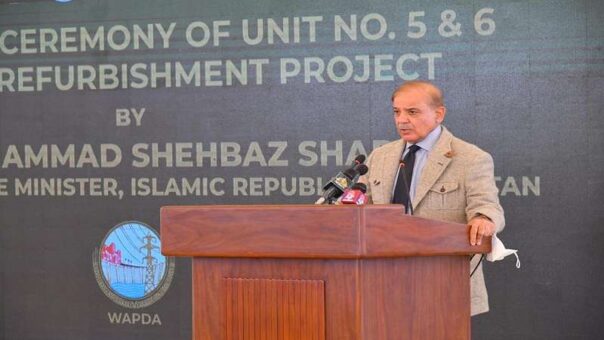
    MANGLA: Prime Minister Shehbaz Sharif on Monday said that Pakistan is unable to bear the cost of heavy energy import bills in a situation when the economy is facing immense challenges.

    He said Pakistan was in dire need of generating cheap electricity as the energy import bill exorbitantly touched $27 billion.

    He was addressing the inaugural ceremony of the refurbishment project of Units 5 and 6 of the Mangla Dam Hydroelectric Power Plant, carried out with the support of the United States Agency for International Development (USAID).

    READ MORE: SBP denies restricting import payment for petroleum products

    PM Shehbaz Sharif said Pakistan, which was already facing immense challenges of economic stability, could not bear the heavy costs of energy import bills and thus needed to utilize alternative sources of electricity production.

    He regretted that in 75 years, both democratic and military rulers were responsible for not building sufficient dams to meet the energy needs.

    “Had the water reservoirs built on time, the country’s energy import bill would not have swelled to $27 billion,” he said, pointing out that “powerful lobbies and cartels” did not let materialize the construction of dams and launch of solar power projects.

    READ MORE: New petroleum prices in Pakistan effective from December 01, 2022

    Also, in the wake of recent flash floods in the country, he said, dams were crucial to mitigate the effects of climate change.

    The prime minister termed the assistance of USAID for the refurbishment of the units of Mangla dam as a “wonderful example of cooperation” between Pakistan and the United States.

    He lauded the valuable grant of $150 million by USAID along with the financial support by the Development Agency of France amounting to 90 million euros besides another pledge of 65 million euros. Also, WAPDA (Water and Power Development Authority) contributed $178 million (Rs 20 billion) from its own resources, he said.

    READ MORE: Shell Pakistan signs ABHI for voluntary carbon compensation offer

    He expressed satisfaction over the interest of the U.S. to carry out an extension programme of the country’s largest Tarbela dam.

    Shehbaz Sharif said the 75-years-old friendship and bilateral relationship between Pakistan and the U.S. had further strengthened at the levels of trade and investment.

    United States Ambassador Donald Blome said the Mangla dam was a great symbol of U.S.-Pakistan cooperation and added that the U.S. was also assisting WAPDA in increasing the power generation capacity of the Tarbela and Gomal Zam dams.

    He said maintenance and upgrades of dams were of critical importance in the wake of climate change and expressed hope that the green alliance between the two countries would prove beneficial for the energy and agriculture sectors of Pakistan.

    READ MORE: PYMA urges government not to impose regulatory duty on yarn

    The General Electric Hydro France Project Director said despite the challenges of the COVID-19 pandemic, the suspended projects of refurbishment were carried out effectively.

    He mentioned that six more units of Mangla dam would also be refurbished in the future.

    Chairman Water and Power Development Authority (WAPDA) Lt Gen (retd) Sajjad Ghani said the refurbishment of the units of Mangla dam was in line with the keen interest of the federal government to provide clean, green and cheap energy to the people of the country.

    He said WAPDA had not only initiated new hydropower projects, but also been rehabilitating

    and upgrading its existing hydel power stations including Mangla to maximize the ratio of environment-friendly and low-cost hydel electricity in the national grid.

    Prime Minister of Azad Kashmir Sardar Tanveer Ilyas, Special Assistant to PM Tariq Fatemi, Secretary Water and Power Division Hassan Nisar, and senior officials were present.

    The prime minister also visited the refurbished units of the dam, where he was given a detailed briefing about the project.

  • Pakistan purchases 450,000 metric tons wheat from Russia

    Pakistan purchases 450,000 metric tons wheat from Russia

    ISLAMABAD: Pakistan is purchasing of 450,000 metric tons wheat from Russia as country’s economic coordination committee approved a bid of a Russian company.

    The Economic Coordination Committee (ECC) of the Cabinet met on Monday which was presided over by Finance Minister Ishaq Dar.

    READ MORE: Saudi Arabia extends term of $3 billion deposit for Pakistan

    Federal Minister for Power Khurram Dastgir Khan, Federal Minister for Industries and Production Syed Murtaza Mahmud, Shahid Khaqan Abbasi MNA/Ex-PM, Minister of State for Finance and Revenue Dr. Ayesha Ghous Pasha, SAPM on Finance Tariq Bajwa, SAPM on Revenue Tariq Mehmood Pasha, SAPM on Government Effectiveness Dr. Muhammad Jehanzeb Khan, Federal Secretaries and other senior officers attended the meeting in person while Federal Minister for Commerce Syed Naveed Qamar, Minister of State for Petroleum Musadik Masood Malik, Coordinator to PM on Commerce and Industry Rana Ihsan Afzal and Governor SBP, MD PASSCO joined the meeting through Zoom.

    READ MORE: Pakistan exports plunge 18.34pc in November 2021

    Ministry of National Food Security and Research submitted a summary on Award of 7th International Wheat Tender 2022 opened on November 30, 2022.

    Keeping in view results of 7th International tender and G2G offer, the ECC approved the lowest bid from M/s Cereal Crop Trading LLC at $ 372/MT for supply of 130,000 MT at Karachi ports for the shipment period from 16th December, 2022 8th February, 2023.

    READ MORE: SBP foreign exchange reserves fall to $7.5 billion

    The ECC also granted approval of the offer of M/s Prodintorg , Russia on Government to Government (G2G) basis at $ 372 /MT for supply of 450,000 MT at Gwadar Port for shipment period from 1st February, 2023 to 31st March, 2023.

    It was decided that any additional cost on inland transportation from Gwadar Port will be borne by PASSCO to be recovered from provinces at the time of release of wheat stock.

    READ MORE: Pakistan slaps 5pc regulatory duty on yarn import

    The ECC also approved proposal of Finance Ministry to change the title of the revolving fund account for CPEC Independent Power Producers from “Pakistan Energy Revolving Fund” to “Pakistan Energy Revolving Account”.

  • KATI urges removal of regulatory duty on yarn

    KATI urges removal of regulatory duty on yarn

    KARACHI: Korangi Association of Trade and Industry (KATI) has urged the government to withdraw the regulatory duty on yarn import because the levy would increase cost of product for textile industry.

    The Economic Coordination Committee (ECC) of the Cabinet on November 30, 2022 imposed five per cent regulatory duty on filament yarn.

    READ MORE: Merchants protest imposition of 5pc regulatory duty on polyester yarn

    In a statement on Monday KATI President Faraz-Ur-Rehman rejected the government’s imposition of regulatory duty on yarn and thread.

    Rehman said that yarn and thread are the raw material of the textile sector, and duty on it is not acceptable in any case. He said that KATI fully supports the stance of yarn traders as the imposition of duty will adversely affect textile exports.

    READ MORE: Pakistan slaps 5pc regulatory duty on yarn import

    President KATI said that due to the ongoing economic crisis in the country, shortage of gas and expensive electricity, the cost of production is already at the highest level and due to the financial crisis, most of the textile mills have closed down and are on the verge of closing down more.

    Faraz-Ur-Rehman said that the government should reconsider this decision, otherwise millions of people who are involved in the textile sector will become unemployed.

    READ MORE: PYMA urges government not to impose regulatory duty on yarn

    President KATI said that the textile sector is the backbone of the country’s exports, and most of the export earnings come from this sector. He said that the imposition of duty on this sector will cause the sector to suffer from a severe financial crisis which will directly harm the economy.

    Faraz-Ur-Rehman further said that the government and the concerned authorities are implementing duties to avoid their responsibilities without consulting the stakeholders, which is causing serious damage to the industry.

    READ MORE: Industries threaten mass protest against gas supply shutdown

    He said that the government should withdraw the regulatory duty immediately otherwise the employment of millions of people will be at risk.

    President KATI said that the survival of the export industry is not possible without ending the implementation of a 17 per cent general sales tax on textile exports.

    Therefore, to improve the liquidity position of exporters and competitiveness in the global market and to prevent fraud and smuggling, the restoration of ‘zero rating’ has become indispensable.

  • FBR nominates focal persons for resolving issues of IT industry

    FBR nominates focal persons for resolving issues of IT industry

    ISLAMABAD: Federal Board of Revenue (FBR) has nominated focal persons for resolving issues related IT industry.

    The following chief commissioners Inland Revenue (by designation) are nominated as focal persons for resolving problems and issues related to IT industry for the regions mentioned against each:

    Chief Commissioners – IR, Corporate Tax Office (CTO), Lahore, Islamabad and Karachi have been nominated as focal person for resolving problems and issues related to IT Industry regarding matter pertaining to Inland Revenue field formations within Lahore, Islamabad & Rawalpindi and Karachi.

    READ MORE: No audit of IT sector due to fixed tax regime: FBR chairman

    In October 2022, FBR Chairman Asim Ahmad said there is no audit of the IT sector due to fixed tax regime. There is no audit of IT sector export-oriented companies through budgetary measures in the current financial year for ensuring ease of doing business and reducing the cost of tax compliance.

    “As fixed and final tax regime has been introduced in this fiscal year therefore, no tax or audit notices will be sent to the IT sector professionals and easier documentation will be the priority,” FBR chairman said.

    READ MORE: Electricity withholding tax not applicable on ATL domestic consumers

    Special Assistant to the Prime Minister on youth affairs Miss Shaza Fatima and the Prime Minister’s task force on Information technology and Telecom sector, convened a meeting in the Prime Minister’s office to discuss IT sector exports taxation issues and the impact thereof particularly of small and medium IT companies and software houses, with Chairman FBR Asim Ahmad, officials of the Ministry of IT and representatives of PASHA.

    The Prime Minister Mian Shehbaz Shareef constituted a task force to devise ways to increase the Information Technology exports by $3 billion till 2023.

    On the note of exemption from the proposed 0.25 per cent tax, this will remain and it is a quarter of what the other exporters pay.

    In the Final Tax Regime, the Federal Board of Revenue has agreed in principle to resolve sales tax registration and return filing issues.

    READ MORE: Tax rates on goods, passenger transport vehicles during 2022-2023

    The definitions of IT in the June 2022 Finance Act were deliberated upon, and found to be all inclusive. The Federal Board of Revenue has also agreed in principle to propose necessary changes in law for all IT exports to attain the benefit of final tax regime.

    In principle the FBR agreed upon the proposal that if the Provincial consensus is reached, Federal Excise Duty (FED) can be reduced from 19.5 per cent to 17 per cent for Telecom sector.

    The funds received by the IT sector through applications like Payoneer etc. will be given the benefit of final tax regime through necessary changes in the law, if required.

    READ MORE: FBR notifies tax rates on brokerage, commission during 2022-2023

  • Pakistan sets up commission to eradicate black economy

    Pakistan sets up commission to eradicate black economy

    Pakistan has constituted a high powered commission for making suggestion to end the black economy or parallel economy. Finance Minister Ishaq Dar last week constituted a high powered tax commission for identifying bottlenecks in tax system and recommending pro-economic policies.

    (more…)
  • Customs Intelligence Gwadar auctions motor vehicles on December 12

    Customs Intelligence Gwadar auctions motor vehicles on December 12

    Directorate of Customs Intelligence and Investigation, Gwadar announced auction of motor vehicles to be held on December 12, 2022 at Custom House, Gaddani.

    The directorate will hold auction of following vehicles:

    01. Toyota Surf Jeep, Chassis No. GRN215-8110039, Model 2009(4000CC).

    READ MORE: Separate property declaration under Section 7E only for returns already filed

    02. Toyota Aqua Car, Chassis No. NHP10-6390841, Model 2015 (1498CC).

    03. Suzuki Swift Car, Manual Transmission, Chassis No. JSAEZC21S00159325, Model 2005 (1328CC).

    04. Toyota Crown Car, Chassis No. GRS204-0007715, Model 2008 (3500CC).

    05. Toyota Axio Car, Chassis No. NZE141-6172214, Model 2010 (1496CC).

    READ MORE: Tax on deemed income from immovable property under Section 7E

    06. Charoki Jeep, Chassis No. ICRNJCDA8ED910227, Model 2014.

    07. Daihatsu Mira Car, Chassis No. LA300S-0022280, Model 2012 (658CC).

    08. Toyota Premio Car, Reg No. BFF-347, Chassis No. ZZT240-0126406, Model 2006 (1794CC).

    09. Toyota Axio Car, (Rusted/Poor Condition), Chassis No. NZE141-6167564, Model 2010 (1496CC).

    10. Daihatsu Mira Car, Chassis No. LA300S-1403990 (after lab Chassis No. LA300S-1194471), Model 2013 (658CC).

    11. Toyota Land Cruiser Cygnus Jeep, Chassis No. UZJ100-0155558 (without Tikli), Engine No. not traceable, Model 2005 (4700CC).

    READ MORE: Supreme Court discourages taxpayers seeking relief in show cause notices

    12. Toyota Axio (G) Car, Chassis No. NZE141-6007549, Model 2006 (1496CC).

    13. Toyota Mark-X Car (Roof/Pillar cut and weld accident condition without bonet, digi, doors, head/brake lights, seats, dashboard and wirings etc.), Chassis No. GRX130-6113354, Engine No. not available, Model 2019 (2499CC).

    14. Suzuki Alto Car, Chassis No. HA36S-32887, Model 2017 (658CC).

    15. Land Cruiser Cygnus Jeep, Chassis No. UZJ100-0158482, as per Chassis Tikli No. UZJ100-0143249, Engine No. 2UZFE, Model 2006 (4663CC).

    16. Honda Bike (not in running condition), Chassis No. JH2SC3309WM200493, Engine No. SC33E-2203890, Model 1998.

    READ MORE: Member Customs assures swift clearance of export consignments