Author: Mrs. Anjum Shahnawaz

  • PKR to AED on November 17, 2022

    PKR to AED on November 17, 2022

    KARACHI: Following are the rates of buying and selling of one UAE Dirham (AED) in Pakistani Rupee (PKR) in the open market on November 17, 2022:

    Buying: Rs 64.20 to the UAE Dirham

    Selling: Rs 64.80 to the UAE Dirham

    The buying rate means an exchange company or a bank buys foreign currency from a customer.

    The selling rate means an exchange company or a bank sells the foreign currency from a customer.

    The rate has been updated at 09:00 AM Pakistan Standard Time (PST).

    The UAE Dirham /PKR parity depends on open market rates, they are set by the market forces based on foreign currency demand.

    PKR to AED on November 16, 2022

    ————————————————-

    PKR to CAD on November 17, 2022

    KARACHI: Following are the rates of buying and selling of one Canadian Dollar (CAD) in Pakistani Rupee (PKR) in the open market on November 17, 2022:

    Buying: Rs 175.60 to the Canadian Dollar

    Selling: Rs 177.60 to the Canadian Dollar

    The buying rate means an exchange company or a bank buys foreign currency from a customer.

    The selling rate means an exchange company or a bank sells for foreign currency from a customer.

    The rate has been updated at 09:00 AM Pakistan Standard Time (PST).

    The Canadian Dollar /PKR parity depends on open market rates, they are set by the market forces based on foreign currency demand.

    PKR to CAD on November 16, 2022

    ————————————————-

    PKR to USD on November 17, 2022

    KARACHI: Following are the rates of buying and selling of one US dollar (USD) in Pakistani Rupee (PKR) in the open market on November 17, 2022:

    Buying: Rs 226.70 to the US Dollar

    Selling: Rs 229.00 to the US Dollar

    The buying rate means an exchange company or a bank buys foreign currency from a customer.

    The selling rate means an exchange company or a bank sells the foreign currency from a customer.

    The rate has been updated at 09:00 AM Pakistan Standard Time (PST).

    The US Dollar /PKR parity depends on open market rates, they are set by the market forces based on foreign currency demand.

    PKR to USD on November 16, 2022

    ————————————————-

    PKR to SAR on November 17, 2022

    KARACHI: Following are the rates of buying and selling of one Saudi Riyal (SAR) in Pakistani Rupee (PKR) in the open market on November 17, 2022:

    Buying: Rs 62.20 to the Saudi Riyal

    Selling: Rs 62.80 to the Saudi Riyal

    The buying rate means an exchange company or a bank buys foreign currency from a customer.

    The selling rate means an exchange company or a bank sells for foreign currency from a customer.

    The rate has been updated at 09:00 AM Pakistan Standard Time (PST).

    The Saudi Riyal /PKR parity depends on open market rates, they are set by the market forces based on foreign currency demand.

    PKR to SAR on November 16, 2022

    ————————————————-

    PKR to EUR on November 17, 2022

    KARACHI: Following are the rates of buying and selling of one Euro (EUR) in Pakistani Rupee (PKR) in the open market on November 17, 2022:

    Buying: Rs 243.00 to the Euro

    Selling: Rs 245.50 to the Euro

    The buying rate means an exchange company or a bank buys foreign currency from a customer.

    The selling rate means an exchange company or a bank sells for foreign currency from a customer.

    The rate has been updated at 09:00 AM Pakistan Standard Time (PST).

    The Euro /PKR parity depends on open market rates, they are set by the market forces based on foreign currency demand.

    PKR to EUR on November 16, 2022

    ————————————————-

    PKR to GBP on November 17, 2022

    KARACHI: Following are the rates of buying and selling of one UK Pound Sterling (GBP) in Pakistani Rupee (PKR) in the open market on November 17, 2022:

    Buying: Rs 278.00 to the UK Pound Sterling

    Selling: Rs 280.80 to the UK Pound Sterling

    The buying rate means an exchange company or a bank buys foreign currency from a customer.

    The selling rate means an exchange company or a bank sells the foreign currency from a customer.

    The rate has been updated at 09:00 AM Pakistan Standard Time (PST).

    The UK Pound Sterling /PKR parity depends on open market rates, they are set by the market forces based on foreign currency demand.

    PKR to GBP on November 16, 2022

    ————————————————-

    Disclaimer: Team PKRevenue.com provides the available rates of the open market, which are subject to change every hour. The given rates are opening for the day. Team PKRevenue.com provides the available exchange rates at the time of posting the story. So the team is not responsible for any inaccuracy of the data.
  • Action against banks for overcharging on LCs by month-end

    Action against banks for overcharging on LCs by month-end

    ISLAMABAD: State Bank of Pakistan (SBP) on Wednesday said it has finalized to take action against banks involved in overcharging on opening of Letters of Credit (LCs).

    The National Assembly Standing Committee on Finance and Revenue was informed here on Wednesday that the actions against eight banks involved in overcharging on opening of LC would be taken by the end of current month.

    READ MORE: Dollar climbs to PKR 222.41 amid foreign payment demand

    While briefing the Committee, Deputy Governor State Bank of Pakistan (SBP), Dr. Inayat Hussain said that in light of inspection findings, SBP is also in process of completing the enforcement action against the concerned banks.

    The Committee met under the Chairmanship of Qaiser Ahmed Sheikh and discussed various issues pertaining to the Ministry and its attached departments.

    The Chairman of the Committee said that now the monitoring process of the Central Bank has been tightened and no complaints have been received yet.

    READ MORE: SBP introduces reporting system for illegal foreign exchange activity

    Inayat said the shortage of dollars in the market is due to the gap between import and export and foreign exchange is also required for balance of payment.

    He highlighted that the shortage occurs when Dollar inflow is less than the outflow. These are the reasons for the increase in the rate of the Dollar and the depreciation of the rupee, he added.

    MNA Sabir Hussain Kaim Khani said that National Bank of Pakistan (NBP) was also responsible for the devaluation of the rupee and increase in the rate of Dollar. He questioned how will we stop others when a government bank does this.

    The Chairman of the Committee said that Banks were still saying that they don’t have Dollars and market confidence was affected due to fluctuations in the value of the rupee.

    READ MORE: Pakistan remittances decline by 15.7% in October 2022

    Dollar is worth Rs 222 in the market and there is a difference of 15 rupees in the interbank and open market, he added.

    Governor State Bank should should come to respond to this, Barjees Tahir said.

    MNA Khalid Hussain Magsi said that now the economy was not in right direction because we have not set the direction.

    Meanwhile discussing the issue of allocation of funds to National Disaster Management Authority (NDMA) and essential items provided to the floods affectees, the official of NDMA informed that the authority disbursed around 283,934 tents, 77,585 tarpaulins, 2,044,104 mosquito nets, 234,545 blankets.

    MNA Nafisa Shah said that according to her information, around 4 to 5 thousand children were died of Malaria in Khairpur district but there was no data available on flood victims. She said that things were given twice in each house and compiling data of flood victims was the biggest responsibility.

    READ MORE: Pakistan banks may issue corporate cards for cross-border commercial payments

    Zarai Taraqiati Bank Limited (ZTBL) briefed the Committee on its overall performance, however the Committee was not satisfied with the briefing and allowed three months’ time asking it to come again with better preparation.

    The Committee also asked ZTBL President to ensure his presence in the next meeting.

  • Baggage rules amended for lowering cash limit for outbound passengers

    Baggage rules amended for lowering cash limit for outbound passengers

    KARACHI: Federal Board of Revenue (FBR) on Wednesday notified draft rules to amend Baggage Rules for lowering cash limit for outbound passengers.

    The FBR issued SRO 2043(I)/2022 to make amendments in the Baggage Rules, 2006. The cash limit has been lowered to $5,000 per person per visit from $10,000.

    READ MORE: SBP limits cash up to USD 5,000 taking out of Pakistan

    According to the proposed rules, any persons travelling abroad (except to Afghanistan) is allowed to take out of Pakistan US Dollar or equivalent thereof in other foreign currencies as per the limits given below:

    The cash limit per visit per person shall be $5,000 for a person 18 years and above (adults). The annual limit per person shall be $30,000.

    The cash limit per visit per person shall be $2,500 for a person below 18 years (minors). The annual limit per person shall be $15,000.

    READ MORE: FBR halts POS prize scheme

    The FBR further said that foreign currency cash limit for passengers travelling to Afghanistan will be: maximum limit per person per visit shall be $1,000. The annual limit per person shall be $6,000.

    The FBR introduced further amendments to the Baggage Rules, according to which the annual limits for outbound passengers for the respective countries will be as per Tables ‘A’ and ‘B’ for a calendar year starting from the year 2023.

    However, for calendar year 2022, the existing annual limits in vogue before the issuance of this notification will continue to be effective till December 31, 2022.

    READ MORE: Tax on persons receiving dividends in Pakistan

    Any person taking foreign currency or any other prohibited or restricted item out of Pakistan shall file a declaration in the tbiin as set out in Appendix-C, before or at the time of departure, electronically in the WeBOC or pass track or manually at the airport.

    The incoming passenger when in possession of foreign currency exceeding US $ 10,000 or equivalent, or any other prohibited or restricted item, shall also file a declaration in the Form as set out in Appendix-C.”; and (3) in Appendix “C”, for the DECLARATION, the following shall be substituted, namely:-

    “DECLARATION

    Are you carrying any of the following goods?

    (a) Prohibited or restricted goods such as arms & ammunitions, narcotics, psychotropic substances or satellite phones etc.?

    (b) Gold and precious metals, jewelry, precious or semi-precious stones.

    READ MORE: Direct tax collection up 41% in four months of current fiscal year: FBR

    (c) Foreign currency in US $/ Bearer Negotiable Instrument or equivalent:

    1. For outbound passengers to all countries taking out foreign currencies; and

    2. Incoming passengers bringing into Pakistan amount exceeding US $ 10,000 or equivalent.

    Any other items requiring declaration before Customs.

    “I declare that t e information furnished by me is correct and in the event of its being incorrect, I hold myself liable for such action as deemed fit under the Foreign Exchange Regulation Act, 1947 and the Customs Act, 1969.” – Signature of the Passenger

  • Petroleum prices in Pakistan for next fortnight effective from November 16, 2022

    Petroleum prices in Pakistan for next fortnight effective from November 16, 2022

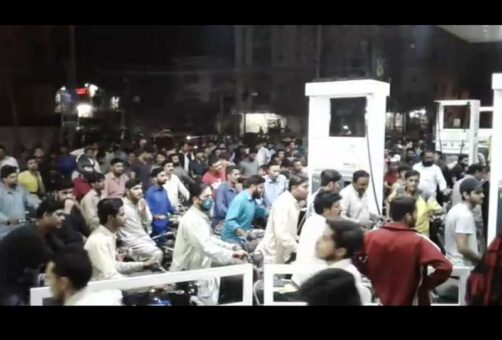
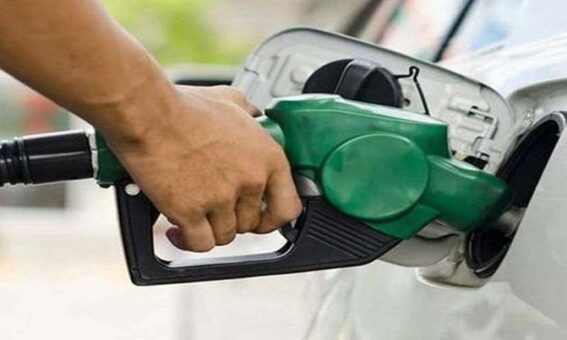
    ISLAMABAD: The government of Pakistan on Tuesday decided to keep the petroleum prices unchanged for next fortnight starting from November 16, 2022.

    It was third straight announcement to keep the prices of petroleum products unchanged. Previously, on September 30, 2022 following changes in petroleum prices were announced:

    The rate of petrol has been reduced by Rs12.63 per liter to Rs224.80 from Rs237.43.

    READ MORE: Petroleum prices in Pakistan effective from November 01, 2022

    The price of high speed diesel has been cut by 12.13 per liter to Rs235.30 from Rs247.43.

    The rate of Kerosene oil has been slashed by Rs10.19 to Rs191.83 from Rs202.02.

    The price of light diesel oil has been reduced by Rs10.78 to Rs186.50 from Rs197.28.

    The government has taken the latest decision amid challenges including long march initiated by leading opposition party and rising benchmark Brent crude rates in international markets.

    The present coalition government led by PML-N is under immense pressure since coming into power in April 2022. This government is mainly criticized for sky rocket prices of all essential items bringing inflation to record levels. The present government had opportunity to attract masses by lowering petroleum prices.

    READ MORE: Pakistan keeps petroleum prices unchanged from October 16, 2022

    On the other hand, Imran Khan, Chairman, Pakistan Tehreek I Insaaf (PTI) launched long march on October 28, 2022 from Lahore demanded the present government to announce general election as the country on the brink of default and masses were witnessing the brunt of high prices.

    The present government has annoyed people through its last decision to keep the prices of petroleum products unchanged. Experts had opinion that the government had room to give benefit by slashing the prices.

    Pakistan is the net importer of petroleum products to meet the domestic demands. Oil import bill of the country went up to $4.86 billion during first quarter (July – September) of the current fiscal year as compared with $4.59 billion in the corresponding quarter of the last year.

    READ MORE: Pakistan sharply reduces petroleum prices from October 01, 2022

    On the other hand the rupee once against started depreciation due to political instability and falling foreign exchange reserves. Although, the SBP recently received $1.17 billion from the International Monetary Fund (IMF) to buffer its foreign exchange reserves and support the local currency. Yet the scheduled repayment gradually dry to foreign exchange reserves position.

    Most recently, the SBP again received $1.5 billion from the Asian Development Bank (ADB) to strengthen the foreign exchange reserves position. However, the repayment pressure and rising political noise the rupee unable to show resistance against the dollar.

    The previous government of PTI had kept both the petroleum levy and sales tax at zero in order to provide relief to the masses. The PTI government also provided a huge subsidy on prices of petroleum products in order to lower the rates and provide relief to the masses.

    READ MORE: Pakistan reviews petroleum prices on Sept 30, 2022 amid crash in global rates

    However, former Prime Minister Imran Khan was removed through a vote of no-confidence motion on April 10, 2022. Since then the new coalition government led by PML-N increased the prices of petroleum products sharply on three different occasions.

    The present government in the budget estimated to collect Rs855 billion as petroleum levy during the fiscal year 2022/2023. As this fiscal year is starting from July 01, 2022, it is likely that the government will opt to impose the levy from this date.

  • FBR halts POS prize scheme

    FBR halts POS prize scheme

    ISLAMABAD: Federal Board of Revenue (FBR) on Tuesday halted the issuance of prizes through computerized balloting of invoices issued by point of sale (POS) of Tier-1 retailers.

    The FBR suspended the draw that was to be held on November 15, 2022. The prize scheme was continuously held since its first draw on January 15, 2022. The FBR conducted 10 draw on 15th of every month.

    READ MORE: FBR announces prize winners of 10th POS balloting

    The FBR issued SRO No. 2042(I)/2022 to suspend the SRO 1005 of 2021 regarding POS Prize Scheme.

    The prize scheme has been suspended till January 31, 2023 to make it more inclusive and participatory for the public. All invoices verified during intervening period will be included in the next prize draw.

    “The new scheme will be launched after discussions with Tier-1 retailers, card acquirers, issuers, and other stakeholders. A new scheme would be launched very soon,” the FBR added.

    Under the suspended scheme, the FBR had encouraged people to actively participate in the balloting to win prizes after buying from POS integrated retailers.

    READ MORE: FTO directs stop unlawful recovery from taxpayers’ bank accounts

    The FBR previously issued a procedure for participating in the prize scheme.

    The revenue body said that the customers of the integrated tier-1 retailers, whose names and CNICs are notified through random computerized draw shall be entitled to prizes in respect of their purchases from the integrated tier-1 retailers.

    The customers shall verify the electronically generated invoice of integrated retailers either through the “tax asaan” application or by sending SMS to number 9966.

    The application shall notify the customer regarding the status of the invoice either as “verified” or “unverified”.

    In case of a verified invoice, the customer shall furnish one time, the following detail to the online system, namely:- Name; CNIC; and Mobile number.

    READ MORE: FBR collects Rs196 billion as income tax from salaried class

    Names and CNICs of the customers shall be included in the random computerized draw upon fulfillment of the requirement.

    In case of an unverified invoice, the customer shall report the same through the system. The Board shall conduct inquiry and take appropriate action under the relevant provisions of law.

    The computerized draw for the prizes shall be held in the first week of every month at the FBR Headquarters and the invoices of the immediately preceding month shall be entered in the draw.

    READ MORE: WHT share in direct taxes jumps to 67% despite omitting provisions

    Draw winners shall be required to perform biometric verification, at the nearest e-sahulat facility of NADRA and submit a scanned copy on the “tax assan” application. After successful biometric verification, winners shall be required to provide their IBAN through a “tax asaan” application.

    The total prize money and the denomination of the prizes shall be decided on month to month basis by the Board.

  • Pakistan petroleum prices to go up with sales tax imposition

    Pakistan petroleum prices to go up with sales tax imposition

    The prices of petroleum products in Pakistan will go up with the imposition of sales tax, which presently at zero per cent.

    Analysts AKD Research Tuesday stated that with the IMF consistently conveying concerns over possible shortfall on account of petroleum development levy (PDL), the government is looking towards a contingency plan by taking up additional taxation measures, for one, imposing full 17 per cent general sales tax (GST) on petroleum products.

    READ MORE: SSGC stops gas supply to industries under load management plan

    To note, sales tax collection from the previous fiscal year stood Rs107 billion, against Rs235 billion in the preceding fiscal year, reflecting a decrease of 54 per cent.

    With petroleum products sales remaining robust during fiscal year 2021-2022, the halving of the collection was due to sales tax being effectively zero during the second half of the fiscal year, since mid-January more specifically.

    READ MORE: Pakistan has sufficient stock of fuel to meet domestic demand

    Assuming moderate 8 per cent imposition (Rs16-20 per liter) of sales tax on retail fuel products, the government could fetch additional around Rs30 billion revenue monthly at these rates.

    Furthermore, the government is likely to take a major hit in the non-tax revenue department as well i.e. PDL as retail offtakes have continued to decline during first four months of the current fiscal year, down 22 per cent year on year (YoY).

    READ MORE: ECC approves raising petroleum levy to Rs50 per liter on RON 95

    Total collection during the four months were estimated at Rs115 billion against the budgeted target of Rs250 billion. To note, annual PDL collection target stands at Rs750 billion (Rs62.5 billion per month).

    Assuming unchanged trends in POL offtakes and similar rates, total PDL collections will end the current fiscal year at Rs350 billion, an overall shortfall of Rs400 billion.

    READ MORE: Petroleum sales decrease by 22% in four months of 2022-2023

    The analysts further said that assuming the government pushes through by imposing further levies/taxes, although inflationary, this target may be more achievable now compared to five months ago, as falling global oil/petroleum prices has given the authorities more space to work with without severely hurting end consumers.

  • Pakistan organizes first international housing expo next month

    Pakistan organizes first international housing expo next month

    ISLAMABAD: Pakistan is organizing first international housing expo to be held in Islamabad next month.

    The housing expo will be jointly organized by the federal ministry of housing and works and Islamabad Chamber of Commerce and Industry from December 08 to 12 this year. Prime Minister Shehbaz Sharif will inaugurate the event as Chief Guest.

    A delegation of Islamabad Chamber of Commerce and Industry (ICCI) led by its President Ahsan Zafar Bakhtawari held a meeting with Iftikhar Ali Shallwani, Secretary Ministry of Housing and Works here Monday.

    The two sides discuss and agreed to finalize the arrangements for organizing the first International Housing Expo in Convention Centre, Islamabad.

    Speaking at the occasion, Iftikhar Ali Shallwani, Secretary, Ministry of Housing and Works said that Prime Minister Shehbaz Sharif is keen to promote affordable housing in Pakistan and he will inaugurate the Expo as Chief Guest.

    He said that all the major international and national developers, builders and real estate enterprises would be invited to display their projects in the Expo. He said that the Expo will help in attracting local and foreign investment to Pakistan and revive the economic activities in the country.

    He said that the government plans to provide affordable housing to low income people and the Expo will make positive progress towards this goal.

    He said that sessions on housing needs (realities, options, action), low cost housing, funding and financing frameworks for housing, regulation for housing sector, rehabilitation, climate resilient housing, public-private partnership and other topics will also be organized on the sidelines of the Expo.

    He hoped that the collaboration between the Ministry and the ICCI for the forthcoming IHE-2022 would be helpful in making the Expo a landmark event.

    Ahsan Zafar Bakhtawari, President, Islamabad Chamber of Commerce and Industry in his remarks said that the housing and construction sector stimulates the business activities of over 50 allied industries and organizing the Housing Expo will boost business activities in all sectors of the construction industry. It would also generate a lot of employment and improve the economy.0

    He said that many investors are interested in construction of high rise buildings in Islamabad and urged the Capital Development Authority (CDA) to amend its building bylaws to encourage vertical constructions, which would offer the best solution to tackling the affordable housing options in the federal capital and across the country.

    He urged that FBR to give at least one-year extension to the ongoing construction projects under the amnesty scheme of the previous government for their smooth completion.

  • Direct tax collection up 41% in four months of current fiscal year: FBR

    Direct tax collection up 41% in four months of current fiscal year: FBR

    Direct tax collection registered an increase of 41 per cent during first four months (July – October) 2022-2023, Federal Board of Revenue (FBR) said on Saturday.

    The FBR strongly rebutted the news report regarding income tax collection. It clarified that the present policy of FBR and the Federal government is also based on direct tax dominated system i.e. the principle of equity where tax contribution is proportional to “ability to pay”.

    READ MORE: What income is taxable in Pakistan?

    As a result, direct taxes collection continue to register steady growth and during the first four months of the current year direct taxes/income tax have risen to Rs886 billion which is 41 per cent higher than the direct tax inflows during the same period last year.

    It is also mentioned that there is a shift in the tax mix and the ratio of direct tax to indirect tax is also increasing. Resultantly, during first four months of the current year, percentage contribution of direct taxes in overall revenue has increased to more than 41 per cent for the first time in a decade, as against 36-39 per cent in the past few years as has also been quoted by the authors.

    READ MORE: FBR, SBP discuss stuck-up consignments, LC opening

    Although, FBR does not agree with the notion that withholding taxes are collected in indirect mode, FBR, during the last few years, has adopted the policy of reducing withholding tax provisions and introducing measures which directly target the rich.

    Even, during the current year’s budget, maximum amendments were introduced regarding direct taxes. These amendments were aimed at taxing affluent and wealthy class by including provisions such as super tax, CVT on foreign assets, deemed rental income on the assets of the rich and higher rates for companies earning high profits such as banks.

    READ MORE: World Bank satisfied with progress of Pakistan Raises Revenue Program

    These provisions alone have a revenue impact of approximately Rs250 billion. At the same time certain withholding tax provisions were eliminated and consequently, the percentage contribution of withholding taxes in direct taxes has also been reduced to 65.8 per cent during first four months from 67.15 per cent during corresponding period of the previous year.

    Authors have also pointed out towards declining tax-to-GDP ratio. Although, tax-to-GDP ratio is lower than what is desired, it is clarified that the current ratio is due to rebasing of GDP from 2005-06 figures to 2015-16 figures, thus adversely impacting it.

    READ MORE: FBR Member PR holds meetings to create return filing awareness

    With base year 2005-06, tax-to-GDP ratio would have been higher by at least 2 percentage points. To further improve the ratio, FBR is continuously striving to increase the tax base with the help of IT/automation and third party data.

    In this regard Directorate General of Broadening of Tax Base was made functional during last month along with establishment of Directorate General of Digital Invoicing and Analysis.

  • President Alvi calls for increasing tax-to-GDP ratio

    President Alvi calls for increasing tax-to-GDP ratio

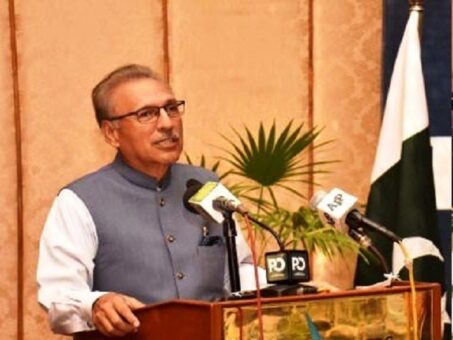
    Lahore: President Dr. Arif Alvi emphasized the imperative for Pakistan to bolster its tax collection mechanisms and elevate the tax-to-GDP ratio as a strategic approach to address persistent financial challenges.

    (more…)
  • Company registration rises to 180,996: SEC Pakistan

    Company registration rises to 180,996: SEC Pakistan

    ISLAMABAD: Securities and Exchange Commission of Pakistan (SECP) has said that total company registration has increased to 180,996 by end of October 2022.

    According to a statement the SECP registered 2,361 new companies in October 2022. “This shows an increase of 17 per cent as compared to corresponding period last month. The total number of registered companies now stands at 180,966,” the SECP added.

    READ MORE: SECP’s company registration goes up to 169,919 till May 2022

    Foreign investment has been reported in 77 new companies. These companies have foreign investors from Afghanistan, Austria, Australia, Bangladesh, China, Denmark, Iran, Italy, Jordan, Korea (South), Lebanon, Lithuania, Norway, Saudi Arabia, Singapore, Yemen, Tunisia, Turkey, the UAE, the UK and the US.

    Total capitalization (paid-up-capital) with regard to newly incorporated companies for the current month stood Rs3 billion.

    READ MORE: SECP, FBR integration brings 2,365 companies under tax net

    In October, about 60 per cent companies were registered as private limited companies, while 37 per cent were registered as single member companies. About three per cent were registered as public unlisted companies, not profit associations, foreign companies and limited liability partnership (LLP). Nearly 99.8 per cent companies were registered online.

    READ MORE: RDA: SECP exempts banks from obtaining license

    The real estate development and construction sector took the lead with incorporation of 432, information technology with 355, trading with 279, services with 234, food and beverages with 93, e-commerce with 92, tourism with 84, education with 83, corporate agricultural farming with 72, marketing and advertisement with 56, engineering with 45, power generation with 44 and 814 companies were registered in other sectors.

    READ MORE: SEC Pakistan amends regulations to facilitate startups

    As a result of integration of SECP with the Federal Board of Revenue (FBR) ad various provincial department, 1,969 companies were registered with the FBR for generation of National Tax Number (NTN), 81 companies with Employees Old-age Benefit Institution (EOBI), 47 companies with PESSI/SESSI ad 57 companies with excise and taxation department.