ISLAMABAD: A Joint Statement was issued after 6th session of Pakistan-Turkey High Level Strategic Cooperation Council (HLSCC) titled “Towards An Ever-Closer Strategic Partnership” co-chaired by Prime Minister Imran Khan and President Recep Tayyip Erdogan.
Reiterating their resolve to transform bilateral fraternal relationship into an ever-expanding, mutually beneficial strategic partnership, Pakistan and Turkey on Friday agreed to further strengthen their cooperation in the areas of trade, energy, defence, infrastructure, transport, communication, agriculture etc.
Following is the text of the Joint Statement:-
“Reaffirming the time-tested and unparalleled relations between the peoples and the governments of the two brotherly countries that are embedded in a common historical, religious and cultural heritage;
Recalling the historic bonds between the peoples of the two regions, manifested through the legendary support provided by the Muslims of South Asia to their Turkish brethren in early 20th century as well as the resolute support provided by Turkey to the people of Pakistan in the face of all challenges;
Emphasizing that the fraternal relations between Pakistan and Turkey are a sacred trust, that must be protected, nurtured and transmitted onwards to successive generations as common heritage;
Reiterating their resolve to transform this fraternal relationship into an ever-expanding, mutually beneficial, strategic partnership;
Underlining the importance and centrality of Turkey-Pakistan High-Level Strategic Cooperation Council (HLSCC) mechanism in expanding Turkey-Pakistan bilateral relations;
Welcoming the finalization of the landmark Pakistan-Turkey Declaration of Strategic Economic Framework (SEF) and Action Plan;
Reiterating their common resolve to fight the scourge of terrorism in all its forms and manifestations; underscoring the need for addressing the root causes of terrorism, including by resolving prolonged conflicts and ending situations of foreign occupation; reaffirming that terrorism cannot and should not be associated with any religion, nationality or civilization; and calling for extending the scope of the UNSC 1267 sanctions regime to individuals and entities currently outside its ambit.
Expressing deep concern at the rising tide of Islamophobia, and condemning in the strongest terms the recent terrorist and racist attacks against Muslims across the globe;
Recalling all the previous Joint Declarations signed between the two sides under the framework of Pakistan-Turkey High-Level Strategic Cooperation Council (HLSCC), and the decisions made therein;
Having endorsed the outcomes of the meetings of the respective Working Groups of the Pakistan-Turkey High-Level Strategic Cooperation Council (HLSCC) held on 13 February 2020 and expressing satisfaction at the progress achieved therein;
We, the Co-chairs of the 6th Meeting of the Pakistan-Turkey High-Level Strategic Cooperation Council (HLSCC), held in Islamabad, on 14 February 2020 have agreed as follows:
Political Cooperation
Bilateral institutional mechanisms:
The High-Level Strategic Cooperation Council (HLSCC) shall continue to be the main political forum that guides bilateral relations in all fields with an effective and expeditious follow-up on its decisions.
The two sides will review, update and amend, as appropriate, the agreements, protocols and MOUs signed under the umbrella of the HLSCC, in order to streamline their implementation.
The ongoing consultations between the Ministries of Foreign Affairs of the two countries shall be further intensified and their scope broadened to new areas.
Fight against terrorism:
Being victims of terrorism themselves, both countries will continue to cooperate in the fight against this scourge, including through the exchange of best practices and experiences in the area of law enforcement, legislation, capacity building and strengthening of the respective AML/CFT regimes.
The two sides reiterate their resolve to fight against the Fetullah Gulen Terrorist Organization (FETO). In this regard, Turkey notes with appreciation the measures taken by Pakistan against FETO in line with its domestic law, through inter alia designation of FETO as a terrorist organization, and handing over of all linked schools to the Turkish Maarif Foundation.
The two sides will continue to cooperate at all international forums, in particular at the United Nations and relevant inter-governmental organizations, to make international counter-terrorism and AML/CFT regimes more transparent, apolitical, non-discriminatory and objective, as well as to counter laws or administrative measures discriminating against and stigmatizing Muslims.
Islamophobia:
The two countries will work closely to combat Islamophobia, hate speech, efforts to link terrorism with Islam, and other manifestations of intolerance towards Muslims, including stereotyping of Muslims.
Joint initiatives will be taken to counter stereotyping and defamation of Islam and Muslims, including incitement to acts of violence, xenophobia, and related intolerance and discrimination against Islam, its religious symbols, and venerated personalities, by means of print, audio-visual & electronic media, the Internet, as well as entertainment media such as movies, videos and digital games.
The two countries note with appreciation the UN Secretary General’s Strategy and Action Plan on Hate Speech and call for convening a special session of the UN General Assembly on measures to combat Islamophobia;
Both sides also call for establishment of an observatory under the auspices of OHCHR (or any other relevant UN body/authority) to monitor acts of hate speech, Islamophobia, incitement to hatred and violence against Muslims;
The two countries call on the UN Human Rights Council to appoint a Special Rapporteur to monitor and combat Islamophobia.
Regional and international issues:
The unilateral actions by India on 5 August 2019, as well as the further deteriorating human rights and humanitarian situation in the region as a result of these actions, have further increased regional tensions, and, the situation must, therefore, be urgently addressed for regional as well as global peace and security.
The two sides underscored need for resolution of all outstanding disputes between Pakistan and India, including the core issue of Jammu & Kashmir through a sustained dialogue process and in accordance with the relevant UN Security Council resolutions. In this regard, Pakistan expresses its deep appreciation for Turkey’s principled stance on the issue as well as its offer for mediation.
Sustainable peace and stability in Afghanistan can only be achieved through an Afghan-led and Afghan-owned peace process. Turkey appreciates Pakistan’s support to the Afghan peace process. Pakistan supports Turkey’s efforts in achieving these objectives and welcomes the Istanbul Declaration adopted at the Heart of Asia Ministerial Conference, held on 11 December 2019.
The two countries reiterate full and resolute support for the efforts towards the comprehensive settlement of the Cyprus issue on the basis of the political equality of the two communities on the Island, and with a view to building peace and stability in the Eastern Mediterranean;
Both sides noted with concern the trend towards exceptionalism and sidelining of non-proliferation objectives. This trend is regarded as detrimental to the credibility of the global non-proliferation regime and, in this regard, also to the strategic stability in South Asia.
Turkey appreciates Pakistan’s strong commitment to non-proliferation and its adherence to the Nuclear Suppliers Group’s (NSG) Guidelines. Turkey recognizes that as a country with an extensive experience in this area, Pakistan’s membership of the NSG will contribute to the global non-proliferation objectives.
The United Nations Security Council needs to be made more representative, democratic, transparent, and accountable through comprehensive UN Security Council reform process, based on widest possible consensus. In addition, the need for the implementation of relevant UN Security Council resolutions to resolve the long-standing disputes on the agenda of the Security Council, especially those pertaining to the Muslim Ummah, is underlined;
Cooperation at the multi-lateral forums:
The two countries shall continue to cooperate and coordinate at regional and international forums, particularly the United Nations, the Organization of Islamic Cooperation (OIC), the Economic Cooperation Organization (ECO), and the D-8 Organization, etc. through, inter alia, mutual support for joint initiatives, policies and candidacies.
Other issues:
The two countries agree to work together bilaterally as well as at the global forums to address threats posed by the adverse effects of climate change; and explore avenues to enhance cooperation with regard to implementation of Sustainable Development Goals (SDGs).
The two countries shall continue to work closely to address irregular migration and agreed to further develop cooperation on irregular migration and to combat human trafficking and migrant smuggling. Turkey acknowledges and notes with appreciation the measures being taken by Pakistan towards implementation of the Agreement on the Readmission of Persons Residing without Authorization as well as facilitation with regard to provision of documents of irregular migrants exiting from Turkey.
Security and Defence Cooperation
The two sides agreed to: further intensify and expand cooperation in the defence and security spheres, including by sourcing their defence purchases from each other to the extent possible, and prioritizing joint research, development and production ventures.
Work for global disarmament, non-proliferation objectives, safeguarding and strengthening international as well as regional security and promoting strategic stability, including in each other’s respective regions.
Enhance cooperation between the law enforcement institutions, departments and agencies of both countries through, inter alia, training activities and sharing of best practices, information, experiences and expertise, etc.
Cooperate through relevant counter-terrorism institutions to develop methods and avenues of cooperation in keeping with the evolving nature of the threat, including in the areas of cyber-terrorism and cyber-crime.
Energy Cooperation
Both countries agreed to: Enhance cooperation in human capacity building, especially in the fields of human safety, management of the distribution systems and senior management training modules.
That the Turkish experience and expertise in human resource development and the expertise would be utilized to upgrade and improved Pakistan’s electricity sectors institutional framework, curriculum, and modules at different levels.
Cooperate in the capacity building of National Energy Efficiency and Conservation Authority (NEECA) Pakistan.
Enhance investment opportunities in the power transmission and distribution sectors of Pakistan.
Enhance cooperation in the field of hydrocarbons, especially in oil and gas exploration and production projects, supply and trade of LPG and petroleum products.
Creation of a joint monitoring group of the Ministries of Energy that would meet at least once a year to review the progress against the decisions made in this joint working group.
Trade and Investment
Both sides reviewed the existing bilateral trade and agreed to increase the level of economic engagement to mobilize the untapped potential for increasing trade and investment.
Both parties agreed to conclude the FTA with the broader purpose of increased economic and trade integration and as per the “Joint Declaration on Pakistan-Turkey Strategic Relationship for Peace and Prosperity” made during the 5th meeting of Pakistan – Turkey High Level Strategic Cooperation Council held on 22-24 February 2017 under which both sides agreed that the “Free Trade Agreement negotiations will be conducted taking into consideration the sensitivities of economies of both countries.”
In this regard, both sides have also agreed to conduct and finalize a Joint Scoping Study by end of March, 2020 which would identify potential sectors where opportunities are not being exploited at present. This Study would form the basis for future roadmap of Pakistan Turkey FTA negotiations.
In the light of above and the progress achieved in the Joint Scoping Study, both sides would consider reinitiating negotiations on Pakistan Turkey FTA in the second quarter of 2020.
Both sides agreed to encourage their businessmen to establish Joint Ventures in industrial sectors and cooperate in the field of e-commerce.
Banking & Finance
Both sides discussed the proposed credit line facility of USD 350 million for implementation of eligible projects in Pakistan. A draft MoU was shared by Pakistan with their counterparts from Turkey. The Turkish side agreed in principle to consider the proposal for extending credit facility of USD 350 million to Government of Pakistan on terms mutually agreed between the two sides. In this regard, both sides agreed to formulate the draft MoU through mutual consultations by the end of May 2020.
Both sides agreed to encourage their banking sectors to enhance cooperation in banking and finance for promotion of trade and investment between the two countries and facilitate each other for opening bank branches on reciprocal basis.
Both sides expressed their mutual desire to enhance bilateral cooperation between their Central Banks by initiating a dialogue with a view to finalize an MoU on Technical Cooperation and Renewal of the Currency Swap Agreement (CSA).
Both sides agreed to enhance technical cooperation in the following fields:
i. Establishment of a Communication Line Between Credit Guarantee Institutions of Both Countries for SME Promotion.
ii. Public Debt Management, Cash Management and Risk Management.
iii. Development of Housing and Housing Finance Industry in Pakistan
iv. Public Private Partnership Framework
In this regard, Pakistan shared draft MoUs/Protocols with Turkish side. The Turkish side agreed to respond within due course of time.
Both sides agreed on knowledge sharing and mutual technical assistance in the areas of Risk Based Approach for Supervision on anti-money laundering, misuse of payment system including new payment method, UNSC sanctions regime, money laundering and terrorist financing typologies.
Both sides agreed on cooperation for capacity building in the areas of Islamic Banking, Project Management, Taxation, Strategic Planning, Sectoral Planning & Development and other areas of mutual interest.
Pakistan appreciated the endeavors made by Turkish International Cooperation & Development Agency (TIKA) for implementing small grant projects in social sectors in Pakistan and assured them of continued cooperation.
Transport and Communications Cooperation
The two sides agreed to: Implement bilateral agreements in all the modes of transport i.e. Road, Rail, Sea and Air, as a step towards promoting bilateral trade and cooperation between the two countries.
Devise all required mechanisms for boosting activities in various fields of Communications & Transport Sector including Roads, Rail, Air, Sea, Postal and IT & Telecom to their full potential by utilizing all available options.
Enhance their commitment in the implementation of bilateral and multilateral Transport Agreements. Turkey appreciated and welcomed Pakistan’s Accession to International UN-TIR Convention 1975 and CMR Convention that has paved the way of harmonizing Pakistan’s procedures and standards with the globally accepted and recognized guaranteeing mechanisms.
Both sides decided to organize a pilot run of at-least 10 trucks on Islamabad-Tehran-Istanbul (ITI) Road Corridor by June 2020 in consultation with the Transport Associations of both sides under framework of already signed bilateral Road Transport Agreement. This will further boost the bilateral cooperation and trade activities between the two countries.
Consider participation in potential projects of highways and motorways of Pakistan by Turkish companies on BOT/Public Private Partnership basis.
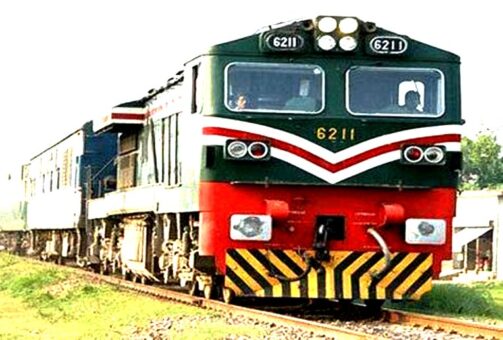
Both sides agreed to explore the possibilities of joint cooperation in railway sector mainly in the areas of business planning, management, railway operations, railway infrastructure, IT & Technology in railways, capacity building etc., in addition to manufacturing, rehabilitation, maintenance and repair of locomotives, freight wagons and passenger coaches in the framework of MoU which has been signed at High level Strategic Cooperation Council. This has also been reflected in the Strategic Economic Framework.
Both sides affirmed to proactively engage in promoting joint cooperation in railways.
The Turkish side agreed to explore the possibility of Pakistan’s proposal for the renewal of MoU between Pakistan Railways & Union of Chamber of Commerce and Commodity Exchange (TOBB) through its logistic company BALO.
The two sides recognized the significance of ITI train for integration of the region with Europe and beyond. The two sides agreed to take measures necessary for resumption of ITI train operations at the earliest.
Pakistani side also encourages Turkish companies to participate in the biding process of potential railways projects funded through own resources and BOT/PPP basis.
Collaborate in the field of (a) international and local remittance and IT innovative services between Turkey and Pakistan, (b) Express and Logistic Services and E-commerce through Postal Network to enhance cooperation in ICT based postal services between the two countries.
Cooperate and exchange of experiences and collaboration in Maritime Education & Trainings, Maritime Trade and Port Management. The geographical location of the Izmir Port of Turkey and Karachi Port need to be utilized to harmonize each other’s capabilities for an effective trade and cargo handling.
Both sides may finalize the Annex-I of the MoU signed in 2015 with a view to further deepen the bilateral ties in the field of aviation. It was further agreed to discuss the traffic rights and frequencies between the two brotherly nations during a forthcoming meeting in Turkey at the invitation of Turkish side as per mutually agreed schedule.
Culture and Tourism Cooperation
Both sides agreed to: Organizing the 4th meeting of Turkey-Pakistan Joint Commission on Tourism.
Promoting the regular exchange of media delegation.
Cooperation in the area of Information, Culture, Tourism, Film and drama to further strengthen people to people interaction and brotherly relations with the two countries.
Initiate Joint-ventures in film production and release of feature films in each other market on reciprocal basis.
Enhance cooperation between TRT and PTVC/PBC in order to exchange programs, information and expertise on a reciprocal basis.
Cooperation on restoration of cultural heritage.
Encouraging joint initiatives for the development, planning and standardization of tourism attractions in Pakistan.
Providing technical information and support on promotion and marketing in the field of tourism.
Exchange of culture groups and tourist festivals within the framework of reciprocity.
Exchange expertise in the fields of archaeology as well as conservation and restoration of archaeological and historical sites as well as museums.
Education Cooperation
Both sides agreed on the following by taking into account the applicable legislation of both countries within the bounds of financial and personnel resources:
Promoting exchanges between universities, technical and vocational institutes and other academic institutes and in this regard continue collaboration on higher education scholarships.
Promoting the relationship between the Technical and Vocational Training Institutes Schools of Turkey and Pakistan through International Sister Schools practice.
Sharing of curricula and qualification standards to assist Pakistan in standardization and modernization of its TVET sector.
Exploring possibilities of training Pakistani TVET teachers in Turkey and in Pakistan to ensure Pakistani TVET teachers acquire modern skills and help them improve the quality standards.
TIKA will be preparing to establish Centre of Excellence of Hospitality and Tourism management in Islamabad in collaboration with NAVTTC
Cooperate in the field of curriculum development.
Both sides agreed to finalize the ongoing negotiations on Memorandum of Understanding between Ministry of Federal education and Professional Training and Turkish Maarif Foundation in the second quarter of 2020.
Both sides agreed to start negotiations in the second quarter of 2020 and finalize as soon as possible the Cooperation Agreement in the field of Education between the Government of the Republic of Turkey and the Government of the Islamic Republic of Pakistan. The date and place of negotiation will be mutually decided through diplomatic channels.
Follow-Up
The two leaders decided to establish two more Joint Working Groups on:
i. Defence Industry
ii. Agriculture and Water
The Joint Working Groups of the High-Level Strategic Cooperation Council shall continue their work to develop specific programmes and projects.
In this regard, the Joint Working Groups, will meet before the meetings of the High-Level Strategic Cooperation Council at least two times in Ankara, in Islamabad, or through video conference.
The next meeting of the High-Level Strategic Cooperation Council shall be held in Ankara. The dates shall be agreed upon through diplomatic channels.
Done in Islamabad on 14 February 2020 in English and Turkish languages, both texts being equally authentic.”