KARACHI: Meezan Bank has signed a partnership with Retailo, the fastest-growing B2B startup in the MENAP region.
The partnership is aimed at providing deserving retailers Kamyab Jawan financing in a Shariah-compliant manner to expand and support their small businesses.
The MoU was signed by Group Head Consumer Finance Meezan Bank, Arshad Majeed, and Wahaj Ahmed, Retailo’s co-founder along with their teams.
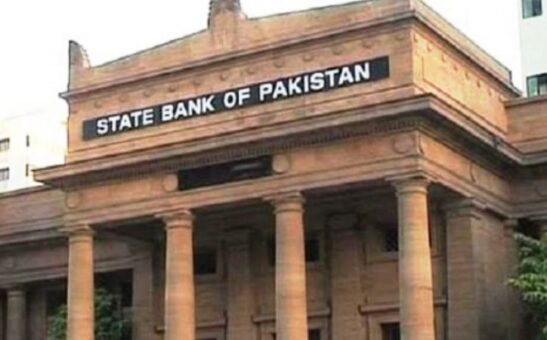
This financing is sourced from Prime Minister Mr. Imran Khan’s ‘Kamyab Jawan – Youth Entrepreneurship Scheme (YES)’ which is targeting young entrepreneurs and existing businesses. It will provide subsidized financing through 21 Commercial, Islamic, and SME banks under the guidance and supervision of the State Bank of Pakistan.
Through this scheme, the Government of Pakistan aims to increase the contribution of aspiring entrepreneurs to the economy and remove obstacles from their path of progress by providing financial backing.
This partnership between Meezan and Retailo will provide much-needed Shariah-compliant financial support to empower small business enterprises and unlock their full earning potential.
As Retailo expands its operations, it is looking for more opportunities to help retailers achieve their full potential. Regarding the partnership with Meezan Bank, Retailo’s co-founder Mr. Wahaj Ahmed said, “The retail sector has vast potential to improve Pakistan’s economy. Through Retailo’s high-powered app and simplified supply chains, we are aiming to play a key role in national progress. By partnering with Meezan Bank to provide retailers with the much-needed support, we wish to make a difference in their lives on a more personal level.”
Commenting on the occasion, Arshad Majeed, Meezan Bank’s Group Head Consumer Finance said, “Meezan Bank is always ready to fulfill its role as the bank of choice and create real value for our customers. Providing growth capital to the retail sector and SMEs will create an equitable economic system and elevate livelihoods for a sector that has tremendous untapped potential.”
ISLAMABAD: The ministry of finance on Thursday said that Pakistan’s debt-to-GDP ratio has increased by 1.7 per cent during the pandemic as against an increase in global average of 13 per cent.
Responding to some media reports regarding the increase in public debt during the last three years, the statement said that a better way to measure the level of debt was through the Debt-to-GDP ratio instead of looking at the absolute values of debt.
“Global Debt-to-GDP ratio increased by 13 percentage points, whereas, Pakistan’s Debt-to-GDP ratio witnessed a minimal increase of 1.7 percentage points in 2019-20,” it said adding that the country’s Debt-to-GDP ratio in fact reduced by 4 percentage points indicating lower debt burden at end June 2021 as compared with last fiscal year.
The ministry said that the increase in debt during the last three years occurred mainly during the Fiscal year 2018-19 due to implementing difficult and unavoidable policy choices.
Had the market-based exchange rate, a sustainable level of Current Account Deficit, adequate cash buffers and long-term domestic borrowing profile been maintained, the debt burden would have been reduced further on the back of fiscal consolidation efforts supported by aggressive control on expenses and growth in tax and non-tax revenues.
As most of the major adjustments to fiscal and monetary policies have been made, the debt burden is projected to decline firmly over the next few years.
The statement while referring to media reports said that these reports ignored the underlying reasons behind such increase adding that in order to fully understand the underlying economic realities, there was a need to analyze the sources of increase in total public debt during last three years. The underlining reasons are:
Interest Expenses: Preference towards short-term domestic borrowing in absence of adequate cash buffers resulted in short-term profile of domestic debt at the end of FY2018.
This short-term profile led to high-interest cost on debt as interest rates had to be increased significantly to curb rising inflationary pressures. The government paid Rs 7.5 trillion against interest servicing which explained 50 percent of the increase in total public debt.
Currency Devaluation Impact: The exchange value of the Rupee was maintained at an artificially high level in the past which triggered the balance of payment crisis.
Transition to a market-based exchange rate regime, being an unavoidable policy choice, resulted in sharp exchange rate depreciation leading to high inflation, high interest rates, slower GDP growth, and lower import-related tax revenues.
This exchange rate depreciation added around Rs 2.9 trillion (20 percent of the increase) in public debt. It is important to highlight here that this increase was not due to borrowing but due to the re-valuation of external debt in terms of rupees after currency devaluation.
Financing of Primary Deficit: The impact of economic slowdown due to the Covid-19 pandemic mainly resulted in higher than estimated primary deficits. Rs 3.5 trillion (23 percent of the increase) was borrowed for the financing of the primary deficit.
Cash Management & Others: Rs 1.0 trillion (7 percent of the increase) was on account of increased cash balances of the government to meet emergency requirements as well as due to difference between the face value (which is used for the recording of debt) and the realized value (which is recorded as a budgetary receipt) of government bonds issued during this period. The government took the revolutionary and economically sound step of not borrowing from the SBP and maintaining a cash buffer, which led to a one-off increase in debt. However, this increase in debt was offset by corresponding increase in the Government’s liquid cash balances.
KARACHI: InfraZamin Pakistan Limited (InfraZamin) and ITMinds Limited (ITMinds), a wholly-owned subsidiary of Central Depository Company of Pakistan Limited (CDCPL), have signed an agreement enabling ITMinds to provide Back Office Accounting Services to InfraZamin.
The agreement was signed by Ms. Maheen Rahman CEO-InfraZamin, and Iqleem-uz-Zaman Khan CEO-ITMinds in the presence of Badiuddin Akber Director-ITMinds and CEO-CDCPL, Waqas Ashraf CFO- ITMinds, Khusro Iqbal Mumtaz Chief Risk Officer-InfraZamin and other management team members from both sides.
InfraZamin is licensed to act as an investment finance company and is an initiative by the Private Infrastructure Development Group (PIDG), including PIDG group companies InfraCo Asia Investments (InfraCo Asia) and GuarantCo Limited (GuarantCo), in partnership with non-profit Karandaaz Pakistan (Karandaaz) to establish a for-profit, credit enhancement facility for raising infrastructure-related debt in Pakistan.
Commenting on the occasion, Ms. Maheen Rahman CEO InfraZamin, said that we look forward to working with IT Minds under this arrangement which will enable the InfraZamin team to focus on our core business function of credit guarantees.
Also commenting on the occasion, Badiuddin Akber, Director ITMinds & CEO-CDCPL, said that considering this is an era of specialization, we have commissioned ITMinds with an aim to enable asset management companies, investment finance companies, and other organizations to outsource their back-office functions to a competent and reliable BPO partner, thus relieving them to focus on their core businesses for their commercial success while achieving efficiency, scalability & transparency of processes.
120. Assessments.—(1) Where a taxpayer has furnished a complete return of income (other than a revised return under sub-section (6) of section 114) for a tax year ending on or after the 1st day of July, 2002,—
(a) the Commissioner shall be taken to have made an assessment of taxable income for that tax year, and the tax due thereon; and
(b) the return shall be taken for all purposes of this Ordinance to be an assessment order issued to the taxpayer by the Commissioner on the day the return was furnished:
Provided that until the date specified under the fourth proviso to sub-section (2A) is notified, this subsection shall be in force as if sub-section (2A) is not in operation:
Provided further that once the date under the fourth proviso to sub-section (2A) is notified, clauses (a) and (b) shall only apply when the provisions of sub-section (2A), if invoked, are first complied with:
Provided further once compliance is made under the second proviso,—
(i) the adjusted amount under sub-section (2A) shall be construed to be the tax payable and due under clause (a); and
(ii) the date of the compliance under sub-section (2A) shall be the date for the purposes of clause (b).
(1A) Notwithstanding the provisions of sub-section (1), the Commissioner may conduct audit of the income tax affairs of a person under section 177 and all the provisions of that section shall apply accordingly.
(2) A return of income shall be taken to be complete if it is in accordance with the provisions of sub-section (2) of section 114.
(2A) A return of income furnished under sub-section (2) of section 114 shall be processed through automated system to arrive at correct amounts of total income, taxable income and tax payable by making adjustments for-
(i) any arithmetical error in the return;
(ii) any incorrect claim, if such incorrect claim is apparent from any information in the return;
(iii) disallowance of any loss, deductible allowance or tax credit under Parts VIII, IX and X respectively of Chapter III; and
(iv) disallowance of carry forward of any loss under clause (b) of sub-section (I)of section 182A:
Provided that no such adjustments shall be made unless a system generated notice is given to the taxpayer specifying the adjustments intended to be made:
Provided further that the response received from the taxpayer, if any, shall be considered before making any adjustment, and in a case where no response is received within thirty days of the issue of such notice, adjustments shall be made.
Provided also that where no such adjustments have been made within six month of filing of return, the amounts specified in the return as declared by the taxpayer shall be deemed to have been taken as adjusted amounts on the day the return was filed and the taxpayer shall be intimated automatically through Iris:
Provided also that the provisions of this sub-section shall apply from the date notified by the Federal Board of Revenue in the official Gazette.
(3) Where the return of income furnished is not complete, the Commissioner shall issue a notice to the taxpayer informing him of the deficiencies (other than incorrect amount of tax payable on taxable income, as specified in the return, or short payment of tax payable) and directing him to provide such information, particulars, statement or documents by such date specified in the notice.
(4) Where a taxpayer fails to fully comply, by the due date, with the requirements of the notice under sub-section (3), the return furnished shall be treated as an invalid return as if it had not been furnished.
(5) Where, in response to a notice under sub-section (3), the taxpayer has, by the due date, fully complied with the requirements of the notice, the return furnished shall be treated to be complete on the day it was furnished and the provisions of sub-section (1) shall apply accordingly.
(6) No notice under sub-section (3) shall be issued after the expiry of one hundred and eighty days from the end of the financial year in which return was furnished, and the provisions of sub-section (1) shall apply accordingly.
For the purposes of this section,-
(a) “arithmetical error” includes any wrong or incorrect calculation of tax payable including any minimum or final tax payable.
(b) “an incorrect claim apparent from any information in the return” shall mean a claim, on the basis of an entry, in the return,-
(i) of an item, which is inconsistent with another entry of the same or some other item in such return;
(ii) regarding any tax payment which is not verified from the collection system; or
(iii) in respect of a deduction, where such deduction exceeds specified statutory limit which may have been expressed as monetary amount or percentage or ratio or fraction.
(Disclaimer: The text of the above section is only for information. Team PkRevenue.com makes all efforts to provide the correct version of the text. However, the team PkRevenue.com is not responsible for any error or omission.)
may apply, in writing, to the Commissioner for an extension of time to furnish the return, or statement, as the case may be.
(2) An application under sub-section (1) shall be made by the due date for furnishing the return of income, or statement to which the application relates.
(3) Where an application has been made under sub-section (1) and the Commissioner is satisfied that the applicant is unable to furnish the return of income, or statement to which the application relates by the due date because of —
(a) absence from Pakistan;
(b) sickness or other misadventure; or
(c) any other reasonable cause,
the Commissioner may, by order, in writing, grant the applicant an extension of time for furnishing the return, or statement, as the case may be.
(4) An extension of time under sub-section (3) should not exceed fifteen days from the due date for furnishing the return of income, employer’s certificate, or statement, as the case may be, unless there are exceptional circumstances justifying a longer extension of time:
Provided that where the Commissioner has not granted extension for furnishing return under sub-section (3) or sub-section (4), the Chief Commissioner may on an application made by the taxpayer for extension or further extension, as the case may be, grant extension or further extension for a period not exceeding fifteen days unless there are exceptional circumstances justifying a longer extension of time.
(6) An extension of time granted under sub-section (3) shall not, for the purpose of charge of default surcharge under sub-section (1) of section 205, change the due date for payment of income tax under section 137.
(Disclaimer: The text of the above section is only for information. Team PkRevenue.com makes all efforts to provide the correct version of the text. However, the team PkRevenue.com is not responsible for any error or omission.)
The vacant posts in BS 01 to 15 in the field formations of Inland Revenue have been advertised in the national press on August 29, 2021.
The candidates have been advised to submit their applications directly to the concerned IR field offices by September 20, 2021.
The recruitment process has to be finalized by the field formations by December 15, 2021, as per instructions of the Establishment Division.
In order to ensure transparency and merit-based selection/recruitment, the following guidelines have been prepared in the light of relevant rules and latest instructions of the Federal Government, to have uniformity in the recruitment process, which are for the guidance of the field formations.
These guidelines are of supplemental nature, do not over-ride the relevant rules/regulations and instructions of the Government on the subject:
The advertisement for recruitment shall be affixed on the Notice Board of each field office.
The recruitment process must be transparent, merit-based, and must be strictly completed in accordance with the relevant rules/procedures/instructions issued from time to time by the Government of Pakistan.
The concerned field formations will conduct requisite tests for the posts where warranted under the service rules. No testing agency can be engaged for the recruitment process in the right of latest instruction of the Federal Government conveyed vide Establishment Division 0.M No. 53/1/2008-SP dated 06.05.2020.
It may be noted that the Federal Government has withdrawn its O.M. dated 29.07.2019 regarding conducting balloting for the post in BPS 1-5 vide SRO 198(1)/2020 dated 11.03.2020, so there will be no balloting for recruitment against any posts in any grade.
The heads of field formation shall designate an officer of their formation to act as the focal person to assist the relevant Departmental Selection Committees (DSCs) in the selection/recruitment process against posts falling under their jurisdiction (Copy of order shall be endorsed to the Board).
The focal person shall be the secretariat and custodian of the entire record of recruitment.
The focal person shall communicate in writing to the DSCs the exact number of vacancies, so that selection could be made only according to the number of vacancies available in the budget and advertised.
However, the number of vacancies must not increase as advertised, without the approval of the Board and Establishment Division. The DSC shall judge the applicants on the basis of guidelines as laid down by the Establishment Division’s 0.M.No.F.53/1/2008-SP dated 3rd March 2015.
The DSC shall consider the employees already working on a contract/contingent basis / daily wages/project staff in the light of Establishment Division’s 0.M.No.F.53/1/2008-SP dated 11th May 2017.
Quota reserved for women, minorities, and disabled persons must be observed, as per the Government’s instructions/policy.
Vacancies for BS-01 to BS- 05 shall be filled on a local basis in terms of Rule, 16 whereas vacancies for BS 06 to 15 shall be filled by appointment of persons domiciled in the province or region concerned strictly under Rule 15 of the Civil Servants (Appointment, Promotion & Transfer) Rules, 1973 read with Establishment Division 0.M No. 4/3/2019-R-II dated 21.08.2019.
Those contract employees (65-01 to 15) who were appointed under the Prime Minister’s Assistance Package for the families of Government employees, who died in service and are still working in the field formations, may also be considered by the DSCs for regular appointment through the selection process, subject to the condition that they have duly applied and fulfilled the criteria of recruitment.
The Departmental Selection Committee shall oversee the recruitment process including skill test / physical test. DSCs may engage the local Traffic office for the post of Dispatch Rider to conduct the Driving test.
The process of interview (where required) shall be initiated by the DSCs immediately on receipt of the list of short-listed candidates. The top five (05) candidates (in order of merit) against each vacancy would be shortlisted and called for an interview. The call letters for the interview may be issued at least 15 days in advance of the date of the interview and must be issued through the Registered post to ensure timely delivery to candidates. The call letter shall also be emailed to candidates at the address provided on the application form and the delivery report shall be made part of the recruitment record.
The DSCs shall prepare proper minutes of their recommendations for selection, duly signed by all members, including the Chairman of the respective Committee. The Committees shall recommend and select suitable candidates, in order of merit, as Principal Candidate(s) according to the number of available vacancies and also recommend alternate candidates up to 50 percent of the vacant posts to be kept on the separate waiting list for a period of six months, so that in case of non-joining of any principal candidate, the alternate candidate could be offered the post.
It may be noted that the waiting list will not be valid for an indefinite period; rather it will be valid only for the current selection process and shall be considered invalid when all the vacancies currently advertised are filled.
The concerned field formation will prepare the lists/particulars of the qualified candidates with scores awarded for the skill test and submit the lists to the concerned departmental Selection Committees (DSCs) specifically constituted in each field formation for the purpose of recruitment.
6 Weeks Basic IT Training for the post of Assistant (BS-15) and 3 weeks training for the post of UDC (BS-11)/LDC (65-09) respectively, from NITB, is mandatory, therefore this term & condition must be mentioned in the offer letter of the selected candidates.
In case applications received within due date, due to misunderstanding of the candidates regarding jurisdiction of an office, not relating to the concerned field office, the same may be sent to concerned field formations immediately and its proper acknowledgment receipt must be obtained and placed on record under intimation to the candidates accordingly.
After compilation of recommendations for selection and signing of minutes of the meetings, the Chairman of the DSCs shall forward the signed minutes to the respective Appointing Authority for approval. The result shall be displayed on the Notice Board of the respective office and shall be submitted to the Board for placement on FBR’s website. The selected candidates shall be issued an offer of appointment by the concerned office in the prescribed format. The appointment letters must be issued through the Registered post to ensure timely delivery.
The number of existing vacant posts in the respective field formation must be re-confirmed from Budget Book prior to issuance of offer of appointment.
The respective Appointing authorities through their designated focal persons will be personally responsible for any lapse i.e recruitment made in excess of the actual number of vacant posts in the respective formation or any procedural lapse/irregularity and record will be saved/preserved for Audit and Accountability by the Focal Person.
Domiciles of candidates shall be verified in the light of the Establishment Division’s letter No. 5/7/2009/PPRAC-Vol.X11 dated 31.03.2021 and No. 5/1/2021-(R) dated 06.04.2021.
A list of finally selected candidates against the vacant posts may invariably be forwarded to the Board for information and record by each office upon completion of the recruitment process.
The maximum age limit for the post of Dispatch Rider (BS-04) as per the advertisement available on FBR’s website is (30+5=35) years.
No candidate shall be appointed without verification of character/antecedent and Medical Fitness Certificate by the Authorized Medical Board.