Category: Automotive

PkRevenue provides stories related to automotive industry. We focus on auto policy of Pakistan. The coverage also includes sales of domestic manufacturing.

  • Ford reveals Mustang GT race car

    Ford reveals Mustang GT race car

    BATHURST: Ford Motor Company revealed its first race prepared seventh generation Mustang, along with the 2023 Mustang GT ‘Gen 3’ Supercar at the Mount Panorama.

    The road-going variants of the seventh-generation Mustang were revealed in Detroit last month, with computer-generated images of the race cars shown at the same time.

    Ford’s challenger for the 2023 Australian Supercars Championship was shown in pit lane this afternoon, in a global first appearance of the seventh-generation Mustang in racing guise.

    The Gen3 Mustang GT Supercar more closely resembles its road-going counterpart, with production-based Coyote V8 engine, low roofline and long hood that makes Mustang the world’s favourite sports car.

    Mark Rushbrook, Global Director, Ford Performance Motorsports said, “It is fantastic to be able to show, for the very first time globally, the seventh-generation Mustang in racing form.”

    He added that, “The reveal of the Mustang Supercar is the first of many, with Mustang to race in GT3, GT4, NASCAR and NHRA competition globally.

    He also said, “Mustang has been an iconic brand on and off the track for 58 years and its legend will continue around the world. We always say Mustang was born to race, and that is more true today than ever. The Mustang GT Supercar is ready to race in 2023.”

    The Mustang Supercar has been built by Ford’s homologation team Dick Johnson Racing, in conjunction with Ford Performance, in preparation for the 2023 season when a new era of Supercars racing begins.

    “We’re very proud to be showing the world our new Mustang Supercar, and what better place to do it than at the Great Race here at Mount Panorama,” said Andrew Birkic, president and CEO, Ford Australia and New Zealand.

    He also said that, “It’s a special moment to be able to uncover this car in front of passionate Ford fans, alongside all of our Supercars drivers. It’s very fitting that Dick will take the car for its first laps this afternoon. He’s a legend of the sport, and an incredible ambassador for Ford.

  • Hyundai IONIQ 6 travels 614 km per charge

    Hyundai IONIQ 6 travels 614 km per charge

    SEOUL: Hyundai Motor Company declared that IONIQ 6 can travel 614 km (about 382 miles) in one time charge, according to the Worldwide Harmonized Light Vehicle Test Procedure (WLTP).

    The press release issued by Hyundai Motors stated that IONIQ 6’s superb all-electric range performance is made possible in large part by Hyundai Motor Group’s dedicated architecture for EVs, Electric Global Modular Platform (E-GMP), and the electrified streamliner’s ultra-low wind resistance.

    E-GMP delivers optimal electric performance and provides 800V ultra-fast charging from 10 to 80 percent in just 18 minutes and supports 400V charging without the need for additional components or adapters.  

    IONIQ 6 customers will benefit from Hyundai Motor Group’s commitment to develop advanced battery technology that enables stress-free driving performance and long range.

    With WLTP-rated energy consumption of 13.9 kWh/100 km, IONIQ 6 will be one of the most energy-efficient electric vehicles (EV) on the market when it goes on sale later this year in select markets in Europe and next year in North America. 

    “From the start of IONIQ 6’s development, we set our sights on making it the leading all-electric range EV,” said Jae Ho Huh, Head of Sub-Mid Project Management Center at Hyundai Motor Company.

    He also added that, “To become the global leader in electric vehicles, we are committed to providing the best possible EV performance and ownership experience.” 

    Having a platform specifically for EVs also means Hyundai Motor is better able to design vehicles to best meet passengers’ needs. With E-GMP, IONIQ 6 can be a workstation or a portable power bank on wheels, creating new usage scenarios to fit customers’ diverse, on-the-go lifestyles. 

    Hyundai Motor maximized IONIQ 6’s all-electric driving range through extensive aerodynamic design and engineering work. The vehicle’s drag coefficient of 0.21 is the lowest in the company’s vehicle lineup and one of the lowest in the industry.

    The model’s streamlined appearance and various design elements, such as an active air flap, wheel air curtains, integrated rear spoiler and wheel gap reducers, significantly enhanced IONIQ 6’s aerodynamics performance, placing it among the sleekest vehicles worldwide.

    In particular, wheel gap reducers minimize the empty space between the front bumper and tires to improve aerodynamic performance around the wheel wells.

    This Hyundai invention made it possible for the electrified streamliner to provide a longer wheelbase for passengers’ riding comfort while simultaneously overcoming the aerodynamics challenges caused by its short front overhang.

    “We put every effort into designing the most efficient car in the EV segment,” said Byung Hoon Min, Head of Total Vehicle Performance Development Center at Hyundai Motor Company.

     He also added that, “Our focus on improving aerodynamics helped to achieve one of the longest all-electric range vehicles available, which will reduce customers’ EV range anxiety and help grow the segment.”

  • Suzuki launches luxury scooter Burgman Street 125EX

    Suzuki launches luxury scooter Burgman Street 125EX

    JAPAN: Suzuki Motor Corporation launched the luxury scooter BURGMAN STREET 125EX, along with the Address 125 and the Avenis 125. The scooters were revealed in the world premier held at the INTERMOT Cologne International Motorcycle and Scooter Fair held in Cologne, Germany.

    The press release issued by Suzuki Motor Corporation stated that the three compact scooters are suited for everyday usage such as commuting to work or school. Sales of the three models in Europe will start from spring of 2023.

    The new BURGMAN STREET 125EX is a premium compact scooter for riders looking for a well-equipped scooter that can be ridden every day. The bike has a luxurious body design with refined details, and the front and rear light systems feature LED lights for better visibility.

    READ MORE: PSMC offers free WagonR registration amid sales slump

    It is the first Suzuki motorcycle to adopt the Suzuki Eco Performance Alpha (SEP-α) engine, which advances the technologies inherited from the powerful yet eco-friendly SEP engine, by adding the Engine Auto Stop-Start (EASS) system, which shuts off the engine automatically when stopping, and the Silent Starter System, which quietly starts the engine.

    The scooter also has features which improve daily convenience and comfort, such as a full-LCD instrument panel, footboards to extend the feet when cruising, and cut-away design at the rear of the floorboards to make it easier to get on and off the scooter.

    In addition, a range of genuine accessories are available, like a 27L large capacity top case, and grip heaters to keep your hands warm in cold climates.

    The new Address 125, sold in India from December 2019 as the Access 125, is the top selling model in the Indian domestic market. The body has a classic and urban styling, with LED headlights and position lights for better visibility.

    READ MORE: Suzuki Motor announces further plant shutdown in Pakistan

    The scooter realizes a relaxed riding position by adopting a flat and spacious floorboard and wide, comfortable seats. It also features theft deterrent key system, as well as utility features such as underseat storage, left front inner pocket, and USB outlet.

    The new Avenis 125 is a sporty scooter sold in India from January 2022. With a flowing, dynamic styling, the scooter features body-mounted LED headlights, dual LED rear combination lights, a rear brake lock which locks the rear wheels when stopped, and a full-LCD instrument panel.

    The lightweight chassis and SEP engine realize a nimble handling performance. The unique sporty two-tone seat with red stitching provides both good grip and easier footing.

    It also has the same utility features as the new Address 125, such as theft deterrent key system and USB outlet, as well as a covered front left compartment.

    READ MORE: Suzuki Pakistan launches new Alto VXR

  • Nissan Z GT4 unveiled; to be available from 2023

    Nissan Z GT4 unveiled; to be available from 2023

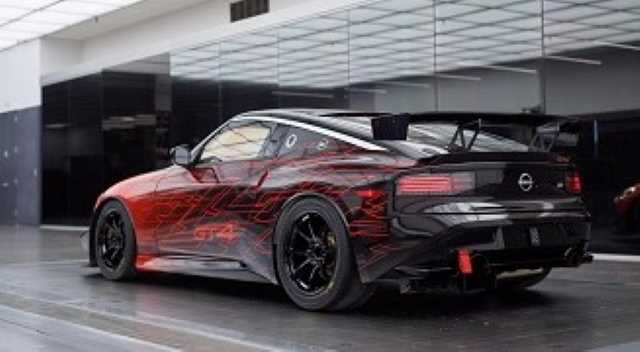
    YOKOHAMA, Japan: Nissan Motor Co., Ltd. and Nissan Motorsports and Customization Co., Ltd. (NMC) revealed the Nissan Z GT4, based on the new Nissan Z. The vehicle will be available for the deliveries in 2023.

    The press release issued my Nissan Motors stated that, GT4-spec racing machines are based on production vehicles, modified for severe competition use. To that end, NMC’s NISMO Racing Division took the street version of the new Z – which is receiving acclaim around the world – and tuned the VR30DDTT engine, optimized its chassis and suspension, enhanced its aerodynamics to the limit of regulations and created a cockpit that works for drivers of all types.

    READ MORE: Ferrari launches its first ever four-door car

    This created a race car that is a Nissan Z in all aspects – accessible to enthusiast drivers and hard-core professionals.

    “Motorsports for Nissan is an expression of our passion and unrivaled expertise. The Nissan Z continues to maintain its position as an exciting sports car that fascinates drivers with its driving dynamics and flexible powertrain,” said Nissan COO Ashwani Gupta.

    He also added that, “We are confident that this track-ready GT4-category Nissan Z will be ready to write another chapter in the Nissan Z’s 50-plus-year legacy of speed.”

    READ MORE: Ford unveils seventh generation of Mustang

    The Nissan Z GT4 was developed at NISMO’s engineering facilities, at multiple track-test sessions and also as a test-entry vehicle which participated in the Fuji 24 Hour Race in June, as well as additional Super Taikyu Series events at Motegi and more.

    Detailed vehicle specifications will be announced at the 2022 SEMA show in the United States, November 1 – 4. Vehicles deliveries will begin in the first half of 2023.

  • Honda suspends car production in Pakistan

    Honda suspends car production in Pakistan

    KARACHI: Honda Atlas Cars (Pakistan) Limited on Monday announced to suspend production due to prevailing economic conditions in the country.

    In a communication received by Pakistan Stock Exchange (PSX), the car manufacturer stated that considering the current economic situation of the country, the government had restored to stringent measures including minimizing the import of Completely Knocked Down (CKD) kits and raw materials, the company’s supply chain had also been disrupted by such measures.

    READ MORE: Indus Motors to increase car prices to pass cost impact

    “As a result, the company has also to rationalize its production and ultimately to shut down its plant from October 04, 2022 to October 11, 2022,” the company added.

    Prior to this, other car manufacturers have also stop production due to same reasons.

    Honda Atlas Cars (Pakistan) Limited is a joint venture between Honda Motor, Japan, and the Atlas Group, Pakistan.

    READ MORE: PSMC offers free WagonR registration amid sales slump

    The Company was incorporated on November 04, 1992 and listed on Pakistan Stock Exchange Limited.

    The joint venture agreement was signed on August 05, 1993. The groundbreaking ceremony was held on April 17, 1993, and within a record time of 11 months, the construction and erection of machinery were completed.

    The first car rolled off the assembly line on May 26, 1994. The official inauguration was honored by the then President of Pakistan, Late Sardar Farooq Ahmad Khan Leghari.

    Nobuhiko Kawamoto, President of Honda Motor, Japan, and the late Yusuf H. Shirazi; Founder of Atlas Group were also present to grace the occasion.

    READ MORE: Toyota stops car production in Russia

    The Company enlisted on then Karachi & Lahore Stock Exchanges (now Pakistan Stock Exchanges) and Initial Public Offer (IPO) was made in November 1994.

    On July 14, 1994, car booking started at six dealerships in Karachi, Lahore, and Islamabad.

    Since then, the dealership network has expanded and now the Company has 37 3S (Sales, Service, and Spare Parts), 17 2S (Service and Spare Parts), and 5 1S (Spare Parts) authorized dealerships in Pakistan.

    All dealerships are constructed in accordance with the standards defined by Honda the world over.

    The Company started production in 1994, with the launch of the 5th generation of the Honda Civic in Pakistan.

    READ MORE: Ferrari launches its first ever four-door car

    Later on, the Company enriched the product line with the launch of Honda City in 1997 and Honda BR-V in 2017. The Company consistently increased production with the progress of the car market and to meet the growing customer demand.

    A major plant expansion was done in 2006 and the production capacity was increased to 50,000 units/ year.

  • Indus Motors to increase car prices to pass cost impact

    Indus Motors to increase car prices to pass cost impact

    KARACHI: Indus Motors, the maker of Toyota cars in Pakistan, is likely to increase prices to pass on the cost impact to consumers.

    The company management said in corporate briefing session on Tuesday.

    READ MORE: PSMC offers free WagonR registration amid sales slump

    Regarding car prices, management informed that company has to increase price to pass cost impact to consumers as current car prices are not sustainable at exchange rate of over Rs230. They highlighted, current car prices are set at dollar rate of around Rs210-215, according to analysts at Topline Securities.

    The company conducted the briefing to discuss its FY22 financial results and company outlook.

    Company expect at-least 40 per cent decline in volumetric sales in FY23 amid higher car prices, hike in interest rates, strict auto financing rules, recent floods and restriction on Completely CKD imports.

    READ MORE: Toyota stops car production in Russia

    To note, INDU is currently running at production capacity of around 40 per cent-45 per cent, the analysts added.

    To note, at the current production level i.e. 40-45 per cent, INDU’s order book is filled for next 4 months. 

    Pakistan car sales increased by 51 per cent YoY to 379,350 units in FY22 out of which INDU car sales clocked in at 75,611 units, up 31 per cent YoY. Used car imports clocked in at 28,122 units in FY22, up from 21,239 units in FY21.

    READ MORE: Ferrari launches its first ever four-door car

    Management stated that higher FED and Sales Tax from Jan-2022 along with 1 per cent CVT on 1300cc+ from Jul-2022 and increase in Advance Income Tax has also led to higher vehicle prices.

    With regards to recently announced refund policy, management informed that around 800-1,000 clients cancelled their booking and got their cash back along with interest amount. 

    Investment plan of US$100 million for local production of HEV vehicles is on track; where company is expected to launch its variant next year in 2023.

    READ MORE: Ford unveils seventh generation of Mustang

    Net sales in FY22 increased by 54 per cent to Rs276 billion from Rs179 billion in FY21 while profit after tax only increased by 23 per cent YoY to Rs15.8 billion from Rs12.8 billion due to rupee devaluation against US dollar and imposition of super tax.

    Gross margins declined to 6.7 per cent in FY22 from 9.3 per cent in FY21 primarily on account of rupee devaluation against US dollar, increased freight charges and higher commodity prices.

    To note, these are lowest margins in last 10-Years. Management highlighted that gross margins will remain depressed in FY23.

  • PSMC offers free WagonR registration amid sales slump

    PSMC offers free WagonR registration amid sales slump

    KARACHI: Pak Suzuki Motor Company (PSMC) has announced free registration on booking of all variants of Suzuki WagonR for the limited time offer only.

    The decision has come after significant decline of motor vehicles recorded in the first two months of the current fiscal year.

    The company stated that the offer is valid on all WagonR variants across Suzuki’s Authorised Dealerships.

    According to recent report, the volumetric sales of Pak Suzuki plunged by 41 per cent to its 27-month low to clocked in at 3.9k units in August 2022, wherein Ravi sales fell by 72 per cent, followed by Alto and Cultus, which are down by 50 per cent and 38 per cent, respectively.

    READ MORE: Suzuki Motor announces further plant shutdown in Pakistan

    The slump in sales has been witnessed due to restriction imposed by the State Bank of Pakistan (SBP) on import of Completely Knocked Down (CKD) unit. The import of CKD is subject to prior approval of the SBP.

    In this regard, the company announced on September 07, 2022 further plant shut down due to shortage of raw material following restriction imposed by the central bank.

    The company in a communication sent to Pakistan Stock Exchange (PSX) on September 06, 2022, stated that the State Bank of Pakistan (SBP) had introduced a mechanism for prior approval for import under HS Code 8703 category including CKD through a circular No. 09 of 2022 dated May 2022.

    Restriction had adversely impacted clearance of import consignment which resultantly affected the inventory levels, the company added.

    READ MORE: New prices of Suzuki cars in Pakistan from August 16, 2022

    Therefore, due to shortage of inventory level, the management of the company has decided to shut down period of automobile plant till September 09, 2022.

    According to details of WagonR, on which the company granted free registration, are:

    The car has a naturally aspired 998cc three-cylinder petrol engine that sends 67 horsepower (hp) and 90 Newton-meters (Nm) of torque to the front wheels through a five-speed manual or an AGS automatic transmission, depending on the variant.

    Some of the basic features include dual airbags, AC, power windows (VXL and AGS only), immobilizer, central locking, power steering and child locks.

    READ MORE: Pakistan car sales plummet by 50% on import restriction

  • Toyota stops car production in Russia

    Toyota stops car production in Russia

    Toyota on Friday decided to end car manufacturing at its Saint Petersburg plant in Russia.

    The company decided to end manufacture operation due to the interruption in supply of key materials and parts. Since then, the company have been closely monitoring the situation and evaluating the future sustainability of our business in Russia.

    During this period the company have fully retained our workforce and ensured our facility was ready to re-start production if the circumstances allowed. However, after six months, the company has not been able to resume normal activities and see no indication that the company can re-start in the future.

    The decision to terminate production of Toyota vehicles in Russia is not one that the company has taken lightly. Over the last 80 years the company has developed business and our brand with the support of stakeholders around the world.

    READ MORE: Honda to launch more than 10 electric motorcycles in 2025

    The company must now act in a way that allows us to protect the values and principles that our predecessors built up and be confident that the company can pass them on to the next generation.

    The company has also determined that our operations in Moscow need to be optimized and restructured―with the clear objective of retaining an effective organization to continue supporting the retail network in providing ongoing service to existing Toyota and Lexus customers in Russia.

    The company would like to thank our employees for their hard work and loyalty. In recognition of their valued contribution, the company will be offering them assistance for re-employment, re-skilling and well-being, including financial support above legal requirements.

  • Honda to launch more than 10 electric motorcycles in 2025

    Honda to launch more than 10 electric motorcycles in 2025

    JAPAN: Honda Motor Company announced to launch electric motorcycles in 2025. The company is putting efforts for carbon neutrality by less consumption of carbon.

    Motorcycles are used all over the world for a wide range of purposes which are often more demanding than for automobiles. Therefore, realizing carbon neutrality for motorcycles will require a multifaceted approach. Here is how Honda, the world’s largest motorcycle manufacturer with cumulative motorcycle production of over 400 million units, will pursue carbon neutrality.

    Honda offers a full lineup of motorcycle models, ranging from compact-size commuter models such as scooters to large-size FUN models, which are sold all over the world in both emerging and advanced countries. They are being used under a wide variety of conditions, including in cold, hot and humid climates and even on unpaved roads and trails. In addition, economic situations vary significantly in different countries and regions, therefore people use motorcycles for many different purposes ranging from everyday transportation to recreational activities. As a result, the performance people expect of motorcycles are also diverse.

    READ MORE: Ferrari launches its first ever four-door car

    Especially in emerging countries, motorcycles, particularly commuter models, are in high demand as a vital means of mobility supporting people’s lives. However, electric motorcycles, which promise to contribute to CO2 reduction, have their own issues such as heavier vehicle weight and higher prices. Another factor that is making the popularization of electric motorcycles difficult is that demand for electric models depends largely on government regulations and incentives such as subsidies and tax credits and the availability of charging infrastructure in each respective country.

    Honda has led the motorcycle industry in environmental initiatives through a wide range of original technologies, such as its ultra-low fuel consumption engines for the Super Cub and other models. However, continuing on the same path will not be enough to realize the company-wide carbon neutrality goal.

    So, Honda will pursue the electrification of its motorcycle products while also continuing to reduce CO2 emissions from its ICE models. Striving to realize carbon neutrality for all of its motorcycle products during the 2040s, Honda will continue to lead the industry at the forefront of its environmental initiatives.

    Here is how Honda plans to work toward its carbon neutrality goal for motorcycle products.

    Electric motorcycles are classified into three categories according to their top speed: Electric Bicycles (EBs, 25km/h or lower), Electric Mopeds (EMs, 25 – 50km/h) and Electric Vehicles (EVs, 50km/h or higher).

    Currently, the size of the global electric motorcycle market is approximately 50 million units a year, and most of them are EMs and EBs in China. However, the market is gradually expanding in other countries as well. In India, for example, sales of EVs, alongside convenient and affordable EMs, is increasing dramatically due to the government’s policies to promote the pursuit of carbon neutrality. Anticipating such market expansion, Honda will introduce electric motorcycles that accommodate a wide range of customer needs.

    READ MORE: Ford unveils seventh generation of Mustang

    As for the advancement of ICE-equipped models, Honda will not only improve fuel efficiency but also introduce models that are compatible with carbon-neutral fuels.

    In addition to Brazil where Honda motorcycles compatible with flex-fuel (gasoline-ethanol blend fuels) are already available, starting in 2023, Honda will introduce flex-fuel models in India, one of the major motorcycle markets.

    Range, charging time and price are the issues that need to be addressed in order to popularize EVs. One solution is the standardization of battery swapping systems. The company believe that a battery swapping system is highly compatible with business uses, especially services such as the delivery of small packages, as those businesses have limited travel distance and distribution centers where battery swapping stations can be installed. Therefore, targeting business-use customers, Honda has introduced the Honda e: Business Bike series. These models are already in use by Japan Post, and the Vietnam Post has begun using them for its mail delivery service.

    As businesses are becoming more conscious of the environment, Honda is introducing its business-use EVs globally. In addition to postal service in Japan and Vietnam, Honda is also conducting joint trials with Thailand Post, and plans to begin production and sales of the Benly e: in Thailand this September.

    For personal use, Honda plans to introduce two commuter EV models between 2024 and 2025 in Asia, Europe and Japan. These models will feature unique added-value to accommodate the needs of the respective market. Moreover, envisioning the future market environment, how electric motorcycles will be used, and technological advancements likely to be made, Honda is exploring a range of future personal-use models including ones equipped with a power source besides swappable batteries.

    In the EM/EB categories, Honda’s strength lies in the fact that a local development operation which is capable of speedy development is already well established in China, the world’s largest EM/EB market. Honda plans to leverage such strength to introduce multiple models under its local joint venture brands. Moreover, with the expectation that demand for EM/EB models will increase not only in China but globally, Honda plans to introduce a total of five compact and affordable EM and EB models between now and 2024, in Asia, Europe and Japan, in addition to China.

    Beyond commuter bikes, Honda will actively develop electrified mid- and large-size sports bikes in the FUN category.

    Based on its FUN EV platform now being developed, Honda plans to introduce three large-size FUN EV models in Japan, the U.S. and Europe between 2024 and 2025. Honda will also introduce a EV model for young riders, which is designed to pass on the joy of riding to the next generation.

    To realize widespread adoption of these electric models, the issues of batteries and charging infrastructure need to be addressed.

    The key to electrification is the battery. Honda will make active use of all of its resources to ensure stable battery procurement. All-solid-state batteries, which are currently being developed for automobiles, will be one valid option for electric motorcycles. Honda will aim to equip its electric motorcycle models with all-solid-state battery as well.

    With regard to charging infrastructure, Honda has already begun its initiatives in many countries around the world, aiming to enhance the infrastructure through the utilization of Mobile Power Packs (MPPs) and battery sharing businesses.

    In Indonesia, Honda has established a joint venture aimed at the widespread adoption of a battery sharing service which utilizes MPPs and MPP-powered motorcycles. The JV is currently operating a small-scale battery sharing service in Bali. In India, Honda is planning to begin its battery sharing service for electric tricycle taxis (so-called “rickshaws”) by the end of this year, while also working with a local partner company toward the standardization of swappable batteries. Honda is also planning on similar initiatives throughout Asia.

    In Japan, ENEOS and the four major Japanese motorcycle manufacturers (Honda, Kawasaki, Suzuki, and Yamaha) jointly established Gachaco, Inc. in April 2020, planning to begin a motorcycle battery sharing service this fall.

    Furthermore, Honda is also participating in battery consortiums in Japan and Europe aiming to standardize battery and swapping system specifications. Honda is taking a proactive approach to standardization in each region. For example, in Japan, major motorcycle manufacturers have agreed on mutual use of swappable batteries and their systems, and in India, Honda is working with its local partner company to facilitate the standardization of swappable batteries.

    Through this process of motorcycle electrification, Honda will offer products with new value by leveraging the high level of compatibility of software technology and electrified models, which the company believe will unlock the future of motorcycles.

    For example, starting with models which will go on sale in 2024, Honda aims to offer user experience (UX) features that continuously enrich the quality of riding through connectivity, such as offering optimal route options that take into consideration the remaining range, charging spot notification, safe riding coaching and after-sales service support.

  • Ferrari launches its first ever four-door car

    Ferrari launches its first ever four-door car

    Ferrari launched its first ever four-door car in the company’s history namely Ferrari Purosangue. The car is powered by a V12 naturally-aspirated engine, the hallmarks of the Prancing Horse’s most powerful sports cars are present and correct, this time coupled with practicality and a raised driving height.

    The car is named Purosangue after the Italian for ‘thoroughbred’, the car has been the subject of rumour and conjecture for many years, as the public and media alike speculated on what Maranello might have up its sleeves.

    One feature of design that is likely to have everyone talking is the fact that the Purosangue features rear-hinged passenger doors, or welcome doors, crafted in order to allow people to get in and out of the car as smoothly as possible without needing to increase the size of the vehicle.

    Elsewhere, customers will find the largest boot ever on a Ferrari, heated seats front and back and a Burmester high-end audio system as standard.

    Four-wheel drive, front-engine glory, with more power than any other car in the Crossover segment. Designed to be as aerodynamic as possible, the Purosangue features a raft of innovations, from the latest in vehicle dynamic control systems to the world debut of Ferrari active suspension technology using Multimatic’s True Active Spool Valve (TASV) System.

    The performance numbers are staggering; 0-62mph is seen off in just 3.3 seconds, while the Purosangue will rocket from 0-125mph in an incredible 10.2 seconds.

    The 6.5 litre, V12 engine has been painstakingly designed to offer the driver a seemingly never-ending amount of power under their right foot, with the eight-speed, dual clutch transmission and cylinder heads derived from the fearsome 812 Competizione. The soundtrack produced is nothing short of jaw-dropping.

    Sustainability was key for Ferrari in designing the Purosangue, in fact, 85 percent of the launch trim for the car was sustainably produced: the fabric roof-lining is made from recycled polyester, the lush carpet is made from polyamide recycled from fishing nets salvaged from the oceans and newly formulated Alcantara, is also derived from recycled polyester.