ISLAMABAD: The ministry of commerce has unveiled the policy to import new and old/used cars under Import Policy Order, 2020. The ministry issued SRO 902(I)/2020 dated September 25, 2020 to notify the Import Policy Order, 2020 and explain the policy to import motor cars under various schemes.
(more…)Category: Automotive
PkRevenue provides stories related to automotive industry. We focus on auto policy of Pakistan. The coverage also includes sales of domestic manufacturing.
-
Car import surges by 180 percent
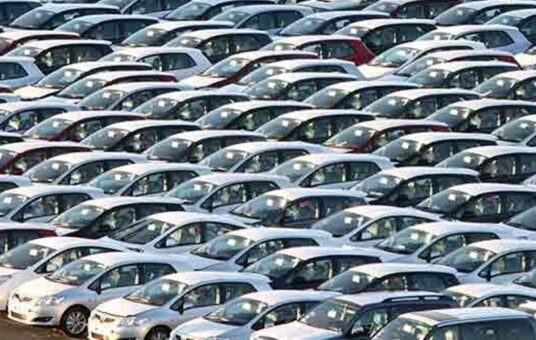
KARACHI: The import of motor cars has increased by 180 percent during first two months of current fiscal year due to normalization of life after lifting of corona lockdown.
The import of motor cars was at $26.53 million during July – August 2020 as compared with $9.46 million in the corresponding period of the last year, showing an increase of 180 percent.
The commercial import of motor cars is not allowed in Pakistan. However, under different schemes such as personal luggage, gift and transfer of resident schemes the overseas Pakistan can bring motor cars in Pakistan.
In the past these scheme were grossly misused and the government while taking strict action imposed restriction that clearance of motor vehicles would only be allowed on payment of duty and taxes out of those amount which was remitted into Pakistan with evidence of banking channels.
The import of motor vehicles in completely built units (CBU) including motor cars recorded an increase of 151 percent to $47.18 million during first two months of current fiscal year as compared with $18.76 million in the same period of the last fiscal year.
-
Car sales climb up by 16pc in August
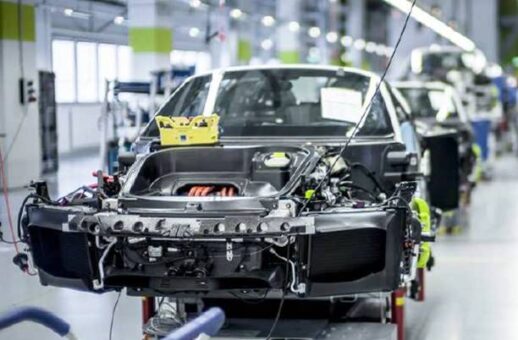
KARACHI: The sales of locally manufactured cars have recorded 16 percent increase to 11,678 units in August 2020 as compared with 10,102 units in the same month of the last year.
According to data released by Pakistan Auto Manufacturers Association (PAMA) Indus Motor (INDU) and Honda Car (HCAR) registered sales increase of 52 percent YoY and 72 percent YoY, respectively. However, Pak Suzuki Motor Company (PSMC) sales declined by 9 percent YoY.
Analysts at Topline Securities said that Kia Lucky Motors (non-member of PAMA) continued to perform well and is also planning to shift its production to double shift from Jan-2021 to meet high customer demand. As per our channel checks KIA sold around 1500 units for August 2020.
Another new entrant Hyundai Nishat launched Tucson in SUV category during the outgoing month and successfully sold 22 units along with 88 units of Porter H-100 (a commercial pickup).
Moreover, car sales increased by 1 percent MoM in Aug-2020, in which major increase was reported by PSMC with 20 percent MoM rise, however INDU and HCAR reported declines of 18 percent MoM and 8 percent MoM, respectively.
Atlas Honda (ATLH) recorded motorbike sales of 85,000 units in Aug-2020, up 6 percent YoY. However, sales declined by 10 percent MoM.
Tractor sales in Aug-2020 are up 12 percent YoY, while down by 21 percent MoM. Millat Tractors (MTL) recorded increase of 80 percent YoY while Al Ghazi Tractors (AGTL) sales declined by 51 percent YoY, respectively.
We expect demand for cars to grow stronger as lower interest rates for auto financing along with pickup in economic activity amidst declining cases of COVID-19 has revived demand for new cars.
-
Pak Suzuki declares half year loss of Rs2.46 billion
KARACHI: Pak Suzuki Motor Company Limited has reported a significant loss of Rs2.46 billion for the first half of 2020 (January to June), as per the financial results submitted to the Pakistan Stock Exchange (PSX) on Wednesday. This represents a 61.44 percent increase in losses compared to the Rs1.52 billion loss recorded in the same period last year.
(more…) -

TPL, Pak Suzuki sign agreement for auto insurance
KARACHI: TPL Insurance, Pakistan’s first Direct Insurance Company, has signed a Memorandum of Understanding (MoU) with Pak Suzuki, the country’s largest car manufacturing company to provide services of auto insurance.
A statement on Tuesday said that following the partnership, Pak Suzuki customers can avail TPL Insurance’s services at any of the 168 Pak Suzuki authorized dealerships operating nationwide.
Customers will have access to One Window Auto Insurance Solution offering tailored coverage backed by the fastest claim settlement ever offered in Pakistan, Online Policy Issuance, services and repair facilities at Pak Suzuki authorized 3S dealerships along with Value Added Services like Self Survey using the TPL Insurance Mobile App – all at extremely competitive rates for Pak Suzuki Customers.
TPL Insurance’s Value Added Services include Drive Pro, Pakistan’s first Telematics Auto Insurance which lets users track driving scores based on driving metrics to spot areas for improvement, helping users drive smart and make the streets safer to drive on. The Self Survey feature enables customers to lodge claims instantly, update details of their vehicle and manage maintenance schedules. In addition to these services, customers can also Buy, Claim and Renew insurance directly through the TPL Insurance App.
This partnership is in line with TPL Insurance’s strategy to evolve as a dominant player by exploring profitable niches through the deployment of cutting-edge technology. With disruption at its core, TPL Insurance continues to invest in platforms that will grow Insurtech in the country.
Commenting on the occasion, Muhammad Aminuddin, CEO, TPL Insurance said, “Together with Pak Suzuki, TPL Insurance will cater to the evolving needs of the companies’ mutual customers by delivering quality coverage and disruptive insurance solutions. I am confident that this partnership will boost TPL Insurance’s footprint in the market by catering to our rapidly growing economy and the population’s increasing consumption of insurance services.”
Masafumi Harano, Managing Director, Pak Suzuki said, “This is an ideal time for such initiatives in Pakistan as the importance of customer services is at an all-time high. We are confident to grow together and explore more transparent and creative solutions for customers.”
-
Car sales dip by 8 percent in July 2020
KARACHI: Domestic car sales have registered 8 percent decline to 11,501 units in July 2020 as compared with 12,482 units in the same month of the last year.
Pak Suzuki Motors registered 40 percent decline in its sales to 4,991 units in July 2020 as against 8,375 units sold in the same month of the last year.
However, Indus Motors and Honda Cars posted growth of 68 percent and 48 percent, respectively during the month under review.
Analysts at Topline Securities said that Kia Lucky Motors (non-member of PAMA) continued to perform well. The company recorded car sales of around 1,500 units in July 2020.
Moreover, car sales increased by 36 percent MoM in July 2020 as COVID-19 lockdowns eased with car assemblers ramping up production levels to meet pent-up demand of consumers, which is evident from 1-3 months of delivery time from the date of booking.
All three main car assemblers reported MoM increases, with INDU reporting the highest increase of 60 percent MoM, followed by PSMC (+28 percent MoM) and HCAR (+23 percent MoM).
Atlas Honda (ATLH) recorded motorbike sales of 94,003 units in Jul-2020, up 17 percent YoY and 4 percent MoM.
The analysts said demand for cars to grow stronger as lower interest rates for auto financing has revived demand for new cars.
-

Sindh allows people to check number of vehicles registered on CNIC
KARACHI: Sindh Excise and Taxation Department has introduced online facility for the citizens to check number of vehicles registered with their Computerized National Identity Card (CNIC).
The facility has been introduced in order to curb misuse of identity and assuring people for having ownership of the vehicles.
Provincial Minister for Excise & Taxation and Narcotics Control & Parliamentary Affairs Mukesh Kumar announced the facility. He said that the facility has been introduced for the convenience of the people under which any person can now know the number of vehicles registered on his CNIC number and for this purpose, one should log on to the website www.excise.gos.pk.
He added that the facility would be provided soon via SMS.
The provincial minister said that people should avail this facility. “Facilitating the people is the top priority of the Sindh Excise Department,” he concluded.
-
Import of old, used motor cars falls by 55.41 percent in 2019-2020
KARACHI: The import of used and old cars massively fell by 55.41 percent during fiscal year 2019/2020 due to condition of payment of duty and taxes through foreign exchange imposed by the government.
The import of used and old cars in Completely Built Unit (CBU) condition fell to $99 million during 2019/2020 as compared with $222 million in the preceding fiscal year, according data released by Pakistan Bureau of Statistics (PBS).
The commercial import of used or old cars is not allowed under prevailing laws of the country. However, in order to facilitate expatriate Pakistanis the government allows incentives to bring cars into the country.
The Federal Board of Revenue (FBR) has allowed Pakistani nationals residing abroad including dual nationals can import old and used vehicles into Pakistan under these schemes: Personal Baggage; Gift Scheme; and Transfer of Residence.
The cars not older than three years and other vehicles not older than five years can be imported under these schemes, the FBR said.
These schemes were grossly misused in the past and bulk of imported cars brought into the country.
However, the ministry of commerce in February 2019 amended Import Policy Order, 2016 and made it mandatory for clearance of cars through foreign exchange, which should be certified by banks.
Since then the clearance of the cars has come to a standstill. Customs authorities said that a large number of imported cars were at the port but importer had failed to make payment as per procedure prescribed by the ministry of commerce.
However, later in a meeting of Economic Coordination Committee (ECC) decided to allow payment for duty and taxes for customs clearance of imported cars through local resources with condition that if foreign exchange becomes short due to currency fluctuations or change in duty and tax rates.
The overall import of CBU vehicles during fiscal year 2019/2020 fell by 43 percent. The import of heavy vehicles including buses and trucks has declined by 24.5 percent. While import of CBU motorcycles fell by 71.63 percent.
On the other hand the import of cars as Completely Knocked Down (CKD) condition also fell by 41.57 percent to $478 million during 2019/2020 as compared with $818 million in the same period of the last fiscal year.
Market sources said that massive depreciation in the local currency during past couple of years had increased the cost of local car manufacturers.
Further, the rates of locally assembled cars for end consumers also jumped up sharply.
These factors have reduced the productions of locally manufactured cars and subsequently reduced the import of cars in CKD condition.
The overall import of vehicles in CKD fell by 41.63 percent to $727.52 million during 2019/2020 as compared with $1.24 billion in the preceding fiscal year.
-
Annual car sales plunge by 53 percent on slow economy, COVID
KARACHI: Domestic car sales have plunged by 53 percent in fiscal year 2019/2020 owing to slow economic activity and outbreak of coronavirus, analysts said on Monday.
According to statistics released by Pakistan Automobile Assemblers Association (PAMA), the total car sales plunged to 110,583 units during fiscal year 2019/2020 as compared with 235,229 units in the preceding fiscal year.
Analysts at Topline Securities said that the year remained turbulent for the car assemblers, as slow economic activity and high interest rates affected demand at the start of the year. In the last quarter, sales were severely affected by COVID-19 outbreak.
The domestic car sales also witnessed 52 percent decline to 8,446 units in June 2020 as compared with 17,468 units in the same month of the last year.
However, the sales increased by 77 percent when compared with the sales of May 2020 as car dealerships became operational after lifting of COVID-19 related lockdowns/restrictions.
Honda Car (HCAR) and Indus Motors (INDU) recorded 514 percent MoM and 199 percent MoM growths, respectively.
The major decline came in sales of Honda Cars which fell by 63 percent to 16,390 units in fiscal year 2019/2020 when compared with 44,234 units in the preceding fiscal year.
Indus Motors witnessed 53 percent decline to 28,378 units in fiscal year 2019/2020 as compared with 60,993 units in the preceding fiscal year.
The sales of Pak Suzuki Motors registered 49 percent decline to 65,815 units during fiscal year 2019/2020 as compared with 130,002 units in the preceding fiscal year.
-
Car imports fall by 61pc in eleven months
KARACHI: The import of used and old cars witnessed sharp decline of 61 percent during first eleven months (July-May) of current fiscal year due to condition of payment of duty and taxes through foreign exchange imposed by the government.
The import of used and old cars in Completely Built Unit (CBU) condition fell by 61 percent to $84.2 million during July –May 2019/2020 as compared with $216.5 million in the corresponding period of the last year, according data released by Pakistan Bureau of Statistics (PBS).
The commercial import of used or old cars is not allowed under prevailing laws of the country. However, in order to facilitate expatriate Pakistanis the government allows incentives to bring cars into the country.
The Federal Board of Revenue (FBR) has allowed Pakistani nationals residing abroad including dual nationals can import old and used vehicles into Pakistan under these schemes: Personal Baggage; Gift Scheme; and Transfer of Residence.
The cars not older than three years and other vehicles not older than five years can be imported under these schemes, the FBR said.
In the past these schemes were grossly misused and bulk of imported cars brought into the country.
However, the ministry of commerce in February 2019 amended Import Policy Order, 2016 and made it mandatory for clearance of cars through foreign exchange, which should be certified by banks.
Since then the clearance of the cars has come to a standstill. Customs authorities said that a large number of imported cars were at the port but importer had failed to make payment as per procedure prescribed by the ministry of commerce.
However, later in a meeting of Economic Coordination Committee (ECC) decided to allow payment for duty and taxes for customs clearance of imported cars through local resources with condition that if foreign exchange becomes short due to currency fluctuations or change in duty and tax rates.
The overall import of CBU vehicles during first eleven months of current fiscal year fell 48 percent. The import of heavy vehicles including buses and trucks has declined by 27 percent. While import of CBU motorcycles fell by 71 percent.
On the other hand the import of cars as Completely Knocked Down (CKD) condition also fell by 40 percent to $440 million during July – May 2019 as compared with $736 million in the same period of the last fiscal year.
Market sources said that massive depreciation in the local currency during past couple of years had increased the cost of local car manufacturers.
Further, the rates of locally assembled cars for end consumers also jumped up sharply.
These factors have reduced the productions of locally manufactured cars and subsequently reduced the import of cars in CKD condition.
The overall import of vehicles in CKD fell by 40 percent to $675 million during first eleven months of 2019/2020 as compared with $1.128 billion in the corresponding period of the last fiscal year.