Category: Money & Banking

Money and banking drive economic activity by facilitating transactions, savings, and investments. Banks manage financial resources, offer credit, and regulate money supply, ensuring stability and growth in Pakistan’s financial sector.

  • Rupee falls by 38 paisas against dollar

    Rupee falls by 38 paisas against dollar

    KARACHI: The Pak Rupee fell by 38 paisas against dollar on Tuesday owing to reports the government is going to hedge oil.

    The rupee ended Rs160.46 to the dollar from previous day’s closing of Rs160.08 in interbank foreign exchange market.

    Currency experts said that the rupee was witnessing deterioration in its values against dollar as the government was mulling to hedge oil to get benefit of lower prices in international market.

    The experts said that the lower import bill however support the local currency to gain values.

    The trade deficit shrank by 25.68 percent to $19.49 billion during July – April 2019/2020 as compared with the deficit of $26.23 billion in the same period of the last fiscal year.

    The exports in first ten months (July – April) 2019/2020 also fell by four percent to $18.41 billion as compared with $19.16 billion in the corresponding period of the last fiscal year.

  • SBP to announce monetary policy on May 15

    SBP to announce monetary policy on May 15

    KARACHI: State Bank of Pakistan (SBP) on Monday said that it will announce monetary policy statement for next two months on Friday May 15, 2020.

    The SBP in previous three announcement during past two months reduced the policy rate by 4.25 percent to 9 percent from 13.25 percent.

    In the last monetary policy meeting on April 16, 2020 decided to cut the policy rate by a further 200 basis points to 9 percent.

    The SBP said that at its last meeting on 24th March 2020, the Monetary Policy Committee (MPC) noted the worsening outlook for global and domestic economic activity in the wake of the Corona pandemic. Given the unfolding situation, the MPC noted that it “remains ready to take whatever further actions become necessary in response to the evolving economic impact of the Coronavirus.”

    Since the last MPC meeting, the global and domestic outlook has further deteriorated. The world economy is expected to enter into the sharpest downturn since the Great Depression, contracting by as much as 3 percent in 2020, according to projections released this week by the IMF.

    This is a much deeper recession than the 0.07 percent contraction during the global financial crisis in 2009. Moreover, there are severe risks of a worse outcome. In addition, global oil prices have plummeted further, with futures markets suggesting low prices will persist.

    Domestically, high-frequency indicators of activity―including retail sales, credit card spending, cement production, export orders, tax collections, and mobility data from Google’s recently introduced Community Mobility Reports―suggest a significant slowdown in most parts of the economy in recent weeks. On the inflation front, both the March CPI out-turn and more recent weekly SPI releases in April also show a marked reduction in inflation momentum.

    While there is exceptionally high uncertainty about the severity and duration of the Coronavirus shock, the developments discussed above imply further downward revision in the outlook for growth and inflation.

    The economy is expected to contract by -1.5 percent in FY20 before recovering to around 2 percent growth in FY21. Inflation is expected to be close to the lower end of the previously announced 11-12 percent range this fiscal year, and to fall to 7-9 percent range next fiscal year.

    While there are some upside risks to headline inflation in case of temporary supply disruptions or food price shocks, these are unlikely to generate strong second-round effects due to the weakness of the economy.

    Similarly, the inflationary impact of the recent exchange rate depreciation is expected to be contained given low import demand and falling global prices.

    This reduces forward looking real interest rates (defined as the policy rate less expected inflation) to around zero, which is about the middle of the range across most emerging markets.

    The MPC was of the view that this action would cushion the impact of the Coronavirus shock on growth and employment, including by easing borrowing costs and the debt service burden of households and firms, while also maintaining financial stability. It would also help ensure that economic activity is better placed to recover when the pandemic subsides.

    The MPC highlighted that this rate cut would complement other measures recently taken by the SBP to support the economy, including concessional financing to companies that do not lay off workers, one-year extension in principal payments, doubling of the period for rescheduling of loans from 90 to 180 days, and concessional financing for hospitals and medical centers incurring expenses to combat the Coronavirus pandemic.

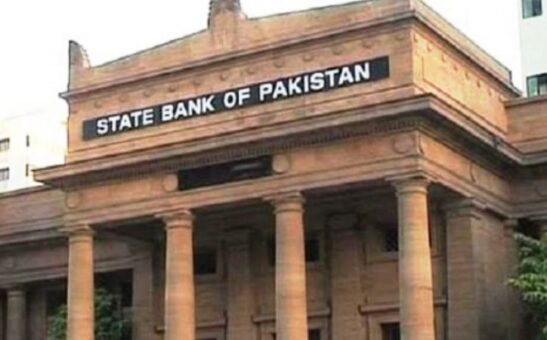
  • SBP further relaxes refinance scheme to prevent major layoffs

    SBP further relaxes refinance scheme to prevent major layoffs

    KARACHI: State Bank of Pakistan (SBP) relaxes refinance scheme to prevent large scale layoff of workers due to adverse effects on the economy due to coronavirus.

    (more…)
  • Rupee falls by 10 paisas against dollar

    Rupee falls by 10 paisas against dollar

    KARACHI: The Pak Rupee fell by 10 paisas against dollar Monday amid higher demand import payment, dealers said.

    The rupee ended Rs160.07 to the dollar from last Friday’s closing of Rs159.97 in interbank foreign exchange market.

    Currency analysts said that the market opened after weekly holiday which increased the demand for import payment.

    They said that the rupee also improved with shrinking trade deficit.

    The trade deficit shrank by 25.68 percent to $19.49 billion during July – April 2019/2020 as compared with the deficit of $26.23 billion in the same period of the last fiscal year.

    The exports in first ten months (July – April) 2019/2020 also fell by four percent to $18.41 billion as compared with $19.16 billion in the corresponding period of the last fiscal year.

  • Rupee gains 25 paisas against dollar

    Rupee gains 25 paisas against dollar

    KARACHI: The Pak Rupee gained 25 paisas against dollar on Friday owing to expectations of improved economic activities after ease in lockdown.

    The rupee ended Rs159.97 to the dollar from previous day’s closing of Rs160.22 in interbank foreign exchange market.

    Currency analysts said that the decision of the government to ease lockdown from May 09 improved the sentiments in the market.

    They said that the rupee also improved with shrinking trade deficit.

    The trade deficit shrank by 25.68 percent to $19.49 billion during July – April 2019/2020 as compared with the deficit of $26.23 billion in the same period of the last fiscal year.

    The exports in first ten months (July – April) 2019/2020 also fell by four percent to $18.41 billion as compared with $19.16 billion in the corresponding period of the last fiscal year.

    On the other hand the import bill fell by 16.5 billion to $39.9 billion in the first ten months of current fiscal year as compared with $45.4 billion in the corresponding period of the last fiscal year.

  • SBP expands economic refinance facility to existing projects

    SBP expands economic refinance facility to existing projects

    KARACHI: State Bank of Pakistan (SBP) on Friday expanded the economic refinance facilities to existing projects in order to provide relief the industry to dilute impact of coronavirus.

    The SBP issued the scheme on March 17, 2020. On the basis of feedback from stakeholders, State Bank has decided to expand the scope of subject facilities.

    Accordingly, in addition to the new projects, existing projects/ businesses are being allowed to avail financing under these Facilities for undertaking Balancing, Modernization and Replacement (BMR) and/or expansion of their projects/ businesses.

    However, to ensure proper utilization of the Facilities, banks/ DFIs and borrowers are required to ensure the following:

    As per TERF’s/ITERF’s eligibility criteria, financing for BMR/expansion will only be available for purchase of new imported and locally manufactured plant & machinery against foreign LC and inland LC, respectively. Second-hand machinery, land or civil works are not covered under the Facilities.

    Banks/DFIs will be required to make disbursements to their customers on the basis of certificates of their Internal Audit confirming that financing is within the terms and conditions laid down in the Facilities. A copy of the said Internal Audit Certificate shall be submitted to the concerned office of SBP BSC (Bank) at the time of availing refinance for the first time for a project/ business while copies of certificates in respect of subsequent disbursements may be submitted at the time of availing last refinance for the same project/ business. In case of consortium finance the lead bank will be required to submit the certificate.

    The borrowers concerned will be required to submit a report from PBA’s approved surveyors (acceptable to bank/DFI concerned) with regard to confirmation that the newly purchased plant & machinery has been installed as per their initial request/proposal for BMR/expansion. In case of installation/fixation in part, this report will be required at first and final installation of the plant/equipment.

  • Meezan Bank maintains deposit base at Rs928 billion

    Meezan Bank maintains deposit base at Rs928 billion

    KARACHI: The Board of Directors of Meezan Bank in its meeting, held on May 05, 2020 approved the financial statements of the Bank for the quarter ended on March 31, 2020.

    The meeting was presided by Riyadh S.A. A. Edrees – Chairman of the Board; Faisal A. A. A. Al – Nassar – Vice Chairman of the Board was also present.

    The bank maintained its deposit base at Rs 928 billion with market share of more than 6 percent in the banking industry. Meezan Bank is the 6th largest bank in Pakistan with a network of 774 branches in 231 cities, complimented with a comprehensive array of digital services, including Internet Banking, Mobile App and other Alternate Distribution Channels for delivery of seamless Shariah-compliant banking services to its customers across Pakistan and around the globe.

    The bank’s net spread grew by 66 percent primarily due to higher volume of average earning assets and higher underlying Policy Rate while the Bank’s non-funded income grew by 64 percent mainly due to higher foreign exchange income and gain on sale of securities of Rs 680 million.

    Administrative and other operating expenses increased to Rs 7.1 billion from Rs 5.5 billion in corresponding period last year primarily due to costs associated with opening of 98 new branches since March 2019.

    The bank’s financing portfolio decreased slightly from December 2019 mainly due to overall slowdown in economic activity and repayment of seasonal financing. Recognizing stresses in certain sectors of the economy due to the COVID -19 outbreak, an additional General Provision of Rs 1 billion was approved by the Board against any potential non-performing financings, bringing the Bank’s non-performing financings coverage ratio to 147 percent – the highest in the banking industry while its infection ratio, at less than 2 percent is one of the lowest in the industry.

    The bank has taken several initiatives to safeguard the health of its employees, their families and its customers during the current pandemic, including activation of Business Continuity Plans, deployment of almost 70 percent Head Office staff to work from alternate sites or from the safety of their homes and mandatory use of face masks at all times in all its premises so as to minimize the risk of exposure to the disease.

  • Rupee falls by 17 paisas against dollar

    Rupee falls by 17 paisas against dollar

    KARACHI: The Pak Rupee fell by 17 paisas against dollar on Thursday owing to hope of escalation in economic activity and higher demand for imports.

    The rupee ended Rs160.22 to the dollar from previous day’s closing of Rs160.05 in interbank foreign exchange market.

    Currency experts said that positive sentiments were prevailed in the markets on reports of ease in lockdown.

    They said that the announcement of allowing import of petroleum products also deteriorated the rupee value.

    However, the trade deficit shrank by 25.68 percent to $19.49 billion during July – April 2019/2020 as compared with the deficit of $26.23 billion in the same period of the last fiscal year.

    The exports in first ten months (July – April) 2019/2020 also fell by four percent to $18.41 billion as compared with $19.16 billion in the corresponding period of the last fiscal year.

    On the other hand the import bill fell by 16.5 billion to $39.9 billion in the first ten months of current fiscal year as compared with $45.4 billion in the corresponding period of the last fiscal year.

  • Rupee falls by 41 paisas against dollar

    Rupee falls by 41 paisas against dollar

    KARACHI: The Pak Rupee depreciated by 41 paisas against dollar on Wednesday owing to hope of escalation in demand.

    The rupee ended Rs160.06 to the dollar from previous day’s closing of Rs159.65 in interbank foreign exchange market.

    Currency experts said that positive sentiments were prevailed in the markets on reports of ease in lockdown.

    They said that the announcement of allowing import of petroleum products also deteriorated the rupee value.

    However, the trade deficit shrank by 25.68 percent to $19.49 billion during July – April 2019/2020 as compared with the deficit of $26.23 billion in the same period of the last fiscal year.

    The exports in first ten months (July – April) 2019/2020 also fell by four percent to $18.41 billion as compared with $19.16 billion in the corresponding period of the last fiscal year.

    On the other hand the import bill fell by 16.5 billion to $39.9 billion in the first ten months of current fiscal year as compared with $45.4 billion in the corresponding period of the last fiscal year.

  • SBP introduces credit risk sharing mechanism to support employment

    SBP introduces credit risk sharing mechanism to support employment

    KARACHI: Ministry of Finance and State Bank of Pakistan (SBP) introduce risk-sharing mechanism to support bank lending to SMEs and small businesses to avail SBP’s Refinance Facility to Support Employment.

    Taking cognizance of the SMEs finding difficulties in arranging adequate collateral and banks’ risk averseness in taking exposures for such lending under the SBPs Refinance Scheme to Support Employment and Prevent Layoff of Workers, Ministry of Finance has stepped forward to shoulder risk sharing with banks. Accordingly, the Federal Government has allocated Rs30 billion under a credit risk sharing facility for the banks spread over four years to share the burden of losses due to any bad loans in future. Under thisrisk sharing arrangement, Federal Government will bear 40% first loss on principal portion of disbursed loan portfolio of the banks.

    This facility will incentivize banks to extend loans to collateral deficient SMEs and small corporates with sales turnover of upto Rs2 billion to avail financing under SBP refinance scheme.

    Under the SBP’s Refinance Scheme to Support Employment and Prevent Layoff of Workers due to the impact of COVID-19, businesses that commit to not lay off workers in the next three months can avail credit through banks for the three months of wages and salaries expenses at a concessional mark-up rate.

    The risk-sharing mechanism being introduced today, that is expected to increase the banks’ incentive to lend to SMEs and small corporate under this scheme, was developed on the basis of feedback received from relevant stakeholders and in collaboration between MOF and SBP.

    Ministry of Finance’s swift approval of the subsidy to provide risk coverage to banks has made it possible for the SBP to launch this credit risk sharing facility for which relevant circular has been issued today.

    SBP will continue to monitor the implementation of the scheme.

    With a view to incentivize banks/DFIs for financing to SMEs and small corporates under above mentioned schemes, Government of Pakistan has approved budgetary allocation for ‘Risk Sharing Facility for State Bank of Pakistan (SBP) Refinance Scheme to Support Employment and Prevent Layoff of Workers’.

    Accordingly, the risk sharing facility is being provided with immediate effect, with following key features.

    S.NoParticularsKey features
    1EligibilityThe financing extended to businesses with maximum sales turnover of Rs 2 billion, under SBP refinance scheme to support employment and prevent layoff of workers is eligible for Risk Sharing Facility by the GOP.
    2Risk CoverageGoP will bear 40% first loss on disbursed portfolio (principal portion only) for eligible borrowers. Note: In case of non-repayments, after being classified as ‘Loss’ (as per the classification criteria laid down under respective SBP Prudential Regulations, credit loss subsidy claim will be paid by the GOP).
    3Security RequirementsSecurity arrangements will be as per executing agency’s own credit policy after taking into account the factor of this risk sharing facility. Hence, banks are encouraged to facilitate collateral deficient borrowers. In any case, banks will not be asking for additional collaterals over and above 60% of the principal amount and markup thereon.
    4Executing AgencyBanks and DFI assigned limits under SBP scheme will be eligible Executing Agencies (EAs).
    5Additional MeasuresEAs shall develop and implement robust mechanism to ensure that the loans are utilized for intended purpose only.
    6AdministrationDevelopment Finance Support Department (DFSD), SBP BSC will manage operational aspects of the risk sharing facility. DFSD will submit data under the risk sharing facility on quarterly basis to the Finance Division.

    7Subsidy PaymentEAs shall submit credit loss subsidy claims to DFSD on quarterly basis within 15 working days after the end of each quarter. DFSD after scrutiny of the claims shall submit the same to Finance Division, GOP. FD will release payment against submitted claims within 15 working days. Upon receipt of subsidy from GOP, SBP BSC Karachi will credit the account of EAs with the subsidy amount.

    The banks/DFIs are advised to ensure immediate implementation of ‘Risk Sharing Facility for SBP Refinance Scheme to support employment and prevent layoff of workers’ and facilitate the eligible businesses to avail financing under this facility.