Category: Money & Banking

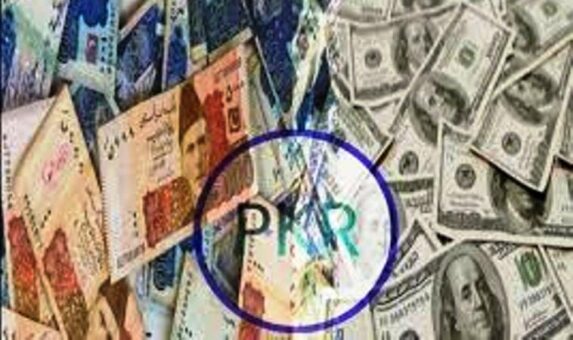
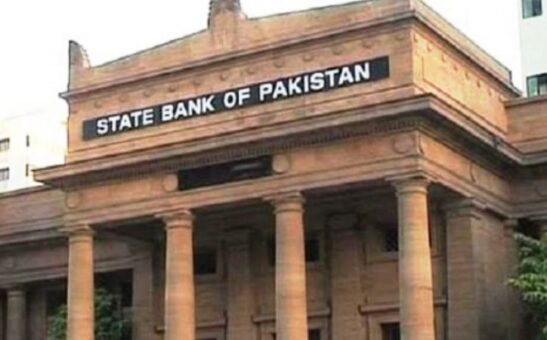
Money and banking drive economic activity by facilitating transactions, savings, and investments. Banks manage financial resources, offer credit, and regulate money supply, ensuring stability and growth in Pakistan’s financial sector.

  • Standard Chartered Pakistan announces 42.5% growth in after tax profit

    Standard Chartered Pakistan announces 42.5% growth in after tax profit

    KARACHI: Standard Chartered Bank Pakistan has declared massive growth of 42.5 percent in after tax profit for the year ended December 31, 2019.

    The bank declared Rs16.017 billion profit after tax for the year 2019 as compared with Rs11.239 billion in the last year.

    The bank also declared earnings per share at Rs4.14 as compared with Rs2.9 billion in the last year.

    The profit before tax was recorded at Rs27.199 billion for the year 2019.

    The bank in its annual report said that a record performance in 2019 by the bank enabled it to deliver a profit before tax of Rs27.2 billion. “This is 47 percent higher than the corresponding period last year and the highest profit since incorporation.”

    Overall revenue growth was 37 percent, whereas client revenue increased by 31 percent year on year with positive contributions from transaction banking, financial markets and retail products.

    Operating expenses increased by only 2 percent year on year on account of spending mainly on the bank’s products, services and people to grow the franchise.

    All businesses have positive momentum in client income with strong growth in underlying drivers.

    Momentum in advances (net) continues with 29 percent growth since the start of the year. This was the result of a targeted strategy to build profitable, high quality and sustainable portfolios.

    With diversified product base, the Bank is well positioned to cater for the needs of its clients. On the liabilities side, the Bank’s total deposits grew by 10 percent, whereas current and saving accounts grew by 8 percent since the start of this year and are now 93 percent of the deposits base.

    The optimal funding structure of the balance sheet continues to support the Bank’s performance. During 2019, the bank contributed around Rs18.6 billion to the national exchequer in lieu of direct income taxes, as an agent of Federal Board of Revenue (FBR) and on account of FED / Provincial Sales Taxes.

    The bank continues to invest in its digital capabilities and infrastructure to enhance our clients’ banking experience through the introduction of innovative solutions.

    “We have made steady progress in further strengthening our control and compliance environment by focusing on our people, culture and systems. We are fully committed to sustained growth by consistently focusing on our clients and product suite along with a prudent approach to building the balance sheet while bringing the best in class services to our customers.”

  • Rupee gains seven paisas on lackluster dollar demand

    Rupee gains seven paisas on lackluster dollar demand

    KARACHI: The Pak Rupee gained seven paisas against dollar on Wednesday owing to lower import and corporate demand, dealers said.

    The rupee ended Rs154.22 to the dollar from previous day’s closing of Rs154.29 in interbank foreign exchange market.

    The currency dealers said that lackluster demand was seen from importer and corporate buyers for the dollar.

    The said that due to coronavirus threat, which spread in many countries, many states imposed restrictions imports from those countries where infections had been detected.

    Certain checks have also been imposed by the government on imports from such countries particularly from China, which is the center-point of this epidemic.

    The exchange rate in open market witnessed no change in rupee value. The buying and selling of dollar was recorded at Rs154.00/Rs154.30, the same previous day’s closing, in cash ready market.

  • Banking deposits hit all-time high on attractive policy rate

    Banking deposits hit all-time high on attractive policy rate

    KARACHI: The deposits of banking system hit all-time high of Rs14.672 trillion by end of January 2020 owing to higher returns on attractive interest rates.

    According to State Bank of Pakistan (SBP), the deposits of banking system grew by 12.36 percent to Rs14.672 trillion by January 2020 as compared with Rs13.057 trillion in the same month of the last year.

    The banking deposits were previously hit all-time high of Rs14.632 trillion by end of December 2019.

    Analysts said that the higher interest rate attracted the investors to keep their money in banking system for higher returns.

    The SBP kept the policy rate unchanged at 13.25 percent in the last monetary policy on January 28, 2020.

    The analysts also believed that the slowdown in economy also discouraged new investment in the industrial and other avenues. Therefore, profit through banking deposits has become prime option.

    The higher deposits also provided room for banks to invest in government papers. The higher investment in government securities resulted in significant profitability of the banks.

    Analysts said that the year 2019 was an exceptional year for the banking sector with profitability increasing by 20 percent or Rs30 billion to reach Rs177 billion, in spite of economic slowdown.

    The primary driver this year has been the net interest income which has increased by 27 percent from Rs486 billion to Rs620 billion, which is mainly due to higher interest rates.

    Weighted average policy rate in 2019 remained 12.2 percent compared to 7.2 percent in 2018.

    In absolute terms, the highest yearly profit was earned by MCB bank (Rs23.8 billion) followed by UBL (Rs19 billion) and NBP (Rs16.6 billion). However in terms of earnings growth BIPL came out on top with 247 percent growth followed by MEBL with 73 percent and AKBL with 58 percent growth, said analysts at Arif Habib Limited.

    As mentioned Net Interest Income (NII) of the banks remained major earnings driver in 2019. In Pakistan rising interest rates bodes well for banks as around 34 percent of deposits are non-remunerative (Current Deposits on which banks give no return) that leads to a higher spread. Top banks with the highest growth in NII are BIPL (78 percent), MEBL (65 percent) and SCBPL (50 percent).

  • UBL continues de-risking strategy in international operations

    UBL continues de-risking strategy in international operations

    KARACHI: The United Bank Limited (UBL) has continued its de-risking strategy in its overseas operations, with the business model focused on selective lending mainly to established corporates with a longer term business relationship with the bank.

    (more…)
  • Rupee gains eight paisas on declining import bill

    Rupee gains eight paisas on declining import bill

    KARACHI: The Pak Rupee gained eight paisas against dollar on Tuesday owing to significant decline in import bill.

    The rupee ended Rs154.29 to the dollar from previous day’s closing of Rs154.37 in interbank foreign exchange market.

    Currency dealers said that the shrinking trade deficit and decline in imports helped the rupee to gain value.

    The import bill of the country fell to $31 billion during July – February 2019/2020 as compared with $36.5 billion in the corresponding period of the last fiscal year, showing decline of around 15 percent.

    The falling imports also helped the country to curtail trade deficit. The trade deficit shrank by 27 percent to $15.5 billion during first eight months of the current fiscal year as compared with $21.5 billion in the corresponding period of the last fiscal year.

    The foreign currency market was initiated in the range of Rs154.32 and Rs154.38. The market recorded day high of Rs154.35 and low of Rs154.29 and closed at Rs154.29.

    The exchange rate in open market witnessed no change in rupee value. The buying and selling of dollar was recorded at Rs154.00/Rs154.30, the same previous day’s closing, in cash ready market.

  • Banking sector profitability grows by 20% in 2019

    Banking sector profitability grows by 20% in 2019

    KARACHI: Banks have posted 20 percent growth in profitability during 2019 despite economic slowdown, analysts said on Monday.

    The analysts at Topline Securities said that 2019 has been an exceptional year for the banking sector with profitability increasing by 20 percent or Rs30 billion to reach Rs177 billion, in spite of economic slowdown.

    The primary driver this year has been the net interest income which has increased by 27 percent from Rs486 billion to Rs620 billion, mainly due to higher interest rates. Weighted average Policy Rate in 2019 remained 12.2 percent compared to 7.2 percent in 2018.

    In absolute terms, the highest yearly profit was earned by MCB bank (Rs23.8 billion) followed by UBL (Rs19 billion) and NBP (Rs16.6 billion). However in terms of earnings growth BIPL came out on top with 247 percent growth followed by MEBL with 73 percent and AKBL with 58 percent growth.

    Out of 17 listed banks the analysts have not taken SILK, SMBL and BOK in the analysis whose results have not been announced.

    As mentioned Net Interest Income (NII) of the banks remained major earnings driver in 2019. In Pakistan rising interest rates bodes well for banks as around 34 percent of deposits are non-remunerative (Current Deposits on which banks give no return) that leads to a higher spread.

    Top banks with the highest growth in NII are BIPL (78 percent), MEBL (65 percent) and SCBPL (50 percent).

    Non funded income has increased by a mere 7 percent. Prime reason for the limited increase was the lack of capital gains given the under performance of the market.

    Secondly, given the tough economic conditions lower payouts resulted in lower dividend income from portfolios.

    However, the cover came through forex income which improved by around Rs7 billion or 20 percent as the banks capitalized on the volatile exchange rate in 2019.

    Cost to income for the year decline to 57 percent from 60 percent. Besides above average increase in income, a number of banks exercised cost rationalization measure in order to endure the current economic slowdown.

    The lowest cost to income ratios belonged to SCBPL (30 percent), MEBL (46 percent) and MCB (48 percent). The lowest increase in non interest expenses was achieved by SCBPL growing by a mere 5 percent followed by 6 percent by MCB and 10 percent by JSBL.

    As expected provisions for the listed banks have increased by 63 percent or Rs17 billion to reach Rs44 billion in 2019.

    The increase has been a mix of diminution in value of investments and loan related charges. The analysts believe that loan provisions would be higher given the prevalent economic conditions and high interest rates.

    Tax expense for the listed banks went up by Rs37 billion to Rs128 billion in 2019. Effective taxation in 2018 was at 38 percent which increased to 42 percent on account of payment of super tax for 2017.

    The analysts said that the year 2020 is expected to be a transitionary year for banks and lot will depend upon the timing and quantum of the interest rate cut.

    Higher than expected inflation numbers have pushed back industry consensus of a cut by few months compared to earlier estimates of a likely cut in 1Q2020.

    Margins of banks in Pakistan are typically affected with falling rates as floating saving and fixed deposits normally go down, whereas, remunerative deposits (34 percent of total deposits) remain unaffected.

    This time in falling interest rate scenario, banks’ NIMs will come under pressure sooner as they have not managed to invest fixed coupon high yielding long tenor PIBs as compared to last time. It is evident from T-bills/PIBs investment ratio of 1.7x this time compared to average of 0.8x last time.

    Banks with strong deposit franchises with a high mix of Current Accounts are likely to be in the limelight due to lower exposure to minimum deposit rate.
    They expect credit growth to improve going forward partially offsetting impact of NIMs contraction. Banks’ credit growth was muted at 3.4 percent in 2019.

    However, they expect growth of 10 percent in 2020 and 13 percent in 2021.

  • Rupee falls by 14 paisas against dollar on import demand

    Rupee falls by 14 paisas against dollar on import demand

    KARACHI: The Pak Rupee ended down by 14 paisas against dollar on Monday owing to higher demand of foreign currency for import and corporate payment.

    The rupee ended at Rs154.37 to the dollar from last Friday’s closing of Rs 154.23 in Interbank foreign exchange market.

    Currency experts said that the market was opened after weekly holidays. The demand for the greenback was higher from importers and corporate buyers.

    The foreign currency market was initiated in the range of Rs154.40 and Rs154.45. The market recorded day high of Rs154.40 and low of Rs154.34 and closed at Rs154.37.

    The exchange rate in open market witnessed no change in rupee value. The buying and selling of the dollar was recorded at Rs154.00/Rs154.30, the same closing level of last Friday, in cash ready market.

  • NBP announces 21% decline in after tax profit

    NBP announces 21% decline in after tax profit

    KARACHI: National Bank of Pakistan (NBP) on Friday announced 21 percent decline in its annual profit for period ended December 31, 2019. The bank declared Rs15.8 billion after tax profit for the year 2019 as cmopared with Rs20.01 billion in the last year.

    According to unconsolidated profit and loss account, the bank declared basic earnings per share at Rs7.43 for the year 2019 as it was Rs9.41 EPS in 2018.

    The net interest income of the bank rose by 18.53 percent to Rs71.9 billion for the period ended December 31, 2019 as compared with Rs60.66 billion a year ago. Non-mark up income of the bank was flat at Rs36.19 bllion when comared with Rs36.246 billion a year ago.

    The operating expenses of the NBP increased by 18.02 percent to Rs65.725 billion when compared with Rs55.687 billion.

    The provisioning for write-offs increased by 26.1 percent to Rs14.25 billion in 2019 as compared with Rs11.3 billion a year ago.

    The tax payment of the bank also increased by 26.22 percent to Rs12.193 billion for the year ended December 31, 2019 as compared with Rs9.66 billion in 2018.

  • Rupee ends down by two paisas against dollar

    Rupee ends down by two paisas against dollar

    KARACHI: The Pak Rupee eased by two paisas against dollar on Friday in range bound trading activities, dealers said.

    The rupee closed at Rs154.23 to the dollar from previous day’s closing of Rs154.21 in interbank foreign exchange market.

    The currency dealers said that the market was remained dull during the day owing to lackluster demand from importers and corporate buyers.

    However, slight demand was seen due to the last week day, they added.

    The foreign currency market was initiated in the range of Rs154.21 and Rs154.24. The market recorded day high of Rs154.24 and low of Rs154.19 and closed at Rs154.23.

    The exchange rate in open market witnessed depreciation in rupee value. The buying and selling of the dollar was recorded at Rs154.10/Rs154.40 from previous day’s closing of Rs154.00/Rs154.30 in interbank foreign exchange market.

  • Rupee gains four paisas on lower import payment demand

    Rupee gains four paisas on lower import payment demand

    KARACHI: The Pak Rupee gained four paisas against dollar on Thursday owing to lower demand for import and corporate payments.

    The rupee ended Rs154.21 to the dollar from previous day’s closing of Rs154.25 in interbank foreign exchange market.

    Currency dealers said that due to fears of coronavirus and stuck up import consignments at the ports discouraged importers to buy the foreign currency.

    Reportedly, huge number of consignments of China origin was stuck up at ports due to formalities attached to coronavirus threat.

    The exchange rate in open market witnessed appreciation in rupee value. The buying and selling of the dollar recorded at Rs154.00/Rs154.30 as compared with previous day’s closing of Rs154.10/Rs154.40 in cash ready market.