In a communication shared with the Pakistan Stock Exchange (PSX), the OGDCL said that the company being operator of Wali Exploration License with 100 per cent working interest had made a gas and condensate discovery over Hangu Formation from its exploratory efforts at Wali #01 well which is located in FR Lakki, Khyber Pakhtunkhwa Province, Pakistan.
“Wali# 01 was spudded-in on December 02, 2019, as an exploratory well and drilled down to a total depth of 4727m (measured depth) inside Kawagarh Formation. Based on the good oil/gas shows during drilling, interpretation of open whole logs data, successful testing was carried out in Kawagarh formation, which proved to be gas/condensate discovery.”
Now, Drill Stem Test (DST) # 02 has been performed in Hangu Formation. The well flowed at the rate of 11.361 Million Standard Cubic Feet per Day (MMSCFD) gas and 895 Barrels per Day (BPD) condensate with Well Head Flowing Pressure (WHFP) of 2800 Pounds per Square Inch (PSI) at 32/64” choke size.
It is highlighted that this gas/condensate discovery has further extended the hydrocarbon play area on the southwestern part of the Bannu Basin.
OGDCL being the leading Exploration & Production Company in Pakistan has adopted an aggressive exploration strategy which has resulted in hydrocarbons discoveries.
“This discovery will add to the hydrocarbon reserves base of OGDCL and of the country. It will positively contribute to mitigating energy demand and supply gap from indigenous resources,” the company said, adding that the company would continue to strive for increasing shareholders’ value through a robust exploration program.
KARACHI: Pakistan’s domestic oil sales have jumped up by 26 percent to 1.97 million tons, which is the highest since May 2018.
Analysts at Topline Securities said that oil sales are also up 1 percent Month on Month (MoM), whereas oil sales during the first two months of the fiscal year 2021/2022 clocked in at 3.9 million tons, up 22 percent YoY.
Furnace oil sales improved by 63 percent YoY to 0.5 million tons in Aug-2021 primarily led by rising LNG prices and shortage in world LNG supply which is an alternative fuel for FO.
Growth in oil sales is also fueled by economic recovery as last year’s sales were mainly impacted by lockdowns and economic slowdown.
Consequently, MOGAS (MS) and High-Speed Diesel (HSD) sales are up 6 percent YoY and 32 percent YoY, respectively. Strong auto sales have also led to growth in these categories during the period under review.
PSO posted growth of 36 percent YoY as its oil sales clocked in at 1.0 million tons. PSO’s FO sales have jumped by 80 percent YoY as its market share in this segment improved to 66 percent in Aug-2021 vs. 60 percent in Aug-2020.
APL’s oil sales also improved by 56 percent YoY to 0.2 million tons, whereas SHEL’s sales are up 28 percent YoY to 0.1 million tons.
HASCOL witnessed a decline of 76 percent YoY in Aug-2021 as it continues to lose its market share as it stands at just 1 percent compared to 10 percent 3-years back.
ISLAMABAD: The federal government on Tuesday announced a reduction in prices of all petroleum products for next fortnight.
A statement issued by the Finance Division the new reduced prices will take effect from September 01, 2021.
According to the notification the price of petrol has been reduced by Rs1.50 to Rs118.30 per liter from Rs119.80.
The price of high speed diesel (HSD) has been reduced by Rs1.50 to Rs115.03 per liter from Rs116.53.
Similarly, the rate of kerosene oil has been reduced by Rs1.50 to Rs86.80 per liter from Rs88.30.
The price of light diesel has been reduced by one rupee to Rs84.77 per liter from Rs85.77.
The statement issued by the finance division said that despite international price fluctuation in petroleum products and anticipated increase in future prices, the government has reduced the price in order to provide maximum relief to the consumer.
The government is firmly committed to ensure stability in prices of essential commodities and has sustained the price pressure in line with its commitment to the common man.
It is pertinent to mention that petroleum levy is kept at minimum which is a clear reflection that the government is fully cognizant of the impact of fuel prices on the prices of basic items that affect people directly.
KARACHI: According to a notice to Pakistan Stock Exchange (PSX) on Tuesday, a consortium of Pakistani companies has been awarded exploration in Abu Dhabi.
The consortium of PPL (operator), OGDC, MARI and GHPL has been awarded an Offshore Block-5 in Abu Dhabi.
Analysts at Arif Habib Limited said that the consortium participated in Abu Dhabi’s second competitive exploration bid round in 2019 for acquiring one of the five blocks (three offshore and two onshore) being offered by Abu Dhabi National Oil Company (ADNOC).
For this purpose, ECC permitted these four companies to invest a total of $400 million ($100 million by each company) in August 2021 for 5 years by issuance of Corporate Guarantees in favor of ADNOC and Supreme Council for Financial and Economic Affairs (SCFEA).
With this, the consortium formed a Special Purpose Vehicle, which made it eligible for the exploration block.
Following the concession award of Offshore Block-5, the consortium announced development of a company Pakistan International Oil Limited (PIOL) located at Abu Dhabi Global Market, where each company has a 25 per cent stake.
The awarded block is located 100 km North East of Abu Dhabi and has an area of 6,223 km². It resides in an area which has prospects of large hydrocarbon reserves.
Albeit, these E&P companies for the first time will be able to explore, appraise and develop oil and gas resources in Abu Dhabi and expand its footprint internationally.
Beside Pakistani companies, other international companies such as Eni (Italy), PTTEP (Thailand), Occidental Petroleum (US), Index (Japan), Bharat Petroleum Company (India) and Indian Oil Company Limited (India) have won blocks in Abu Dhabi, according to the analysts.
ISLAMABAD: The Federal Board of Revenue (FBR) on Thursday reduced rate of sales tax on supply of petrol (Motor Spirit).
The revenue body issued SRO 1072(I)/2021 to make change in sales tax rate on supply of petrol.
According to the notification the sales tax rate on supply of petrol has been reduced to 10.54 per cent. The FBR brought down the sales tax rate from 10.77 per cent. Previously, the revenue body notified the sales tax rate on petroleum products through SRO 937(I)/2021 dated July 26, 2021.
The uniform rate of sales tax is 17 per cent. However, the government has reduced the rate of sales tax on various petroleum products in order provide relief to the masses.
Despite providing relief to general public through reduced rate of sales tax, the government increased the prices of various petroleum products with effect from August 16, 2021.
The prices of kerosene oil have been increased by Rs0.81 per liter, from Rs87.49 to Rs 88.30.
Likewise, the prices of Light Diesel Oil (LDO) have been increased by Rs1.10 per liter from Rs84.67 to Rs85.77.
However, the government kept prices of petrol and diesel unchanged with effective form August 16 for next fortnight.
According to the latest notification, the FBR has kept sales tax rates at reduced level for other petroleum products. However, sales tax rate on high speed diesel is remained at 17 per cent.
The sales tax rate on supply of kerosene oil is 6.70 per cent and on supply of light diesel oil is 0.20 per cent.
KARACHI: Pakistan State Oil (PSO) has announced a record breaking gross revenue of Rs1.4 trillion and highest ever profit after tax of Rs29.1 billion for the financial year 2020-2021 (FY21) after a loss after tax of Rs6.5 billion in the preceding year.
The net profit translated into a healthy earning per share of Rs62.07 vs. loss per share of Rs13.77 in the preceding fiscal year.
The announcement came after PSO’s Board of Management (BoM) reviewed the performance of the company together with its subsidiary Pakistan Refinery Limited (PRL) for the financial year 2020-21, ended on June 30, 2021, during the meeting held on August 23, 2021 in Islamabad.
Based on the outstanding financial and operational performance of the company, the Board of Management has announced a final dividend of Rs 10/- per share (100 per cent) which is in addition to the interim cash dividend of Rs 5/- per share (50 per cent) for financial year 2020-21.
The dividend for the financial year stands at Rs 15/- per share (150 per cent).
PRL, a subsidiary of PSO, also reported a profit after tax of Rs 0.94 billion during the year compared to a loss of Rs 7.6 billion in the previous year. On a consolidated basis, the group achieved a profit after tax of Rs 29.6 billion in FY21 compared to loss after tax of Rs 14.8 billion in FY20.
The board noted that these results have demonstrated PSO’s agility and strength across its diverse portfolio despite the challenging economic scenario and recurrent waves of the pandemic. PSO is leading the market by a large margin, delivering a phenomenal performance over and above the industry average.
The company exhibited an outstanding growth of 21.9 per cent in liquid fuels over last year with volumes reaching 9.2 million tons, attaining a market share of 46.3 per cent in FY21 compared to 44.3 per cent in FY20. PSO also achieved its highest ever volume of 7.6 million tons in the white oil segment despite the shrinking jet fuel and kerosene oil industry, with a market share of 45.2 per cent in FY21 vs. 44 per cent in FY20 i.e. a growth of 120 basis points (bps).
PSO set an all-time high record in Motor Gasoline (MoGas) achieving volumes of 3.5 million tons, an increase of 21.2 per cent from FY20, translating into market share of 41.3 per cent vs. 38.7 per cent last year – an increase of 260 bps.
The company made a strong closing in Hi-Cetane Diesel as well, achieving a volumetric growth of 21.1 per cent vs. industry growth of 17.5 per cent, translating into volumes of 3.7 million tons in FY21. The volumes contributed in regaining market share, bringing it to 47.2 per cent vs. 45.8 per cent in the preceding year i.e. an increase of 140 bps. PSO attained a volumetric growth of 53.2 per cent in black oil with volumes of 1.7 million tons and a market share of 51.7 per cent vs. 46 per cent in FY20.
In line with GOP’s clean and green initiative, PSO was the first OMC to upgrade the country’s fuel standard from Euro 2 to Euro 5. The launch of Hi-Octane 97 Euro 5, Premier Euro 5 and Hi-Cetane Diesel Euro 5 proved to be game changers in the industry, bolstering customer’s confidence in PSO’s products.
Building on its value creation model, the company prioritized high margin products i.e. High-Octane 97 Euro 5 and lubricants adding significant revenues with a volumetric growth of 177.6 per cent and 11.3 per cent respectively compared to last year. PSO’s first EV charging facility – Electro was also launched in Islamabad.
This performance is also a strong indicator of the change and transformation going on within PSO. With a focus on innovation and technology, PSO continued to enhance its digital capabilities to drive growth and enhance efficiency.
The company made significant strides on its journey of digital transformation with the launch of Pakistan’s first digitally integrated oil storage & dispatch terminal in Karachi. PSO also became the first public sector entity to launch e-procurement through SAP Ariba. Other automation initiatives included the launch of PSO Sahulat – an online order management system for dealers, Automated Queue Management System for tank-lorries and internal applications for fund management and employees leave management.
The company fast tracked infrastructural projects to gain operational efficiency. 174,000 tons of new and rehabilitated storages were added which significantly increase the number of day’s cover of petroleum products. Pipeline links have been completed to connect operational locations with White Oil Pipeline to make product movement safer and more efficient. 71 new vision retail outlets were also added to the company’s footprint.
Living up to its promise of keeping the wheels of the nation’s economy in motion and ensuring a seamless supply of fuel, the company imported 4.9 million tons of white oil products, an all-time high since the inception of the company. PSO has also played a pivotal role in the LNG sector. The company entered into another agreement with Qatar Petroleum under G2G arrangement to supply an additional 3 million tons of LNG for a period of 10 years. This contract shall add additional volumes to an already executed 15-year long term sales purchase agreement (SPA), making PSO the largest supplier of LNG in the country with a supply base of 6.75 million tons per annum.
With the burden of circular debt still large, to improve its balance sheet further, PSO recovered Rs 25.8 billion from the Power Sector along with late payment surcharge income. Reduction in finance cost by Rs. 3.2 billion. (24 per cent) further complemented the profitability of the company.
In a statement on Sunday the company clarified that:
No cargo from long-term supply contract in September has been dropped or canceled by PSO as reported by certain media outlets. As per the Annual Delivery Plan (ADP) agreed with all stakeholders, 04 cargoes were to be supplied under the long-term contract in the month of September and 02 spot deliveries were planned.
PSO’s long-term contract for 60 cargoes a year is not equally divided over 12 months. PSO prudently planned winter (Jan-Feb & Nov-Dec) in advance, when spot prices are usually higher, and arranged 28 cargoes instead of 20 under the long-term contracts -24 cargoes from the existing long-term contract and 4 additional cargoes from the recently executed long-term contract commencing in January 2022 by exercising contractual rights. This has been planned to meet the ever-increasing gas demand in winters at the lowest possible rates.
PSO has enabled considerable savings through effective planning and contract management by reducing the number of spot cargoes from 12 to 6 this year using contractual flexibilities available while maximizing long-term cargoes through contracts from 60 to 70.
As far as the timing of the tenders is concerned, awarding cargoes ahead of the required delivery windows or awarding a strip of cargoes in one go does not suit PSO since the company has certain contractual flexibilities available under long-term contracts and spot purchases are very few in a year as mentioned above. For e.g. due to the unplanned Dry Dock activity of FSRU in Jun-Jul and uncertain situation in September considering scheduled FSRU replacement, had PSO awarded July and September spot cargoes in advance, the company would have had to either drop much cheaper contractual cargo or face Take or Pay penalty. Therefore, spot purchases are finalized after carefully seeing the demand-supply dynamics and market conditions.
The bids received against the required deliveries in September 2021 are yet to be awarded by PSO. As per procedure, the received bids will be presented to the company’s Board of Management along with the supply/demand situation & global price trends and a decision will be arrived at accordingly.
Considering that 2021 has seen exceptionally high LNG prices in international market, the planning and management of contract done by PSO will not only absorb the impact of higher spot prices but also result in potential savings. As the national flag bearer, PSO is committed to safeguarding national interest and leaves no stone unturned to fuel the country’s progress.
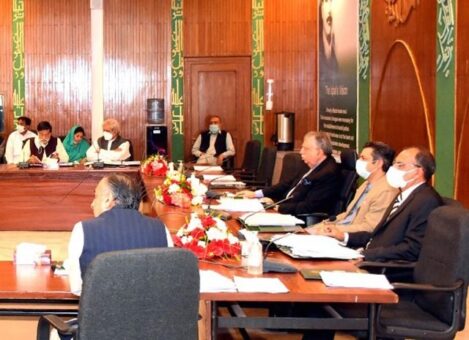
Finance Minister Shaukat Tarin presided over the ECC meeting. The ministry of commerce gave a detailed presentation for continuation of reduced rates of electricity and RLNG to export oriented sectors.
Secretary commerce briefed the Committee that extension of concessional rates of electricity and RLNG is important for sustained increase in exports by providing energy at regionally competitive rates.
After due deliberations, the committee approved the continuation of electricity and gas subsidy for export-oriented sectors to support the momentum of growth in exports during the FY 2021-2022.
The finance minister emphasized the need to incentivize export-oriented sectors in order to take our exports to the next level. He also stressed the need to rationalize usage of energy inputs. For this purpose, the ECC constituted a sub-committee comprising Minister for Energy, Minister for Industries & Production, Advisor on Commerce, Deputy Chairman Planning Commission, Additional Secretary (CF) Finance Division and other relevant officials for presenting a plan to resolve the issue of continued use of gas by some units for power generation and non-cooperation in audit of such use.
The sub-committee was directed to present its recommendations before ECC within 30 days for further deliberation.
The ECC considered and approved a summary presented by the Power Division for extension of incremental consumption package for K-Electric industrial consumers of X-WAPDA DISCOs & K-Electric and application of incremental consumption package for BI(Non ToU) consumers of X-WAPDA DISCOs and K-Electric at the rate of Rs.12.96/kwh from 1st July 2021 to 31st December 2021.
The cabinet committee approved another summary by the Petroleum Division regarding NOC for issuance of the Parent Company Guarantees/Corporate Guarantees by each of the consortium companies, on a joint and several basis, in favour of ADNOC and SCFEA to pursue international exploration and production opportunity in Abu-Dhabi, United Arab Emirates.
Federal Minister for Privatization Muhammad Mian Soomro, Federal Minister for National Food Security & Research Syed Fakhar Imam, Federal Minister for Industries and Production Makhdoom Khusro Bakhtiar, Federal Minister for Energy Muhammad Hammad Azhar, Federal Minister for Economic Affairs Division Omar Ayub Khan, Adviser to the PM on Commerce Abdul Razak Dawood, Adviser to the PM on Institutional Reforms and Austerity Dr. Ishrat Hussain, SAPM on Finance and Revenue Dr. Waqar Masood, SAPM on Power & Petroleum Tabish Gauhar, Federal Secretary Finance, Secretary M/o Industries and Production, Secretary M/o NFS&R, Secretary Power, Secretary Petroleum, Chairman FBR and other senior officers participated in the meeting, Governor SBP Dr. Reza Baqir also participated through video link.
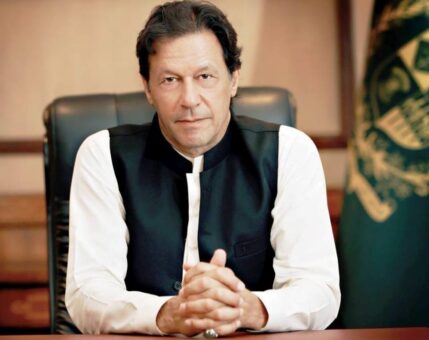
ISLAMABAD: Prime Minister Imran Khan on Thursday directed authorities to finalize Tight Gas Policy by end of September 2021.
The prime minister chaired a meeting to discuss the tight gas resources.
The meeting was attended by Federal Ministers Shaukat Fayyaz Tareen, Hamad Azhar, Asad Umar, Special Assistant Tabish Gohar and concerned senior officials.
The meeting discussed in detail the potential resources of Tight Gas in the country.
The meeting was informed that Pakistan is expected to have huge reserves of tight-gas. These reserves could help reduce the country’s dependence on expensive imported LNG.
The prime minister directed that the Tight Gas Policy be reviewed and finalized by the end of September 2021.