K-Electric, the primary electric power supplier for Karachi, reported a significant reduction in net profits due to an increased tax burden during the first half of the fiscal year 2019/2020.
(more…)Category: Energy
You can go through stories related to energy. The stories are about changes in petroleum prices and updates on energy sector of Pakistan and world.
-

Domestic oil sales increase by 3 percent in July
KARACHI: Domestic oil sales in Pakistan posted a three percent year-on-year growth in July 2020, driven by a surge in demand for furnace oil used in power generation and a general revival of economic activity. This growth reflects improved industrial operations and enhanced mobility following the easing of COVID-19 restrictions.
(more…) -
Petrol price increases to Rs103.97 per liter
ISLAMABAD: The government has increased prices of petroleum products effective from August 01, 2020. The price of petrol has been increased by Rs3.86 per liters.
According to a statement issued on Friday, the government decided to revise the existing prices of petroleum products in view of the rising oil prices trend in the global market.
The new prices effective from August 01, 2020 are as follows:
The price of MS (Petrol) has been increased by Rs3.86 per liter to Rs103.97 from Rs100.11.
The price of High Speed Diesel (HSD) has been increased by Rs5 per liter to Rs106.46 from Rs101.6.
The price of kerosene oil has been increased by Rs5.97 per liter to Rs65.29 from Rs59.32.
The price of light diesel oil has been increased by Rs6.62 per liter to Rs62.86 from Rs56.24.
-

KE starts updating information of industrial, commercial consumers for tax purpose
KARACHI: K-Electric has launched updating details of industrial and commercial consumers, which is mandatory under income tax law.
The company, which is providing electricity to 2.5 million consumers including residential, commercial, industrial and agriculture, has asked the consumers to update their details through an electronic form along with providing details of CNIC and NTN.
The K-Electric said that pursuant to Section 181AA of Income Tax Ordinance, 2001 all entities with industrial and commercial electricity connections are required to maintain a National Tax Number (NTN) issued by the Federal Board of Revenue (FBR).
In order to comply with the above-mentioned law, KE is updating its customer information database and in this regard we request you to share your NTN and CNIC numbers at earliest for our record.
The power utility asked the consumers to provide details, included: name, CNIC, consumer number, mobile number, NTN, email address and occupancy.
-
Power generation eases by one percent in FY20
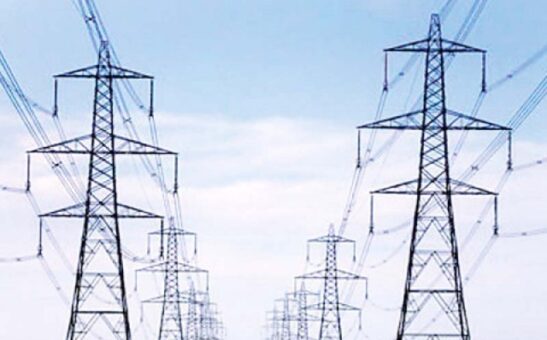
KARACHI: Power generation in Pakistan declined by one percent YoY to 121,867 GWh (23,618 MW) during FY20 as compared to 122,708 GWh (23,781 MW) in FY19 due to overall slow economic activity during the year and the impact of COVID-19 related lockdowns and restrictions during Mar-May 2020, analysts said on Thursday.
The analysts at Topline Securities said that power mix during FY20 moved in favor of Hydel (32 percent in FY20 against 26 percent in FY19) and Coal (21 percent in FY20 against 13 percent in FY19), replacing Gas (12 percent in FY20 against 18 percent in FY19) and Furnace Oil based generation (3 percent in FY20 against 7 percent in FY19).
RLNG contributed 20 percent to the overall power mix, with Nuclear and Wind based generation clocking in at 8 percent and 2 percent, respectively during the year.
Coal power generation has increased due to the commencement of China Hub Power Generation (1,220 MW) and Engro Powergen Thar (660 MW), while Hydel power generation increased due to improved availability of water amidst higher water availability during the year.
The demand for Furnace Oil and Gas based power fell due to their higher cost of producing power, which resulted in their respective decline in merit order list.
The installed Capacity in the country touched 34,157MW in Jun-2020 compared to 30,590 MWin Jun-2019.
Power Generation started to decline in Mar-2020 (down by 9 percent YoY to 6,911 GWh from 7,621 GWh in Mar-2019) largely due to COVID-19 related lockdowns and restrictions.
A similar trend was also witnessed in Apr-2020 and May-2020 as Power Generation declined by 14 percent YoY and 5 percent YoY, respectively.
However, encouragingly Power Generation has picked up, though up 1 percent YoY, it is has almost double (+92 percent) from the low recorded in Mar-2020.
With industries opening up post COVID-19 lockdown and subsequent pick up in economic activity, we expect demand for Power to increase from here forth.
The average fuel cost was down by 3 percent YoY to Rs5.97/KWh in FY20 compared to Rs6.13/KWh in FY19.
This is mainly due to increase in Hydel based generation by 20 percent YoY (no fuel cost) and increased in coal based power generation at a lower cost of Rs6.1/Kwh.
-
SBP enhances financing limit to Rs2 billion for renewable energy schemes
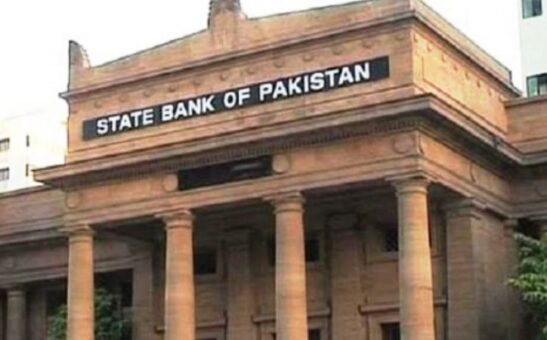
KARACHI: The State Bank of Pakistan (SBP) has increased cumulative financing limit to Rs2 billion and also enhanced project size to 5MW.
According to a statement issued on Wednesday, the central bank said it had enhanced the scope of its Refinance Scheme for Renewable Energy by allowing financing under category III of the scheme to solar and wind based energy sale companies.
In light of the feedback received from stakeholders, the size of the project established by vendor/ supplier/ energy sale company has been enhanced from 1 MW to 5 MW. Accordingly, the cumulative financing limit has also been increased from Rs.1 billion to Rs.2 billion.
SBP Financing Scheme for Renewable Energy was announced in June 2016with an aim to help addressing the challenges of energy shortages and climate change in the country.
The scheme comprised of two categories: Category 1 allowed financing for setting up of renewable energy power projects with capacity ranging from 1 MW to 50 MW for own use or selling of electricity to the national grid or combination of both.
Category II allowed financing to domestic, agriculture, commercial and industrial borrowers for installation of renewable energy based projects/ solutions of up-to 1 MW to generate electricity for own use or selling to the grid/distribution company under net metering.
Later, in July 2019, SBP introduced a new Category III for facilitating financing to vendors/suppliers for installation of wind and solar systems/solutions of upto 1 MW. SBP also launched a Shariah complaint version of the scheme in August 2019.
Since the introduction of the scheme, total outstanding financing under the Scheme has reached to Rs.15.6 billion for 217 projects having potential of adding 292 MW of energy supply.
This revision in the scheme is expected to not only attract fresh local and foreign investment in the sector but also facilitate production of clean energy in the country, helping in managing climate change.
-
Mari Petroleum discovers gas in Sindh
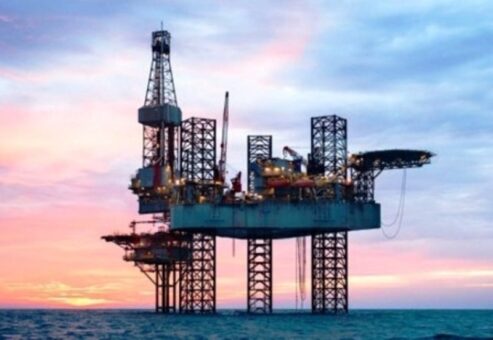
KARACHI: Mari Petroleum Company Limited (MPCL) on Monday announced discovery of gas from its exploratory well Hilal-1, drilled in Mari D&P Lease Area, located in Daharki, District Ghotki, Sindh.
Hilal-1 was spud-in on April 21, 2020 and drilled down to the depth of 1,202m into Sui Main Limestone(SML).
The well was drilled with the objective to test the hydrocarbon potentials of SML and Sui Upper Limestone (SUL).
The Drill Stem Tests (DSTs) carried out in SUL Formation flowed gas at a rate of 11 MMSCFD at wellhead flow pressure (WHFP)of 887 Psi at 48/64 inch choke size after acid job.
While DSTs carried out in SML Formation also successfully flowed 6.88 MMSCFD of gas with 132 barrels per day of water at WHFP of 804 Psi at 40/64 inch choke size subsequent to acid job.
It is highlighted that this is the 5th consecutive new discovery in Mari D&P Lease Area based on 1,079 sq.km carpet 3D seismic survey of the area in 2015, which was followed by an extensive drilling program.
-
Pakistan’s oil, gas import bill plunges by 28 percent in FY20
ISLAMABAD: Country’s import of oil and gas fell sharply by 28 percent during fiscal year 2019/2020 owing to significant decline in international prices.
The import of petroleum group has decline to $10.42 billion during fiscal year 2019/2020 as compared with $14.44 billion in the preceding fiscal year, according to data released by Pakistan Bureau of Statistics (PBS).
Industry sources explained that the slump had been observed in terms of value due to significant decline in international oil prices.
During the year the international oil prices were remained lower due to conflict between Russia and Saudi Arabia.
The Russia–Saudi Arabia oil price war of 2020 is an economic war triggered in March 2020 by Saudi Arabia in response to Russia’s refusal to reduce oil production in order to keep prices for oil at moderate level. This economic conflict resulted in a sheer drop of oil price over the spring of 2020.
Reportedly, on March 08, 2020, Saudi Arabia initiated a price war with Russia, facilitating a 65 percent quarterly fall in the price of oil.
Unofficial reports suggested that in the first few weeks of March, US oil prices fell by 34 percent, crude oil fell by 26 percent, and Brent oil fell by 24 percent.
The price war was triggered by a break-up in dialogue between the Organization of the Petroleum Exporting Countries (OPEC) and Russia over proposed oil-production cuts in the midst of the COVID-19 pandemic. Russia walked out of the agreement, leading to the fall of the OPEC+ alliance.
Oil prices had already fallen 30 percent since the start of the year due to a drop in demand. The price war is one of the major causes and effects of the currently ongoing global stock-market crash.
Pakistan’s import of retail petroleum products fell by 24.54 percent to $4.74 billion during fiscal year 2019/2020 as compared with $6.28 billion in the preceding fiscal year.
The imported quantity of the retail petroleum products, however, increased by 3.7 percent during the year under review. The quantity increased to 10.8 million metric tons during fiscal year 2019/2020 as compared with 10.42 million metric tons in the preceding year.
The import of petroleum crude even fell more sharply by 40.44 percent to $2.72 billion during fiscal year 2019/2020 as compared with $4.57 billion in the preceding fiscal year.
The import of Liquefied Natural Gas (LNG) has declined by 20.21 percent to $2.66 billion during fiscal year 2019/2020 as compared with $3.33 billion in the preceding fiscal year.
However, import of Liquefied Petroleum Gas (LPG) registered 17.63 percent growth to $294 million during fiscal year 2019/2020 as compared with $250 million in the preceding fiscal year.
-
Excessive Billing: NEPRA asked to conduct detailed audit of K-Electric
KARACHI: Sindh Governor Imran Ismail on Tuesday asked National Electric Power Regulatory Authority (NEPRA) to conduct detailed audit of K-Electric as many complaints were received related to excessive billing.
In a letter to Tauseef H Farooqi, Chairman, NEPRA, the Sindh governor said that on a daily basis, a large section of society was complaining against K-Electric (KE) authorities for multiple issues, one out of them is excessive billing. Unfortunately, KE-being the sole electricity provider to Karachi City has an obvious monopolistic approach towards its consumers.
“It becomes a nightmare for a common person, when he receives an exaggerated bill from KE, as there is a general perception that such situation has no remedy,” according to the letter.
As a matter of fact, KE instead of giving people relief against their complaints, advise them to pay the billed amount first (to avoid disconnection of electricity) and then wait for what KE decides upon their complaints.
It is pertinent to add that these complaints are not limited with domestic consumers only, commercial and industrial consumers are also facing similar approach from KE, and voicing against excessive billing at different forum.
The Sindh governor proposed that the NEPRA to accord instructions for conducting a thorough audit of complaints lodged against KE for excessive billing.
“And those which are found valid, be refunded their excessive paid amount instantly,” according to the letter.
-
K-Electric seeks stakeholders meeting to explain power generation
KARACHI: K-Electric, the power supply and generation utility, has requested Sindh governor for a meeting of stakeholders to discuss matters pertaining to power generation.
The power utility is under serious criticism for continuous breakdown of power in Karachi, the commercial hub of the country. The residents and business community equally suffered with unscheduled loadshedding for hours.
The power utility has its challenges and wanted to explain. In a letter to Sindh governor, the KSE has requested a meeting with all relevant stakeholders to discuss matters pertaining to power generation, its planning and matter related to financial management, the KE said in a tweet massage a few minutes ago while filing this new item at 1:22AM Saturday.
Furthermore, KE wants to present the steps taken as safety measures for the upcoming Monsoon season along with highlighting the city wide hazardous issues pertaining to power theft, illegal street light switches, and encroachment.
Work has been initiated to receive additional power from National Grid upon confirmation last month. Also, work is already in progress for the 900MW power plant for which the first unit will start generation from 2021.