Category: Energy

You can go through stories related to energy. The stories are about changes in petroleum prices and updates on energy sector of Pakistan and world.

  • Pakistan may cut petroleum prices from July 16, 2022

    Pakistan may cut petroleum prices from July 16, 2022

    ISLAMABAD: Pakistan likely to cut prices of petroleum products from July 16, 2022 in the wake of falling oil prices in the international markets.

    Prime Minister Shehbaz Sharif on Tuesday directed the authorities to pass on the full benefit of falling oil prices in the international markets to the masses.

    READ MORE: Gas price hike report baseless: Musadiq Malik

    The premier directed the ministries of petroleum and finance to prepare a summary for reduction in oil prices for next fortnight starting from July 16, 2022.

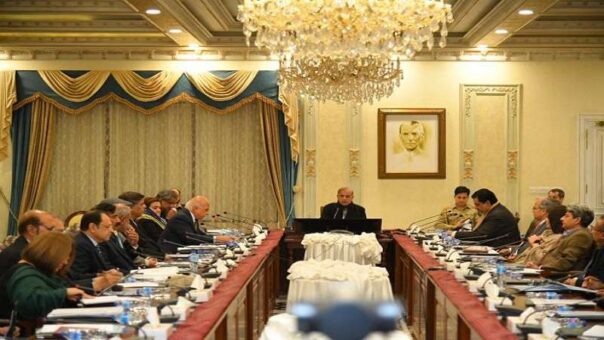
    Chairing a meeting on fuel prices, the Prime Minister said the people spent a difficult time, now they have the right to get full relief.

    He said we will take every step for the provision of relief to the masses who suffered heavily because of inflation caused by the previous government.

    READ MORE: Govt. halts gas supply to export industry: APTMA

    The Prime Minister said if the grace and blessings of Allah Almighty continue like this, they will bring more ease in the lives of the people.

    The meeting was also attended by senior officials of Oil and Gas Regulatory Authority (OAGRA) and other ministries and departments.

    Previously, the government was continuously increasing the prices of petroleum products since May 26, 2022 by eliminating subsidies and imposition of petroleum levy.

    The prices of petroleum products effective from July 01, 2022, were:

    READ MORE: FBR exempts sales tax on oxygen gas import

    The new prices of petrol have been increased by Rs14.85 per liter to Rs248.74 from Rs233.89.

    The rate of high speed diesel has been increased by Rs13.25 per liter to Rs276.54 from Rs263.31.

    The rate of kerosene oil has been increased by Rs18.83 per liter to Rs230.26 from Rs211.43.

    Similarly, the rate of light speed diesel has been increased by Rs18.68 per liter to Rs226.15 from Rs207.47.

    READ MORE: New prices of petroleum products in Pakistan from July 01, 2022

    Although, the prime minister directed the authorities to reduce the prices of petroleum products in the wake of fall in oil prices in the international markets but the imposition of petroleum levy may not give the government much room to reduce the prices drastically.

    Recently, National Assembly (NA) approved a levy of Rs50 per liter on each petroleum product. The assembly allowed the government to include the levy in the prices of petroleum products up to Rs50 per liter of each product.

  • Gas price hike report baseless: Musadiq Malik

    Gas price hike report baseless: Musadiq Malik

    ISLAMABAD: Minister of State for Petroleum Musadiq Malik on Friday addressed in a news conference about the baseless speculations regarding the increase in prices of gas.

    READ MORE: Govt. halts gas supply to export industry: APTMA

    While addressing in a news conference he said, we have just proposed new slabs to protect the people with low income while capable people will pay just 50 to 60 percent of the real price of gas.

    READ MORE: FBR exempts sales tax on oxygen gas import

    The state minister also said according to newly proposed prices, fifty percent of the consumers will pay the existing amount or less than that for gas.

    READ MORE: OGDCL discovers oil, gas reserves in Sindh

    He added that our every step is aimed at protecting poor segment of society and for this purpose, we have proposed subsidy for those consumers who use gas for just cooking and they are fifty percent of total consumers.

    READ MORE: OGDCL declares over 63% net profit for 1HFY22

  • Pakistan petroleum sales climb up by 16 per cent in FY22

    Pakistan petroleum sales climb up by 16 per cent in FY22

    KARACHI: The domestic sales of petroleum products in Pakistan have jumped up by 16 per cent to 22,595 metric tons in fiscal year 2021/2022 when compared with the preceding year, a report said on Monday.

    However, Pakistan oil sales declined by 11 per cent MoM to 1.9 million in June 2022 which is mainly driven by 14 per cent MoM dipped in MOGAS and High Speed Diesel (HSD) sales.

    READ MORE: Dealers threaten shutting down petrol pumps from July 18

    “This was due to sharp increase in MOGAS and HSD prices by 31 per cent and 51 per cent in June 2022, respectively,” said analysts at Topline Securities Research.

    This led to reduced demand of petroleum products and rise in usage of public transport/car pooling, they added.

    On YoY basis, oil sales remained flat during the month of June 2022.

    READ MORE: NA approves levy on petroleum products up to Rs50/liter

    MOGAS and HSD sales were down 12 per cent and 16 per cent on MoM basis to 702k tons and 713k tons, respectively. Excluding Furnace Oil (FO), overall petroleum sales volume stood at 1.48 million tons in June 2022, down 13 per cent MoM and 7 per cent YoY.

    “In FY22, Pakistan’s oil sales clocked in at 22.6 million tons, up 16 per cent YoY, which was much better than the last 10-year growth rate,” the analysts said.

    This was mainly led by higher than expected growth in Furnace Oil (FO) sales which reached 4 million tons (highest since FY18) due to high demand in power plants amidst non-availability of RLNG along with low hydel generation.

    READ MORE: New prices of petroleum products in Pakistan from July 01, 2022

    Excluding FO, oil sales were up 13 per cent YoY in FY22 due to uptick in MOGAS and HSD sales.

    Motor Gasoline (MOGAS) and High Speed Diesel (HSD) volumes witnessed jump of 9 per cent YoY and 15 per cent YoY to 8.9 million tons each in FY22. This was driven by (i) strong economic growth including growth in Agriculture sector, and (ii) increase in auto sales.

    Pakistan State Oil (PSO) sales outperformed the sector growing by 29 per cent whereas Attock Petroleum (APL) sales improved by 22 per cent in FY22. Shell Pakistan (SHEL) and Hascol Petroleum (HASCOL) underperformed the market during FY22.

    READ MORE: Petroleum levy to generate Rs750 billion

    Moving forward, we expect oil sales to decline by around 15 per cent YoY in the current fiscal year to due to (i) expected decline in auto sales in FY23, (ii) low growth estimated in agriculture sector (2.5 per cent for FY23F vs. 4.4 per cent in FY22), and (iii) sharp increase in petrol/diesel prices.

  • Dealers threaten shutting down petrol pumps from July 18

    Dealers threaten shutting down petrol pumps from July 18

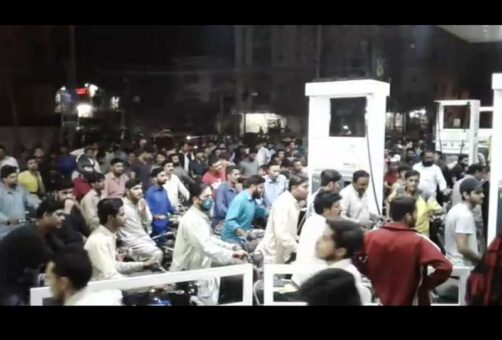
    KARACHI: Pakistan Petroleum Dealers Association (PPDA) on Saturday announced a complete shutdown of petrol pumps from July 18, 2022 in protest of rise in cost of doing business and falling dealers margin.

    READ MORE: NA approves levy on petroleum products up to Rs50/liter

    Abdul Sami Khan, Chairman, PPDA at a meeting discussed the current dealers margin, which were forcing petroleum dealers to shut down their business. The association demanded that the dealers margin should be enhanced to 6 per cent.

    Sami Khan said that due to high cost of electricity their profit margin declined drastically. Besides, massive hike in prices of petroleum products also affected their business adversely.

    READ MORE: New prices of petroleum products in Pakistan from July 01, 2022

    He further added, the protest shut down would continue till the demands were accepted. He said that fuel stations could not continue supply while sustaining continuous losses. At present the dealers are receiving margin after deduction of tax at Rs3.20 per liter on diesel and Rs3.90 on petrol per liter.

    READ MORE: Petroleum levy to generate Rs750 billion

    He also recalled the promise of increasing margin to 4.5 per cent given by the previous PTI government but due to increased prices of diesel and petrol, the PPDA is facing many problems in operating the fuel stations.

    The chairman threatened the present coalition government led by PML-N to close down the fuel stations if the demand of increasing margin to 6 per cent is not accepted.

    READ MORE: What are new petroleum prices in Pakistan?

  • NA approves levy on petroleum products up to Rs50/liter

    NA approves levy on petroleum products up to Rs50/liter

    ISLAMABAD: National Assembly (NA) has approved a levy of Rs50 per liter on each petroleum product.

    The assembly allowed the government to include the levy in the prices of petroleum products up to Rs50 per liter of each product.

    READ MORE: All tax proposals of IT sector accepted: FBR

    The National Assembly passed the Finance Act, 2022 that empowers the government to enforce the laws that were amended through federal budget 2022/2023.

    In this regard amendment has been made to Petroleum Products (Petroleum Levy) Ordinance, 1961.

    READ MORE: Pakistan’s salaried class unhappy over new tax changes

    In this ordinance the fifth schedule has been amended as following:

    High Speed Diesel: Rs50/liter

    Motor Gasoline (Petrol): Rs50/liter

    Superior Kerosene Oil (SKO): Rs50/liter

    Light Diesel Oil (LDO): Rs50/liter

    READ MORE: Pakistan reduces salary tax slabs to 7 in budget 2022/23

    High Octane Blending Component (HOBC): Rs50/liter

    E-10 Gasoline: Rs50/liter

    Liquefied Petroleum Gas (Produced/extracted in Pakistan): Rs30,000 per metric ton.

    The government has estimated a collection of Rs750 billion as petroleum levy during the fiscal year 2022/2023.

    READ MORE: Pakistan reduces salary tax slabs to 7 in budget 2022/23

    It is worth mentioning that the previous PTI government had not imposed a petroleum levy in order to provide petroleum products at cheaper rates.

    However, the current coalition government led by PML-N in its budget 2022/2023 announced on June 10, 2023 estimated collection of Rs750 billion during the current fiscal year.

  • New prices of petroleum products in Pakistan from July 01, 2022

    New prices of petroleum products in Pakistan from July 01, 2022

    ISLAMABAD: The government of Pakistan has announced another raise in prices of petroleum products effective from July 01, 2022.

    The new prices of petrol have been increased by Rs14.85 per liter to Rs248.74 from Rs233.89.

    The rate of high speed diesel has been increased by Rs13.25 per liter to Rs276.54 from Rs263.31.

    The rate of kerosene oil has been increased by Rs18.83 per liter to Rs230.26 from Rs211.43.

    READ MORE: New petroleum prices in Pakistan from June 16, 2022

    Similarly, the rate of light speed diesel has been increased by Rs18.68 per liter to Rs226.15 from Rs207.47.

    The National Assembly on Wednesday passed the Finance Bill 2022, which enabled the government to impose petroleum levy up to Rs50 per liter on petroleum products.

    At present the government is not charging a levy on sale of petroleum products.

    Besides, the sales tax is also at the minimum level of zero per cent on petroleum products.

    READ MORE: Petroleum prices in Pakistan may rise from July 01, 2022

    The previous government of PTI had kept both the petroleum levy and sales tax at zero in order to provide relief to the masses. The PTI government also provided a huge subsidy on prices of petroleum products in order to lower the rates and provide relief to the masses.

    However, former Prime Minister Imran Khan was removed through a vote of no-confidence motion on April 10, 2022.

    Since then the new coalition government led by PML-N increased the prices of petroleum products sharply on three different occasions.

    READ MORE: New petroleum prices in Pakistan from June 03, 2022

    The new government of Prime Minister Shehbaz Sharif increased the prices of petroleum products on May 26, 2022, June 02, 2022 and June 15, 2022. Cumulatively, the government increased the price of petrol by 84 per liter in these price hikes.

    The present government in the budget estimated to collect Rs750 billion as petroleum levy during the fiscal year 2022/2023. As this fiscal year is starting from July 01, 2022, it is likely that the government will opt to impose the levy from this date.

    Shaukat Tarin, former finance minister during PTI tenure said that on the demand of the International Monetary Fund (IMF) the government was increasing the rates of petroleum products. The government will further increase the prices of petroleum products to Rs300 per liter.

    READ MORE: Petroleum prices in Pakistan from June 01, 2022

    In a Tweet he said: “IMF wants more prior actions before they even consider taking the proposal to their board. Rs 855 billion Petroleum Development Levy (PDL) and 11 per cent sales tax. Will push cost to Rs300+/litre. Immediate increase in electricity prices. Rs800 billion provincial surpluses signed off by provinces, when they showed only Rs80 billion.”

    Previously, the government announced the increase of the price of diesel to Rs263.31 per liter effective from June 16, 2022. The rate of high speed diesel had been increased by Rs59 per liter. The rate of this product was Rs144.16 as of May 26, 2022. A cumulative increase of Rs119 during the past 20 days. Similarly, the price of petrol increased by Rs84 to Rs233.89 from Rs149.89 as of May 26, 2022.

    READ MORE: Petroleum levy to generate Rs750 billion

  • Petroleum prices in Pakistan may rise from July 01, 2022

    Petroleum prices in Pakistan may rise from July 01, 2022

    KARACHI: The prices of petroleum products in Pakistan are likely to increase due to planned implementation of petroleum levy and sales tax from July 01, 2022.

    The National Assembly on Wednesday passed the Finance Bill 2022, which enabled the government to impose petroleum levy up to Rs50 per liter on petroleum products.

    READ MORE: New petroleum prices in Pakistan from June 16, 2022

    At present the government is not charging a levy on sale of petroleum products.

    Besides, the sales tax is also at the minimum level of zero per cent on petroleum products.

    The previous government of PTI had kept both the petroleum levy and sales tax at zero in order to provide relief to the masses. The PTI government also provided a huge subsidy on prices of petroleum products in order to lower the rates and provide relief to the masses.

    READ MORE: New petroleum prices in Pakistan from June 03, 2022

    However, former Prime Minister Imran Khan was removed through a vote of no-confidence motion on April 10, 2022.

    Since then the new coalition government led by PML-N increased the prices of petroleum products sharply on three different occasions.

    The new government of Prime Minister Shehbaz Sharif increased the prices of petroleum products on May 26, 2022, June 02, 2022 and June 15, 2022. Cumulatively, the government increased the price of petrol by 84 per liter in these price hikes.

    READ MORE: Petroleum prices in Pakistan from June 01, 2022

    The present government in the budget estimated to collect Rs750 billion as petroleum levy during the fiscal year 2022/2023. As this fiscal year is starting from July 01, 2022, it is likely that the government will opt to impose the levy from this date.

    Shaukat Tarin, former finance minister during PTI tenure said that on the demand of the International Monetary Fund (IMF) the government was increasing the rates of petroleum products. The government will further increase the prices of petroleum products to Rs300 per liter.

    In a Tweet he said: “IMF wants more prior actions before they even consider taking the proposal to their board. Rs 855 billion Petroleum Development Levy (PDL) and 11 per cent sales tax. Will push cost to Rs300+/litre. Immediate increase in electricity prices. Rs800 billion provincial surpluses signed off by provinces, when they showed only Rs80 billion.”

    READ MORE: Petroleum levy to generate Rs750 billion

    Previously, the government announced the increase of the price of diesel to Rs263.31 per liter effective from June 16, 2022. The rate of high speed diesel had been increased by Rs59 per liter. The rate of this product was Rs144.16 as of May 26, 2022. A cumulative increase of Rs119 during the past 20 days. Similarly, the price of petrol increased by Rs84 to Rs233.89 from Rs149.89 as of May 26, 2022.

    New prices of petroleum products with effect from June 16, 2022 are as follows:

    i. MS ( Petrol) Rs. 233.89/Liter

    ii. High Speed Diesel(HSD) Rs. 263.31/Liter

    iii. Kerosene (SKO) Rs. 211.43/Liter

    iv. Light Diesel Oil (LDO) Rs. 207.47/Liter.

  • GIZ Pakistan organizes certificate award ceremony

    GIZ Pakistan organizes certificate award ceremony

    LAHORE: Deutsche Gesellschaft fur Internationale Zusammenarbeit (GIZ) Pakistan has organized certificate award and showcasing programme achievements ceremony under clean power purchasing development project.

    A certificate award ceremony for Master Trainers in Entrepreneurial Skills trained at the Professional Development Center of National University of Science & Technology (NUST) Islamabad under the Clean Power Purchasing Development project. The project is being implemented by Deutsche Gesellschaft fur Internationale Zusammenarbeit (GIZ) as part of the DeveloPPP.de Programme of German Federal Ministry for Economic Cooperation & Development (BMZ).

    Chief Operating Officer TEVTA Punjab, Zaheer Abbas was the chief guest at the occasion who distributed the certificates to the master trainers along with Ms. Iris Cordelia Rotzoll, Head of Programme TVET Sector Support Programme GIZ, Muhammad Ishaq Bhatti, Chairperson Solar Quality Foundation (SQF), Faisal Mahmood, Regional Coordinator (Punjab) and DV Clean Power Purchasing Development Project, and Haseeb Saadat CEO Allied Solar Private Limited & local partner of Power One for One Germany.  Other senior officials and heads of institutes from Punjab TEVTA were also present at the occasion.

    The DV Clean Power Purchasing Development Project, Faisal Mahmood presented the programme achievements over the last three years. The project has trained 37 Master Trainers on technical skills related to design, installation, O&M of solar PV plants, 30 Assessors in CBT&A to support implementation of National Vocational Qualification in Solar PV, and 40 TVET Professionals from TEVTA Punjab and PVTC on Entrepreneurial Skills to promote entrepreneurship in the Solar PV sector. A 10-kW grid-connected pilot solar PV plant was installed with the support of project partner Power One for One at TEVTA Government Technical Training Institute, Gulberg Lahore for education purpose.

    Addressing to the participants, the Head of TVET Sector Support Programme GIZ, Ms. Iris Cordelia Rotzoll, stated that all these efforts not only lead to a new beginning and small steps toward sustainable energy generation and management, but also open avenues to promote the trend of green skills in Pakistan. The master trainers, trainers and assessors trained in Solar PV technology will create a pathway for internal and external buy-in among more and more TVET trainers and managers.

    Speaking at the ceremony Zaheer Abbas appreciated the role of German cooperation for promotion of clean energy in Pakistan through DeveloPPP Programme. He highlighted the fact that promotion of green skills is inevitable to fight the global climate change and save the environment while also conserving the natural resources. He expressed his resolve that master trainers trained under the project will be utilized to support implementation of solar PV training courses in Punjab and increase the quality & access to trained human resource for solar companies.

  • Govt urged to minimize reliance on LNG import

    Govt urged to minimize reliance on LNG import

    ISLAMABAD: As Pakistan is facing with severe natural gas shortage for the last couple of years, it has started relying heavily on Liquefied Natural Gas (LNG), however, the government needs to explore other energy sources to save environment as well as financial spending on the LNG import.

    There are other green energy options like solar and wind that can provide cheap environment-friendly energy sources and the country needs go for these options.

    This was the crux of one of the two reports “Gas Monitor – Pakistan” & “Tabeer LNG Terminal, Socio-Economic & Environmental Analysis” launched by the Indus Consortium held about the gas provision as an energy source in the country at a ceremony here on Friday.

    The reports launch was attended by representatives of academic institutions, member of GROW Green Network, which is an umbrella of environmental organizations of Pakistan working for the promotion of renewable energy, independent researchers, member of Renewable Energy coalition Pakistan and alliance for climate Justice and clean energy.

    Sharing findings of the Gas Monitor – Pakistan report, Dr. Amanullah Mahar, Director, and Center for Environmental Sciences, University of Sindh, Jamshoro, said that since LNG, fossil gas is a very high carbon intensive fuel and cannot be called “transition” fuel source to a cleaner energy system.

    He explained that fossil gas (methane) can be leaked from the re-gasification, transport, and consumption and processing of it. After carbon dioxide (CO2), methane is the second most abundant anthropogenic greenhouse gas and responsible for 20% of worldwide atmospheric emissions. The methane is 25 times more potent than CO2 at absorbing atmospheric heat.

    While presenting findings of another report on “Tabeer LNG Terminal, Socio-Economic & Environmental Analysis”, an independent sustainability consultant Fatima Fasih said that keeping the global LNG markets and their volatility in consideration, it is clear that LNG is no longer a financially-viable source of fuel.

    She said, “Instead of focusing on short-term monetary gains and quick gains in energy for the economy, public and private institutions should focus on building stronger energy security within Pakistan and develop a greener economy through a just and equitable energy transition towards renewable energy.”

    She suggested that solar and wind power have shown remarkable success in Pakistan from an economic perspective and should be invested in to increase their ratios within the country’s energy mix and help the country transition towards a just and sustainable energy transition.

    Iqbal Hyder, Board member of Indus Consortium and Executive Director Laar Humanitarian Development Program (LHDP), while concluding his remarks, said that the livelihood of population inhabiting along the coastal areas is directly dependent on mangrove forests.

    He said cautioned that any additional construction or industrial operations in these areas will exacerbate the declining socio-economic conditions of the local communities. “We need to recognize the valuable indigenous knowledge for local fishing and rejuvenate the current worsening fishing populations.”

    The Gas Monitor – Pakistan report focuses on the case of the development of Pakistan’s gas sector, especially LNG. It discusses how increasing reliance on LNG is posing challenges to the country’s economy on one hand and the release of methane gas emissions is deteriorating the environment on the other.

    The monitor also comes up with a set of recommendations that present a potential way out of this entrenched dependence and its associated impacts.

    An analysis of the socio-economic and environmental impacts of the Tabeer LNG terminal, Port Qasim, Karachi, investigates the Environmental Social Impact Assessment (ESIA) and explores the Corporate Social Responsibility criterion with a set of recommendations.

    Indus Consortium is an umbrella organization of over 60 civil society organizations across Pakistan, working on DRR, climate change, green development, and green finance. It also envisions a democratic and equitable society where all citizens enjoy equal economic, cultural, and political rights, with a mission to work for local communities to enhance their resilience and participation in green development.

  • OGDCL discovers oil, gas reserves in Sindh

    OGDCL discovers oil, gas reserves in Sindh

    KARACHI: Oil and Gas Development Company Limited (OGDCL), a public limited company of Pakistan with 75 percent share of the government, on Wednesday announced a discovery of oil and gas reserves in Tando Allha Yar, Sindh Province.

    The Joint Venture of Nim Block Comprising OGDCL as Operator (95 per cent) and Government Holdings (Private) Limited (GHPL) (5 per cent carried) has discovered oil and gas from exploratory well namely Nim East- 1 located in District Tando Allah Yar, Sindh Province, the company said in a statement.

    READ MORE: OGDCL declares over 63% net profit for 1HFY22

    Nim East-1 was spudded in on March 21, 2022 as an exploratory well by using OGDCL’s in-house expertise and in close collaboration with GHPL team.

    The well was drilled down to 2573m. Based on the results of wireline logs interpretation, Drill Stem Test-1 in the Basal Sand has tested 1400 Barrels of Oil per Day (BOPD) and 5.02 Million Standard Cubic Feet per Day (MMSCFD) Gas through choke size 32/64” at Well Head Flowing Pressure (WHFP) of 1820 Pounds per Square Inch (psi).

    READ MORE: OGDCL declares Rs33.63 billion net profit in first quarter

    “The said discovery is the 11th discovery in Nim Block which shows the commitment of Nim Joint Venture Partners to exploit the hydrocarbon potential of the block besides reflection of aggressive exploration strategy,” according to the statement.

    Discovery will help in mitigating energy demand and supply gap from indigenous resources and will add to the hydrocarbon reserve base of joint venture entities and the country.

    READ MORE: OGDCL discovers huge gas deposits in Balochistan