Category: Finance

Explore finance-related stories with Pakistan Revenue, your source for the latest updates on Pakistan’s economy, financial trends, and market insights. Stay informed with real-time economic developments.

  • SBP’s reserves fall to $10.889 billion

    SBP’s reserves fall to $10.889 billion

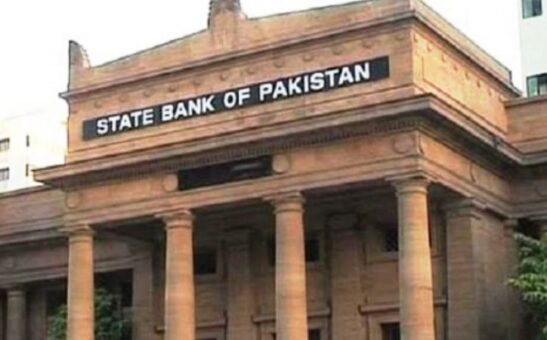
    KARACHI: The official reserves of State Bank of Pakistan (SBP) have reduced by $85 million to $10.889 billion by week ended April 17, 2020, the central bank said on Thursday.

    The SBP attributed this decline to government external debt payments of $145 million.

    The SBP said that on April 20, 2020, it received $1.39 billion from International Monetary Fund (IMF) under the Rapid Financing Instrument (RFI) to address the economic impact of the Covid-19 shock.

    These funds will be part of SBP weekly reserves data as of 24-April-2020, to be released on 30-April-2020.

    The total liquid foreign reserves held by the country stood at $17.300 million on April 17, 2020. The reserves held by commercial banks were at Rs6.41 billion.

  • ECC discusses arrest of PNSC ship by South Africa

    ECC discusses arrest of PNSC ship by South Africa

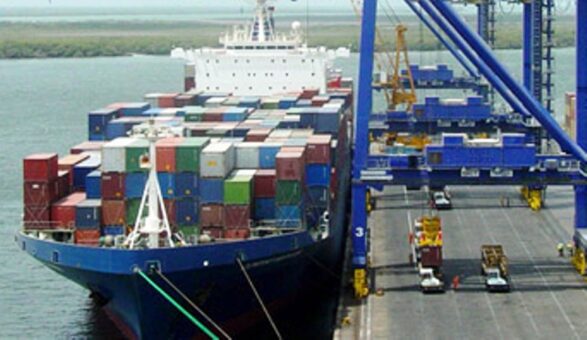
    ISLAMABAD: South Africa has arrested a ship of Pakistan National Shipping Company (PNSC) for alleged payment default by Pakistan Steel Mills.

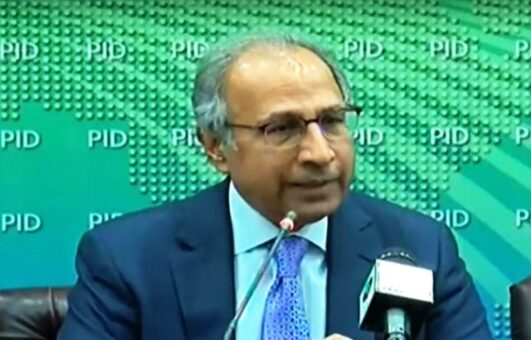
    The issue was discussed at the Economic Coordination Committee (ECC) of the Cabinet on Wednesday which was chaired by Adviser to the Prime Minister on Finance and Revenue Dr Abdul Hafeez Shaikh.

    A statement said that the ECC considered a proposal by the Ministry of Maritime Affairs regarding arrest of PNSC ships in South Africa on account of alleged claims of M/s Coniston against Pakistan Steel Mills Ltd and asked the Finance Secretary to engage with the PNSC and PSM and seek opinion of the Law Division, if necessary, to resolve the issue having ended up in litigation.

    The ECC approved release of Rs 75 billion from PM’s Relief Package of Rs 200 billion for targeted payments to the low-income groups, especially labourers and daily wagers most severely affected by the lockdown situation in the country.

    Under the decision, disbursement of Rs 12,000/- per selected person would be made using the Ehsaas disbursement mechanisms under a programme called “Mazdoor Ka Ehsaas Programme”.

    For this purpose, a fourth category in addition to already existing three categories in “Ehsaas Kifalat”, would be created and standard filters/checks of Ehsaas Program would be applied for identification of the beneficiaries.

    Earlier, the ECC was told that after the usual filters and checks, up to 6 million low-income people were expected to benefit under the planned 4th category in addition to the 12 million labour population already targeted through category 1-3 of Kifalat.

    “Mazdoor Ka Ehsaas Programme” was aimed at extending much-needed support in the current situation to the low-income labour/daily wagers mostly involved in activities such as loaders, cleaning staff, contract employees, piece rate workers, self-employed street vendors, construction workers, painters, welders, mechanics, carpenters, domestic help, drivers, etc.

    The ECC also asked the Ministry of Industries and Production and the Poverty Alleviation and Social Sector Development Division (PASSD) to jointly work out comprehensive mechanism and modalities to ensure a transparent and efficient disbursement of the support to the deserving people.

    During the meeting, the ECC on two separate proposals approved a technical supplementary grant of Rs 606 million for 19 projects to be implemented by the Government of Balochistan for FY 2019-20 and another technical supplementary grant amounting to Rs 7 million for purchase of spare parts for helicopter maintenance by Frontier Corps Balochistan (North).

    The ECC also approved release as government loan of Rs 1.30 billion in the current financial year and Rs 3.85 billion per annum during the next three years for settlement of the outstanding liabilities of litigants in the case involving Pakistan Steel Mills (PSM).

    On a proposal by the Ministry of Commerce, the ECC approved notification of the Export Policy Order, 2020 and Import Policy Order, 2020 in consolidated form as per the Law Division’s recommendations for the convenience of the business community.

    The ECC also approved a proposal by the Ministry of Overseas Pakistanis and HRD for approval of the budget proposal for the year 2019-20 & revised budget estimate for 2018-19 of EOBI.

    The ECC, on a proposal by the Ministry of Climate Change, approved exemption from the Re-lending Policy of the Government in respect of a USD 188 million World Bank IDA for the Pakistan Hydromet and Ecosystem Restoration Services Project.

    The ECC also accorded principled approval to a proposal by the Ministry of National Health Services for provision of Rs 150 million funds as grant in aid/seed money for Islamabad Healthcare Regulatory Authority, the ECC asked the Secretary Finance and Secretary Health to jointly to work out modalities for the arrangement of funds.

    On a proposal by the Ministry of Industries and Production seeking a supplementary grant of Rs 288 million for payment of salaries to the employees of Pakistan Machine Tool Factory, the ECC asked the Finance Division and the Industries and Production Division to sit together and resolve the issue.

  • SBP receives $1.39 billion from IMF under Rapid Financing Instrument

    SBP receives $1.39 billion from IMF under Rapid Financing Instrument

    KARACHI: State Bank of Pakistan (SBP) on Wednesday said that it has received $1.39 billion from International Monetary Fund (IMF) under Rapid Financing Instrument program to fight against COVID-19.

    The Executive Board of the IMF last week approved the disbursement of $1.386 billion under the Rapid Financing Instrument to address the economic impact of the Covid-19 shock.

    With the near-term outlook deteriorating sharply, the authorities have swiftly put in place measures to contain the impact of the shock and support economic activity. Crucially, health spending has been increased and social support strengthened, it added.

    As the impact of the COVID-19 shock subsides, the authorities’ renewed commitment to implement the policies in the existing EFF will help support the recovery and strengthen resilience.

    The Executive Board of the International Monetary Fund (IMF) approved a purchase of Pakistan under the Rapid Financing Instrument (RFI) equivalent to SDR 1,015.5 million (US$ 1.386 billion, 50 percent of quota) to meet the urgent balance of payment needs stemming from the outbreak of the COVID-19 pandemic.

    While uncertainty remains high, the near-term economic impact of COVID-19 is expected to be significant, giving rise to large fiscal and external financing needs. The IMF support will help to provide a backstop against the decline in international reserves and provide financing to the budget for targeted and temporary spending increases aimed at containing the pandemic and mitigating its economic impact.

    The IMF remains closely engaged with the Pakistani authorities and as the impact of the COVID-19 shock subsides will resume discussions as part of the current EFF.

    Following the Executive Board discussion, Geoffrey Okamoto, First Deputy Managing Director and Acting Chair, made the following statement:

    “The outbreak of Covid-19 is having a significant impact on the Pakistani economy. The domestic containment measures, coupled with the global downturn, are severely affecting growth and straining external financing. This has created an urgent balance of payments need.

    “In this context of heightened uncertainty, IMF emergency financing under the Rapid Financing Instrument provides strong support to the authorities’ emergency policy response, preserving fiscal space for essential health spending, shoring up confidence, and catalyzing additional donor support.

    “In response to the crisis, the government of Pakistan has taken swift action to halt the community spread of the virus and introduced an economic stimulus package aimed at accommodating the spending needed to tackle the health emergency and supporting economic activity. Crucially, the authorities are increasing public health spending and strengthening social safety net programs to provide immediate relief to the most vulnerable. Similarly, the State Bank of Pakistan has adopted a timely set of measures, including a lowering of the policy rate and new refinancing facilities, to support liquidity and credit conditions and safeguard financial stability. In this context, the authorities’ policies should be targeted and temporary.

    “As the crisis abates, the authorities’ renewed commitment to the reforms in the existing Extended Fund Facility—in particular those related to fiscal consolidation strategy, energy sector, governance, and remaining AML/CFT deficiencies—will be crucial to entrench resilience, boost Pakistan’s growth potential, and deliver broad based benefits for all Pakistanis.

    “Expeditious donor support is needed to close the remaining balance of payments gap and ease the adjustment burden.”

  • FDI inflow registers sharp growth of 137pc in July-March

    FDI inflow registers sharp growth of 137pc in July-March

    KARACHI: The inflow of Foreign Direct Investment (FDI) into Pakistan has witnessed sharp growth of 137 percent during first nine months (July – March) 2019-2020, State Bank of Pakistan (SBP) said on Tuesday.

    The FDI increased to $2.15 billion during first nine months of current fiscal year as compared with $905 million in the corresponding period of the last fiscal year.

    The inflows under this head increased to $2.69 billion during the period under review as compared with $2.14 billion in the corresponding period of the last fiscal year, showing 25.6 percent growth. The outflows, however, fell by 56 percent to $548 million during first nine months of current fiscal year as compared with $1.24 billion in the same period of the last fiscal year.

    Portfolio investment in equity market increased by 75 percent as outflow reduced to $103.6 million during July –March 2019/2020 as compared with outflow of $409 million in the corresponding period of the last fiscal year.

    Therefore, the foreign private investment increased by 312 percent to $2.044 billion in first nine months of current fiscal year as compared with $495.6 million in the same period of the last fiscal year.

  • Commission constituted to review salary, perks of government employees

    Commission constituted to review salary, perks of government employees

    ISLAMABAD: The federal government has constituted a pay and pension commission to review existing salary and perks.

    According to the finance ministry, the government of Pakistan had constituted a Pay and Pension Commission, with effect from 14-04-2020.

    The Composition of the Commission shall be as follows:

    Mr. Wajid Rana, Former Federal Secretary, Chairman.

    Mr. Nazar Hussain Mahar, Retired Civil Servant, Member.

    Dr. Noor Alam, Retired Civil Servant, Member.

    Ms. Seema Kamil, President, United Bank Limited, Karachi, Member.

    Mr. Zubyr Soomro, Chairman, Board of Directors, National Bank of Pakistan, Member.

    Ms. Nausheen Ahmed, Company Secretary, ICI (Pakistan) Limited, Member.

    MEMBERS EX-OFFICIO

    Secretary, Finance Division, Government of Pakistan, Member.

    Secretary, Establishment Division, Government of Pakistan, Member.

    Secretary, Defence Division, Government of Pakistan, Member.

    Secretary, Finance Department, Government of Punjab, Member.

    Secretary, Finance Department, Government of Khyber Pakhtunkhwa, Member.

    Secretary, Finance Department, Government of Sindh, Member.

    Secretary, Finance Department, Government of Balochistan, Member.

    Secretary, Finance Department, Government of AJ&K, Member.

    Secretary, Finance Department, Government of Gilgit Baltistan, Member.

    An Officer of BS-21 of the Auditor, General of Pakistan, Government of Pakistan, Member.

    An Officer of BS-21, Controller General of Accounts, Government of Pakistan, Member.

    Joint Secretary (Regulations), Finance Division, Government of Pakistan, Member/Secretary.

    The terms of Reference of the commission are as following.

    i) PAY & ALLOWANCES

    a) Study the adequacy of existing Basic Pay Scale System and to evaluate the current salaries of Government employees throughout the federation including the provincial government and recommend measures for its improvement and uniformity. Also make recommendations for the streamlining of existing classification from BPS 1-22.

    b) Study the separations of existing Basic Pay Scales for specialized departments/occupations/cadres.

    c) Review of Special Scales such as Management Grades, Management Position Scales (MP Scales), Special Professional Pay Scales (SPPS), Project Pay Scales etc. and propose measures for uniformity and improvement.

    d) Review of admissible Regular allowance, Special incentives and all other allowances with a view to highlight prevalent distortions and recommend corrective measures.

    e) Review of existing perks and facilities and make recommendations, including possibility of their monetization.

    1)  PENSION

    To Review the Pension system of the Government of Pakistan:

    A) Highlight existing distortions and anomalies in the Pension Scheme and recommend remedial measures. Verify the sustainability of the current model after critically evaluating future liabilities through an actuarial study.

    B) Evaluate alternate system of Pension like defined contribution and setting up of pension funds in light of international best practices and recommend a system with clear timelines that is more efficient and sustainable, considering the available recourses.

    iii) To Review the existing incentive regime (honorarium and special rewards) and recommend improvement in it.

    iv) To evaluate and recommend legislative measures to protect and streamline Pay, Pension and Allowances regime for government employees.

    v) The Commission may, if so desired by the Government, make interim recommendation to provide interim relief, pending the submission of its final report.

    vi) The Commission shall have power to co-opt any person or agency to assist it in its deliberations>

    vii) The Finance Division shall provide Secretariat support to the Commission and the Commission shall make its recommendations within 6 Months of its constitution. While formulating its proposal/recommendations on the above terms of reference, the pay and pension commission would take into consideration the financial recourses of the Government.

    The scope of work of the Commission will include Federal and Provincial civil servants, other government servants, civilians paid from defence estimates, all Armed Forces/Civil Armed Forces personnel and holders of the posts in Management Scales and employees of such Public sector corporations/autonomous/semi-autonomous bodies, other than Banks and DFIs, which have adopted the scheme of Basic Pay Scales in toto.

    Employees of Public Sector Corporations/Autonomous/Semi-Autonomous bodies who are regulated under the Pay Scales prescribed by these organizations and the employees governed under the Industrial Relations Ordinance, 1969 and/or whose financial terms of service are settled through Collective Bargaining Agents, are executed from the scope of work of the Pay & Pension Commission.

  • Textile export falls by 18.4pc as COVID-19 affects global economies

    Textile export falls by 18.4pc as COVID-19 affects global economies

    KARACHI: The coronavirus pandemic (COVID-19) is taking its toll on Pakistani textile export as it fell by 18.40 percent in March 2020 as compared with previous month, according to data released by Pakistan Bureau of Statistics (PBS) on Friday.

    (more…)
  • IMF approves $1.38 billion for Pakistan to address economic impact of COVID-19 shock

    IMF approves $1.38 billion for Pakistan to address economic impact of COVID-19 shock

    KARACHI:  The Executive Board of the International Monetary Fund (IMF) approved the disbursement of $1.386 billion under the Rapid Financing Instrument to address the economic impact of the Covid-19 shock, according to statement received here late Thursday.

    With the near-term outlook deteriorating sharply, the authorities have swiftly put in place measures to contain the impact of the shock and support economic activity. Crucially, health spending has been increased and social support strengthened, it added.

    As the impact of the COVID-19 shock subsides, the authorities’ renewed commitment to implement the policies in the existing EFF will help support the recovery and strengthen resilience.

    The Executive Board of the International Monetary Fund (IMF) approved a purchase of Pakistan under the Rapid Financing Instrument (RFI) equivalent to SDR 1,015.5 million (US$ 1.386 billion, 50 percent of quota) to meet the urgent balance of payment needs stemming from the outbreak of the COVID-19 pandemic.

    While uncertainty remains high, the near-term economic impact of COVID-19 is expected to be significant, giving rise to large fiscal and external financing needs. The IMF support will help to provide a backstop against the decline in international reserves and provide financing to the budget for targeted and temporary spending increases aimed at containing the pandemic and mitigating its economic impact.

    The IMF remains closely engaged with the Pakistani authorities and as the impact of the COVID-19 shock subsides will resume discussions as part of the current EFF.

    Following the Executive Board discussion, Geoffrey Okamoto, First Deputy Managing Director and Acting Chair, made the following statement:

    “The outbreak of Covid-19 is having a significant impact on the Pakistani economy. The domestic containment measures, coupled with the global downturn, are severely affecting growth and straining external financing. This has created an urgent balance of payments need.

    “In this context of heightened uncertainty, IMF emergency financing under the Rapid Financing Instrument provides strong support to the authorities’ emergency policy response, preserving fiscal space for essential health spending, shoring up confidence, and catalyzing additional donor support.

    “In response to the crisis, the government of Pakistan has taken swift action to halt the community spread of the virus and introduced an economic stimulus package aimed at accommodating the spending needed to tackle the health emergency and supporting economic activity. Crucially, the authorities are increasing public health spending and strengthening social safety net programs to provide immediate relief to the most vulnerable. Similarly, the State Bank of Pakistan has adopted a timely set of measures, including a lowering of the policy rate and new refinancing facilities, to support liquidity and credit conditions and safeguard financial stability. In this context, the authorities’ policies should be targeted and temporary.

    “As the crisis abates, the authorities’ renewed commitment to the reforms in the existing Extended Fund Facility—in particular those related to fiscal consolidation strategy, energy sector, governance, and remaining AML/CFT deficiencies—will be crucial to entrench resilience, boost Pakistan’s growth potential, and deliver broad based benefits for all Pakistanis.

    “Expeditious donor support is needed to close the remaining balance of payments gap and ease the adjustment burden.”

  • Foreign exchange reserves increase to $17.295 billion

    Foreign exchange reserves increase to $17.295 billion

    KARACHI: Pakistan’s foreign exchange reserves have increased by $307 million to $17.295 billion by week ended April 10, 2020.

    A week ago the foreign exchange reserves were at $16.988 billion, the State Bank of Pakistan (SBP) said on Thursday.

    The officials foreign exchange reserves of the central bank increased by $252 million to $10.974 billion by week ended April 10, 2020 as compared with $10.722 billion a week ago.

    Similarly, the foreign exchange reserves held by commercial banks increased by $55 million to $6.321 billion by week ended April 10, 2020 as compared with $6.266 billion a week ago.

  • COVID-19 makes economy highly uncertain: SBP

    COVID-19 makes economy highly uncertain: SBP

    KARACHI: The State Bank of Pakistan (SBP) on Tuesday said that the global and domestic spread of Covid-19 has brought an exceptional set of challenges for the country.

    “The spillovers from the global economy and the infection-containment measures in the country are bound to weaken the economic activity and consumer demand and adversely impact supply,” the SBP said in its Second Quarterly Review on Pakistan Economic.

    As the situation is extremely fluid and highly uncertain, the economic outlook remains subdued compared to the pre-outbreak estimates.

    The government and the SBP have therefore taken a number of measures to mitigate the adverse impacts of Covid-19 on the economy.

    These include sizable fiscal spending programs, tax reliefs, and incentives to the construction industry.

    As for the SBP, within a span of 8 days (in March 2020), the Monetary Policy Committee cut the policy rate by 225 basis points.

    Furthermore, the SBP has announced multiple measures to provide relief to borrowers for one year on principal loan repayments, offer concessional financing to businesses that do not lay off workers, provide concessional financing to hospitals seeking to enhance their capacity to provide care for Coronavirus infected individuals, facilitate the general public’s access to financial services, simplify payment procedures for exporters and importers, among other measures.

    According to the report, the stabilization efforts and regulatory measures yielded notable improvements during the first half of FY20.

    The current account deficit contracted to a six-year low, foreign exchange reserves increased, the primary budget recorded a surplus, and core inflation eased. Importantly, export-based manufacturing showed signs of traction and construction activities picked up, indicating that the economy was on the path of recovery.

    Progress under the IMF program remained on track and the credit rating agencies maintained their stable outlook for Pakistan during the review period.

    Further improvements will require deep structural reforms to put the economy on a firm path towards sustainable growth.

    In case of balance of payments, the report noted that the improvement in current account mostly stemmed from a reduction in the import bill with some contribution from export earnings. Depressed international commodity prices had partially offset the gains in export volumes offered by a competitive exchange rate.

    With the exception of the telecommunications sector, foreign direct investment (FDI) inflows were also about the same level as last year. The report emphasized that reforms needed to be prioritized to attract and sustain higher FDI inflows into the country.

    Regarding the fiscal sector, the report noted that the primary budget recorded a surplus, while the fiscal deficit was contained during H1-FY20 compared to the same period last year.

    This was due to a significant growth in revenues despite a slowdown in the economy and the compression in imports. The reversal of earlier tax concessions and implementation of new levies helped increase the revenue collection.

    Nonetheless, the overall revenue target was missed, highlighting the scope for greater efforts to broaden the tax base and increase documentation in the economy.

    The report further highlighted the challenges pertaining to the agriculture sector. The sector appears less resilient to challenges like constrained water availability and climate change.

    The cotton crop, in particular, was hit by unfavorable weather, pest attacks and low water availability. Though the prospects for the wheat crop and livestock are encouraging, the decline in cotton production is likely to undermine the agriculture sector’s performance in FY20.

    On the inflation front, the report noted that the inflationary pressures continued to build up throughout the first half of FY20. While the non-food-non-energy (NFNE) inflation exhibited stability amid subdued demand conditions in the economy, food inflation surged steeply in both the quarters.

    Given that the surge in inflationary pressures was mostly an outcome of supply disruptions, which are typically seasonal and temporary and core inflation did not rise by a commensurate amount, the SBP’s projections for the average headline inflation for FY20 remained broadly unchanged at 11-12 percent.

    This was one of the major reasons the Monetary Policy Committee decided to keep the policy rate unchanged during both its September and November meetings during the first half of FY20.

    To ensure that the stabilization measures lead to a sustainable growth path for the country, the report emphasizes that the ongoing efforts must be complemented with further structural reforms.

    In this regard, the Special Section of the report identifies the state of competition in the domestic economy as an area needing attention of the policymakers.

    It assesses the current state of competition in the country, and highlights the importance of competition in achieving economic growth and price stability.

    The section argues that the overall competitive environment in Pakistan has been unfavorable for productivity enhancement and growth. In this context, a rethinking is needed with respect to the regulatory structure of the economy.

    The role of the public sector should generally be limited to addressing market failures through structural reforms, and only providing broad institutional support to businesses.

    Where targeted interventions are inevitable to support activity in the presence of market failures, it may be ensured that these do not become entrenched.