Category: National

  • PM approves 20pc trade officers’ quota for overseas Pakistanis

    PM approves 20pc trade officers’ quota for overseas Pakistanis

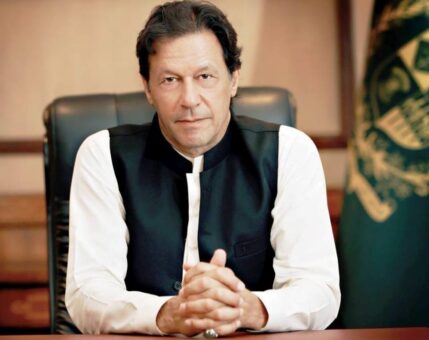
    ISLAMABAD: Prime Minister Imran Khan has approved quota of 20 percent for appointing overseas Pakistanis to the post of trade officers in Pakistan’s missions abroad.

    The decision was taken during a meeting regarding reforms in posting of Trade Officers Abroad, a statement said on Tuesday.

    It may be recalled that the prime minister had directed the ministry of commerce to revamp the entire system of postings of trade officers who are posted abroad to promote trade and commercial interests of the country.

    The new policy approved by the prime minister focuses on transparent and merit-based selection of the trade officers, market diversification, involvement of Pakistani diaspora, rationalizing the expenditure, broad-based monitoring and performance evaluation and automation of the processes.

    To effectively promote commercial interests of the country especially in the emerging markets and various regions across the globe, trade clusters have been focused in the new policy to ensure optimum utilization and maximum outreach of the trade officers.

    The prime minister was informed that in order to ensure broad-based and real-time monitoring of the performance of the trade officers, the entire evaluation process has been made IT-based.

    Secretary Commerce Mohammad Younus Dagha also briefed the prime minister about National Trade Data Analytics System which is being developed by the ministry.

    The National Trade Data Analytics System with its comprehensive database of trade statistics, exporters/importers directory, product database and trade lead insight will help in better evaluation and promotion of trade interests of the country.

  • Rise in rate by 20pc benefits 388,684 pensioners

    Rise in rate by 20pc benefits 388,684 pensioners

    KARACHI: The recent increase of 20 percent is benefiting about 388,684 pensioners of Employees Old-Age Benefit Institution (EOBI), said a statement on Monday.

    The present government has honored its commitment of EOBI pension. Therefore, EOB Pension rate is now increased by 20 percent effective from September, 2018.

    The total increase of Rs5 billion is shared by EOBI and the government which has paid its share of Rs2.4 billion to EOBI.
    A total of 388,684 pensioners are benefited from this increase. The minimum pension now stands at Rs6,500/- whereas maximum pension is now Rs13,416 per month.

    In order to keep the institution financially viable and to sustain the increase in EOBI pension rates the EOBI has requested to Employers Community to fulfill their legal and moral obligations for the coverage of their employees to pay EOBI contribution under current minimum wage of Rs.15,000/- i.e. an employer share of Rs.750/- per employee per month and an employee share of Rs.150/- per month.

    The higher wages would result in higher Pension for registered employees.

    As part of its responsibility in ease of Doing Business sprint-IV, EOBI with the co-operation of Board of Investment (BoI), Statement Bank of Pakistan and SECP has taken the initiative of On-line payment facility for its Contributors. Regd. Employers can generate payment vouchers and pay EOB Contribution by using internet banking from their offices without visiting bank branches.

    For the facilitation of EOBI pensioners, EOBI has introduced Pension payments through ATMs since October 2016, Pensioners can draw their Pensions from any ATM without incurring “switch fee”. To ensure genuine payments, Pensioners are required to provide bi-annual proof of life through biometric verification.

    EOBI is a pioneer Institution of the country which provides Pension through ATM Card.

  • SFA seals many breakfast eateries in Karachi

    SFA seals many breakfast eateries in Karachi

    KARACHI: Sindh Food Authority (SFA)has sealed many breakfast eateries in different districts of Karachi on Sunday.
    Director Operations, Sindh Food Authority Abrar and Deputy Director Imtiaz Abro along with his team inspected various big eateries.

    Names are as under:

    1) Master broast
    2) Baithak peshawari
    3) Dera
    4) Handi Inn
    5) New Dil pasand

    The team found extreme unhygienic and poor condition of production and storage area. Besides high contamination of dairy products also found in products including meat, salads, pees, sweets, vegetables.

    It is detected that temperature controlling devices were not installed and sanitary conditions were not satisfactory.
    Further following issues were also found:

    — No tracebility records were shown
    — No pests management records were shown
    — No medical certificates of food handlers
    — open kitchen
    — MSG(banned by supreme court) was found
    — unknown food colours/essence were found
    — Mislabelling

    The authority imposed fine of Rs400,000 in total and sealed eateries temporary, including Master Broast, Dera and Baithak.

    In district east, inspection was done at following breakfast eateries in Bahadurabad:
    1) Tooso 2) Nashta point 3) Abbas hotel 4) Akram lassi
    In Gulshan e Iqbal
    1) Continental sweets & bakers 2) Asia pakwan

    The issues were found at these eateries, included:
    — Extremely poor hygiene.
    — Sop’s were not followed.
    — Cross contamination in food.
    — Rancid oil.
    — no medical certificates of food handlers
    — incomplete traceability records

    The authorities imposed fine of Rs210,000
    The Sindh Food Authority has take action in District Central:

    Inspection done at following breakfast eateries
    1) Nasir Sweets, Dhamtal, United king, Dilpasand, Kamran Sweets, Madina Sweets, Chai Session and Mazaidar Pakwan Center.
    The issues were found as:
    — Extremely poor hygiene.
    — SOP’s were not followed.
    — Cross contamination in food.
    — no medical certificates

    Imposed fine of Rs40,000 in total and sealed Madina Sweets.

    Total fine imposed in different districts of Karachi is Rs650,000. The authority has give 7 days of time period is given to these eateries for improvement and chalaan payment.

  • Petrol price increased to Rs92.88 per liter

    Petrol price increased to Rs92.88 per liter

    ISLAMABAD: The government has increased the prices of petroleum products for the month of March 2019. The price of petrol has been increased to Rs92.88 per liter.

    A statement on Thursday said that the government decided to change prices of petroleum products for the month of March 2019 as follows:

    Ms 92 RON Petrol has been increased by Rs2.50 from Rs90.38 to Rs92.88.

    The price of High Speed Diesel (HSD) has been increased by Rs4.75 from Rs106.68 to Rs111.43 4.75.

    The price of Kerosene Oil (SKO) has been increased by Rs4 from Rs82.31 to Rs86.31

    The price of Light Diesel Oil (LDO) has been increased by Rs2.50 from Rs75.03 to Rs77.53.

    It may be added that based on international oil prices, increase of Rs. 4.71, Rs 9.44, Rs 8.06 and Rs 5.12 per litre in the price of MS (Petrol), HSD, Kerosene Oil and LDO respectively was worked out but the government decided not to pass on the full impact of price increase to the consumers and approved a reduced level of increase as indicated in the table above.

    The new prices shall be applicable from 1st to 31st March 2019.

  • Power theft cases: 20,712 FIRs lodged; 1,909 arrested

    Power theft cases: 20,712 FIRs lodged; 1,909 arrested

    ISLAMABAD: The Cabinet Committee on Energy (CCoE) has been informed that around 20,712 FIRs were registered and 1909 arrests were made in electricity theft cases.

    Finance Minister Asad Umar chaired the meeting of CCoE on Wednesday.

    The Power Division gave the meeting performance update on efficiency improvement and control of theft.

    Regarding control of theft, CCoE was apprised that during the period from October 13, 2018 to February 22, 2019 as many as 20,712 FIRs were registered and 1909 arrests were made.

    Detection bills charged amounted to Rs. 1,278.305 million while the amount of detection recovered was Rs 537.120 million.

    The CCoE appreciated the Power Division’s effective drive for recoveries and theft control. The meeting also noted the progress shared by the Power Division on proposed plan/measures to bring down power sector losses.

    The meeting was informed that total collection from November 2017 to January 2018 stood at Rs 203,953 million which rose to Rs. 243,642 million in the same period in FY 2018-19, showing net increase of Rs 39,689 million.

    Improved recovery from consumers and decrease in losses significantly contributed to the enhanced collection, the meeting was informed.

    The committee approved proposals from Power Division providing for all future Renewable Energy investments to be treated in line with the RE Policy 2019 that envisages a framework consistent with the current international market norms and greater consumer benefits.

    The Power Division informed that draft RE Policy 2019 was currently in circulation for comments by stakeholders and would be presented to the CCoE as soon as such comments were finalized.

    All those projects which have been granted LoS by AEDB, shall be permitted to proceed towards the achievement of their requisite milestones as per the RE Policy 2006.

    However in those cases where more than a year has elapsed since determination of tariff by NEPRA, their tariff would have to be reviewed by NEPRA as per policy.

    Petroleum Division apprised the CCoE about findings of the committee probing into the matter of inflated gas bills. It was also informed that report of audit being conducted in this matter will also be shared with the CCoE.

  • Pakistan to strongly respond Indian aggression, NSC decides

    Pakistan to strongly respond Indian aggression, NSC decides

    ISLAMABAD: Pakistan on Tuesday decided to strongly respond to Indian aggression, which violated the airspace.

    In this regard a special meeting of the National Security Committee was held. The committee strongly rejected Indian claim of targeting an alleged terrorist camp near Balakot and said India has committed an “uncalled for aggression to which Pakistan shall respond at the time and place of its choosing.”

    The meeting chaired by Prime Minister Imran Khan here at the PM office, was attended by Ministers of Foreign Affairs, Defence, Finance, Chairman Joint Chiefs of Staff Committee, COAS, CNS, CAS and other civil and military officials.

    The Prime Minister also summoned a special meeting of the National Command Authority on Wednesday – February 27.

    Prime Minister Imran Khan directed that elements of national power including the Armed Forces and the people of Pakistan to remain prepared for all eventualities.

    The meeting “strongly rejected Indian claim of targeting an alleged terrorist camp near Balakot and the claim of heavy casualties,” a statement from the PM House said.

    “Once again Indian government has resorted to a self-serving, reckless and fictitious claim. This action has been done for domestic consumption, being in election environment, putting regional peace and stability at grave risk.”

    The security forum said India has committed uncalled for aggression to which Pakistan shall respond at the time and place of its choosing.

    The National Security Committee said the claimed area of strike was open for the world to see the facts on ground and agreed that the domestic and international media be taken to the impact site. The government also decided to requisition the joint session of Parliament to take all parties on board.

    He also decided to engage with the global leadership to expose irresponsible Indian policy in the region.

    The Prime Minister appreciated the timely and effective response of the Pakistan Air Force to repulse Indian attempt without any loss of life or property.

  • FATF advises Pakistan to continue on action plan implementation

    FATF advises Pakistan to continue on action plan implementation

    ISLAMABAD: Financial Action Task Force (FATF) in its plenary meeting on Friday advised Pakistan to continue to work on implementing its action plan to address its strategic deficiencies.

    The meetings of Financial Action Task Force (FATF) took place at OECD, Paris from February 17-22, 2019 to review the compliance of a number of countries with the international standards on Anti-Money Laundering and Counter Financing of Terrorism (AML-CFT).

    Pakistan was earlier placed by FATF in its Ongoing Compliance Document in view of an Action Plan undertaken by it to strengthen its CFT Regime.

    The FATF reviewed the progress made by Pakistani authorities concerned with CFT role, based upon an analysis carried out by Asia-Pacific Joint Group.

    The FATF noted that Pakistan took several steps to implement the Action Plan including by undertaking Risk Assessment of Terrorism Financing and Cash Smuggling in the country.

    The FATF advised Pakistan for continue work on action plan, included:
    (1) adequately demonstrating its proper understanding of the TF risks posed by the terrorist groups above, and conducting supervision on a risk-sensitive basis;

    (2) demonstrating that remedial actions and sanctions are applied in cases of AML/CFT violations, and that these actions have an effect on AML/CFT compliance by financial institutions;

    (3) demonstrating that competent authorities are cooperating and taking action to identify and take enforcement action against illegal money or value transfer services (MVTS);

    (4) demonstrating that authorities are identifying cash couriers and enforcing controls on illicit movement of currency and understanding the risk of cash couriers being used for TF;

    (5) improving inter-agency coordination including between provincial and federal authorities on combating TF risks;

    (6) demonstrating that law enforcement agencies (LEAs) are identifying and investigating the widest range of TF activity and that TF investigations and prosecutions target designated persons and entities, and persons and entities acting on behalf or at the direction of the designated persons or entities;

    (7) demonstrating that TF prosecutions result in effective, proportionate and dissuasive sanctions and enhancing the capacity and support for prosecutors and the judiciary; and

    (8) demonstrating effective implementation of targeted financial sanctions (supported by a comprehensive legal obligation) against all 1267 and 1373 designated terrorists and those acting for or on their behalf, including preventing the raising and moving of funds, identifying and freezing assets (movable and immovable), and prohibiting access to funds and financial services;

    (9) demonstrating enforcement against TFS violations including administrative and criminal penalties and provincial and federal authorities cooperating on enforcement cases;

    (10) demonstrating that facilities and services owned or controlled by designated person are deprived of their resources and the usage of the resources.

    The FATF urged Pakistan to swiftly complete its action plan, particularly those with timelines of May 2019.

  • FBR issues tax directories of parliamentarians, companies and individuals

    FBR issues tax directories of parliamentarians, companies and individuals

    ISLAMABAD: Federal Board of Revenue (FBR) on Friday issued tax directories of parliamentarians and general taxpayers including companies in order to public the information about contribution of different segments of taxpayers.

    (more…)
  • PM approves draft Pak-Turkey economic framework

    PM approves draft Pak-Turkey economic framework

    ISLAMABAD: Prime Minister Imran Khan on has approved the draft Strategic Economic Framework between Pakistan and Turkey.

    At a meeting the prime minister directed for early finalization of the framework aiming at transforming the bilateral relations between the two countries into a broader growing strategic economic relationship, a statement said on Wednesday.

    He directed relevant ministries to vigorously pursue this framework and put in place strong institutional arrangements for its implementation, once finalized.

    The meeting was attended by relevant federal ministers and secretaries including Finance, Information and Broadcasting, IPC, Health, Commerce, Energy, Chairman BOI and others.

    Secretary Economic Affair Division (EAD) gave a detailed briefing on the contents and contours of the proposed framework.

    It was informed that during the Prime Minister’s visit to Turkey in the first week of January this year, the top leadership of the two sides had agreed to transform the bilateral relationship into a long-term strategic trade, investment and economic relationship based on the principles of reciprocity and fairness.

    On his return from Turkey, the Prime Minister constituted a ten member ministerial committee headed by Finance Minister Asad Umar to finalize the proposed framework.

    Subsequently, two meetings of this Ministerial Committee were chaired by the finance minister and ideas and proposals were received from the 16 relevant ministries of the federal government.

    After due consideration and examination, proposals were identified, evaluated and incorporated into a wholesome draft strategic economic framework.

    The finance minister briefed the meeting that it is an integrated framework that has been built keeping in view the best interest of Pakistan, capitalizing on mutual complementarities and key advantages of the two economies, the framework so finalized will serve as the overarching strategic policy framework integrating all facets of existing bilateral economic cooperation into a single platform.

    The economic framework seeks to build a strategic economic framework with brotherly country Turkey in a globally evolving geo strategic environment and through this instrument tangible measurable results will be pursued.

    It will encompass broader areas of bilateral cooperation like trade, textiles, investment, industries and production, energy, economy/banking and finance, aviation, agriculture, social sectors and tourism.

    Pakistan through this framework is not looking for aid but trade, investment and technology for enhancing industrial productivity of its economy.

    There are strong mutual complementarities between the two economies. While on one hand Pakistan can benefit from modern industrial base and technological advancement specifically in auto sector, steel sector, value added textiles and tourism on the other hand Pakistan can meet Turkish economy’s requirements such as agricultural products, raw materials, textile materials etc.

    The joint ventures between Turkey and Pakistan in multiple sectors including value added textile and leather industry can produce quality products for export to European Union and East Asian markets. After approval by the Prime Minister in principle, the government of Pakistan is now sharing this draft framework with the Turkish side for their review and consideration before the same is finalized between the two countries in the coming weeks.


  • Bringing elites into tax net vital for economic viability: PM

    Bringing elites into tax net vital for economic viability: PM

    ISLAMABAD – Prime Minister Imran Khan, on Wednesday, underscored the significance of bringing elites into the tax net as a crucial step for the economic viability of Pakistan.

    (more…)