Category: Top stories

Find top stories in this section. Pakistan Revenue brings you the latest and most important news from Pakistan and around the world, keeping you informed with key updates and insights.

  • Asian Bank approves $1.5 billion to finance Pakistan

    Asian Bank approves $1.5 billion to finance Pakistan

    Asian Development Bank (ADB) has approved $1.5 billion in financing to help Pakistan provide social protection, promote food security, and support employment for its people amid devastating floods and global supply chain disruptions.

    In a statement issued on Friday, the ADB said the loan, provided under ADB’s Building Resilience with Active Countercyclical Expenditures (BRACE) Program, will help fund the government’s $2.3 billion countercyclical development expenditure program designed to cushion the impacts of external shocks, including the Russian invasion of Ukraine.

    “Pakistan’s recovery from the COVID-19 pandemic has been impeded by external shocks,” said ADB Director General for Central and West Asia Yevgeniy Zhukov.

    “Increasing business costs and rising living expenses are affecting millions of Pakistanis, especially the poor and vulnerable. ADB’s program will help the government manage the impacts of high prices, increasing food insecurity, slowing business activity, and reducing income for vulnerable groups, many of whom are also reeling from the devastating floods.”

    ADB’s financing will provide the fiscal space needed for the government to implement its countercyclical development expenditure package, which is designed to target the poorest families in Pakistan who are often disproportionately affected in times of crisis.

    The government’s support includes specific measures to promote gender empowerment and climate change adaptation, which have become even more important in light of the recent floods.

    ADB’s assistance will help to expand the number of families receiving cash transfers from 7.9 million to 9 million, increase the number of children enrolled in primary and secondary schools, and enhance geographic coverage of health services and nutritional supplies for pregnant and lactating mothers and children under 2 years old.

    “The program is part of a comprehensive and well-coordinated package of support. It will help the government deal with the impact of the immediate shocks to the economy, while, in parallel, continue the structural reforms that are necessary to improve the country’s medium- to long-term macroeconomic prospects,” said ADB Director for Public Management, Financial Sector, and Trade Tariq Niazi.

    “We are working closely with the International Monetary Fund and other development partners to ensure that our support through policy dialogue, technical assistance, and program lending is well-coordinated and that, ultimately, we are able to help the government improve Pakistan’s resilience to shocks.”

    ADB’s $1.5 billion countercyclical support is part of a significant response package to support people, livelihoods, and infrastructure in Pakistan in the wake of the recent floods which have affected over 33 million people and caused extensive damage to infrastructure and agriculture.

    Pakistan was a founding member of ADB. Since 1966, ADB has committed over $37 billion in loans, grants, and other forms of financing to promote inclusive economic growth in Pakistan and improve the country’s infrastructure, energy and food security, transport networks, and social services.

  • Suzuki Pakistan announces plant shutdown on inventory shortage

    Suzuki Pakistan announces plant shutdown on inventory shortage

    KARACHI: Pak Suzuki Motor Company Limited on Thursday announced a temporary plant shutdown due to shortage of inventory after conditions imposed by the central bank.

    In a communication sent to Pakistan Stock Exchange (PSX), the company stated that the State Bank of Pakistan (SBP) had introduced a mechanism for prior approval for importer under HS Code 8703 category, including CKDs through a circular No. 09 issued on May 20, 2022.

    READ MORE: Suzuki Motors extends plant shutdown in Pakistan

    “Restriction had adversely impacted clearance of import consignment which resultantly affected the inventory levels,” it added.

    Therefore, due to shortage of inventor level, the management of the company has decided to shut down automobile plant for period extending from October 24, 2022 to October 26, 2022. “However, motorcycle plant will remain operative,” it said.

    READ MORE: Suzuki Motor Pakistan continues plant shutdown

    The company for the last several months is making similar announcement due to shortage of inventory and raw material for the locally manufactured cars.

    READ MORE: Suzuki Motor announces further plant shutdown in Pakistan

    According to latest data of locally assembled car sales, Pak Suzuki witnessed sharp decline during the first quarter (July – September) of fiscal year 2022/2023. The car sales of Pakistan Suzuki fell to 16,639 units during the first quarter of the current fiscal year as compared with 38,431 units in the same quarter of the last fiscal year.

    READ MORE: New prices of Suzuki cars in Pakistan from August 16, 2022

  • Pakistan will not default: Ishaq Dar

    Pakistan will not default: Ishaq Dar

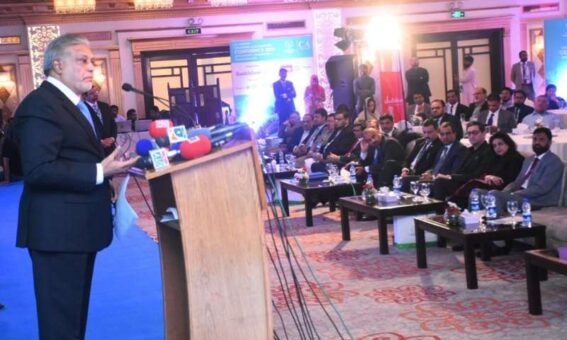
    ISLAMABAD: Finance Minister Mohammad Ishaq Dar on Wednesday said there was no question of Pakistan going into default as the same had been averted, though at a very high political cost.

    “I want to give a message to markets through this conference… no need to get nervous, we are back to business, Insha’Allah we will arrange everything. Nothing is to worry,” the minister said while addressing here the All Pakistan Chartered Accountant Conference.

    READ MORE: Pakistan’s forex reserves continue to fall; deplete to $13.25 billion

    He said Pakistan would be fine and nobody should have any problem because “Pakistan will not default”. There were serious challenges the country had been facing, however, the incumbent government had rescued it from default although it had to give a very high political cost.

    “If there is a choice between state or politics, the priority should be the state and not the politics as if the country is there, there may be politics. If there is no county where there will be politics?” he asked.

    Ishaq Dar said Pakistan would require around $32-34 billion to fulfill its liabilities and financial needs for the fiscal year 2022-23. “These include around $22 billion multilateral-level debt liabilities and around $12 billion current account deficit.”

    He, however, vowed that the government would work hard to fulfill the sovereign guarantees to save the country’s pride.

    The minister once again clarified the government’s position about rescheduling of the Paris Club’s debts. He said soon after assuming the charge of finance ministry, he had announced that the government would not approach the Paris Club for rescheduling of loans.

    READ MORE: Home remittances decline to $7.68 billion in 1QFY23

    Likewise, he also rejected the speculations about extending bond maturity dates beyond December 2022. Pakistan, he said, was a sovereign country so it should meet its obligations in time for its own credibility and honour.

    He urged the chartered accountants to play their role and influence politicians to work for the betterment of national economy.

    Ishaq Dar said Pakistan had deep challenges which were further increased by the devastating floods. He, however, was confident that everything would be corrected as was done back in 1998-99 and 2013, when the country was facing similar challenges.

    He said in its last tenure, the Pakistan Muslim League-Nawaz government had put the economy on growth path and it was predicted that it would be become the 18th big economy, leaving behind Canada and Italy, however, due to political interest of some parties it could not be done.

    Had the political parties joined the hands together, the country would have achieved the target of becoming the 18th big economy by 2026, however due to political instability, it now stood at 54th position, he lamented.

    He had always favoured a ‘Charter of Economy’ that would help put the economy on a sustainable growth path, he remarked.

    The minister said the PML-N assumed power in 2013 at a time when the country was facing serious macroeconomic challenges and its was predicted to be going in default in six to seven months.

    However, the government fixed the problems and took the economy towards growth, he added. The whole world acknowledged the progress at that time while the country’s ratings went up, the Consumer Price Index (CPI) based inflation was recorded at 4 percent and food inflation at 2 percent. The country had stable currency around Rs104 in parity with dollar and had reserves of around $26 billion.

    READ MORE: Moody’s downgrades Pakistan rating to Caa1 from B3

    Had that journey been allowed to continue, the country would have become the member of G20 club and 18th big economy, the minister said.

    Replying to a question, Dar said that in 2013 Pakistan was on the virtual black List of FATF and due to the hard work by the then PML(N) government, the country was moved into the grey list in 2014 followed by the white list in 2015.

    “I had done my projection for the economy and the prime minister is better aware of it,” he said, adding that the government was working on his projections to revive the economy.

    To a question, he said the previous government impeded the CPEC projects which led to its increased cost.

    READ MORE: Rupee plunges to PKR 220.88 against dollar in interbank

    Dar said the inflation did not surge all of a sudden rather it was due to the incompetence of the previous PTI government over the last four years, pushing the country to the prevailing situation.

    However, he added, the incumbent government was working to stabalize macroeconomic indicators to control the inflation.

    The minister said the dollar appreciated artificially which would be brought down to its natural value below Rs 200.

  • Rupee plunges to PKR 220.88 against dollar in interbank

    Rupee plunges to PKR 220.88 against dollar in interbank

    KARACHI: Pakistani Rupee (PKR) sharply declined against dollar on Wednesday amid falling foreign exchange reserves and high demand for import payments.

    The local currency ended down by PKR 1.17 to end at PKR 220.88 against the dollar from previous day’s closing of PKR 219.71 in the interbank foreign exchange market.

    READ MORE: Rupee fall continues; Dollar ends at PKR 219.71 in interbank

    Currency experts said that the local currency was under pressure during the day due to rising dollar demand for import payments and falling foreign exchange reserves.

    The dollar rebounded on October 12, 2022 after making a losing streak for straight 13 sessions to the rupee.

    READ MORE: PKR falls to dollar in interbank on Oct 17, 2022

    The exchange rate reached to near record low of PKR 239.71 on September 22, 2022 to the dollar but ended at PKR 217.79 on October 10, 2022. Dar recently claimed that the actual value of the dollar is below PKR 200 and he vowed to bring it down.

    The rupee hit all-time low of PKR 239.94 against the dollar on July 28, 2022.

    READ MORE: PKR falls against dollar on depleting forex reserves

    Pakistan’s foreign exchange reserves continued to decline and depleted by $342 million to $13.247 billion by week ended October 07, 2022. The foreign exchange reserves of the country were at $13.589 billion a week ago i.e. September 30, 2022.

    The country’s foreign exchange reserves hit all-time high of $27.228 billion on August 27, 2021. Since then the foreign exchange reserves have declined by $13.981 billion.

    READ MORE: Dollar ends up to PKR 218.38 in interbank on Oct 13, 2022

    They said that the rupee had made gain during the past couple of weeks due to various measures taken by the central bank to curb the dollar hoarding.

  • Cabinet approves expansion of advance meters installation

    Cabinet approves expansion of advance meters installation

    ISLAMABAD: The federal cabinet, chaired by Prime Minister Muhammad Shehbaz Sharif, approved the expansion of the advanced meters project beyond Islamabad to address line losses in the power sector.

    (more…)
  • Rupee fall continues; Dollar ends at PKR 219.71 in interbank

    Rupee fall continues; Dollar ends at PKR 219.71 in interbank

    KARACHI: Pakistani Rupee (PKR) continued to fall against the dollar to end at PKR 219.71 on Tuesday at interbank foreign exchange market.

    The rupee recorded a decline of 82 paisas to end at PKR 219.71 against the dollar from previous day’s closing of PKR 218.89 in the interbank foreign exchange market.

    READ MORE: PKR falls to dollar in interbank on Oct 17, 2022

    Currency experts said that the local currency was under pressure during the day due to rising dollar demand for import payments and falling foreign exchange reserves.

    The dollar rebounded on October 12, 2022 after making a losing streak for straight 13 sessions to the rupee.

    READ MORE: PKR falls against dollar on depleting forex reserves

    The exchange rate reached to near record low of PKR 239.71 on September 22, 2022 to the dollar but ended at PKR 217.79 on October 10, 2022. Dar recently claimed that the actual value of the dollar is below PKR 200 and he vowed to bring it down.

    The rupee hit all-time low of PKR 239.94 against the dollar on July 28, 2022.

    READ MORE: Dollar ends up to PKR 218.38 in interbank on Oct 13, 2022

    Pakistan’s foreign exchange reserves continued to decline and depleted by $342 million to $13.247 billion by week ended October 07, 2022. The foreign exchange reserves of the country were at $13.589 billion a week ago i.e. September 30, 2022.

    The country’s foreign exchange reserves hit all-time high of $27.228 billion on August 27, 2021. Since then the foreign exchange reserves have declined by $13.981 billion.

    They said that the rupee had made gain during the past couple of weeks due to various measures taken by the central bank to curb the dollar hoarding.

    READ MORE: Dollar ends 13-day losing streak; ends at PKR 217.88

  • Updated active taxpayers list grows to 3.59 million

    Updated active taxpayers list grows to 3.59 million

    ISLAMABAD: An updated list issued by the Federal Board of Revenue (FBR) on Monday revealed that the number of active taxpayers has grown to 3.59 million.

    According to the latest Active Taxpayers List (ATL) the total number surged to 3,596,092 by October 16, 2022 for tax year 2021.

    READ MORE: FBR gets 3.38 million active taxpayers by August 28, 2022

    The ATL will also include names of those taxpayers who will file their income tax returns for the tax year 2021 in coming days till the ATL remained applicable.

    The FBR issues ATL weekly basis on Monday to update the names of persons who filed their income tax returns during the week.

    ATL provides taxpayers to get concession in payment of lower withholding tax rates or amount. The FBR issues ATL for the new tax year on the first day of March every year. Therefore, the existing ATL will prevail till February 28, 2023.

    READ MORE: Tax rates on payments to non-residents during 2022-2023

    According to the FBR the ATL is a central record of online Income Tax Return filers for the previous Tax Year.

    It further says that ATL is published every financial year on the 1st March and is valid up to the last day of February of the next financial year. For example, Active Taxpayer List for Tax year 2020 was published on 1st March 2021 and will be valid till 28th February 2022. Similarly, Active Taxpayer List for Tax year 2021 will be published on 1st March 2022 and will be valid till 28th February 2023.

    The ATL is updated on every Monday on the Federal Board of Revenue (FBR) website.

    The FBR said that a person’s name will be part of the current ATL, if the Tax Return filed pertains to the Tax year of the relevant ATL. For example, to be part of the ATL published on 1st March 2021, a person must have filed a Tax return for the Tax year 2020. Similarly, to be a part of the ATL published on 1st March 2022, a person must have filed a Tax Return for the Tax year 2021.

    READ MORE: Preventing currency smuggling top priority: FBR Chairman

    Restriction on including a person’s name on ATL, if the person has not filed Tax Return by the due date specified by Income Tax authorities was introduced through Finance Act, 2018. For example, to be part of the ATL published on 1st March 2022, a person must file a Tax Return by the specified due date for the Tax year 2021.

    However, through Finance Act, 2019 a person’s name can be part of ATL, even if the person has filed Tax Return after the due date specified by Income Tax authorities.

    Furthermore, a surcharge for placement on ATL after due date of filing of Tax Return will be charged as under:

    Company: Rs20,000

    Association of Persons: Rs10,000

    Individuals: Rs1,000

    READ MORE: FBR collects Rs459 billion as sales tax on POL products in TY 2022

    A company or an AOP shall be included in the ATL, whose return is not to be filed due to incorporation or formation after 30th day of June relevant to the Tax year pertaining to the ATL.

    Joint account holders as an entity shall be deemed to be part of ATL if any of the persons in the joint account have met the criteria of being included in the ATL.

    Bank account held in the name of a minor shall be considered part of ATL if the parents, guardians of the minor or any person who has deposited money in minor’s account are deemed to have met the criteria of being included in the ATL.

  • Rupee sinks to PKR 219.11 to dollar in early interbank trading

    Rupee sinks to PKR 219.11 to dollar in early interbank trading

    KARACHI: The Pakistan Rupee (PKR) fell to PKR 219.11 against the dollar in early trading at interbank foreign exchange market on Monday.

    The exchange rate witnessed a decline of 68 paisas in rupee value as the foreign currency is being traded at PKR 219.11 from last Friday’s closing of PKR 218.43 in the interbank foreign currency market.

    READ MORE: PKR falls against dollar on depleting forex reserves

    Currency experts said that the local currency was under immense pressure due to higher import payment demand and repayment against foreign debt.

    The dollar rebounded on October 12, 2022 after making a losing streak for straight 13 sessions to the rupee.

    READ MORE: Dollar ends up to PKR 218.38 in interbank on Oct 13, 2022

    The exchange rate reached to near record low of PKR 239.71 on September 22, 2022 to the dollar but ended at PKR 217.79 on October 10, 2022. Dar recently claimed that the actual value of the dollar is below PKR 200 and he vowed to bring it down.

    The rupee hit all-time low of PKR 239.94 against the dollar on July 28, 2022.

    Currency experts said that the rising dollar demand was due to falling foreign exchange reserves and increasing import payments.

    READ MORE: Dollar ends 13-day losing streak; ends at PKR 217.88

    Pakistan’s foreign exchange reserves continued to decline and depleted by $342 million to $13.247 billion by week ended October 07, 2022. The foreign exchange reserves of the country were at $13.589 billion a week ago i.e. September 30, 2022.

    The country’s foreign exchange reserves hit all-time high of $27.228 billion on August 27, 2021. Since then the foreign exchange reserves have declined by $13.981 billion.

    They said that the rupee had made gain during the past couple of weeks due to various measures taken by the central bank to curb the dollar hoarding.

    READ MORE: PKR maintains winning streak to dollar for 13th straight session

  • Preventing currency smuggling top priority: FBR Chairman

    Preventing currency smuggling top priority: FBR Chairman

    ISLAMABAD: Asim Ahmad, Chairman, Federal Board of Revenue (FBR) has said that prevention of currency smuggling is top priority of Pakistan Customs.

    The FBR chairman identified top priority arrears of the government to combat smuggling of currency, vehicles, and goods. Besides, prevention of mis-invoicing was also one of the top priorities, he added.

    READ MORE: FBR collects Rs459 billion as sales tax on POL products in TY 2022

    Asim Ahmad, Chairman, addressed the inaugural session of the quarterly coordination and performance review conference held recently of the Regional Directors of the Directorate General of Intelligence & Investigation-Customs; an important arm of the FBR.

    The Chairman made it very clear that the Directorate General, I&I-Customs, had the capacity and competence to come up to the expectations with respect to each of these priority areas.

    READ MORE: WHT share in direct taxes jumps to 67% despite omitting provisions

    He assured the Director General, Faiz Ahmad Chadhar, that all possible resources required to achieve the desired results will be provided by FBR.

    During the 12 hours long conference, each Regional Director gave a detailed presentation on the performance in the first quarter of FY 2022-23.

    It covered major challenges hindering achievement of organizational goals, methods of information gathering, gaps in human resource and logistics as well as suggestions for further improvement.

    READ MORE: Pakistan amends baggage rules; now $1,000 require declaration

    In his closing remarks, the Director General directed the Regional Directors to focus on mis-invoicing not only in imports but also in exports, mis-use of exemption regimes, variation in pattern of transit trade viz a viz national imports and improving vigil along the borders.

    He underscored the importance of improved liaison of the officers of Directorate General of I&I-Customs with national law enforcement agencies including Police, Rangers, FC, ANF, Provincial Excise Departments, other national intelligence agencies, and District Administration.

    READ MORE: PTBA raises objections to amendments proposed by FBR

    He also highlighted the need of coordination with the Chambers of Commerce and other trade bodies to have first-hand knowledge about their issues and grievances.

    The Director General further emphasized that meeting the targets and expectations of FBR and the Federal Government with respect to smuggling, money laundering, and mis-invoicing will lead to creation of an enabling environment in the country for economic growth and investment.