Category: Top stories

Find top stories in this section. Pakistan Revenue brings you the latest and most important news from Pakistan and around the world, keeping you informed with key updates and insights.

  • Pakistani rupee overshoots temporarily: FinMin, SBP

    Pakistani rupee overshoots temporarily: FinMin, SBP

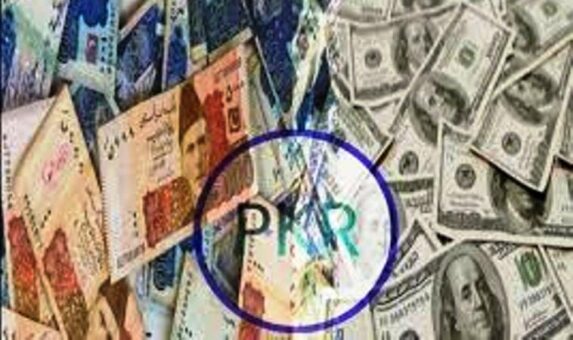
    KARACHI: The Pakistani rupee has overshot temporarily but it is expected to appreciate in next few months, said a joint statement issued on Sunday late night by the Finance Ministry (FinMin) and the State Bank of Pakistan (SBP).

    According to the statement the rupee has overshot temporarily but it is expected to appreciate in line with fundamentals over the next few months.

    The statement strongly rejected rumors that a particular level of the exchange rate has been agreed with the IMF are completely unfounded. “The exchange rate is flexible and market-determined, and will remain so, but any disorderly movements are being countered,” it added.

    READ MORE: Pakistani rupee falls 36% to Saudi Riyal in seven months

    The statement pointed out around half of the rupee depreciation since December 2021 can be attributed to the global surge in the US dollar, following historic tightening by the Federal Reserve and heightened risk aversion.

    “Of the remaining half, some is driven by domestic fundamentals. In particular, the widening of the current account deficit, especially in the last few months,” it added.

    As noted above, the deficit is expected to narrow going forward as the temporary surge in the import bill is brought under control. As this happens, the Rupee is expected to gradually strengthen.

    The remaining depreciation has been overdone and driven by sentiment. The Rupee has overshot due to concerns about domestic politics and the IMF program.

    This uncertainty is being resolved, such that the sentiment-driven part of the Rupee depreciation will also unwind over the coming period.

    Where the market has become disorderly, the State Bank has continued to step in through sales of US dollars to calm the markets and will continue to do so, as needed in the future.

    READ MORE: Rupee fall to continue till IMF fund realization: Pakistan’s top bank

    Strong steps to counter any speculation have also been taken, including close monitoring and inspections of banks and exchange companies. Further additional measures will be taken as situation warrants.

    Going forward, as the current account deficit is curtailed and sentiment improves, we fully expect the Rupee to appreciate. Indeed, this was the experience during the beginning of the IMF program in 2019, when the Rupee strengthened considerably after a period of weakness in the lead-up to the program.

    Clearly, the Rupee can overshoot temporarily as it has done recently. However, it moves both ways over time. We expect this pattern to re-assert itself in the coming period. As a result, the Rupee should strengthen in line with improved fundamentals in the form of a smaller current account deficit as well as stronger sentiment.

    Pakistan’s problems are temporary and are being forcefully addressed. “Pakistan’s foreign exchange reserves have fallen since February as foreign exchange inflows have been outpaced by outflows.”

    The inflows mainly comprise of multilateral loans from the IMF, World Bank and ADB; bilateral assistance in the form of deposits and loans from friendly countries like China, Saudi Arabia, and the UAE; and commercial borrowing from foreign banks and through the issuance of Eurobonds and Sukuks.

    The paucity of inflows has happened in large part due to the delay in completing the next review of the IMF program, which has lingered since February due to policy slippages.

    READ MORE: Pakistani rupee crashes 17% against dollar in July 2022

    Meanwhile, on the outflows side, debt servicing on foreign borrowing has continued as repayments on these debts have been coming due over this period.

    At the same time, the exchange rate has come under significant pressure, especially since mid-June. It has been driven by general US dollar tightening, a rise in the current account deficit (exacerbated by a heavy energy import bill in June), the decline in foreign exchange reserves, and worsening sentiment due to uncertainty about the IMF program and domestic politics.

    However, important developments have happened recently that will address both of these temporary issues. On July 13, the critical milestone of a staff-level agreement on completing the next IMF review was reached. As of today, all prior actions for completing the review have been met and the formal Board meeting to disburse the next tranche of $1.2 billion is expected in a couple of weeks.

    At the same time, macroeconomic policies—both fiscal policy and monetary policy—have been appropriately tightened to reduce demand-led pressures and rein in the current account deficit. Finally, the government has clearly announced that it intends to serve out the rest of its term until October 2023 and is ready to implement all the conditions agreed with the Fund over the remaining 12 months of the IMF program.

    In FY23, Pakistan’s gross financing needs will be more than fully met under the on-going IMF program.

    The financing needs stem from a current account deficit of around $10 billion and principal repayments on external debt of around $24 billion.

    READ MORE: Pakistan interbank rupee ends Rs239.37 to dollar on July 29, 2022

    In order to bolster Pakistan’s foreign exchange reserves position, it is important for Pakistan to be slightly over-financed relative to these needs.

    As a result, an extra cushion of $4 billion is planned over the next 12 months. This funding commitment is being arranged through a number of different channels, including from friendly countries that helped Pakistan in a similar way at the beginning of the IMF program in June 2019.

    Important measures have been taken to contain the current account deficit.

    In addition to high global commodity prices, the large current account deficit in FY22 was driven by rapid domestic demand (growth reached almost 6 percent for two consecutive years leading to overheating of the economy), artificially low domestic energy prices due to the February subsidy package, an unbudgeted and procyclical fiscal expansion, and heavy energy imports in June to minimize load-shedding and build inventories.

    To contain this deficit going forward, the policy rate was raised by 800 basis points, the energy subsidy package has been reversed, and the FY23 budget targets a consolidation of nearly 2.5 percent of GDP, centered on tax increases while protecting the most vulnerable. This will help cool domestic demand, including for fuel and electricity.

    In addition, temporary administrative measures have been taken to contain the import bill, including requiring prior approval before importing automobiles, mobile phones and machinery. These measures will be eased as the current account deficit shrinks in the coming months.  

    These measures are working: the import bill fell significantly in July, as energy imports have declined and non-energy imports continue to moderate.

    Foreign exchange payments in July were significantly lower than in June. This is true for both oil and non-oil payments. Altogether, payments were a sustainable $6.1 billion in July compared to $7.9 billion in June.

    The latest trade data indicate that non-oil imports continue to fall.  Specifically, non-oil imports fell by 5.7 percent quarter-on-quarter during Q4 FY22. They are expected to reduce further going forward.

    Looking ahead, a considerable slowdown has been witnessed in LC opening in recent weeks, again for both oil as well as non-oil commodities. Based on market reports, there was an 11% month-on-month decline in Oil Marketing Companies sales volume in June.

    After the surge in energy imports in June, a stock of diesel and furnace oil sufficient for 5 and 8 weeks, respectively, is now available in the country, much higher than the normal range of 2 to 4 weeks in the past. This implies a lower need for petroleum imports going forward.

    With the recent rains and storage of water in the dams, hydroelectricity is also likely to increase and need to generate electricity on imported fuel is expected to decline going forward.

    As a result of these trends, the import bill is likely to shrink going forward and should begin to manifest itself more forcefully in lower FX payments over the next 1-2 months.

    Overall, imports are expected to decline in coming months due to a decline in global commodity prices, the higher oil stock, the unfolding impact of higher domestic prices of petroleum products, adjustments in electricity and gas tariffs, the removal of tax exemptions under the FY23 budget, administrative measures taken to curtail imports, and the lagged impact of the monetary and fiscal tightening that has been undertaken.

  • New petroleum prices in Pakistan from August 1, 2022

    New petroleum prices in Pakistan from August 1, 2022

    KARACHI: Pakistan on Sunday revised the prices of petroleum products effective from August 01, 2022.

    Ministry of Finance announced the following rates effective from August 01, 2022:

    The new prices of petrol have been decreased by Rs3.05 per liter to Rs227.19 from Rs230.24.

    The rate of high speed diesel has been increased by Rs8.95 per liter to Rs244.95 from Rs236.

    The rate of kerosene oil has been increased by Rs4.62 per liter to Rs201.07 from Rs196.45.

    Similarly, the rate of light speed diesel has been decreased by 12 paisas per liter to Rs191.32 from Rs191.44.

    READ MORE: New petroleum prices in Pakistan from July 15, 2022

    Previously the present government had started increasing the petroleum prices on May 26, 2022 when the benchmark Brent Oil was at $112 per barrel and now as of July 29, 2022, the international prices of Brent Oil have fallen to $110 per barrel.

    Considering the price slump of international oil, the government had reduced the prices of petroleum products from July 15, 2022. However experts believed it was political decision as the government had to increase petroleum levy and apply sales tax.

    Furthermore the Pakistani Rupee (PKR) has sharply fell against the dollar leaving no room for the government but to increase the prices of petroleum products.

    READ MORE: New prices of petroleum products in Pakistan from July 01, 2022

    The previous government of PTI had kept both the petroleum levy and sales tax at zero in order to provide relief to the masses. The PTI government also provided a huge subsidy on prices of petroleum products in order to lower the rates and provide relief to the masses.

    However, former Prime Minister Imran Khan was removed through a vote of no-confidence motion on April 10, 2022.

    Since then the new coalition government led by PML-N increased the prices of petroleum products sharply on three different occasions.

    READ MORE: New petroleum prices in Pakistan from June 16, 2022

    The new government of Prime Minister Shehbaz Sharif increased the prices of petroleum products on May 26, 2022, June 02, 2022 and June 15, 2022. Cumulatively, the government increased the price of petrol by 84 per liter in these price hikes.

    The present government in the budget estimated to collect Rs750 billion as petroleum levy during the fiscal year 2022/2023. As this fiscal year is starting from July 01, 2022, it is likely that the government will opt to impose the levy from this date.

    READ MORE: New petroleum prices in Pakistan from June 03, 2022

  • Pakistani rupee crashes 17% against dollar in July 2022

    Pakistani rupee crashes 17% against dollar in July 2022

    KARACHI: The Pakistani Rupee (PKR) crashed by about 17 per cent against the US dollar in the month of July 2022 owing to weakness in balance of payment and political instability.

    The exchange rate was opened at Rs204.85 to the dollar on July 04, 2022 and ended at Rs239.37 at closing on July 29, 2022 at interbank foreign exchange market.

    During the month about 17 trading days were observed due to long Eid holidays and bank holiday. The government announced holidays from July 08, 2022 to July 12, 2022 on account of Eid ul Adha. Meanwhile, the due to bank and weekly holidays, the month started on July 04, 2022.

    READ MORE: Pakistan interbank rupee ends Rs239.37 to dollar on July 29, 2022

    The rupee witnessed a consistent decline during the month and recorded historic low of Rs239.94 to the dollar on July 28, 2022.

    Experts believed that the downgrade of rating of Pakistan by three top credit rating agencies deteriorated the outlook of the country. Furthermore, the political conflict further aggravated the situation.

    Besides, the massive decline in foreign exchange reserves also put pressure on the dollar demand.

    Analysts at Arif Habib Limited said that the fear of free-fall in rupee value has gripped the financial markets and different stakeholders of the economy is that if prudent and timely economic measures are not taken, Pakistan may spiral out of control, much like Sri Lanka.

    READ MORE: Rupee plunges near Rs240 to dollar at interbank closing

    This accelerated the free fall of Pak Rupee against dollar in the interbank recently. However, to highlight, the initial major depreciation of PKR against dollar was triggered back in April 2022, post Vote of No Confidence leading to political change in the country.

    The political risks and shifting paradigms took a toll on the foreign investors/creditors’ confidence, hence contributing largely to bringing Rupee under pressure.

    The analysts said that although we believe that the Pak Rupee still has inherent depreciation bias in the long-term, in the short term, we expect some stability to be restored. We attribute this short-term stability conditional upon: inflows from bilateral and multilateral creditors, IMF inflows, and strengthening of some macro-economic variables including current account position along with State Bank of Pakistan’s (SBP) attempts to curb market speculation.

    READ MORE: Dollar touches new peak at Rs236.02 at interbank closing

    A report released by KASB Research pointed out that exchange rate decline would continue until there is support and funds from the International Monetary Fund (IMF). “This could be another 10-15 per cent decline,” the report stated, adding that however, post clarity on IMF there would be 20-25 per cent recovery in the rupee value.

    The analysts at the KASB Research are expecting a fair value of the rupee against dollar at Rs190 – 200.

    The report further pointed out that the main challenge is hyperinflation caused by the exchange rate movement. The government could be forced to maintain cuts on imports which could hurt companies who rely on imported raw material. The auto sector is a good example.

    READ MORE: Rupee crashes Rs232.93 to dollar at interbank closing

    It however said that Pakistan would meet its sovereign liabilities, especially of the two bonds maturing in December 2022. “However, the market yields are indicating that the marking is pricing a higher risk of default.”

    It further noted that the rupee had been hit hard and is down 51 per cent year to date and 17 per cent in just in the month of July 2022.

  • No date extension for exchanging Pakistan prize bond

    No date extension for exchanging Pakistan prize bond

    KARACHI: Pakistan has not extended the date for exchanging bearer prize bonds that were expired on June 30, 2022.

    A number of persons have reached PkRevenue.com regarding extension for exchanging bearer prize bonds. However, there is no information from the finance ministry of the State Bank of Pakistan (SBP) regarding date extension.

    READ MORE: Pakistan-issued prize bonds expire on June 30, 2022

    So far no decision came from the finance ministry to extend the last date for exchanging bearer prize bonds. The federal government had already extended the last date for converting or exchanging the bearer prize bonds up to June 30, 2022.

    The State Bank of Pakistan (SBP) issued a circular on March 30, 2022 to extend the date up to June 30, 2022 for exchanging or converting the bearer prize bonds including denominations of Rs40,000/- Rs25,000/-, Rs15,000/- and Rs7,500.

    READ MORE: SBP directs banks to accept bearer prize bonds

    Earlier, the last date for exchanging the bearer prize bonds was March 31, 2022.

    The SBP instructed the banks to accept requests for encashment / conversion / redemption of cited denominations from general public till June 30, 2022.

    “Further, the banks shall submit branch / region wise consolidated data of cited denomination national prize bonds held by them on last date i.e. June 30, 2022 latest by July 04, 2022, as per the instructions stipulated in aforementioned CMD Circulars.

    READ MORE: Prize bond (bearer) holders given 3 months to document

    The finance ministry launched the withdrawal of the unregistered prize bonds in a phased manner. The federal government on June 24, 2019, announced to discontinue the circulation of Rs40,000 denomination national prize bonds. Similarly, on December 10, 2020, the government announced to discontinue the circulation of Rs25,000 denomination prize bonds. In April 2021, the finance ministry announced that national prize bonds of denominations Rs7,500 and Rs15,000 shall not be sold.

    Since June 2019 the government repeatedly extended the date for exchanging the bearer bonds. Previously, the last date for exchanging the unregistered bonds was December 31, 2021.

    READ MORE: History of Prize Bonds in Pakistan

    The government is aiming to document the bearer bonds so the exchanging the unregistered bond with cash has been prohibited. The ministry of finance issued various procedure to convert the bond without exchanging with the cash.

    The bonds can be converted to premium prize bonds (registered) of denomination of Rs25,000 and Rs40,000 (subject to the adjustment of differential amount) through 16 field offices of State Bank of Pakistan (SBP) Banking Services Corporation (BSC), and branches of six commercial banks i.e. National Bank of Pakistan, Habib Bank Limited, United Bank Limited, MCB Bank Limited, Allied Bank Limited, and Bank Alfalah Limited.

    READ MORE: Income tax on prize bonds, lottery winning

    The bonds can be replaced with Special Saving Certificates/Defence Saving Certificates through the 16 field offices of SBP Banking Services Corporation, authorized commercial banks, and the National Savings Center.

    The bonds will only be encashed by transferring the proceeds to the bonds holder’s bank account through the 16 field offices of SBP BSC as well as the authorized commercial bank branches and to the Saving Accounts at National Savings Centers.

  • FTO investigates tax collection through electricity bills

    FTO investigates tax collection through electricity bills

    KARACHI: The Federal Tax Ombudsman (FTO) has launched investigation in a complaint received regarding sales tax collection through electricity bills.

    The FTO Friday issued notices to Secretary, Revenue Division, Chief Commissioner and Commissioner Inland Revenue Large Taxpayers Office (LTO) Karachi, in the complaint filed by Mrs. Fauzia Salman against illegal and unlawful collection of taxes through electricity bills by K-Electric Limited.

    READ MORE: Withdrawal of sales tax through electricity bills demanded

    The FTO has ordered to conduct an investigation into the complaint.

    The tax office has been directed to submit reply to the allegation contained in the complaint by August 09, 2022.

    Previously, the complainant sent a letter to K-Electric, the power supply utility in Karachi, and forwarded to the chairman of Federal Board of Revenue (FBR), Federal Ombudsman, and chambers of commerce, Fauzia pointed out that her company had received monthly electricity bill, which included: further tax at 3 per cent; extra tax/retail tax at 5 per cent; and newly introduced sales tax on retailers at Rs6,000 being an inactive taxpayer.

    She claimed that the sales tax collection had been made in the bill for the month of July 2022 as her company was a legal service provider.

    READ MORE: Tax through electricity connections on retailers, service providers

    Furthermore, as per the record of the Federal Board of Revenue (FBR) the law firm is an active taxpayer as per requirement under Income Tax Ordinance, 2001.

    In her letter, she explained that Section 3(1A) of the Sales Tax Act, 1990 relates to further tax (leviable where taxable supplies are made to a person who has not obtained registration number), Section 3(5) of the Act relates to Extra Tax (The government may imposed extra tax in addition to tax levied under sub section (1), (2) & (4) of Section 3) and Section 3(9) relates to sales tax on retailers, before and after the amendments made through Finance Act, 2022, under the Sales Tax Act, 1990 are applicable on the persons who is/are dealing in retail business of the taxable goods/supplies and required to be registered under the Act, 1990 but did not registered himself /themselves in FBR for the said purpose.

    READ MORE: FBR explains income tax on export of services

    “Indeed, we [the law firm] are not dealing in supply /retail of taxable goods and as such you have wrongly levied and charged further tax u/s 3(1A), extra tax u/s 3(5) or 3(9) and retail tax u/s 3(9) of the Sales Tax Act, 1990 through the Electric Bills,” according to the letter.

    The law firm is only engaged in rendering of legal services on the subject premises, according to the letter.

    Under the Sales Tax Act, 1990, neither the company is required to be registered with FBR nor various sales tax through electric bills i.e., Further Tax, Extra Tax and Retail Sales Tax are applicable on it, being a “Service Provider”.

    Fauzia said that the K-Electric imposed the sales tax on the monthly bill on the basis of assumption that the commercial connection holder was a retailer.

    READ MORE: FBR restores 100% depreciation deduction

    “You [the K-Electric] have imposed two taxes under the single provision of law i.e., Section i.e., 3(9) of the Act, 1990 relying on prior and post amendment made in Section 3(9) of the Sales Tax Act 1990 through Finance Act, 2022 which cannot be permitted under the law to charge the taxpayer twice, even if it is applicable,” she pointed out towards important provisions of the law.

    The relevant amendment made through Finance Act, 2022 in Section 3(9) of the Act, 1990 is reproduced here as under:-

    Section 3(9),–

    (i) for the words “five per cent where the monthly bill amount does not exceed rupees twenty thousand and at the rate of seven and half percent where the monthly bill amount exceeds the aforesaid amount”, the words “rupees three thousand per month where the monthly bill amount does not exceed rupees thirty thousand, rupees five thousand per month where the monthly bill amount exceeds rupees thirty thousand but does not exceed rupees fifty thousand and rupees ten thousand per month where the monthly bill amount exceeds rupees fifty thousand” shall be substituted;

    READ MORE: FBR notifies graduated tax rates on disposal of securities

    (ii) after sub-section (9), the following provisos shall be inserted, namely:–

    Provided that the above rates of tax shall be increased by one hundred percent if the name of the person is not appearing in the Active Taxpayers List issued by the Board under section 181A of the Income Tax Ordinance, 2001 on the date of issuance of monthly electricity bill:

    Provided further that the Board may through a general order prescribe any persons or class of person who shall pay upto rupees two hundred thousand per month through their monthly electricity bill.

    Despite having number of employees who are engaged in monitoring of meter or recording of energy consumption from meter installed on the subject premises, the utility provider has blatantly charged such taxes without verification of status whether the consumers is/are liable to be charged for such taxes or not.

    It came to our knowledge from number of electricity consumers that the K Electric Limited has charged such taxes from all Commercial Consumers irrespective of their business status and FBR’s active taxpayer’s profile and treated all of them as “In-active Retailer of taxable goods” which cannot be justified or allowed under the Act, 1990.

    Such an act of M/s K Electric Limited comes within the meaning of mal-administration as defined under Section 3 of the Federal Tax Ombudsman Ordinance, 2000.

  • Pakistan decides to lift ban on imported goods

    Pakistan decides to lift ban on imported goods

    ISLAMABAD: Pakistan on Thursday decided to lift the ban imposed on imported goods except for Completely Built Unit (CBU) of motor vehicles, mobile phones and home appliances.

    A review meeting was held to review the ban after two months owing to serious concerns raised by major trading partners on the imposition of ban and considering the fact that the ban has impacted supply chains and domestic retail industry.

    READ MORE: 15% surcharge imposed for clearance of banned items

    In the light of fact that imports substantially reduced due to consistent efforts of the government, the Economic Coordination Committee of the Cabinet (ECC) decided to lift the ban on imported goods except for Auto CBU, Mobile CBU and Home Appliances CBU.

    The committee also decided that all held up consignments (except items which still remain in banned category) which arrived at the ports after July 01, 2022 may be cleared subject to payment of 25 per cent surcharge.

    Ministry of Commerce submitted a summary on prohibition/complete quantitative restrictions on import of non-essential and luxury items.

    It was submitted that in order to curtail the rising current account deficit (CAD), ban on the import of about 33 classes/categories of goods was imposed with the approval of the Cabinet.

    READ MORE: Pakistan allows release of banned items stuck up at ports

    Due to the decision, the overall imports of the banned items have shrunk by over 69 per cent i.e. from $ 399.4 million to $ 123.9 million.

    Recently, the ministry of commerce had imposed surcharge up to 15 per cent for clearance of consignments stuck up at ports and were banned for saving foreign exchange.

    The ministry of commerce issued an office memorandum dated July 22, 2022 pursuance to the federal cabinet decision to release the consignments of prohibited items.

    The government through SRO 598(I)/2022 dated May 19, 2022 imposed a complete ban on the import of luxury and non-essential items.

    However, a large number of containers were stuck up at ports that were arrived after the imposition of ban.

    READ MORE: KCCI demands release of stuck up containers

    The Federal Cabinet on July 15, 2022 allowed the release of all those consignments/shipment which had been imported in violation of SRO 598(I)/2022 dated May 19, 2022 and were pending customs clearance.

    However, this clearance was subject to condition that consignments had landed at any port including sea, air or dry port of the country on or before June 30, 2022 subject to payment of surcharge to be imposed on the cost and freight value of goods.

    According to the ministry of commerce, five per cent surcharge has been imposed on the shipment which had arrived within two weeks of issuance of the SRO 598(I)/2022.

    Further, 15 per cent surcharge has been imposed on shipment which had arrived after two weeks of issuance of SRO 598(I)/2022 till June 30, 2022.

    Due to the ban about one thousand containers piled up and resulted in choking the ports. The stakeholders requested the government to allow the release of those consignments as many of the consignments were shipped before May 19, 2022 but lander after the date.

    READ MORE: Committee recommends lifting import ban on luxury items

    Previously, the Economic Coordination Committee (ECC) of the Cabinet in its meeting held on Tuesday July 5, 2022 allowed one-time release of those consignments carrying banned items and reached on or before June 30, 2022.

    Ministry of Commerce submitted a summary to seek permission for one time release of those consignments of items banned on May 19, 2022 which have reached Pakistan or would reach or their payments.

    In order to resolve the hardship cases, the ECC granted one-time special permission for release of consignments stuck at the ports due to contravention framed under SRO 598(I)/2022 dated May 19, 2022, only for those consignments which have landed at ports or airports in Pakistan on or before June 30, 2022.

  • Pakistan forex reserves deplete to $14.42 billion

    Pakistan forex reserves deplete to $14.42 billion

    KARACHI: Pakistan foreign exchange reserves depleted by $827 million to $14.415 billion by week ended July 22, 2022, State Bank of Pakistan (SBP) said on Thursday.

    The foreign exchange reserves of the country were $15.242 billion a week ago i.e. July 15, 2022.

    READ MORE: Pakistan’s forex reserves decline to $15.24 billion

    The country’s foreign exchange reserves hit all-time high of $27.228 billion on August 27, 2021. Since then the foreign exchange reserves have declined by $12.813 billion.

    The official reserves of the State Bank also fell by $754 million to $8.575 billion by week ended July 22, 2022 as compared with $9.329 billion a week ago.

    READ MORE: Pakistan’s forex reserves drop to $15.61 billion

    The SBP attributed the decline in foreign exchange reserves to external debt repayments.

    It is pertinent to mention that the SBP received about $2.3 billion from Chinese banks for buildup of foreign exchange reserves. However, despite receiving the amount the external debt payment kept the pressure on the reserves.

    Further, the country is in negotiation with the IMF for release of next tranche under Extended Fund Facility (EFF) to boost its foreign exchange reserves.

    READ MORE: Pakistan’s forex reserves deplete to $15.74 billion

    The foreign exchange reserves held by the central bank witnessed a record high at $20.146 billion by week ended August 27, 2021. Since then the official reserves of the SBP declined by $10.571 billion.

    The commercial banks held foreign exchange also witnessed a decline of $73 million to 5.84 billion by week ended July 22, 2022 when compared with $5.913 billion a week ago.

    READ MORE: State Bank’s reserves dip to 32-month low at $8.238 billion

    The sharp decline in foreign exchange reserves has resulted in free-fall of rupee value.

    The local currency ended historic low of Rs239.94 to the dollar at closing of interbank foreign exchange market on July 28, 2022.

  • Super tax to hammer auto business in Pakistan: Honda Atlas

    Super tax to hammer auto business in Pakistan: Honda Atlas

    KARACHI: Honda Atlas Cars (Pakistan) Limited on Thursday said that super tax to hammer the already thin margins of the auto business in the country.

    The company in its detailed financial report said: “The imposition of Super Tax will further hammer the already thin margins of auto business.”

    The company said that the automobile industry is considered as one of the key sectors for rapid transformation of the economy.

    READ MORE: Suzuki Motors warns plant shutdown in Pakistan

    Likewise, the automobile industry of Pakistan epitomizes considerable growth, capacity building and technological prowess.

    “The current state of auto sector, however, has matured differently through the quarter under review. Adverse USD/PKR exchange rate parity and global supply glitches continue to undermine the Industry’s potential throughout,” it said.

    Moreover, the fiscal measures adopted by the State Bank of Pakistan (SBP) for the management of foreign reserves has unavoidably impacted the import and production schedules lately.

    READ MORE: Indus Motors rebuts plant shutdown reports

    Rupee devaluation has approached an alarming level under the vague economic and political direction; further aggravating the situation.

    “Resultantly, the car customers are facing delays in delivery, hikes in prices and temporary non- availability of some car variants,” the company said.

    Honda Atlas Cars said during the period under review, the sales and production of the four-wheeler segment have not been up to the Industry’s expectation owing to curbed auto lending, escalating inflation and soaring fuel prices.

    The overall industry production for the three months ended June 2022 remained 71,745 units in comparison with 53,915 units a year ago while car sales were observed at 73,815 units against 46,679 units during the same period.

    READ MORE: Toyota Indus Motors offers 100% refunds on booking cancellation

    The company produced 9,324 units against 7,826 units and sold 9,446 units as compared to 7,598 units in the same period of last financial year.

    The recently approved Federal Budget 2022-2023 also poses tough times ahead for the auto industry. Amid negotiations with International Monetary Fund (IMF), to release the bailout package, the Government had to enforce stringent stabilization measures. Accordingly, the purchase of automobiles with engine capacity exceeding 1300CC has now been subject to 1 per cent of Capital Value Tax (CVT).

    The advance tax on vehicles with engine capacity above 1600CC has also been significantly increased.

    These revenue measures by the Government will further burden the customers, which may affect the Industry’s sales volume.

    READ MORE: Toyota lowers July production in Japan

    The imposition of Super Tax will further hammer the already thin margins of auto business.

    The auto industry may experience a further slowdown in anticipation of price revision and rising interest rates.

    Ranging from raw material sourcing to management of stable commodity pricing and customary lead time, the automobile industry is currently in the midst of multiple challenges.

    During the quarter, the OEMs have managed to avoid potential shut down of production due to relatively higher stock levels. This led to improved financial results for the 1st quarter of the new financial year.

    During the three months ended June 30, 2022, the Company achieved net sales revenue of Rs 30,246 million as compared to Rs 21,765 million in the corresponding period last year.

    Higher production volumes with better overhead absorption helped to generate gross profit of Rs 1,915 million against Rs 1,595 million, a year ago. The selling and administrative expenses were increased to Rs 575 million against Rs 363 million.

    Other income improved to Rs 526 million against Rs 335 million owing to customers’ confidence on the Company’s products and better funds management; benefited by increased interest rates.

    The Company posted Rs 1,094 million as profit before tax in comparison to Rs 1,364 million. After statutory tax adjustments, including super tax provision, the net profit for the three month period ended June 30, 2022 came out Rs 658 million as compared to Rs 928 million of the corresponding period last year.

    The earning per share remained Rs 4.61 against Rs 6.50 for three months of the last year.

  • Suzuki Motors warns plant shutdown in Pakistan

    Suzuki Motors warns plant shutdown in Pakistan

    KARACHI: Suzuki Motors Co. Ltd. on Thursday warned shutting down its production plant in Pakistan due to import restrictions.

    In a communication sent to Pakistan Stock Exchange (PSX), the auto manufacturer said that State Bank of Pakistan (SBP) had introduced a mechanism for prior approval for import under HS Code 8703 category (including CKD) vide circular No. 09 of 2022 dated May 20, 2022.

    READ MORE: Indus Motors rebuts plant shutdown reports

    “Restrictions had adversely impacted clearance of import consignments of the company from the ports which might result in shutdown of the plant in near future,” the company said, adding that Pak Suzuki has stopped bookings of its products since July 01, 2022.

    The company further clarified that at present it had not plan to shut down the plant. “The production schedule of the company and any non-production days remain contingent on a number of external factors,” it said.

    READ MORE: Toyota Indus Motors offers 100% refunds on booking cancellation

    The company is actively monitoring its production and operations and is closely working with the government of Pakistan and the central bank to alleviate the present challenges.

    A day earlier, Indus Motors Company– the manufacturers of Toyota cars in Pakistan, also issued a statement in this regard.

    READ MORE: Toyota lowers July production in Japan

    The IMC said that the auto sector was facing unprecedented difficulties in its operations due to ongoing economic challenges and factors beyond the control of automobiles manufacturers.

    “The unprecedented devaluation of Pakistan Rupee (PKR), coupled with restrictions imposed by the State Bank of Pakistan (SBP) regarding prior LC approval for Completely Knocked Down (CKD) imports and continuing financing instability has radically impacted the auto industry,” the IMC said.

    The company clarified that as of today (July 27, 2022), there are no plans fixed for complete plant shutdown for more than two weeks in the month of August 2022.

    READ MORE: COVID-19 cases reported at Toyota work sites

  • Rupee plunges near Rs240 to dollar at interbank closing

    Rupee plunges near Rs240 to dollar at interbank closing

    KARACHI: The Pakistani Rupee (PKR) crashed near Rs240 against the US Dollar on Thursday at closing of interbank foreign exchange market.

    The exchange rate recorded a decline of Rs3.92 in rupee value to end at Rs239.94 to the dollar from previous day’s closing of Rs236.02 in the interbank foreign exchange market.

    The rupee is falling continuously against the greenback for the last many days due to political instability and weak economic indicators.

    Currency dealers said that external payment pressure causing a continuous decline in rupee value.

    READ MORE: Dollar touches new peak at Rs236.02 at interbank closing

    The dealers said that the continuous decline in rupee value may also be attributed to the fall in foreign exchange reserves.

    The foreign exchange reserves of the country have further declined.

    Pakistan’s foreign exchange reserves have declined by $368 million to $15.242 billion by week ended July 15, 2022. The foreign exchange reserves of the country were $15.61 billion a week ago i.e. July 07, 2022.

    The country’s foreign exchange reserves hit all-time high of $27.228 billion on August 27, 2021. Since then the foreign exchange reserves have declined by $11.986 billion.

    READ MORE: Rupee crashes Rs232.93 to dollar at interbank closing

    The official reserves of the State Bank also depleted by $388 billion to $9.329 billion by week ended July 15, 2022 as compared with $9.717 billion a week ago.

    The foreign exchange reserves held by the central bank witnessed a record high at $20.146 billion by week ended August 27, 2021. Since then the official reserves of the SBP declined by $10.817 billion.

    The SBP on July 07, 2022 announced a hike of 125 basis points in policy rate to bring it to 15 per cent. The purpose of increasing the interest rate was to curb the demand and support the rupee value. However, the effort of the SBP failed to support the rupee value.

    READ MORE: Dollar hits new high Rs229.86 on political crisis