Find top stories in this section. Pakistan Revenue brings you the latest and most important news from Pakistan and around the world, keeping you informed with key updates and insights.
The prices will remain unchanged from November 16, 2021, till the end of the month: Petrol Rs145.82 per liter; High-Speed Diesel (HSD) Rs142.62 per liter; Kerosene Oil Rs116.53 per liter; and Light Diesel Oil Rs114.07 per liter.
A statement issued by the Finance Division said that despite rising petroleum products prices globally, the Prime Minister of Pakistan has kindly rejected the proposal for enhancement in the prices and desired that the prices of petroleum products from November 16, 2021, shall remain the same as notified on November 04, 2021, for providing maximum relief to the general public.
The decision has been taken in the public interest. The government will bear the burden by making adjustments in the sales tax rates, etc.
Muzzammil Aslam, spokesman to the finance minister in a Tweet said: “History has been made today. In today’s petrol prices the Sales Tax is effective zero per cent.”
KARACHI: The State Bank of Pakistan (SBP) on Monday launched an end-to-end digital regulatory approval process known as the Regulatory Approval System (RAS).
The central bank now achieved another milestone by launching a module pertaining to banking policy and regulations.
With the launch of this module in RAS, banks, Development Finance Institutions (DFIs) and Microfinance Banks (MFBs) can now submit their request letters/ proposals on a dedicated online portal to SBP’s Banking Policy and Regulations Department whereby SBP, after digitally processing them, would also be in a position to disseminate the regulatory decisions to them through the same portal.
Earlier in October 2020, Governor SBP Dr. Reza Baqir had launched the SBP FX RAS for end-to-end digitization of Foreign Exchange (FX) related case submission process.
The system turned out to be a huge success as it enabled the customers to lodge their FX-related requests from the location of their convenience thereby sparing their valuable time previously spent in navigating the paper-based processes. It also enabled banks to submit FX-related cases electronically for regulatory approval of SBP and SBP-Banking Services Corporation (BSC).
Implementation of RAS for Banking Policy and Regulation-related issues will be effective from November 24, 2021. It will enable banks, DFIs and MFBs to digitally submit their requests and receive regulatory decisions through a single window. Nevertheless, in addition to online submission, banks, DFIs and MFBs shall also continue with the manual submission of their cases that will cease after a brief transitory period till December 31, 2021.
Implementation of SBP’s RAS is expected to conserve precious resources, contribute towards SBP’s Green Banking initiative and bring efficiency in the communication between the banking sector and SBP. Moreover, this arrangement will also replace paper-based submissions that are prone to logistic and storage issues, and cause inadvertent and unnecessary delays for relevant stakeholders.
RAS is a regulatory initiative under SBP’s Vision 2020 aiming at the digital flow of information amongst the stakeholders to improve the service standards through leveraging upon digital techniques.
Miftah Ismail, Former Federal Minister for Finance, has pointed out key reasons behind the massive depreciation in Pak Rupee (PKR) against the dollar.
Ismail, who is also General Secretary of PML-N Sindh, in his Tweet on Sundh pointed out a thread on the four main reasons for the recent precipitous decline in the value of the rupee.
A: Uncertainty about the renewal of the IMF program
B: Largest trade deficit and fastest-growing imports in history
C: Fourth highest inflation rates among major countries.
D: Rapid increase in the money supply.
Ismail explained that uncertainty about the renewal of the IMF program behind the rupee weakness.
The former finance minister said: “Our program was ‘revived’ earlier this year and we were supposed to get a $1 billion tranche in July 2021. We are now in November and still, there isn’t an agreement. This is giving markets jitters.”
In his opinion largest trade deficit and fastest-growing imports are the second major reason for the rupee fall.
“We are on track for imports of $75 billion or over 24 per cent of the GDP. Both these are the highest in history. This year exports will cover only 37 per cent of imports, down from 44 per cent in 2018. We are moving in the wrong direction.”
Our trade deficit in on track to be $47 billion or 15 per cent of the GDP. Again both numbers are highest in the history. Current account deficit will be around 5 per cent of the GDP. But for the healthy remittances due to decreased travel etc. we would have recorded the second-highest current account deficit
The former finance minister said that in our history, after the one of 8.1 per cent in 2007/2008, the last year of Gen. Musharraf. The increased net demand of dollars from foreign trade is thus putting pressure on the Pak rupee. “Until we slow down imports or increase exports, the rupee will continue to be under pressure.”
Another reason highlighted by the former finance minister is the highest inflation rates among major countries.
A recent issue of The Economist showed that Pak has the fourth-highest inflation among major counties, two of whom we don’t even have much trade with. “We also have the highest inflation in South Asia.”
Given that our inflation is more than our trading partners, our exports goods become more expensive and import goods become cheaper. This increases our real effective exchange rate and puts pressure on the rupee.
Miftah Ismail continued that our money supply has grown from Rs 4.7 trillion to Rs 7 trillion, an increase of 49 per cent.
Dr Hafeez Pasha estimates that a 1 per cent increase in money forces a 0.6 per cent rise in inflation. The primary cause of money supply increase is record-high government budget deficits.
“There are other reasons for the continuous devaluation, political uncertainty for one, but these four —-interlinked as they are— I think are the major reasons.”
Federal Minister for Energy Hammad Azhar in his tweet replied to Miftah Ismail saying: “I thought Miftah sahib was reminiscing about PML-N’s economy. Back then they managed to create such conditions without Covid shocks. The truth is that trade deficit now has risen due to price effect (same goods but more $ outflow due to high prices) rather than volume effect.”
The SBP decided to increase the average (CRR), to be maintained during a period of two weeks by scheduled banks, from 5 percent to 6 percent and minimum CRR to be maintained each day from 3 percent to 4 percent.
CRR is the amount of money that banks are required to keep with State Bank of Pakistan and is applicable on demand liabilities and time liabilities with tenor of less than a year.
Time liabilities with tenor of more than one year shall continue to be exempted from maintenance of cash reserves.
With the economy recovering briskly from last year’s acute Covid shock, there is a need to gradually normalize policy settings, including the growth of monetary aggregates.
In recent months, real money supply growth has drifted above its trend. Today’s measure will moderate this growth as well as domestic demand, thereby helping to sustain the current economic recovery, achieve the government’s medium-term inflation target, and reduce pressures on the Pak Rupee (PKR).
In addition, this measure is likely to have positive impact on deposit mobilization as the banks would be encouraged to generate more deposits to cope with additional liquidity requirements for their operations.
This would incentivize banks to offer better returns on deposits to attract these funds; thus serving the SBP objective of encouraging savings.
It may also be highlighted that waiver of CRR on Time liabilities with tenor more than a year will encourage banks to raise more long-term deposits, which will facilitate asset-liability matching and enable banks to extend long term loans for construction and housing financing.
President Dr Arif Alvi has upheld two different decisions of the Banking Mohtasib (BM) ordering Al Baraka Bank Ltd (ABBL) and Habib Bank Ltd (HBL) to pay Rs9.145 million to Mrs. Zahida Naseem and Rs 5 million to Mushtaq Ahmed Bajwa, respectively, who had been swindled out of their money by the management of the banks.
The President rejected the appeals of both the banks against the decisions of the Banking Mohtasib.
He regretted that the victims of fraud, including an Overseas Pakistani, suffered a lot at the hands of the banks’ management and no relief was provided to them.
He urged the public to avail the services of the Banking Mohtasib to seek relief in fraud cases as well as against the maladministration of bank officials/officers.
According to details of both the cases, Mrs Zahida Naseem (complainant) opened her PKR Account on 03-03-2017 and British Pound Sterling on 28-03-2017 with Al Baraka Bank, at DHA Branch, Lahore. She applied for Term Deposit for an amount of Rs 10.7 million for one year after signing her cheque and TDR Application Form.
The then Branch Manager, Omer Ikram, provided her fake and fabricated Account Statement and TDR Certificates on bank’s Letter Head.
However, in July, she came to know that the given account statement and TDR certificates were fake and fabricated.
The Bank Manger had fraudulently used her cheque and requested for Real Time Gross Settlement instead of TDR. It was later revealed that Ikram had allegedly committed fraud of huge amount of Rs 125 million and was an expert in making and providing tampered and fake bank statements to his clients.
This was admitted by the bank which had cancelled the policies of clients and had refunded money to respective accounts in different cases. In this case, an amount of Rs 9 million was transferred to the bank account of Mr Ikram’s personal driver.
Mrs. Naseem requested ABBL to credit the lost funds to her account but without any result. Subsequently, she approached the Banking Mohtasib for the redressal of her grievance.
In a similar case, Mushtaq Ahmed Bajwa (complainant), an Overseas Pakistani living in Holland, was maintaining a PLS Saving Account with Habib Bank Ltd’s branch in Faisalabad.
He handed over cash of Rs 5 million to the then branch manager, Akhtar Hussain, on 14-04-2017.
Hussain filled in the deposit slip, and after signing and stamping it, handed over the counterfoil to the complainant. Later on, his brother informed him in Holland that an internal fraud had been perpetrated and funds deposited by several depositors had been embezzled by the ex-Branch Manager.
The manager had deceitfully mentioned some imaginary cheque numbers on his deposit slip instead of cash amount personally handed over to him.
Further, the bank lodged an FIR with FIA Faisalabad against the main accused and his accomplices. The bank did not pay Bajwa his claim despite acknowledging his complaint, after which, the complainant approached the Banking Mohtasib to seek justice.
The Banking Mohtasib investigated both the cases and, after perusal of facts, ordered that the complainants may be refunded their lost money by the respective banks.
Wafaqi Mohtasib held that the complainants had entrusted their hard earned money to the concerned banks and it was fiduciary duty of the banks to protect their customers.
It noted that the appointment of vigilant bank officials, honest and professional staff was the responsibility of the bank and not of the complainants.
The Ombudsman noted that the bank officials had been duly posted by the management of the banks and they were performing the employer’s business, when the complainants had suffered financial losses due to the unethical and fraudulent activities of the authorized bank officers.
The bank cannot escape the liability in such cases when the commission of fraud with the accountholder by its management is established and admitted, the BM held.
The Mohtasib ordered that both the banks were responsible to make good the loss of the complainants without further delay. Subsequently, the banks filed separate appeals against the decisions of the BM.
President Dr Arif Alvi upheld both the decisions of the Mohtasib on the grounds that banks were given ample opportunity by the Mohtasib to defend and controvert the claims of the complainants, however, banks had failed to discharge the burden and statutory liability cast upon them under the law.
“No justification has been made to upset the order of the learned Banking Mohtasib”, the President wrote while rejecting the representations of the banks.
The US dollar climbed to a record high against the Pakistani Rupee (PKR), touching Rs175.73 in interbank trading on Friday. This unprecedented surge marks the rupee’s weakest performance, as escalating import payments continue to exert pressure on the local currency.
Currency experts noted a significant depreciation of the rupee by Rs1.54, ending the day at Rs175.73 against the previous day’s close of Rs174.19. This new record surpasses the previous all-time low of Rs175.27, recorded on October 26, 2021.
The rupee had experienced a temporary rally following its last record low in October 2021, buoyed by a financial pledge from Saudi Arabia. The Saudi government committed to transferring $3 billion directly to the State Bank of Pakistan (SBP) on the same day the last lowest rate was recorded. This support had offered a brief reprieve to the weakening currency.
However, the relief was short-lived as the demand for dollars continued to rise, primarily driven by a significant increase in import bills. Data from the Pakistan Bureau of Statistics (PBS) reveals that the import bill soared by 65.15 percent to $25.06 billion during the period from July to October 2021, compared to $15.17 billion during the same period in the previous fiscal year. This stark increase in imports reflects a growing economic challenge for Pakistan, fueling further demand for the US dollar.
The rising dollar has been a source of concern for Pakistan’s economy, which is grappling with multiple financial pressures including higher import costs and international debt obligations. These factors combine to stress the PKR, making imports more expensive and inflation harder to control.
Market analysts predict that if the trend of high import bills continues without corresponding increases in exports or external financial support, the PKR could face further devaluation. Economists suggest that Pakistan needs to enhance its export capabilities and seek more sustainable financial inflows to stabilize the currency.
As the government and financial authorities ponder over solutions to mitigate this economic challenge, the business community and consumers are bracing for potential impacts on pricing and cost of living due to the depreciating local currency.
The situation underscores the importance of comprehensive economic strategies that balance import needs with export growth, effective utilization of foreign aid, and stabilization measures by the central bank to ensure economic stability in the face of fluctuating global currency markets.
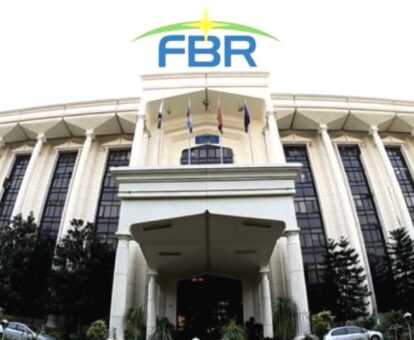
ISLAMABAD: The Federal Board of Revenue (FBR) on Thursday has taken major decision to ban removal of sugar bags from factory premises without affixation of tax stamp.
The condition has been imposed to implement track and trace system for monitoring of production and supply of the commodity for the crushing season 2021-2022.
In order to implement the decision the FBR issued Sales Tax General Order (STGO) No. 05 on November 11, 2021. “No sugar bags shall be allowed to be removed from a production site, factor premises or manufacturing plant without affixation of tax stamps/Unique Identification Marking (UIMs) with effect from November 11, 2021, which are to be obtained/procured from FBR’s Licensee M/s. AJCL/MITAS/Authentix Consortium,” it said.
The purpose of imposing the condition is to launch electronic monitoring of the commodity as the sugar crushing for the season 2021-2022 is about to start.
Sources in the FBR said that the track and trace system was not fully installed at sugar mills. There are still few sugar mills that were in process to install the electronic monitoring system.
In the meantime, the FBR may also deploy tax officials at the sugar mills by invoking Section 40 B of the Sales Tax Act, 1990 for parallel monitoring.
ISLAMABAD: Saudi Arabia will disburse cash deposits to Pakistan under assistance package pledged on October 26, 2021, Saudi diplomat said on Thursday.
While talking to the Pakistan’s state media Saudi Ambassador Nawaf Bin Said Al-Malki said Saudi Arabia will disburse cash deposits under the pledged financial assistance after approval of the Royal Court and signing of a Memorandum of Understanding (MoU) in a few days.
“This will be soon InshaAllah. There will be the agreement from the Royal Court and the MoU will be signed in a few days for the payment, and also for the deferred oil payment [facility],” the Saudi envoy said in an exclusive interview with APP, during his visit to the headquarters.
Saudi Arabia had recently announced to provide Pakistan $3 billion as a cash deposit with the State Bank to address its balance-of-payments crisis. Also, the Kingdom had pledged a one-year deferred payment facility for the import of oil, worth up to another $1.2 billion.
Ambassador Al-Malki said the government of Saudi Arabia considered Pakistan as “a dear country” with a very deep and strong relationship.
He said Saudia Arabia always stood with Pakistan and extended support to it on multiple occasions, adding that the relationship with Pakistan was regardless of any government in power.
“Our connection is with the Pakistani flag and we consider it our brotherly country,” he said, adding that he saw a “very bright future of Pakistan”.
The Saudi ambassador mentioned the camaraderie between the Saudi Crown Prince Mohammed Bin Salman and Prime Minister Imran Khan and expressed confidence that the relationship would strengthen in the future.
In three years, the six visits of PM Imran Khan to the Kingdom reflect the level of relationship, he added.
The Saudi envoy said Pakistani people loved the Kingdom of Saudi Arabia from the core of their hearts and held in high esteem the Custodian of the holy mosques.
ISLAMABAD: The federal government has announced a reduction of 73 per cent in sales tax rate on supply of petrol in order lower the impact of high global oil prices.
According to the notification the rate of sales tax has been reduced to 1.43 per cent from the rate of 6.84 per cent. The FBR issued previous notification SRO 1327(I)/2021 on October 7, 2021.
The revenue body also reduced the rate of sales tax on High Speed Diesel (HSD) to 6.75 per cent from 10.32 per cent.
However, the sales tax rates on kerosene and Light Diesel Oil (LDO) have been kept unchanged at 6.70 per cent and 0.20 per cent, respectively.
It is worth mentioning here that the normal rate of sales tax is 17 per cent. The present government has already reduced the rate of sales tax on petroleum products to the lowest level to minimize the impact of sharp rise in global oil prices.
The government on November 04, 2021 notified increased in petroleum prices, which are now all time high.
The petrol was fixed at Rs145.82 per litre instead of Rs137.79, showing an increase of Rs8.03. The price has been increased from previous high of Rs137.79.
Similarly, the price of high speed diesel has been increased by Rs8.14 to Rs142.62 from Rs134.48.
The rate of kerosene oil has been increased by 6.27 per liter to Rs116.53 from Rs110.26. Likewise, the price of light diesel oil has been increased by Rs5.72 per liter to Rs114.07 from Rs108.35.
A notification issued by the Finance Division stated that on November 01, 2021, the prime minister had not agreed with the proposals worked out by the Oil and Gas Regulatory Authority (OGRA) and the finance division directed to maintain the prices as notified on October 16, 2021.
It is pertinent to mention that maintaining the October 16, 2021 petroleum prices had some underlying concerns for cash flow issues due to short recovery of the cost, according to the statement.
It is important to note that in the previous petroleum prices, already a significant relief was provided to the consumers. The government is cognizant of its responsibility to provide maximum relief to the consumers.
“This has dented the petroleum levy budget of Rs152.5 billion during July – September, 2021 as compared to Rs20 billion realized only,” it said.
Foregoing in view, prices of petroleum products have been increased partially as compared to the prices being worked out by the OGRA. If the government had accepted OGRA’s recommendations, the new prices would have been much higher.
Infact, the government has absorbed the bulk of the pressure after making adjustment after making adjustment in the sales tax and petroleum levy. The collection of petroleum levy is far short of its fixed target for the first quarter of the fiscal year 2021/2022, it added.
KARACHI: The US dollar jumped to Rs174.19 at the closing on Thursday making a fourth straight day gain.
The Pak Rupee lost another Rs1.26 to the dollar from the previous day’s closing of Rs172.93 in the interbank foreign exchange market.
Currency experts said that the rupee remained under pressure due to large external payments.
The local currency made recovery after falling to the lowest level of Rs175.27 on October 26, 2021. The recovery in the local unit was due to the announcement of the Saudi government to support Pakistan in managing the balance of payment.
The Saudi government announced an amount of $3 billion on October 26, 2021 that was to be transferred directly to the State Bank of Pakistan (SBP).
The currency experts said that the rupee witnessed the massive depreciation due to the delay in Saudi package as well as IMF tranche.
Meanwhile, the import bill remained on the higher side due to a surge in international commodity prices.
The import bill registered a growth of 65.15 per cent to $25.06 billion during July – October 2021 as compared with $15.17 billion in the same period of the last fiscal year, according to the Pakistan Bureau of Statistics (PBS).