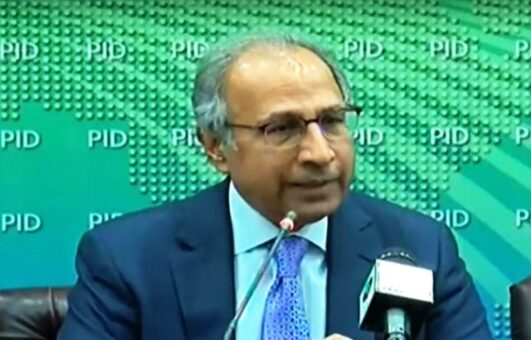
ISLAMABAD: Coronavirus led impacts are expected to deeply distort economic fabric of Pakistan, said Dr. Abdul Hafeez Shaikh, Advisor to the Prime Minister on Finance and Revenue.
(more…)Blog
-

FBR extends date for payment, return filing
ISLAMABAD: Federal Board of Revenue (FBR) has extended the last date for filing monthly sales tax return and payment for March 2020.
In a notification issued on Friday, the FBR extended the date for payment of sales tax and federal excise duty for the month of March 2020 which was due on April 15, 2020 and extended up to May 12, 2020, has been further extended up to May 27, 2020.
Similarly, the filing of sales tax return for the month of March 2020, which was due on April 18, 2020 and extended up to May 15, 2020, has been further extended up to May 30, 2020.
-
SBP slashes policy rate by 100 basis points to 8 percent
KARACHI: The State Bank of Pakistan (SBP) on Friday decided to further reduce the policy rate by 100 basis points to 8 percent as inflation outlook has improved further in light of the recent cut in domestic fuel prices.
A statement said that at its meeting on May 15, 2020, the Monetary Policy Committee (MPC) decided to reduce the policy rate by 100 basis points to 8 percent.
This decision reflected the MPC’s view that the inflation outlook has improved further in light of the recent cut in domestic fuel prices.
As a result, inflation could fall closer to the lower end of the previously announced ranges of 11-12 percent this fiscal year and 7-9 percent next fiscal year.
The MPC highlighted that the coronavirus pandemic has created unique challenges for monetary policy due to its non-economic origin and the temporary disruption of economic activity required to combat it.
While easier monetary policy can neither affect the rate of infection transmission nor prevent the near-term fall in economic activity due to lockdowns, it can provide liquidity support to households and businesses to help them through the ensuing temporary phase of economic disruption.
In particular, the successive policy rate cuts and sizeable cheap loans provided through the SBP’s enhanced refinancing facilities have helped maintain credit flows, bolster the cash flow of borrowers, and support asset prices.
This has contained the tightening of financial conditions that would otherwise have amplified the initial necessary contraction in activity.
The MPC noted the swift and forceful monetary easing of 525 basis point in the two months since the beginning of the crisis and SBP’s measures to extend principal repayments, provide payroll financing, and other measures to support liquidity.
Together with the government’s proactive fiscal stimulus―including targeted support packages for low-income households, SMEs, and construction―as well as assistance from the international community, these actions should provide ample cushion to growth and employment, while also maintaining financial stability.
This coordinated and broad-based policy response has provided relief and stability and should provide support for recovery as the pandemic subsides.
In reaching its decision, the MPC considered key trends and prospects in the real, external and fiscal sectors, and the resulting outlook for monetary conditions and inflation.
Key developments since the last MPC meeting
The MPC noted three key developments since the last MPC meeting on 16th April, 2020. First, the government has significantly reduced petrol and diesel prices by 30-40 percent in response to the continued fall in global oil prices, which has improved the outlook for inflation.
Second, most countries, including Pakistan, have begun easing lockdowns, which should help provide support to economic activity.
Nevertheless, as elsewhere, the situation remains highly uncertain. A possible rise in infections could prompt fresh lockdowns, and the recovery could prove more sluggish than is currently being anticipated.
Third, due to timely policy actions and international assistance, the initial volatility observed in domestic financial and foreign exchange markets has somewhat subsided in recent weeks, although global financial conditions remain considerably tighter than before the coronavirus outbreak.
Recent supportive developments have helped to restore the SBP’s foreign reserves position to close to pre-coronavirus levels of over US$ 12 billion.
Economic data has been consistent with the expected sudden and sharp drop in activity. LSM witnessed a steep decline of 23 percent (y/y) in March, due to the withdrawal from economic and social activity aimed at slowing the spread of the virus. High-frequency indicators of demand such as credit card spending, cement dispatches, credit off-take and POL sales also suggest a marked contraction in domestic economic activity in both March and April. At the same time, after showing signs of recovery earlier in the year, both consumer and business sentiment have fallen sharply.
More recently, the government has initiated a phased lifting of restrictions for different economic sectors conditional on the future course of the pandemic. If this easing proceeds smoothly, activity should pick up in coming months. The MPC noted that, in light of preliminary evidence from China and other countries that eased lockdowns earlier than others, activity in service sectors and consumption, which form a large part of the domestic economy, could remain subdued for longer.
The current account deficit has continued to narrow, even though both exports and imports have fallen sharply since the coronavirus outbreak. Exports declined by 10.8 percent (y/y) in March. Imports, after indicating some recovery on in recent months, contracted by 19.3 percent (y/y). The April figures from the Pakistan Bureau of Statistics reveal an even steeper decline in both exports (54 percent) and imports (32 percent). While remittances have so far remained resilient, there are potential downside risks given the economic difficulties across the world, especially in oil exporting countries.
Despite challenging global conditions, the outlook for external sector broadly remains stable. The current account deficit should remain bounded and the recent fall in portfolio inflows will be offset by official flows committed by the international community, such that Pakistan’s external position remains fully funded. Together, these developments, buttressed by the flexible exchange rate regime, should continue to support a steady build up in the SBP’s foreign exchange reserve buffers.
Like the external sector, the fiscal sector was also on track of much-needed consolidation before the coronavirus outbreak. The primary balance recorded a surplus of 0.4 percent of GDP in Jul-Mar FY20 against a deficit of 1.2 percent in the same period of FY19, the first 9-month surplus since FY16. However, the substantial fall in economic activity since March has significantly affected tax revenues. After rising by 17.5 percent (y/y) during Jul-Feb FY20, tax revenues declined sharply by 15 percent (y/y) in both March and April. Moreover, given the needed increase in spending to support healthcare, businesses, households and more vulnerable segments of society, the fiscal deficit is expected to widen substantially in Q4.
The MPC noted the significant reduction in headline inflation since January on the back of sharply decelerating food and energy prices, as well as easing core inflation. Looking ahead, this waning price momentum is expected to be complemented by the recent 30-40 percent cut in domestic petrol and diesel prices, creating room for today’s additional rate cut. Today’s decision has brought the cumulative reduction in the policy rate to 525 basis points, which was enabled by the fact that both the fall in inflation in Pakistan since January and the expected further decline next year are the highest among comparable emerging markets.
The inflation outlook is subject to two-sided risks. Inflation could fall further than expected if economic activity fails to pick up as expected next fiscal year. On the other hand, there are some upside risks from potential food-price shocks associated with adverse agricultural conditions. Price pressures could also emerge if the economy gains greater momentum in the second half of FY21.
Overall, the MPC felt that with today’s rate cut and based on available information, the monetary policy stance should support the economy over the coming months, while ensuring price and financial stability. In line with its previous communications, the MPC has remained data-driven and forward-looking in its interest rate decisions and stands ready to take appropriate actions as the need may arise.
-

Share market gains 203 points as energy scrips make recovery
KARACHI: The share market gained 203 points on Friday owing to recovery in energy scrips after gain in oil prices in international markets.
The benchmark KSE-100 index of Pakistan Stock Exchange (PSX) closed at 34,008 points as against 33,805 points showing an increase of 203 points.
Analysts at Arif Habib Limited said that the market opened on a positive note today with +89 points and went up by 236 points during the session, closing +203 points at 34,000 level.
Bounce in international crude prices helped oil and gas stocks to stage some recovery from recent past sessions.
OGDC and PPL particularly performed well. In the anticipation of rate cut by the Central bank (to be decided today), Cement sector also performed though posted limited gains.
FEROZ continued ascent on the back of its arrangement with Gilead for manufacturing of Remdesivir, and made consecutive cap for past several sessions.
Banking sector stocks remained subdued on the prospect of rate cut, however, active buying interest was observed in both BOP and HBL, which have since the beginning of the week performed well.
Cement sector recorded trading volume of 29.7 million shares, followed by Technology (26.3 million) and O&GMCs (18.8 million). Among scrips, HASCOL led the volumes with 14.8 million shares, followed by KEL (12.2 million) and MLCF (9.9 million).
Sectors contributing to the performance include E&P (+109 points), Power (+58 points), Cement (+50 points), Food (+31 points), Fertilizer (+20 points) and Banks (-62 points).
Volumes declined from 240.2 million shares from 213.3 million shares (-11 percent DoD). Average traded value inched up by 1 percent to reach US$ 38.8 million as against US$ 38.5 million.
Stocks that contributed significantly to the volumes include HASCOL, KEL, MLCF, FFL and FCSC, which formed 25 percent of total volumes.
Stocks that contributed positively to the index include HUBC (+53 points), NESTLE (+34 points), MARI (+33 points), POL (+29 points) and OGDC (+25 points). Stocks that contributed negatively include BAHL (-22 points), MCB (-21 points), UBL (-19 points), DAWH (-15 points), and PAKT (-12 points).
-

Rupee ends firmer against dollar
KARACHI: The Pak Rupee ended firmer against dollar on Friday owing to lackluster demand from importers and corporate buyers.
The rupee ended Rs160.10 to the dollar, the same previous day’s level, in interbank foreign exchange market.
Earlier this week the dollar strengthened by around one rupee during (Monday to Wednesday) three trading sessions owing to fall in remittances and rise in demand for import payments.
However, the rupee recovered sharply on Thursday May 14, 2020 against the dollar.
The currency experts attributed to depreciation in rupee value to the ease in lockdown from May 10, 2020 the demand of consumer goods increased substantially, which also encouraged the importers to place new foreign orders.
Overseas Pakistani workers sent home $1.790 billion in April, compared with $1.894 billion in previous month.
Pakistan received $18.781 billion in remittances in July-April FY2020, compared with $17.801 billion in the same period last year.
However, the experts said that the local currency recovered on the back of improved economic indicators.
-
FBR allows filing annex-H for July-Dec up to June 30
ISLAMABAD: Federal Board of Revenue (FBR) on Friday announced extension in date for filing annexure-H (stock position) up to June 30, 2020 for the period July – December 2019.
Filing Annexure-H is mandatory for taxpayers to claim sales tax refunds.
In an official memorandum issued, the FBR extended the time limit for filing of Annexure – H for the tax period July – December 2019 up to June 30, 2020.Annexure-H is a statement for providing stock position by taxpayers along with monthly sales tax return.
The FBR from July 01, 2019 introduced expeditious payment of sales tax refunds within 72 hours subject to the true filing of Annexure – H.
As per the Rules, refund will be treated as having been filed only after filing of Annexure H of the Sales Tax return, for which deadline of 120 days has been prescribed in the Rules and the same can be extended for a period of 60 days on the basis of approval from the Commissioner.
-
FPCCI recommends audit exemption for commercial importers
KARACHI – The Federation of Pakistan Chambers of Commerce and Industry (FPCCI) has called on the government to reinstate audit immunity for commercial importers in the upcoming federal budget 2020–2021.
(more…) -

SECP facilitates companies in IAS 39 requirements
ISLAMABAD: The Securities and Exchange Commission of Pakistan (SEC) has allowed relief registered companies that are applying IAS 39/principles of IAS 39 (for Available for Sale equity instruments).
The SECP issued S.R.O. 414 (I)/2020 and allowed following relief from the requirements contained in IAS 39 in relation to their Available for Sale (AFS) Equity Investments as follows:
(a) The company/entity can opt to show impairment loss (if any, due to significant or prolonged decline in fair value of AFS equity investment portfolio), as at March 31, 2020, in the statement of changes in equity.
(b) If the above short-term relief is opted, the company/entity shall disclose in the notes to the financial statements:
(i) amount of impairment loss included in the statement of changes in equity under (a) above;
(ii) amount of profit or loss after tax, arrived at by accounting for the impact of impairment loss in accordance with IAS 39; and
(iii) Earnings per share based on the (ii) above.
(c) The dividend income and actual realized gain/loss arising from the de-recognition of AFS equity instruments shall be recognised in the profit and loss account in accordance with the requirements of IAS 39.
(d) The amount of loss taken to equity as per (a) above, shall be treated as a charge to profit and loss account for the purpose of distribution as dividend, where applicable.
(e) The amount taken to equity as per (a) above for an AFS equity instrument, adjusted with the fair value change of this AFS equity instrument during the period from April 01, 2020 to June 30, 2020, shall be considered for impairment in accordance with the requirements of IAS 39.
(f) The impairment loss (if any), as of June 30, 2020, as per (e) above shall be taken to the profit and loss account for the year/period ending June 30, 2020.
The SECP said that companies/entities willing to follow the full requirements of IAS-39 as applicable are encouraged to do so.
-

FBR should shun multiple tax audits
KARACHI: Business community has advised Federal Board of Revenue (FBR) to shun conducting multiple audits of a taxpayer in a year in order to ensure ease of doing business.
In its proposals for budget 2020/2021 submitted to the FBR, the Federation of Pakistan Chambers of Commerce and Industry (FPCCI) said that registered Tax payers receive notices of multiple audits in a year such as Income Tax audit under Section 177 of the Income Tax Ordinance 2001, Withholding Tax audit under Section 161 of the Income Tax Ordinance 2001; Sales Tax audit under Section 25 of the Sales Tax Act 1990.
Moreover, the taxpayers also receive multiple notices of amendments in assessments under Section 122 of the Income Tax Ordinance 2001 and under Section 111 of the Income Tax Ordinance 2001 to explain sources.
The multiplicity of audit of a single taxpayer in a single year is against the concept of ease of doing business and creating unnecessary problems for tax payers.
The FPCCI recommended that multiplicity of audits in a single year be done away with and replaced with the concept of composite audit of registered taxpayers.
Further, it is suggested that new audit parameters should be enforced after consultation with all stakeholders.
-

FBR proposed to reduce import duty on smartphones
KARACHI: Federal Board of Revenue (FBR) has been urged to reduce customs duty on import of smartphones for the growth of economy.
In its proposals for budget 2020/2021 submitted to FBR, the Overseas Investors Chamber of Commerce and Industry (OICCI) said that after the implementation of DIRBS and accompanying tax increase, the smartphone penetration in the country has dropped by 6 percent in the current fiscal year.
“This is primarily due to the reason that for smartphone, we primarily rely on imports,” the OICCI said.
Smartphones are not only used for communications but are predominantly used as an enabling tool for internet in almost all segments of the economy including finance, education, health, agriculture, social development etc.
In the digital ecosystem, availability and affordability of these phones plays a major role in the growth of economy.
All imported mobile phones including smartphones are now heavily taxed, rendering them unaffordable for vast segment of the population.
This lack of affordability has become major impediment in proliferation of broadband in the country.
The OICCI recommended:
i. Retaining the current tax structure on low-end 2G handsets/feature phones (i.e. Rs. 500 as tax per device)
ii. Reducing taxes on 3G/4G handsets (smartphones) below Rs. 10,000 and cap it to a max of Rs. 1,000/- per device
iii. Reducing taxes on smartphones in the higher price brackets and cap it to a max of Rs. 5,000/- per device.