Blog

  • Reducing corporate tax to 25 percent recommended

    Reducing corporate tax to 25 percent recommended

    KARACHI: Federal Board of Revenue (FBR) has been urged to gradually reduce the corporate tax rate to 25 percent by tax year 2023.

    Overseas Investors Chamber of Commerce and Industry (OICCI) in its tax proposals for budget 2020/2021 recommended consolidation of all federal taxes in one lump sum.

    The government previously announced a policy for gradual decrease in corporate tax rate to bring it down to 25 percent by Tax Year 2023. However in the 2019 Finance Act the rate was frozen at 29 percent.

    The tax system has become cumbersome and inefficient due to a number of parallel taxes. In addition to direct corporate taxes, companies also pay other levies like the Workers Profit Participation Fund (WPPF) at 5 percent, Workers Welfare Fund (WWF) at 2 percent on their profits, thus the effective tax rate goes up significantly.

    If other taxes like the provincial infrastructure taxes in Sindh and Punjab, stamp duty on Purchase Orders and contracts, together with many other local levies are added, overall tax burden goes up to about 40 percent of profits, which is a significant tax burden with consequential increase in cost of doing business.

    The OICCI recommended to consolidate all federal taxes – Income Tax, and levies like WWF, WPPF in one lump sum so as to make the system more efficient and business friendly.

    Further, continue the previously announced policy to annually revise the tax rate to eventually align with the average Regional Corporate rate of 25 percent by FY 2023.

  • Terminal operators refuse to extend waiver from detention, demurrage charges: KCCI

    Terminal operators refuse to extend waiver from detention, demurrage charges: KCCI

    KARACHI: Karachi Chamber of Commerce and Industry (KCCI) has said terminal operators have refuse to extend waiver from demurrage and detention charges despite clear instruction of the government to facilitate the trade in the wake of COVID-19.

    (more…)
  • FBR exempts various properties from attachment for tax recovery

    FBR exempts various properties from attachment for tax recovery

    ISLAMABAD: Federal Board of Revenue (FBR) has exempted various properties from attachment for recovery from tax defaulters.

    The FBR issued SRO 353(I)/2020 through which the tax officials have been restrained from attaching certain movable properties of a defaulter for recovery of due taxes.

    According to the notification, the FBR officials may not attach assets for recovery, which included the necessary wearing apparel, cooking vessels, beds and bedding of the defaulters, his wife and children, and such personal ornaments, as, in accordance with religious usage, cannot be parted with by any women.

    The tax official further barred from attaching assets for recovery, which included tools of artisans, and where the defaulter is an agriculturist, his implements of husbandry and such cattle and seed grain as may be necessary to enable him to earn his livelihood.

    The FBR also explained the assets, which cannot be attached by the tax officials for recovery. This will include houses and other buildings (with the materials and the sites and the land immediately appurtenant) belonging to an agriculturist and occupied him.

    The FBR said that the tax officials may also not attach included: books of account; a mere right to sue for damages; and any right of personal service.

    The amendment to sales tax rules also prohibited the tax officials to attach all compulsory deposits and other sums in or derived from fund to which the Provident Fund Act, 1925, for the time being applies in so far as they are declared by the Act not to be liable to attachment.

  • FBR orders food outlets to display tax amount

    FBR orders food outlets to display tax amount

    ISLAMABAD: Federal Board of Revenue (FBR) has made it mandatory for food outlets to display tax amount along with retail price in menus.

    The FBR on Wednesday issued SRO 353(I)/2020 to make it mandatory for all the restaurants, bakeries, caterers and sweetmeat shops supplying prepared foods, foodstuff and sweetmeat to show prices and amount of tax separately on menu cards for menu board displayed in their outlets for the end consumers.

    The FBR has made this requirement for tier-I retailers, who are required to integrate their point of sales with the FBR’s online system.

    The FBR also made amendment through notification and made it mandatory for all the retailers to show prices and amount of tax separately on the price tags attached with finished fabric and locally manufactured finished articles of textile and textile made-ups leathers and artificial leather.

    The FBR made these changes in order to ensure revenue generation from the retail sector. The FBR recently allowed input tax adjustment to Tier-1 retailers in order to attract more retailers into this segment.

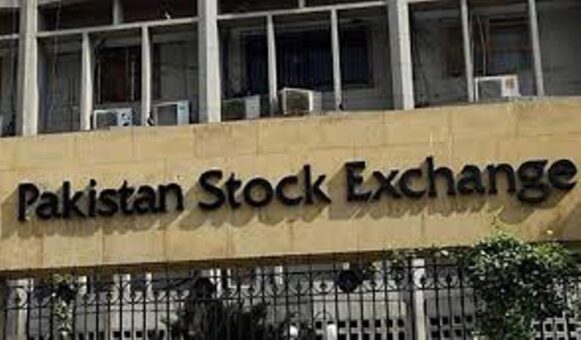
  • Share market ends down 265 points on selling pressure

    Share market ends down 265 points on selling pressure

    KARACHI: The share market fell by 265 points on Wednesday owing to selling pressure in major scrip witnessed during the day.

    The Index closed at 33,728 points as against 33,993 points showing a decline of 265 points.

    Analysts at Arif Habib Limited said that the market opened on a positive note today with +114 points but could not sustain selling pressure, which brought the index down in negative territory and witnessed a decline of 317 points.

    The index made some recovery by the end of session and closed -264 points.

    Banks, Cement and E&P stocks weathered selling pressure regardless of international crude oil prices.

    Fertilizer stocks traded no different than the rest and saw decline in stock prices.

    Among Banks, HBL saw low prices due to MSCI rebalancing and concerns among investors about a possible exit.

    Technology stocks managed to post the highest volumes with 28.9 million shares, followed by O&GMCs (28.2 million) and Cement (24.1 million).

    Among scrips, HASCOL topped with 23.8 million shares, followed by UNITY (20.4 million) and TRG (14.5 million).

    Sectors contributing to the performance include Banks (-99 points), Cement (-53 points), E&P (-39 points), Fertilizer (-34 points), Power (-34 points).

    Volumes declined from 261 million shares to 208.9 million shares (-20 percent DoD). Average traded value also declined by 22 percent to reach US$ 45.1 million as against US$ 57.6 million.

    Stocks that contributed significantly to the volumes include HASCOL, UNITY, TRG, MLCF and PIBTL, which formed 36 percent of total volumes.

    Stocks that contributed positively to the index include NESTLE (+9 points), TRG (+8 points), BAFL (+6 points), SHEL (+6 points) and ANL (+6 points).

    Stocks that contributed negatively include MCB (-56 points), HBL (-42 points), HUBC (-36 points), LUCK (-24 points), and FFC (-18 points).

  • Fiscal deficit contracts at 3.8pc in first nine months

    Fiscal deficit contracts at 3.8pc in first nine months

    ISLAMABAD: The fiscal deficit has contracted at 3.8 percent during first nine months of current fiscal year. The budget deficit was 5 percent in the same moths of the last fiscal year.

    Analysts at Topline Securities said that importantly, the primary balance during the period clocked in at 0.4 percent of GDP or Rs194 billion (last year was -1.2 percent of GDP or -Rs463 billion), close to the initial target of 0.6 percent set by the IMF.

    IMF is likely to review these targets going forward because of the implications of COVID-19 outbreak, the analysts said.

    In the 3QFY20, the fiscal deficit came in at 1.6 percent of GDP compared to 2QFY20’s fiscal deficit of 1.6 percent of GDP and 1QFY20’s fiscal deficit of 0.7 percent of GDP.

    All the four provinces recorded a budgetary surplus during the first nine months of current fiscal year, while only Punjab recorded a budgetary deficit in 3QFY20.

    During the 9MFY20, Total Revenues increased by 31 percent YoY, where the improvement was led by 14 percent YoY higher Tax Revenues (Mar-2020 revenues partially affected by COVID-19) and 160 percent YoY higher Non-Tax Revenues.

    Looking into further breakup of revenues, government collected 15 percent YoY higher Direct taxes, 18 percent YoY higher Sales Tax and 40 percent YoY higher Petroleum Levy during 9MFY20. In 3QFY20, the same were down by 16 percent QoQ, 16 percent QoQ and 17 percent QoQ, respectively.

    The government hugely benefitted from 360 percent YoY higher profits from State Bank of Pakistan (SBP) in 9MFY20 (down 13 percent QoQ in 3QFY20), which is around 1.4 percent of GDP.

    On the expenditures front, Total Expenditure increased by 16 percent YoY. Current Expenditures increased by 17 percent YoY, where Mark-up Payments were up 29 percent YoY and Defense Expenditures were up 4 percent YoY. Excluding these items, government’s own expenses increased by 14 percent YoY during 9MFY20.

    The decline in interest rates helped the government reduce the interest bill by 16 percent QoQ during 3QFY20.

    The Development Expenditure remained steady, where growth of 14 percent YoY was witnessed in 9MFY20. In 3QFY20, the same declined by 6 percent QoQ.

    In the wake of COVID-19, government’s expenses on Social Protection during the 3QFY20 clocked in at Rs13.9bn (vs. Rs701mn in 2QFY20 and Rs547mn in 1QFY20).

    Pakistan’s fiscal deficit to clock in at 9.0 percent of GDP in FY20 due to implications of COVID-19 on both revenues and expenditures, the analysts estimated.

  • Rupee falls by 41 paisas against dollar

    Rupee falls by 41 paisas against dollar

    KARACHI: The Pak Rupee depreciated by 41 paisas against dollar on Wednesday owing to hope of escalation in demand.

    The rupee ended Rs160.06 to the dollar from previous day’s closing of Rs159.65 in interbank foreign exchange market.

    Currency experts said that positive sentiments were prevailed in the markets on reports of ease in lockdown.

    They said that the announcement of allowing import of petroleum products also deteriorated the rupee value.

    However, the trade deficit shrank by 25.68 percent to $19.49 billion during July – April 2019/2020 as compared with the deficit of $26.23 billion in the same period of the last fiscal year.

    The exports in first ten months (July – April) 2019/2020 also fell by four percent to $18.41 billion as compared with $19.16 billion in the corresponding period of the last fiscal year.

    On the other hand the import bill fell by 16.5 billion to $39.9 billion in the first ten months of current fiscal year as compared with $45.4 billion in the corresponding period of the last fiscal year.

  • SBP introduces credit risk sharing mechanism to support employment

    SBP introduces credit risk sharing mechanism to support employment

    KARACHI: Ministry of Finance and State Bank of Pakistan (SBP) introduce risk-sharing mechanism to support bank lending to SMEs and small businesses to avail SBP’s Refinance Facility to Support Employment.

    Taking cognizance of the SMEs finding difficulties in arranging adequate collateral and banks’ risk averseness in taking exposures for such lending under the SBPs Refinance Scheme to Support Employment and Prevent Layoff of Workers, Ministry of Finance has stepped forward to shoulder risk sharing with banks. Accordingly, the Federal Government has allocated Rs30 billion under a credit risk sharing facility for the banks spread over four years to share the burden of losses due to any bad loans in future. Under thisrisk sharing arrangement, Federal Government will bear 40% first loss on principal portion of disbursed loan portfolio of the banks.

    This facility will incentivize banks to extend loans to collateral deficient SMEs and small corporates with sales turnover of upto Rs2 billion to avail financing under SBP refinance scheme.

    Under the SBP’s Refinance Scheme to Support Employment and Prevent Layoff of Workers due to the impact of COVID-19, businesses that commit to not lay off workers in the next three months can avail credit through banks for the three months of wages and salaries expenses at a concessional mark-up rate.

    The risk-sharing mechanism being introduced today, that is expected to increase the banks’ incentive to lend to SMEs and small corporate under this scheme, was developed on the basis of feedback received from relevant stakeholders and in collaboration between MOF and SBP.

    Ministry of Finance’s swift approval of the subsidy to provide risk coverage to banks has made it possible for the SBP to launch this credit risk sharing facility for which relevant circular has been issued today.

    SBP will continue to monitor the implementation of the scheme.

    With a view to incentivize banks/DFIs for financing to SMEs and small corporates under above mentioned schemes, Government of Pakistan has approved budgetary allocation for ‘Risk Sharing Facility for State Bank of Pakistan (SBP) Refinance Scheme to Support Employment and Prevent Layoff of Workers’.

    Accordingly, the risk sharing facility is being provided with immediate effect, with following key features.

    S.NoParticularsKey features
    1EligibilityThe financing extended to businesses with maximum sales turnover of Rs 2 billion, under SBP refinance scheme to support employment and prevent layoff of workers is eligible for Risk Sharing Facility by the GOP.
    2Risk CoverageGoP will bear 40% first loss on disbursed portfolio (principal portion only) for eligible borrowers. Note: In case of non-repayments, after being classified as ‘Loss’ (as per the classification criteria laid down under respective SBP Prudential Regulations, credit loss subsidy claim will be paid by the GOP).
    3Security RequirementsSecurity arrangements will be as per executing agency’s own credit policy after taking into account the factor of this risk sharing facility. Hence, banks are encouraged to facilitate collateral deficient borrowers. In any case, banks will not be asking for additional collaterals over and above 60% of the principal amount and markup thereon.
    4Executing AgencyBanks and DFI assigned limits under SBP scheme will be eligible Executing Agencies (EAs).
    5Additional MeasuresEAs shall develop and implement robust mechanism to ensure that the loans are utilized for intended purpose only.
    6AdministrationDevelopment Finance Support Department (DFSD), SBP BSC will manage operational aspects of the risk sharing facility. DFSD will submit data under the risk sharing facility on quarterly basis to the Finance Division.

    7Subsidy PaymentEAs shall submit credit loss subsidy claims to DFSD on quarterly basis within 15 working days after the end of each quarter. DFSD after scrutiny of the claims shall submit the same to Finance Division, GOP. FD will release payment against submitted claims within 15 working days. Upon receipt of subsidy from GOP, SBP BSC Karachi will credit the account of EAs with the subsidy amount.

    The banks/DFIs are advised to ensure immediate implementation of ‘Risk Sharing Facility for SBP Refinance Scheme to support employment and prevent layoff of workers’ and facilitate the eligible businesses to avail financing under this facility.

  • FBR allows duty drawback on supplementary food items

    FBR allows duty drawback on supplementary food items

    ISLAMABAD: Federal Board of Revenue (FBR) has allowed duty drawback on import of ready to use supplementary food, which included palm oil and skimmed milk.

    The FBR on Tuesday issued SRO 341(I)/2020 to allow 5.33 percent freight on board (fob) to the extent of customs duty. The duty drawback is available from April 27, 2020.

    The facility has been allowed to items falling under HS Code 2106.9090, which included:

    01. RBD Palm Olien

    02. RBD Canola Oil

    03. Skimmed Milk Powder

    04. Emulsifier

    05. Vitamin and Mineral Premix

    06. Anti Oxidant

    07. Whey Powder

    08. Peanuts

  • Domestic oil sales plunge by 35 percent in April

    Domestic oil sales plunge by 35 percent in April

    KARACHI: The domestic sales of petroleum products have plunged by 35 percent to 1.07 million tons in April 2020 as compared with 1.65 million tons in the same month of the last year.

    However, the sales in April 2020 increased by three percent when compared with 1.03 million tons in March 2020.

    Analysts at Arif Habib Limited attributed the increase in sales of petroleum products to: 1) Surge in sales of HSD on account of higher demand from agriculture sector given beginning of wheat harvesting season, and 2) Closure of Iran border resulting in lower availability of illegally dumped fuel.

    Pertinently, sales of FO, MS and HSD witnessed a steep decline of 75 percent, 36 percent and 16 percent YoY to 0.07 million tons, 0.44 million tons and 0.55 million tons, respectively.

    As per market sources, oil consumption witnessed a rising trend since the government opted for a ‘smart lockdown’ and issued Standard Operating Procedures (SOP) for construction and export oriented industries.

    However, if lockdown is extended (deadline is May 09, 2020) then this will be negative for May 2020 sales.

    On a monthly basis, MS sales dropped by 21 percent MoM while HSD and FO volumes grew by 41 percent and 2 percent MoM respectively.

    The analysts expect demand for furnace oil to increase in upcoming months due to higher demand of power in summer season coupled with historic low prices (FO touched USD 77/M.T on 22nd April’20) which may improve merit order of furnace oil based power plants.

    During first ten months of current fiscal year, total White and Black Oil sales clocked-in at 13.35 million tons, depicting a decline of 13 percent YoY due to dip in sales volumes of MS, HSD and FO by 3 percent, 15 percent and 31 percent YoY, respectively.

    Motor Gasoline sales witnessed a meager decline of 3 percent YoY to 5.99 million tons due to the Coronavirus. However, massive reduction in price will increase demand as customers will prefer petrol over Compressed Natural Gas (CNG). High Speed Diesel (HSD) sales shrunk by 15 percent YoY to 5.15 million tons led by i) Sharp slowdown in Agriculture sector, ii) Negative growth of 3.03 percent YoY in the manufacturing sector of LSM, and iii) Availability of smuggled HSD from Iran, which is cheaper in contrast to official imported product.

    Meanwhile, FO is being replaced by other sources namely Coal, Hydel and RLNG, resulting in a decline of 31 percent YoY to 1.68 million tons compared to 2.44 million tons in SPLY.