Blog

  • Immunity under Section 111 is Tax Amnesty

    Immunity under Section 111 is Tax Amnesty

    KARACHI: Granting immunity from Section 111 of Income Tax Ordinance, 2001 is an amnesty, senior tax officials at Federal Board of Revenue (FBR) said. This section of the ordinance deals with unexplained income or assets. This section is powerful tool against concealed or black money.

    This was made part to the ordinance as deterrence against tax evasion. However, respective governments frequently granted immunity from this section to classes of persons to whiten their ill-gotten money at the cost of genuine taxpayers.

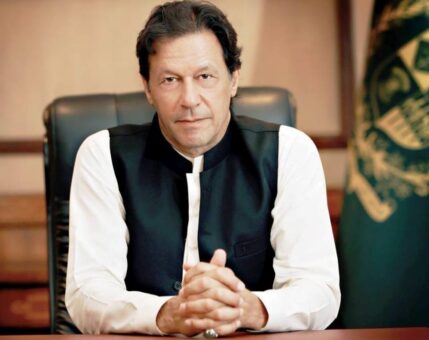
    PTI’s ruling government, which was very vocal against amnesty schemes and its chairman and sitting Prime Minister Imran Khan in the past on many occasion vowed to tighten noose around tax evaders instead giving such amnesties.

    In contrast the PTI government in its less than two years granted a general amnesty in 2019 and now is going to grant blanked amnesty to construction sector despite realizing it was parking lot for black money.

    It is lamentable the ministry of finance late last month issued Medium Term Budget Strategy Paper for year 2020-2023 in which it is clearly written: “Amnesty schemes will no longer be offered, and exemptions will be curtailed.”

    Prime Minister Imran Khan on April 03, 2020 announced a package for construction industry and said: “those investing in the construction sector during the year 2020, would not be asked any queries about the source of their income.”

    The story not ends here as the government is going beyond and reverting its decision and announced a fixed tax regime for builders and developers. The fixed tax regime is disaster for taxation system and in the last budget the government itself reinstated minimum tax regime in order to realize income tax from true income.

    The Medium Term Budget Strategy Paper 2020/2023 also pointed out eliminating the final tax regime. “Gradual phasing out of Final Tax Regime will help in taxing real income,” it added.

    Prior to Finance Act, 2019, persons involved in certain transactions were not required to pay tax on their actual income. Instead, the tax collected or deducted on such transactions was treated as their final tax liability.

    “Since the tax deducted was final tax, therefore, such persons were not subjected to detailed scrutiny through audit,” according to Income Tax Circular 09 of 2019.

    It further said the actual tax potential from such transactions is not realized due to presence of final tax regime.

    Tax experts believed that the government was considered only one sector for granting amnesty and allowing immunity from questioning source of income. Granting such amnesty to a particular sector is against fundamental right and may be challenged in the court of law.
  • Business community demands cut in tax rates to half for three months

    Business community demands cut in tax rates to half for three months

    KARACHI: Business community has demanded the government of reducing tax rates to half for at least three months in order to provide relief to industry and dilute impact of coronavirus.

    (more…)
  • Highlights of tax amnesty for construction sector

    Highlights of tax amnesty for construction sector

    KARACHI: Federal Board of Revenue (FBR) to offer many incents through amendment to income tax law in order to comply with the announcement of the prime minister to grant tax amnesty to construction sector.

    According to highlights released by Arif Habib Limited, the following incentives to be offered by the FBR:

    1. Special tax provisions for builders and developers

    2. Exemption from provisions of section 111 of the Income Tax Ordinance 2001, on construction activity

    3. Rationalization of the Capital Gains Tax (CGT)

    4. Valuation of Real Estate / Plots

    5. Rationalization / Reduction in Sales Tax on Construction Material

    6. Exemption of taxes on first house

    7. Establishment of special taxes.

    The analysts said that the domestic construction sector has faced enormous challenges in recent times due to changes in the regulatory environment (influenced by the ruling government, FATF etc.) including provision of money trail, assessment of income and increase in valuation of real estate.

    Moreover, regulations such as CNIC requirement, restriction on sale of construction material to non-registered clients of over PKR 10mn etc.) also hindered construction activity.

    The government has recognized the importance of the housing and construction sector and has addressed some of these concerns under the “Special Incentive Package for the Construction Industry” to revive the real estate sector.

    The Government intends to dilute the impact of Covid-19 outbreak on domestic employment and has therefore introduced this package to mitigate its impact to some extent.

  • KCCI demands suspension in sales tax on services collection for six months

    KCCI demands suspension in sales tax on services collection for six months

    KARACHI: Karachi Chamber of Commerce and Industry (KCCI) has demanded the Sindh government to suspend the sales tax collection by Sindh Revenue Board (SRB) for six months.

    (more…)
  • Weekly Review: Market to celebrate amnesty to black money

    Weekly Review: Market to celebrate amnesty to black money

    KARACHI: The stock market likely to maintain bullish trend during the next week owing to tax amnesty announced by the prime minister for construction sector.

    Analysts at Arif Habib Limited said that the index to continue the rally as investors celebrate the government’s proactive stance to keep the economy afloat during the lockdown.

    The government’s incentives package for the construction industry to keep economic activity upbeat should help sustain the positivity in the cement/engineering sector while oil scrips should be dictated by the developments regarding an emergency meeting of OPEC+ called by Saudi Arabia and its outcome.

    The benchmark KSE-100 index of Pakistan Stock Exchange (PSX) is currently trading at a PER of 5.8x (2020) compared to Asia Pac regional average of 10.2x and while offering DY of around 8.8 percent versus around 3.1 percent offered by the region.

    Following a 3-week rout of the KSE-100 Index, the bourse finally rebounded this week with a 12.5 percent return WoW – highest ever weekly return.

    Optimism in the bourse was sourced from the federal government announcing a series of measures to mitigate risks to the economy from the COVID-19. Banks and E&P rallied as valuations had reached dirt cheap levels. Towards the end of the week President Trump’s announcement of a possible agreement between Saudi Arabia and Russia to cut production sent oil prices soaring (WTI up 18 percent WoW) and thereby E&P stocks.

    The KSE-100 closed at 31,622 points (up by 12.5 percent / 3,512 points WoW).

    Sector-wise positive contributions came from i) Commercial Banks (764 points), ii) Oil & Gas Exploration Companies (550 points) and iii) Cement (537 points). Scrip-wise positive contributions were led by HUBC (290 points), LUCK (227 points), and UBL (186 points).

    Foreign selling continued this week clocking-in at USD 36.1 million compared to a net sell of USD 13.7 million last week. Selling was witnessed in E&Ps (USD 13.5 million) and Commercial Banks (USD 8.0 million).

    On the domestic front, major buying was reported by Individuals (USD 13.0 million) and Funds (USD 10.3 million). Average Volumes settled at 228 million shares (up by 52 percent WoW) while average value traded clocked-in at USD 46 million (up by 66 percent WoW).

  • PM announces tax incentive package for construction industry

    PM announces tax incentive package for construction industry

    ISLAMABAD: Prime Minister Imran Khan on Friday announced a comprehensive tax incentive package for construction industry and allowed opening of activities in this sector from April 14, 2020.

    According to state-run media the prime minister announced the opening of construction sector from April 14 to help the country’s daily wagers and laborers, affected by continued lockdown due to COVID-19 outbreak, to earn their livelihoods.

    Talking to media-persons, he said the government’s decision taken in coordination with the provinces, was also aimed at reviving economic activities in the country, badly hit by the situation arising out of the coronavirus outbreak.

    The prime minister also announced various incentives for the construction sector including tax incentives, waivers and subsidies in the areas of sales tax, capital gain tax, withholding tax etc.

    Giving details of the decisions, he said that those investing in the construction sector during the year 2020, would not be asked any queries about the source of their income.

    Secondly, the Prime Minister said, the government had also decided to bring the construction sector in the fixed-tax regime under which the rate of tax on land would be levied on the basis of per square yard and per foot.

    He, however, added that those investing in the prime minister’s housing programme would be given 90 percent tax rebate and they would be required to pay just 10 percent of the total calculated tax amount on their projects.

    Imran Khan said that it has also been decided to waive-off withholding in cement and steel sectors.

    Besides, he said, that in coordination with the provincial governments of Punjab, Khyber Pakhtoonkhwa and Sindh, it has also been decided to bring the sales tax in construction sector to 2 percent through consolidation of all taxes.

    The Prime Minister further said that Capital Gain Tax on the sale of house was also being done away with.

    He also announced Rs. 30 billion subsidy for Naya Pakistan Housing Programme, adding, further subsidy would be given on its progress.

    The Prime Minister said the government has also decided to give construction sector the status of industry.

    It has also been decided to establish the Construction Industry Development Board (CIDB) to help promote the construction industry in the country, he added.

    The Prime Minister said all the decisions regarding the COVID-19 were being taken in coordination with the provinces. However, he added, any of the provinces could make changes as per their requirements.

    He said since the Rs. 1200 billion’s stimulus package announced by the federal government to provide financial relief to the poor and daily-wagers in the wake of lockdown due to Coronavirus outbreak, the government had decided to open the construction sector.

    The prime minister said with the agriculture sector, which was already open, providing jobs to people in villages, the opening of construction sector, the main source of employment in urban areas, was very much needed.

  • FBR monitors tax refund repayments to ensure transparency

    FBR monitors tax refund repayments to ensure transparency

    ISLAMABAD: Federal Board of Revenue (FBR) has initiated the monitoring to ensure transparency in repayment of tax refunds.

    An office order circulated to all Regional Tax Offices (RTOs) and Large Taxpayers Units (LTUs), the FBR said that the prime minister had announced relief package for the industry which included tax refunds of Rs100 billion to industrial sector.

    The FBR said that presently huge amount of sales tax refund claims were laying pending for replication/processing in each RTO/LTU.

    The revenue body further said that in this emergency situation the genuine businesses/industries need liquidity to pay salaries to their employees.

    The FBR directed the tax offices to process the sales tax refund claims immediately on urgent basis and sanction the admissible amount to the refund claimant as per law.

    The FBR directed Chief Commissioner of RTOs/LTUs to monitor the process in order to maintain transparency and fairness.

    The chief commissioners have also been directed to report the refund release to FBR on daily basis.

  • Rs100 billion released for tax refunds, duty drawback repayments

    Rs100 billion released for tax refunds, duty drawback repayments

    ISLAMABAD: In a bid to alleviate liquidity challenges faced by the industry, particularly in the aftermath of the COVID-19 pandemic and subsequent lockdowns, the government of Pakistan has disbursed a substantial amount of Rs 100 billion for the repayment of tax refunds and duty drawbacks.

    (more…)
  • Customs directs shipping lines, agents to withdraw delay, detention charges

    Customs directs shipping lines, agents to withdraw delay, detention charges

    KARACHI: Pakistan Customs on Friday directed shipping companies and shipping agents to extend waiver of delay and detention charges during lockdown to contain coronavirus.

    Model Customs Collectorate (Enforcement &Compliance) Karachi issued instructions to chairman All Pakistan Shipping Association and chairman Pakistan Ship Agents Association to allow free time to importers.

    The customs authorities said that Pakistan is currently facing a great challenge to address the issue of spread of coronavirus outbreak.

    As a result of lockdown and restriction of movement of people / vehicle, the time duration of lifting the cargo from ports is exceeding the free-time as allowed to the importers under normal course of business.

    The FBR has already issued similar instructions to container terminal operators on March 31, 2020 to waive demurrage and detention charges in order to facilitate importers and trade community in difficult times.

    The collectorate said that considering the challenging scenario for importers and trade community the shipping lines and their agents should extend free-days in respect of container detention and not charge container detention charges and other charges in connection of late delivery of goods for the period from March 25, 2020 to April 16, 2020 in addition to free days already allowed by shipping lines and their agents.

  • SBP allows relief package relaxations to refinance scheme borrowers

    SBP allows relief package relaxations to refinance scheme borrowers

    KARACHI: State Bank of Pakistan (SBP) on Friday allowed easy loans, as allowed under relief package, to borrowers of refinance schemes.

    In a statement issued the central bank said that it had allowed similar relaxations, as provided under the relief package, on its concessional refinance schemes.

    The SBP is continuously reviewing the challenges arising out of COVID-19 pandemic situation with particular reference to the financial sector and taking measures.

    Expanding the scope of its recently announced relief package for households and businesses, SBP has taken another major step today.

    Under various refinance schemes loans are provided with preferential terms and conditions to promote growth in priority sectors of the economy.

    Now the relaxation allowed for deferment in repayment of principal amount for one year for corporate, consumer, agriculture, SMEs and microfinance sectors, will now be available on financing of banks/ DFIs under SBP’s refinance schemes as well.

    With this deferment of principal, the complete repayment schedule/tenor of the loan will be extended by one year.

    The borrowers will, however, continue servicing their mark up during the period of principal deferment. In case borrowers are not able to service mark-up payment, banks/DFIs may reschedule/restructure the loan in such a manner that tenor of the loan can go up to one year beyond the existing maximum tenor of the respective scheme.

    Borrowers of SBP’s following refinance schemes and their Shariah alternatives would benefit from this relaxation:

    Long Term Financing Facility (LTFF)

    Financing Facility for Storage of Agricultural Produce (FFSAP)

    Refinance Facility for Modernization of SMEs

    Refinance and Credit Guarantee Scheme for Women Entrepreneurs

    Refinance Scheme for Working Capital Financing of Small Enterprises and Low-End Medium Enterprises

    Small Enterprise (SE) Financing and Credit Guarantee Scheme for Special Persons