KARACHI: The Pakistan rupee witnessed a sharp decline on Tuesday, falling by 91 paisas against the US dollar. The rupee closed at Rs167.90 per dollar in the interbank foreign exchange market, down from the previous day’s rate of Rs166.99. The depreciation was primarily driven by increased demand for dollars, largely due to rising import payments.
(more…)Blog
-
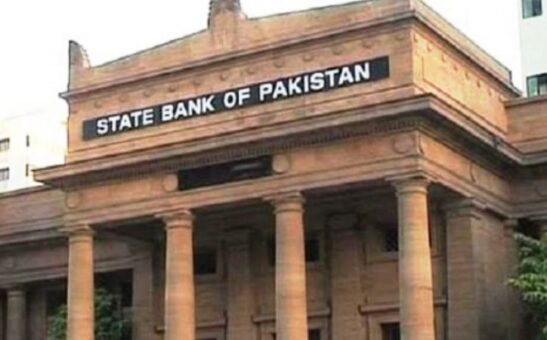
SBP exempts service charges on payment made to PM Corona Relief Fund
KARACHI: State Bank of Pakistan (SBP) has exempted services charges on donations made to Prime Minister Corona Relief Fund through payment cards.
The SBP in a statement on Tuesday said that it previously issued a circular on August 06, 2018 on Service Charges on Donations/ Payments to Supreme Court of Pakistan’s Diamer Bhasha and Mohmand Dam Fund through Payment Cards.
In this regard, it has been decided that the scope of the Circular would also cover Payments/Donations made to the Prime Minister’s as well as provincial governments’ Covid19 Pandemic Relief Funds.
Accordingly, all issuing and acquiring banks in Pakistan shall not charge any service fee including Interchange Reimbursement Fee (IRF), Merchant Discount Rate (MDR), Merchant ID Fee, on boarding fee or any other fee that may be applicable on any transactions made to the said account.
The issuing and acquiring banks/microfinance banks/payment schemes are advised to meticulously comply with these instructions.
-

SBP relaxes loan conditions for hospitals combating coronavirus
KARACHI: State Bank of Pakistan (SBP) on Monday further relaxed conditions for refinance facilities for hospitals that are engaged in combating the coronavirus (COVID-19).
The central bank in a statement said that since the outbreak of COVID‐19, the SBP has taken a number of measures to support the economy. One of the earliest measures taken by SBP was to support the hospitals, which have been at the fore front in combating the disease, by providing them a facility to meet their financial needs namely the SBP Refinance Facility to Combat COVID‐19 (RFCC) on March 17, 2020.
Since then SBP received several suggestions by stakeholders to further improve it. Keeping in view such suggestions, SBP has provided more flexibility under RFCC to facilitate the health sector further.
Hospitals and medical centres engaged in fight against COVID‐19 will now be allowed to avail financing against their existing equipment and purchase of refurbished equipment as well, provided the same are used in creation of special facility/isolation ward to deal with COVID‐19.
Moreover, maximum coverage of 60 percent of civil works for setting up separate /isolation facility, has also been enhanced to 100 percent. Banks have been directed to ensure that financing extended under this facility is utilized for the intended purpose.
It is believed that above changes would help hospitals/medical centres avail SBP’s refinance facility with much ease.
-

Share market plunges by 1043 points on selling pressure
The share market witnessed a significant downturn on Monday as the benchmark KSE-100 index of Pakistan Stock Exchange (PSX) plunged by 1043 points.
(more…) -

Rupee ends down 23 paisas against dollar
KARACHI: The Pak Rupee ended down 23 paisas against dollar on Monday owing to demand for import payments.
The rupee ended Rs166.99 to the dollar from last Friday’s closing of Rs166.76 in interbank foreign exchange market.
The dealers said that the rupee was under pressure due to higher demand for import payment. They said that mostly demand was come from foreign buying related to commodities for the month of Ramazan.
The dealers said that the rupee however likely to gain in future owing to lower import payment demand after decline in international oil prices.
The import bill of the country has declined by 21 percent in March 2020 over the previous month owing to lockdown to contain coronavirus pandemic.
The import bill was at $3.3 billion in March 2020 as compared with $4.185 billion in February 2020, according to data released by Pakistan Bureau of Statistics (PBS) on Friday.
Similarly, the pandemic also adversely affected the country’s exports. The exports fell by 15.56 percent to $1.8 billion in March 2020 as compared with $2.14 billion in February 2020.
The total import bill during July – March 2019/2020 fell by 14.42 percent to $38.81 billion as compared with $40.68 billion in the corresponding period of the last fiscal year.
However, the exports registered increase of 2.23 percent during first nine months of current fiscal year to $17.45 billion as compared with $17 billion in the corresponding months of the last fiscal year.
The trade deficit during first nine months contracted by 26.45 percent to $17.36 billion as compared with the deficit of $23.61 billion in the corresponding period of the last fiscal year.
-
SBP sets up direct helpline to facilitate banking consumers
KARACHI: State Bank of Pakistan (SBP) has facilitated consumers of banks by setting up direct helpline for quick disposal of complaints amid difficult situations due to coronavirus.
In a statement issued on Monday, the central bank said it had taken additional measures to facilitate bank customers that are faced with extraordinary challenges arising out of COVID-19 situation in the country.
They can now approach SBP through its helpline service in case their queries or complaints are not being responded by banks.
The SBP also encourages public to use digital payment services as much as possible to help banks providing their services with minimal staff to ensure their safety.
SBP has taken notice of phone calls to banks’ customers by fraudsters seeking personal information taking advantage of the current conditions. Following are the details of measures taken.
To facilitate banking consumers, SBP has advised all banks to ensure that their call centers/helplines are available 24/7 for instant customer support.
Banking consumers are encouraged to approach banks through helpline for queries or lodging complaints. In case complainants do not get an appropriate response from banks, they may approach SBP helpline at 021-111-727-273, which will remain available during office hours.
To cater to the needs of the public for facilitation and guidance, SBP has enhanced its helpline capacity by deploying more agents at its call center.
The general public is encouraged to take appropriate safety measures in the context of the coronavirus and use alternate delivery channels where possible.
SBP recognizes that the employees of banks and other financial institutions are providing services amid the difficult working conditions arising due to COVID-19.
For the protection of bank employees and customers, work place safety and to meet the operational challenges in serving the bank customers, banks have been advised to implement guidelines issued by World Health Organization, the Government of Pakistan and the Provincial Governments in letter and spirit.
Nevertheless, bank employees and customers still facing difficulties or having concerns over arrangements may bring this to the notice of SBP.
For this purpose, queries, concerns, complaints may be emailed to SBP at [email protected].
SBP has time and again advised the general public through various channels of communication not to disclose or share any personal information about their bank accounts or credit/debit cards including CNIC number, debit or credit card number, passwords, PINs and one-time password (OTP), etc. on incoming phone calls or messages.
It has been brought to the notice of SBP that fraudsters, imitating as officials of SBP, bank or any other government agency, have been attempting to seek personal information from the public on the pretext of verification of account due to emergency conditions under COVID-19 pandemic.
It is reiterated that SBP, banks or any other agency are not collecting information from banking customers regarding their bank accounts or cards.
The SBP never asks for any personal information directly from bank customers. The general public is, therefore, advised again not to disclose personal information on incoming calls.
Details of any such call or message received by the public may also be reported to SBP Helpline at 021-111-727-273 or emailed at [email protected]
-

Nausheen Amjad appointed FBR chairperson
ISLAMABAD: Ms. Nausheen Javaid Amjad, a BS-22 officer of Inland Revenue Service (IRS) has been appointed as the chairperson of Federal Board of Revenue (FBR) and a notification will be issued shortly, sources said on Monday.
Ms. Nausheen has been appointed as the chief of revenue body on the recommendations of senior tax officers. A vacuum was created after Shabbar Zaidi went on leave for an indefinite period.
She was serving as acting chairperson since January 31, 2020 after Shabbar Zaidi was granted leave on health grounds.
Last week a summary for the cabinet was sent for the appointment of FBR chairman.
Selection Committee for selection of senior officers has unanimously recommended that Ms. Nausheen Javaid Amjad presently posted as Member (Admin) FBR may be appointed as Chairperson FBR.
Syed Muhammad Shabbar Zaidi, Chartered Accountant, was appointed as Chairman FBR, on May 10, 2019 for a period of two years, on honorary / pro bono basis.
In view of the above, Establishment Division proposed the following:
1. The honorary / pro bono appointment of Syed Muhammad Shabbar Zaidi, as Chairman FBR may be terminated with immediate effect.
2. Ms. Nausheen Javaid Amjad (BS-22/IRS) presently posted as Member (Admin), may be transferred and appointed as chairperson FBR with immediate effect.
-

FBR extends suspension of customs officials
ISLAMABAD: Federal Board of Revenue (FBR) has extended the suspension period for further three months in case of two customs officials.
Through a notification, the FBR extended the suspension period of the following inspectors BS-16 of Model Customs Collectorate (Enforcement and Compliance), Lahore for further period of three months with effect from March 30, 2020:
01. Muzaffar Hussain, Inspector
02. Khalid Pervaiz Bhutta, Inspector
Both the customs officials were suspended on December 30, 2019 for inefficiency and misconduct.
-

Immunity under Section 111 is Tax Amnesty
KARACHI: Granting immunity from Section 111 of Income Tax Ordinance, 2001 is an amnesty, senior tax officials at Federal Board of Revenue (FBR) said. This section of the ordinance deals with unexplained income or assets. This section is powerful tool against concealed or black money.
This was made part to the ordinance as deterrence against tax evasion. However, respective governments frequently granted immunity from this section to classes of persons to whiten their ill-gotten money at the cost of genuine taxpayers.
PTI’s ruling government, which was very vocal against amnesty schemes and its chairman and sitting Prime Minister Imran Khan in the past on many occasion vowed to tighten noose around tax evaders instead giving such amnesties.
In contrast the PTI government in its less than two years granted a general amnesty in 2019 and now is going to grant blanked amnesty to construction sector despite realizing it was parking lot for black money.
It is lamentable the ministry of finance late last month issued Medium Term Budget Strategy Paper for year 2020-2023 in which it is clearly written: “Amnesty schemes will no longer be offered, and exemptions will be curtailed.”
Prime Minister Imran Khan on April 03, 2020 announced a package for construction industry and said: “those investing in the construction sector during the year 2020, would not be asked any queries about the source of their income.”
The story not ends here as the government is going beyond and reverting its decision and announced a fixed tax regime for builders and developers. The fixed tax regime is disaster for taxation system and in the last budget the government itself reinstated minimum tax regime in order to realize income tax from true income.
The Medium Term Budget Strategy Paper 2020/2023 also pointed out eliminating the final tax regime. “Gradual phasing out of Final Tax Regime will help in taxing real income,” it added.
Prior to Finance Act, 2019, persons involved in certain transactions were not required to pay tax on their actual income. Instead, the tax collected or deducted on such transactions was treated as their final tax liability.
“Since the tax deducted was final tax, therefore, such persons were not subjected to detailed scrutiny through audit,” according to Income Tax Circular 09 of 2019.
It further said the actual tax potential from such transactions is not realized due to presence of final tax regime.
Tax experts believed that the government was considered only one sector for granting amnesty and allowing immunity from questioning source of income. Granting such amnesty to a particular sector is against fundamental right and may be challenged in the court of law.
-
Business community demands cut in tax rates to half for three months
KARACHI: Business community has demanded the government of reducing tax rates to half for at least three months in order to provide relief to industry and dilute impact of coronavirus.
(more…)