The tax registration is key for filing income tax rates. The taxpayers should know about the required information for the tax registration.
(more…)Tag: FBR
FBR, Pakistan’s national tax collecting agency, plays a crucial role in the country’s economy. Pakistan Revenue is committed to providing readers with the latest updates and developments regarding FBR activities.
-
FBR categorizes heads of income for tax collection
The Federal Board of Revenue (FBR) in Pakistan has outlined five distinct heads of income for the purpose of tax collection from both individuals and corporate entities.
(more…) -

FBR bars field formations from assigning additional charge to any officer
The Federal Board of Revenue (FBR) has issued a directive, barring field formations from assigning unauthorized additional charges to officers.
(more…) -
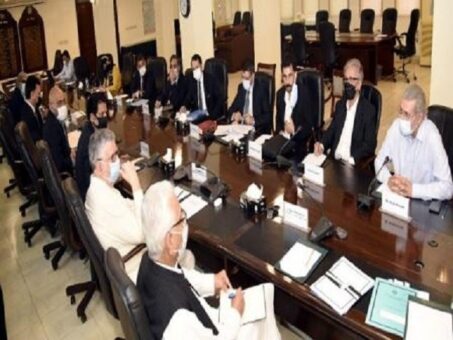
Finance minister reiterates taking stern action against tax evaders
ISLAMABAD: Finance Minister Shaukat Tarin on Monday reiterated the government’s resolve to take stern action against tax evaders, who are not willing to be part of the tax net.
The finance minister said this while chairing a steering meeting to review progress on broadening of tax base and integration of retailers into Point of Sales (POS) system by the Federal Board of Revenue (FBR).
Tarin stated that the government had incentivized the retailers by giving tax credit on electronic cash registers during the new Budget 2021-2022.
The underlying rationale is to give incentives to the tax payers in order to broaden the tax base and at the same time, reiterated to take stern action against tax evaders who are not willing to be part of the tax net.
In the beginning, Member (IT), FBR briefed the participants about operational Terms of Reference (TORs) for integration of retailers into the POS system.
The TORs have been formulated in consultation with key stakeholders including representatives from the private sector to have a proper system of check and balance in place, he added.
While reviewing the progress of the Steering Committee, the Finance Minister stated that limited tax base is one of the key challenges and the Government is firmly committed to expand the tax base to enhance revenues exponentially.
He commended the efforts made by the members of the steering committee on the occasion.
In his concluding remarks, the Finance Minister urged FBR to strictly adhere to timelines and benchmarks and follow-up the whole exercise for broadening tax base on regular basis.
The way forward requires use of new technologies, analytical tools and end-to-end automation to broaden the tax base by integrating all the chains/outlets into MIS system by FBR.
The minister further directed to gather data by undertaking interim measures such as Mystery Shopping exercise to identify anomalies as well as adding new entrants into the system to yield efficient results.
-
FBR officials directed to file asset declarations
ISLAMABAD: The Federal Board of Revenue (FBR) has directed officials of Inland Revenue Service and Pakistan Customs to submit their asset declarations by July 31, 2021.
A notification issued on Monday, the FBR directed all the officers and officials to submit their asset declaration ending June 30, 2021 and Performance Evaluation Report due for the year 2020/2021 by July 31, 2021.
The FBR warned the officials that their performance allowance would be discontinued without any further notice and necessary action under the Civil Servants (E&D) Rules, 2020 would also be initiated on account of ‘misconduct’.
The FBR stated that according to Rule 12 of Government Servant (Conduct) Rules, 1964, every government servant is liable to submit his/her annual declaration of assets and liabilities ending on June 30 every year.
Also as per guideline to performance evaluation, the timelines for all employees of the FBR including its field formations to initiate and submit their performance evaluation reports are as: reporting officer by July 20; countering officer by July 31.
The FBR said it had been found from perusal of the record that some officers/officials had not complied with this mandatory responsibility on time.
-
FBR highlights salient features of new export facilitation scheme
ISLAMABAD: The Federal Board of Revenue (FBR) on Monday highlighted the salient features of the new export facilitation scheme – 2021.
In this regard the FBR issued draft rules for the new Export Facilitation Scheme 2021 and called for comments from industry, exporters and other stakeholders.
New Export Facilitation Scheme has been approved by Federal Government and passed by Parliament under Finance Act 2021.
This Scheme will be implemented from 14th August 2021 and will run parallel with existing schemes like Manufacturing Bond, DTRE and Export Oriented Schemes for two year.
The existing old schemes shall be phased out in next two years and will be fully replaced by Export Facilitation Scheme-2021. Draft Rules can be accessed at official website of FBR.
The Salient Features of new EFS-2021 include Minimum documentation and encourages new entrants and SMEs. This Scheme will be completely automated under WeBOC and PSW.
The focus of the Scheme is on post clearance compliance checks and audits. Users of this Scheme include Exporters (Manufacturers cum Exporters, Commercial Exporters, Indirect Exporters), Common Export Houses, Vendors and International Toll Manufacturers. Users of this Scheme shall be subject to authorization of inputs by the Collector of Customs and Director General Input Output Organization (IOCO).
Inputs include all goods (imported or procured local) for manufacture of goods to be exported. These include raw materials, spare parts, components, equipment, plant and machinery.
No duty and taxes shall be levied on inputs imported by the authorized users and local supplies of inputs to the authorized users shall be zero rated. Through this new Scheme concept of Common Export House to import raw material duty and tax free for subsequent sale to the authorized users especially SMEs has been introduced.
This Scheme also introduces concept of International Toll manufacturing. Under this new Scheme, utilization period has been enhanced from two years to five years depending on the profile/category of exporters.
It is expected that Export Facilitation Scheme 2021 shall reduce cost of doing business and cost of tax compliance, improve ease of doing business, reduce liquidity problems of exporters by eliminating Sales Tax refunds and Duty Drawback for the users of Scheme and shall attract more users and shall ultimately promote exports.
-
FBR explains Pakistan source of income
ISLAMABAD: Federal Board of Revenue (FBR) has defined Pakistan source of income for collection of income tax.
Pakistan source of income is defined in section 101 of the Income Tax Ordinance, 2001, which caters for Incomes under different heads and situations. Some of the common Pakistan source Incomes are as under: -Salary received or receivable from any employment exercised in Pakistan wherever paid;
– Salary paid by, or on behalf of, the Federal Government, a Provincial Government, or a local Government in Pakistan, wherever the employment is exercised;
– Dividend paid by Resident Company;
– Profit on debt paid by a Resident Person;
– Property or rental Income from the lease of immovable property in Pakistan;
– Pension or annuity paid or payable by a Resident or permanent establishment of a Non-Resident.
The FBR also defined foreign source Income as any Income, which is not a Pakistan source Income.
-
Measures for ease of doing business taken through Finance Act, 2021
ISLAMABAD: Federal Board of Revenue (FBR) has explained amendments made through Finance Act, 2021 in Sales Tax Act, 1990 and Federal Excise Act, 2005 for ease of doing business.
The FBR said that there are certain provisions in the Sales Tax Act, 1990 and Federal Excise Act, 2005, which required some corrections or streamlining, while some changes have been made for the purpose of ‘ease of doing business’ for registered persons.
Further, some drafting errors have also been corrected.
All such measures are listed below:
1. Section 2(4AA) of Sales Tax Act, 1990: A new definition has been inserted to define Commissioner (Appeals).
2. Section 2(5AB) of Sales Tax Act, 1990: Annual threshold for the cottage industry has been increased from Rs 3 million to Rs. 10 million by amending section 2(5AB).
3. Section 2(18A) of Sales Tax Act, 1990: For the purpose of defining online market place, new clause (18A) has been inserted under section 2.
4. Section 2(37) of Sales Tax Act, 1990: Drafting error has been corrected in clause (37) of section 2.
5. Section 2 (4 3A) of Sales Tax Act, 1990: Definition of tier-1 retailer has been streamlined through insertion of a new clause, whereby a retailer who has acquired point of sale is also included therein.
6. Section 2(44) of Sales Tax Act, 1990: Advance receipt of payment has been excluded from the purview of definition of time of supply.
7. Section 3 of Sales Tax Act, 1990: Besides correcting drafting error and deleting proviso regarding cash back, new sub-section (9AA) has been inserted in section 3 for fixation of minimum production as per criteria specified in newly added Thirteenth Schedule.
8. Section 8B of Sales Tax Act, 1990: In order to encourage listed corporate sector, Public limited Companies listed on Pakistan Stock Exchange have been excluded from the purview of section 8B of the Sales Tax Act, 1990. Moreover, in order to enhance cost of retailers not integrated with the FBR’s online system, disallowance of input tax adjustment by such retailers has been further enhanced to 60 per cent.
9. Section 11 of Sales Tax Act, 1990: Sales tax returns are filed on monthly basis, while audit is carried out on annual basis. Hence, in order to streamline section 11, the words “relevant date” have been substituted with the words “end of the financial year in which the relevant date falls”.
10. Section 22 of Sales Tax Act, 1990: Section 22 has been amended by inserting cash book and electronic version of record to strengthen and streamline the requirement of record keeping.
11. Section 25AA of Sales Tax Act, 1990: A new sub-section has been added in section 25AA to provide enabling provision for prescribing rules for determining transfer pricing of taxable supplies between associates to reflect fair market value in arm’s length transactions.
12. Section 26AB of Sales Tax Act, 1990: For the purpose of facilitation of the registered persons and in order to streamline the procedure for extension of time for furnishing of sales tax returns, new section 26AB has been inserted.
13. Section 40D of Sales Tax Act, 1990: Border Sustenance Markets have been included in the tax exempt areas and accordingly supplies made from such areas to the taxable areas shall be chargeable to sales tax.
14. Section 40E of Sales Tax Act, 1990 & Section 45AA of Federal Excise Act, 2005: New section has been added in both STA and FEA making it mandatory for manufacturers of the specified goods to obtain brand license for each separate brand or stock keeping unit (SKU) produced by them.
15. Section 48 of Sales Tax Act, 1990 & Section 14 of Federal Excise Act, 2005: Enabling provision has been inserted in both STA and FEA regarding assistance in collection and recovery of taxes with other countries on mutual basis.
16. Section 50 of Sales Tax Act, 1990: Procedure for publishing and placing the rules has been streamlined.
17. Section 56A of Sales Tax Act, 1990 & Section 47A of Federal Excise Act, 2005: Enabling provisions regarding sharing of data with other ministries or divisions of Federal Government or Provincial Governments besides providing for mechanism for assistance in recovery of taxes with foreign countries on reciprocal basis have been inserted in section 56A of STA and 47A of FEA.
18. Section 56C of Sales Tax Act, 1990: Enabling provision has been inserted in section 56C to monitor and regulate the invoices issued by tier-1 retailers by way of mystery shopping.
19. Section 67 of Sales Tax Act, 1990: Benefit of additional payment has also been extended to those persons in whose case any order is passed under section 66 and refund is not issued within forty-five days of date of refund order.
20. Section 73 of Sales Tax Act, 1990: For the purpose of promoting ease of doing business, the concept of constructive payment (setting off payables against receivables from the same registered person) has been introduced in section 73 by inserting a new proviso in sub-section (1).
21. Section 76 of Sales Tax Act, 1990 & Section 49 of Federal Excise Act, 2005: Enabling provision has been inserted in in both STA and FEA for authorizing and prescribing the manner for utilizing the fees and service charges collected by the Board from taxpayers.
22. S. Nos. 18, 19 & 20 of Table-II of the Sixth Schedule to Sales Tax Act, 1990: S. No. 18 of Table-ll of Sixth Schedule to STA, which grants exemption to marble and granite manufacturers having annual turnover less than Rs. 5 million, has been omitted, as the said exemption is already available under section 2(5AB) of STA. Moreover, exemptions on bricks and crush stones have already expired on 30th June, 2018; hence these serial numbers have been omitted, being redundant.
23. Section 4 of Federal Excise Act, 2005: Provision for revision of return without seeking approval from the Commissioner has been incorporated in section 4 of the FEA.
24. S. No. 56 of Table-1 of the First Schedule to Federal Excise Act, 2005: To correct drafting error, PCT heading for filter rod has been substituted.
-
Last date for filing annual tax return is September 30; no extension to be granted
KARACHI: The last date for filing income tax return for tax year 2021 is September 30, 2021. The FBR has decided not to extend the last date beyond the cutoff date.
The FBR opened the IRIS portal on July 01, 2021 to start the income tax return filing for tax year 2021. As per law taxpayers should be given at least three months from launch of income tax return forms for the year. The FBR issued the income tax return forms on July 01, 2021, therefore this year the last date will match the date as prescribed in the lat.
The taxpayers including salaried persons, business individuals, association of persons and corporate entities whose financial year ends between July 01 to December 31 are required to file their annual return for tax year 2021 by September 30, 2012.
For further details watch our following video and subscribe to the channel for further informative videos:
-
FBR drafts rules for warehousing, export of POL products
ISLAMABAD: The Federal Board of Revenue (FBR) has drafted rules for bonded warehousing and export POL Products.
The FBR issued SRO 872(I)/2021 on Friday and proposed amendments to Customs Rules, 2001. The FBR invited recommendations on the draft rules from stakeholders before finalizing the rules to make part of the law.
Following new rule 363A has been suggested regarding bonded warehousing and export of POL products:
(1) The owner may store any imported POL products in a warehouse and export the same in accordance with rules 363A to 363F.
(2) At the time of arrival of goods at a port, the owner shall file goods declaration through WeBOC system for in-bonding of the imported POL products submitting the documents as required under the Act.
(3) The securities in the shape of postdated cheques and indemnity bond furnished by the owner under section 86 of the Act, at the time of warehousing of POL products, shall continue to be in force notwithstanding the transfer of the goods to any other person or firm unless the warehoused POL products are exported by way of supply to conveyances as provisions and stores as provided in section 106 of the Customs Act, without payment of any duties, taxes or levies, as the case maybe.
Explanation / Note: Since the POL products, to be imported under this scheme, will be shipped or supplied without foreign exchange remittances from Pakistan, on account of cost of goods at the time of their imports, therefore, no Electronic Import Form (EIF) shall be required at the time of filing of GD for their in-bonding. Similarly, no EIF shall be required at the time of export. The owner of any POL products, warehoused in accordance with the foregoing provisions of this rule, may export such POL products as provisions and stores for conveyances proceeding to any foreign territory including by way of direct sale or sale through a third party.
Explanation / Note: ‘direct sale’ — means that owner makes a direct sale to the owner or charterer of the conveyance and deliver the POL products to such conveyance. ‘Sale through a third party’ — means that the owner will:
(i) issue sales invoice to a foreign entity other than the owner or charterer of the conveyance; and
(ii) deliver POL products to a conveyance on the instructions of such foreign entity.