Tag: FBR

FBR, Pakistan’s national tax collecting agency, plays a crucial role in the country’s economy. Pakistan Revenue is committed to providing readers with the latest updates and developments regarding FBR activities.

  • Sales tax law explains ‘time of supply’

    Sales tax law explains ‘time of supply’

    Sales Tax Act, 1990 has explained ‘time of supply’ for collection of sales tax.

    The Sales Tax Act, 1990 [updated up to June 30, 2020 issued by the Federal Board of Revenue (FBR)] explained the term as:

    Time of supply”, in relation to,

    (a) a supply of goods, other than under hire purchase agreement, means the time at which the goods are delivered or made available to the recipient of the supply” “or the time when any payment is received by the supplier in respect of that supply, whichever is earlier;

    (b) a supply of goods under a hire purchase agreement, means the time at which the agreement is entered into; and

    (c) services, means the time at which the services are rendered or provided;

    Provided that in respect of sub clause ( a) ,(b) or (c), where any part payment is received, –

    (i) for the supply in a tax period, it shall be accounted for in the return for that tax period; and

    (ii) in respect of exempt supply, it shall be accounted for in the return for the tax period during which the exemption is withdrawn from such supply .

  • Who are Tier-1 retailers under Sales Tax Act?

    Who are Tier-1 retailers under Sales Tax Act?

    The term ‘Tier-1 retailer’ was introduced through Finance Act, 2017 by inserting relevant clause into Sales Tax Act, 1990.

    All Tier-1 retailers are required to integrate all their Point of Sales (POSs) with computerized system of the Federal Board of Revenue (FBR).

    The Sales Tax Act, 1990 (updated up to June 30, 2020 issued by the FBR), defined Tier-1 retailer as:

     “Tier-1 retailer” means a retailer falling in any one or more of the following categories, namely:-

    (a) a retailer operating as a unit of a national or international chain of stores;

    (b) a retailer operating in an air-conditioned shopping mall, plaza or centre, excluding kiosks;

    (c) a retailer whose cumulative electricity bill during the immediately preceding twelve consecutive months exceeds Rupees twelve hundred thousand;

    (d) a wholesaler-cum-retailer, engaged in bulk import and supply of consumer goods on wholesale basis to the retailers as well as on retail basis to the general body of the consumers”;

    (e) a retailer, whose shop measures one thousand square feet in area or more; and

    (f) any other person or class of persons as prescribed by the Board.”

  • FBR warns against issuing manual tax notices

    FBR warns against issuing manual tax notices

    KARACHI: Federal Board of Revenue (FBR) has warned tax officials of initiating disciplinary proceedings for issuing manual tax notices, including audit and assessment.

    The FBR in an official communication sent to Large Taxpayers Offices (LTOs), Regional Tax Offices (RTOs), Corporate Tax Offices (CTOs) and Medium Taxpayers Office (MTO) that instances had been reported to the revenue board that field officers tend to issue manual notices and assessment orders.

    These manual notices have created problems for the taxpayers as they preferred to file appeal and were also adversely affecting the efficiency of the field formations.

    The FBR issued following instructions to the tax offices:

    i. All statutory notices available in IRIS shall be issued electronically without any exception; manual issuance of notices, available in IRIS, is not allowed.

    ii. All orders shall be issued electronically through IRIS; issuance of manual orders is not allowed.

    iii. All Commissioners are requested to conduct periodic inspection to ensure that notices/orders are issued electronically.

    Any divergence from instructions shall be viewed as inefficiency and shall entail disciplinary proceedings, the FBR said.

  • What is tax fraud?

    What is tax fraud?

    Sales Tax Act, 1990 has defined ‘tax fraud’ as doing of any act knowingly without lawful excuse.

    The Sales Tax Act, 1990 [updated up to June 30, 2020 issued by the Federal Board of Revenue (FBR)] explained ‘tax fraud’ as:

    Tax fraud” means knowingly, dishonestly or fraudulently and without any lawful excuse (burden of proof of which excuse shall be upon the accused) –

    (i) doing of any act or causing to do any act; or

    (ii) omitting to take any action or causing the omission to take any action, including the making of taxable supplies without getting registration under this Act; or

    (iii) falsifying or causing falsification the sales tax invoices,

    in contravention of duties or obligations imposed under this Act or rules or instructions issued thereunder with the intention of understating the tax liability or underpaying the tax liability for two consecutive tax periods or overstating the entitlement to tax credit or tax refund to cause loss of tax.

  • Sales Tax Act defines ‘supply’

    Sales Tax Act defines ‘supply’

    Sales Tax Act, 1990 has explained the word ‘supply’ for the purpose of imposition and collection of tax.

    The Sales Tax Act, 1990 [updated up to June 30, 2020 issued by the Federal Board of Revenue (FBR)] has defined the word ‘supply’ as:

    Supply” means a sale or other transfer of the right to dispose of goods as owner, including such sale or transfer under a hire purchase agreement, and also includes –

    (a) putting to private, business or non-business use of goods produced or manufactured in the course of taxable activity for purposes other than those of making a taxable supply;

    (b) auction or disposal of goods to satisfy a debt owed by a person;

    (c) possession of taxable goods held immediately before a person ceases to be a registered person; and

    (d) in case of manufacture of goods belonging to another person, the transfer or delivery of such goods to the owner or to a person nominated by him:

    Provided that the Board, with the approval of the Federal Minister-in-charge, may, by notification in the official Gazette, specify such other transactions which shall or shall not constitute supply;

    The law also explained “supply chain” as the series of transactions between buyers and sellers from the stage of first purchase or import to the stage of final supply.

  • What is sales tax?

    What is sales tax?

    Sales Tax Act, 1990 has explained the meaning of sales tax imposed on supply of goods.

    The Sales Tax Act, 1990 [updated up to June 30, 2020 issued by the Federal Board of Revenue (FBR)] has explained the following:

     “sales tax” means – –

    (a) the tax, additional tax, or default surcharge levied under this Act;

    (b) a fine, penalty or fee imposed or charged under this Act; and

    (c) any other sum payable under the provisions of this Act or the rules made thereunder;

     “sales tax account” means an account representing the double entry recording of sales tax transactions in the books of account.

  • Sugar mills monitoring: ECC approves Rs350 million for VAS purchase

    Sugar mills monitoring: ECC approves Rs350 million for VAS purchase

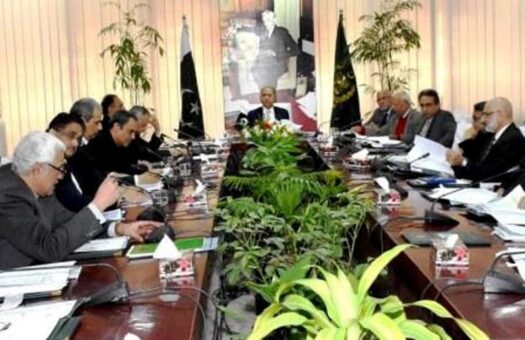
    ISLAMABAD: The Economic Coordination Committee (ECC) of the Cabinet on Monday approved Rs350 million for procurement of Video Analytics System (VAS) to monitor production of sugar mills.

    Federal Minister for Finance and Revenue, Dr. Abdul Hafeez Shaikh, chaired the meeting of the ECC.

    The Federal Board of Revenue (FBR) presented a summary regarding procurement of VAS for proper monitoring of the production and sale of sugar in compliance with the directive of the prime minister.

    “The ECC approved an allocation of Rs350 million as a Technical Supplementary Grant for installation of the most optimal VAS solution at the sugar mills’ premises during the current crushing season as requested by the FBR,” a statement said.

    Federal Minister for Planning, Development and Special Initiatives Asad Umar, Federal Minister for Energy Omar Ayub Khan, Adviser to the PM on Institutional Reforms and Austerity Dr. Ishrat Hussain, SAPM on Revenue Dr. Waqar Masood, SAPM on Power Tabish Gauhar, Governor State Bank Reza Baqir, Chairman FBR and Chairman Board of Investment participated in the meeting.

    Secretary, Ministry of Energy briefed the ECC about the detailed report by the Implementation Committee regarding conversion of MOUs into Agreements with IPPs to devise a payment mechanism for clearing outstanding payables.

     The Implementation Committee has agreed the payment mechanism with the 46 IPPs to clear the outstanding dues as on 30th November, 2020.

    The ECC commended the efforts made by the Implementation Committee and acknowledged the input of all concerned including Federal Minister for Energy, Federal Minister for Planning, SAPM on Power, Finance Division, Chairman Federal Land Commission, SAPM on Revenue, Governor SBP etc in working out a viable payment mechanism with the IPPs which will eventually save approximately Rs836 billion for the government over the average life of the projects.

    The ECC approved the report of the Implementation Committee with a direction to present the same before Cabinet for final approval.

  • FBR issues draft rules for enrollment in Pakistan Single Window

    FBR issues draft rules for enrollment in Pakistan Single Window

    ISLAMABAD: Federal Board of Revenue (FBR) on Monday notified draft rules for enrollment in Pakistan Single Window (PSW) for the facilitation of trade and business.

    The FBR issued SRO 164(I)/2021 to notify draft amendments in Customs Rules, 2001.

    The revenue body invited feedback from the stakeholders within 15 days for finalization of the proposed rules.

    According to the draft rules:

    “431A. Enrollment in Pakistan Single Window (PSW).- (1) Subject to electronic verification, the subscribers who are required to be enrolled in the Customs Computerized System by electronic means through the Pakistan Single Window (PSW) interface shall, for obtaining unique user identifier (HID), follow the process outlined hereinafter, namely:-

    (a) the subscriber shall provide the following particulars through the electronic interface of PSW:-

    National Tax Number (NTN), Free Tax Number (FTN) and Sales Tax Registration Number (STRN);

    in case of a company Securities and Exchange Commission of Pakistan (SECP)’s Registration Number or Computer-Generated Unique Identification Number (CUIN);

    Subscriber identification module (SIM) card number or by such other name registered in the name of the subscriber;

    Biometric verification from the National Database and Registration Authority’s e-Sahulat centers;

    Email address of the subscriber as appearing in IRIS; and digital bank account number duly authorized by State Bank of Pakistan.

    (b) the PSW interface shall through electronic means verify the particulars listed above which may include NTN, CUIN, and SIM card and Bank account number etc. from the concerned authorities and issue One Time Password (OTP) via registered email and SIM card number;

    (c) subscription fee shall be charged by the PSW through digital means as per clause (a) of rule 426; (d) the PSW system shall by electronic means issue UID to the eligible subscribers fulfilling the requirements as per clauses (a), (b) and (c) ;

    (e) the UID of the subscriber shall remain valid and active for a period of two years or as may be determined, however, a notice not less than fifteen days before the inactivation of the UID shall be given to the subscriber before deactivating his UID, whether through electronic or manual means. The Collector of Customs having jurisdiction may however, immediately deactivate  the UID of a subscriber for reasons to be recorded in writing;

    A subscriber whose UID got deactivated through lapse of time or persistent not use of not less than two years, shall reapply for subscription in the same manner as a new subscriber applies for UID which shall inter alia include payment of subscription fee afresh;

    The subscriber having a valid and active UID shall be entitled to avail all the privileges made available in the Subscription Module of the PSW;

    Customs agents as licensed under section 207 of the Act shall be allowed to tie onetime goods declaration in respect of persons having a valid Computerized National Identity Card Number after approval from an officer not below the rank of an Assistant Collector having jurisdiction and provision of the particulars listed in clause (a)-above; and

    Any subscribers, not appearing on the Active Taxpayers List of either Income Tax or Sales Tax, shall be allowed issuance of UID, however, during the time of their inactive status they shall not be allowed any exemptions or concessions etc., as the case may be.

    (2) The subscriber shall be responsible for the authenticity of the information provided, security of his password, data shared or retrieved from the PSW, ethical use of the system and any failure to exercise due care in the use of PSW or compromising its digital systems or conniving with any person who intend to get unauthorized access to the PSW, shall be liable to penal action under the law for the time being in force. No subscriber shall assign, sublet or allow any person to use his biometric verification, NTN, password, SIM card number or any other particulars under any circumstances whatsoever and such subscriber shall be responsible for using any of his digital particulars for the purposes of subscription only to extent relevant to the PSW interface.

    (3) In order to facilitate, educate or assist the subscribers of PSW, the Model Customs Collectorates listed below shall designate an officer not below the rank of an Assistant Collector as Assistant Collector (Facilitation) namely: –

    Model Customs Collectorate of Appraisement and Facilitation (East-Karachi)/Quetta/Lahore/Peshawar/Faisalabad;

    Model Customs Collectorate Gwadar/Hyderabad/Sialkot/Islamabad/Gilgit: Baltistan; and

    Model Customs Collectorate of Enforcement and Compliance, Multan.

    (4) This rule shall apply to all the subscribers of the Customs Computerized System through the PSW interface till such time and to such categories of subscribers as the Board may determine.”

  • Income tax law defines amalgamation

    Income tax law defines amalgamation

    The word ‘amalgamation’ has been defined under Income Tax Ordinance, 2001.

    The Ordinance updated up to June 30, 2020 issued by the Federal Board of Revenue (FBR) has defined the word ‘amalgamation’ as:

    “Amalgamation” means the merger of one or more banking companies or non-banking financial institutions, or insurance companies, or companies owning and managing industrial undertakings or companies engaged in providing services and not being a trading company or companies in either case at least one of them being a public company, or a company incorporated under any law, other than Companies Ordinance, 1984 (XLVII of 1984), for the time being in force, (the company or companies which so merge being referred to as the “amalgamating company” or companies and the company with which they merge or which is formed as a result of merger, as the “amalgamated company”) in such manner that –

    (a) the assets of the amalgamating company or companies immediately before the amalgamation become the assets of the amalgamated company by virtue of the amalgamation, otherwise than by purchase of such assets by the amalgamated company or as a result of distribution of such

    assets to the amalgamated company after the winding up of the amalgamating company or companies; and

    (b) the liabilities of the amalgamating company or companies immediately before the amalgamation become the liabilities of the amalgamated company by virtue of the amalgamation.

  • What is taxable activity under Sales Tax Act?

    What is taxable activity under Sales Tax Act?

    The Sales Tax Act, 1990, as updated by the Federal Board of Revenue (FBR) up to June 30, 2020, clearly defines the term ‘taxable activity’ for the purpose of determining liability under the sales tax regime.

    (more…)