Section 25AA of the Sales Tax Act, 1990 grants Inland Revenue (IR) officers the authority to determine the fair market value of supplies in transactions between associates.
(more…)Tag: Federal Board of Revenue
The Federal Board of Revenue is Pakistan’s apex tax agency, overseeing tax collection and policies. Pakistan Revenue is committed to providing timely updates on the Federal Board of Revenue to its readers.
-
Applications invited for post of CEO FBR Foundation
The Federal Board of Revenue Foundation (FBRF) has officially opened applications for the position of Chief Executive Officer (CEO), with a deadline set for November 30, 2021.
(more…) -
Digital mode to disrupt business transactions: FPCCI
KARACHI: Federation of Pakistan Chambers of Commerce and Industry (FPCCI) has said that the digital mode of payment for corporate expenses would disrupt business transactions; because almost all sales in the country are made on credit and this credit is secured through ‘post-dated’ cheques issued by buyers in favor of the sellers.
Mian Nasser Hayat Maggo, President FPCCI, in a statement on Thursday expressed dismay that the Federal Board of Revenue (FBR) continues to persist with the provisions of the ITO Third Amendment 2021; which seeks to compel companies to make payments for their expenses through digital mode instead of cross cheques; which is the prevalent mode for settling sale and purchase transactions in the country.
He also stated that he was shocked by news reports revealing serious ‘Conflict of Interest’ underpinning this provision of coercing companies to make payments digitally. It has been learnt that this proposal was initiated by a committee of the FBR; and, not by the FBR itself and that committee includes an owner of a B2B FinTech company; which provides software services for digital payments.
FPCCI Chief added that it was that owner of the FinTech Company and a member of that FBR committee as well; who proposed this idea and pushed it to be made part of the law, according to some other committee members.
Mian Nasser Hyatt Maggo added that FPCCI has taken note of FBR’s contention that “3rd party payments are highly prevalent in organized and informal sector whereby businesses do not use their own bank accounts when making payment for supplies and tell their own customers/transaction based informal investors to make direct payments to the principal supplier.
This is highly prevalent in supply chains and has become an accepted norm” FPCCI considers this as a fallacious argument, as such practice cannot be employed by a company as it has to deduct withholding tax on all payments that it makes and submit returns of tax withheld to the FBR, he added.
Mian Nasser Hyatt Maggo explained that a company can only indulge in such practice if it has an ‘Undeclared Business Account’ in a bank. In that case, any such delinquent company can continue to make payments digitally; despite the change in the law; as the bank account used is ‘undeclared’ anyway.
Mian Nasser Hyatt Maggo pointed out that, nowhere else in the world, bank cheques have been discontinued or businesses coerced to use digital mode of payment instead of bank cheques. FBR’s desire to outlaw use of bank cheques by companies is indeed a unique regulation. Digital payments are evolving in Pakistan and developed countries are way ahead in employing digital mode of payments, but they too, have not coerced companies or anyone else to limit or discontinue use of cheques, he added.
FPCCI President emphasized that it is abundantly clear that what the FBR enunciates as problems, that lead to leakage of revenue, pertain more to the non-corporate sector than the corporate sector. The question, therefore, is why companies are being subjected to this third degree? The obvious answer lies in vested interests influencing the FBR to promote a particular mode of business by one stroke of a pen, he added.
-
IR officer authorized to obtain sample for sales tax
Section 25A of the Sales Tax Act, 1990 authorized officer of Inland Revenue the authority to obtain samples of goods or raw materials for various purposes related to sales tax.
(more…) -
PM Imran to launch online sugar monitoring on Nov 23
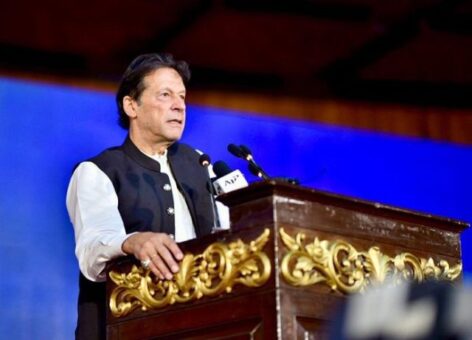
ISLAMABAD: Prime Minister Imran Khan will inaugurate the electronic monitoring of production and supply of sugar on November 23, 2023, a spokesman of the Federal Board of Revenue (FBR) said on Tuesday.
“PM will inaugurate the Track & Trace System (TTS) of FBR for sugar industry on November 23, 2021,” the spokesman said through a Tweet.
TTS will ensure electronic monitoring of manufacturing and sales of products of important sectors i.e tobacco, fertilizers, sugar and cement.
The FBR on November 11, 2021 taken a major step for electronic monitoring of sugar production and supply by banning the movement of sugar bags from mills.
The FBR banned the removal of sugar bags from mills without affixation of tax stamps / Unique Identification Marking (UIMs). The condition is applicable from November 11, 2021. The monitoring has been launched for sugar crushing season 2021/2022.
In this regard, the FBR issued Sales Tax General Order (STGO) No. 05 of 2021-2022.
The FBR said that sugar bags must have tax stamps, which are to be procured from FBR’s Licensee M/s. AJCL/MITAS/Authentix Consortium.
Previously, the FBR through a notification on February 26, 2019, issued rules for the implementation of the track and trace system. Further, in March 11, 2021 the revenue board issued a Sales Tax General Order (STGO) to notify that the monitoring system
According to the rules, all manufacturers of sugar products are warranted under the law to make necessary arrangements for importation of application and other equipment required for successful installation and implementation of track and trace systems at their production facilities.
The electronic monitoring would help the FBR to record the actual quantity of sugar production and utilization of raw material by the sugar millers.
By implementing the track and trace system, the FBR would get data of online monitoring from the sugar mills when they commence purchasing sugarcane from growers and start production of sugar products and subsequent selling to their dealers.
The FBR has planned online monitoring of production lines of five sectors, including tobacco products, beverages, sugar, fertilizer and cement.
-
CNG valuation up by 84% for sales tax collection
The Federal Board of Revenue (FBR) in Pakistan has declared a substantial 84% increase in the valuation of Compressed Natural Gas (CNG) for the purpose of sales tax collection.
(more…) -
FBR increases valuation of steel products
The Federal Board of Revenue (FBR) has implemented a significant change in the valuation of steel products, aiming to boost sales tax collection.
(more…) -
Computation of income tax on profit and gains for SMEs
Fourteenth Schedule of Income Tax Ordinance, 2001 has described the rules for computation of income tax on profit and gains for Small and Medium Enterprises (SMEs).
The Federal Board of Revenue (FBR) issued the Income Tax Ordinance, 2001 updated up to June 30, 2021. The Ordinance incorporated amendments brought through Finance Act, 2021.
Following is the text of Fourteenth Schedule of Income Tax Ordinance, 2001:
1. Application.- These rules shall apply to small and medium enterprises as defined in Clause (59A) of Section 2 of the Ordinance.
2. Registration.- Small and medium enterprise shall be required to register with FBR on its Iris web portal or Small and Medium Enterprises Development Authority on its SME registration portal (SMERP).
3. Categories and tax rates.- There shall be following two categories of small and medium enterprises and tax on their taxable income shall be computed at the tax rates given in the table below, namely:-
Sr. No. Category Turnover Rates (1) (2) (3) (4) 1. Category-1 Where annual business turnover does not exceed Rupees 100 million 7.5% of taxable income 2. Category-2 Where annual turnover exceeds Rupees 100 Million but does not exceed Rupees 250 Million 15% of taxable income 4. Option for Final Tax Regime.- (1) The small and medium enterprises may opt for taxation under final tax regime at the rates given in the table below:
Sr. No. Category Turnover Rates (1) (2) (3) (4) 1. Category-1 Where annual business turnover does not exceed Rupees 100 million 0.25% of gross turnover 2. Category-2 Where annual business turnover exceeds Rupees 100 million but does not exceed Rupees 250 million 0.5% of gross turnover (2) Option under sub-rule (1) of this rule shall be exercised at the time of filing of return of income and option once exercised shall be irrevocable for three tax years.
(3) The provisions of section 177 and 214C shall not apply to SME who opts for taxation under sub-rule (1) of this rule.
5. Audit.- (1) SMEs who opt for taxation under normal law under rule 3 may be selected for tax audit through risk based parametric computer ballot under section 214C of the Ordinance if its tax to turnover ratio is below tax rates given in rule 4 of these rules.
(2) The cases selected under sub-rule (1) of this rule shall not exceed 5% of the total population of SMEs whose tax to turnover ratio is below tax rates given in rule 4 of these rules.
6. Exports.- The export proceeds of SMEs shall be subject to tax as per rates prescribed in Rule (4) under final tax regime.”;
7. Exclusion from Minimum Tax on Turnover.- The provisions of section 113 of the Ordinance shall not apply to SMEs.
8. Tax on Supply of Goods.-The tax deductible under clause (a) of sub-section (1) of section 153 shall not be minimum tax where payments are received on sale or supply of goods by SMEs.
9. Provisions of Ordinance to apply.- The other provisions of the Ordinance shall apply mutatis mutandis to the SMEs.
(Disclaimer: The text of above section is only for information. Team PkRevenue.com makes all efforts to provide the correct version of the text. However, the team PkRevenue.com is not responsible for any error or omission.)
-
Tax credit for charitable donations under 13 schedule
Thirteenth Schedule of Income Tax Ordinance, 2001 has explained the tax credit for charitable donations.
The Federal Board of Revenue (FBR) issued the Income Tax Ordinance, 2001 updated up to June 30, 2021. The Ordinance incorporated amendments brought through Finance Act, 2021.
Following is the text of Thirteenth Schedule of Income Tax Ordinance, 2001:
S. No. Name (1) (2) 1. any Sports Board or institution recognised by the Federal Government for the purposes of promoting, controlling or regulating any sport or game. 2. The Citizens Foundation. 3. Fund for Promotion of Science and Technology in Pakistan. 4. Fund for Retarded and Handicapped Children. 5. National Trust Fund for The Disabled. 6. Fund for Development of Mazaar of Hazarat Burn i Imam. 7. Rabita-e-lslami’s Project for printing copies of the Holy Quran. 8. Fatimid Foundation, Karachi. 9. Al-Shifa Trust. 10. Society for the Promotion of Engineering Sciences and Technology in Pakistan. 11. Citizens-Police Liaison Committee, Central Reporting Cell, Sindh Governor House, Karachi. 12. ICIC Foundation. 13. National Management Foundation. 14. Endowment Fund of the institutions of the Agha Khan Development Network (Pakistan listed in Schedule 1 of the Accord and Protocol, dated November 13, 1994, executed between the Government of the Islamic Republic of Pakistan and Agha Khan Development Network. 15. Shaheed Zulfigar Ali Bhutto Memorial Awards Society. 16. Iqbal Memorial fund. 17. Cancer Research Foundation of Pakistan, Lahore. , 18. Shaukat Khanum Memorial Trust, Lahore. 19. Christian Memorial Hospital, Sialkot. 20. National Museums, National Libraries and Monuments or institutions declared to be National Heritage by the Federal Government. 21. Mumtaz Bakhtawar Memorial Trust Hospital, Lahore. 22. Kashmir Fund for Rehabilitation of Kashmir Refugees and Freedom Fighters. 23. Institutions of the Agha Khan Development Network (Pakistan) listed in Schedule 1 of the Accord and Protocol, dated November 13, 1994, executed between the Government of the Islamic Republic of Pakistan and Agha Khan Development Network. 24. Azad Kashmir President’s Mujahid Fund,1972. 25. National Institute of Cardiovascular Diseases, (Pakistan) Karachi. 26. Businessmen Hospital Trust, Lahore. 27. Premier Trust Hospital, Mardan. 28. Faisal Shaheed Memorial Hospital Trust, Gujranwala. 29. Khair-un-Nisa Hospital Foundation, Lahore. 30. Sind and Balochistan Advocates’ Benevolent Fund. 31. Rashid Minhas Memorial Hospital Fund. 32. Any relief or welfare fund established by the Federal Government. 33. Mohatta Palace Gallery Trust. 34. Bagh-e-Quaid-e-Azam project, Karachi. 35. Any amount donated for Tameer-e-Karachi Fund. 36. Pakistan Red Cres-cent Society. 37. Sank of Commerce and Credit International Foundation for Advancement of Science and Technology. 38. Federal Board of Revenue Foundation. 39. The Indus Hospital, Karachi. 40. Pakistan Sweet Homes Angels and Fairies Place. 41. Al-Shifa Trust Eye Hospital. 42. Aziz Tabba Foundation. 43. Sindh Institute of Urology and Transplantation,SIUT Trust and Society for the Welfare of SIUT. 44. Sharif Trust. 45. The Kidney Centre Post Graduate Institute. 46. Pakistan Disabled Foundation. 47. Sardar Trust Eye Hospital, Lahore. 48. Supreme Court of Pakistan — Diamer Bhasha & Mohmand Dams — Fund. 49. Layton Rahmatullah Benevolent Trust (LRBT). 50. Akhuwat. 51. The Prime Minister’s COVIE)-19 Pandemic Relief Fund-2020. 52. Ghulam Ishaq Khan Institute of Engineering Sciences and Technology (GIKI). 53. Lahore University of Management Sciences. 54. Dawat-e-Hadiya, Karachi. 55. Baitussalam Welfare Trust. 56. Patients’ Aid Foundation. 57. Alkhidmat Foundation. 58. Alamqir Welfare Trust International. 59. Prime Minister’s Special Fund for victims of terrorism. 60. Chief Ministers(Punjab) Relief Fund for Internally Displaced Persons (1DPs) of KPK. 61. Prime Ministers Flood Relief Fund 2010 and Provincial Chief Ministers Relief Funds for victims of flood 2010. 62. Waqf for Research on Islamic History, Art and Culture, Istanbul. Provided that the Federal Government shall have the power to add, amend or omit any entry in this Schedule.
(Disclaimer: The text of above section is only for information. Team PkRevenue.com makes all efforts to provide the correct version of the text. However, the team PkRevenue.com is not responsible for any error or omission.)
-
Commissioner empowered to access sales record
Section 25 of Sales Tax Act, 1990 has explained commissioner empowered to access sales record.
The Federal Board of Revenue (FBR) issued the Sales Tax Act, 1990 updated up to June 30, 2021. The Act incorporated amendments brought through Finance Act, 2021.
Following is the text of section 25 of Sales Tax Act, 1990:
25. Access to record, documents, etc.– (1) A person who is required to maintain any record or documents under this Act or any other law shall, as and when required by Commissioner, produce record or documents which are in his possession or control or in the possession or control of his agent; and where such record or documents have been kept on electronic data, he shall allow access to the officer of Inland Revenue authorized by the Commissioner and use of any machine on which such data is kept.
(2) The officer of Inland Revenue authorized by the Commissioner, on the basis of the record, obtained under sub-section (1), may, once in a year, conduct audit:
(2A) For the purpose of sub-section (2) of section 25, the Commissioner may conduct audit proceedings electronically through video links, or any other facility as prescribed by the Board.
Provided that in case the Commissioner has information or sufficient evidence showing that such registered person is involved in tax fraud or evasion of tax, he may authorize an officer of Inland Revenue, not below the rank of Assistant Commissioner, to conduct an inquiry or investigation under section 38:
Provided further that nothing in this sub-section, shall bar the officer of Inland Revenue from conducting audit of the records of the registered person if the same were earlier audited by the office of the Auditor-General of Pakistan.
(3) After completion of Audit under this section or any other provision of this Act, the officer of Inland Revenue may, after obtaining the registered person’s explanation on all the issues raised in the audit shall pass an order under section 11.
(5) Notwithstanding the penalties prescribed in section 33, if a registered person wishes to deposit the amount of tax short paid or amount of tax evaded along with default surcharge voluntarily, whenever it comes to his notice, before receipt of notice of audit, no penalty shall be recovered from him:
Provided if a registered person wishes to deposit the amount of tax short paid or amount of tax evaded along with default surcharge during the audit, or at any time before issuance of show cause notice he may deposit the evaded amount of tax, default surcharge under section 34, and twenty five per cent of the penalty payable under section 33:
Provided further that if a registered person wishes to deposit the amount of tax short paid or amount of tax evaded along with default surcharge after issuance of show cause notice, he shall deposit the evaded amount of tax, default surcharge under section 34, and full amount of the penalty payable under section 33 and thereafter, the show cause notice, shall stand abated.
Explanation.– For the purpose of sections 25, 38, 38A, 38B and 45A and for removal of doubt, it is declared that the powers of the Board, Commissioner or officer of Inland Revenue under these sections are independent of the powers of the Board under section 72B and nothing contained in section 72B restricts the powers of the Board, Commissioner or Officer of Inland revenue to have access to premises, stocks, accounts, records, etc. under these sections or to conduct audit under these sections.
(Disclaimer: The text of above section is only for information. Team PkRevenue.com makes all efforts to provide the correct version of the text. However, the team PkRevenue.com is not responsible for any error or omission.)