Tag: Federal Board of Revenue

The Federal Board of Revenue is Pakistan’s apex tax agency, overseeing tax collection and policies. Pakistan Revenue is committed to providing timely updates on the Federal Board of Revenue to its readers.

  • GST exemption on various goods may be withdrawn

    GST exemption on various goods may be withdrawn

    Pakistan’s Federal Board of Revenue is likely to withdraw exemption and concession of general sales tax (GST) granted on many consumable items.

    The consumption tax may be withdrawan on the supply of goods to generate an estimated revenue of Rs334 billion, news reports suggested.

    The exemption of GST may be withdrawn on supplies of various local and imported goods. The exemption and concession of consumption tax may continue on basic food items.

    The report suggested that Personal Income Tax (PIT), there are 11 slabs and one proposal under consideration is to bring down slabs to 6 or 7 where the minimum taxable ceiling of Rs0.6 million might be adjusted upward while the rate of higher-income brackets might be increased.

    The hike in power tariff to the tune of Rs1.40 per unit might be notified after the agreement with the IMF.

    Federal Minister for Finance Shaukat Tarin is expected to hold a meeting with the IMF’s Managing Director (MD) Kristalina Georgieva on October 15, 2021 in Washington, DC. However, things are still unclear whether Pakistan and the IMF will be able to strike a staff-level agreement or not. The review talks may be extended if both sides remained unable to strike any staff-level agreement on the completion of the sixth and seventh reviews under the $6 billion Extended Fund Facility (EFF).

    Sources said that the IMF was advising stringent taxation measures but Pakistani authorities were making last-ditch efforts to convince the IMF for delaying taxation measures on account of withdrawal of sales tax exemptions and adjustment into Personal Income Tax till the announcement of the next budget 2022-23 or implementation of these steps in a staggered manner.
  • Rate of super tax for Tax Year 2022

    Rate of super tax for Tax Year 2022

    The Federal Board of Revenue (FBR) has defined the super tax rate for the tax year 2022 under the First Schedule of the Income Tax Ordinance, 2001.

    (more…)
  • Rates of income tax for companies during Tax Year 2022

    Rates of income tax for companies during Tax Year 2022

    The tax rates for corporate entities for tax year 2022 under the First Schedule of the Income Tax Ordinance, 2001.

    The Federal Board of Revenue (FBR) issued the Income Tax Ordinance, 2001 updated up to June 30, 2021. The Ordinance incorporated amendments brought through Finance Act, 2021.

    Following are the rates of tax for corporate entities:

     (i) The rate of tax imposed on the taxable income of a company for the tax year 2007 and onward shall be 35%:

    Provided that the rate of tax imposed on the taxable income of a company other than a banking company, shall be 34% for the tax year 20145:

    Provided further that the rate of tax imposed on the taxable income of a company, other than a banking company, shall be 33% for the tax year 2015:

    “Provided further that the rate of tax imposed on taxable income of a company, other than banking company shall be 32% for the tax year 2016, 31% for tax year 2017, 30% for tax year 2018 and 29% for tax year 2019 and onwards.  

    (iii) where the taxpayer is a small company as defined in section 2, tax shall be payable at the rate of 25%:

    Provided that for tax year 2019 and onwards tax rates shall be as set out in the following Table, namely:—

    Tax yearRate of Tax
    201924%
    202023%
    202122%
    202221%
    2023 and onwards20%”;

    (Disclaimer: The text of the above section is only for information. Team PkRevenue.com makes all efforts to provide the correct version of the text. However, the team PkRevenue.com is not responsible for any error or omission.)

  • Rate of tax for salaried persons for tax year 2022

    Rate of tax for salaried persons for tax year 2022

    The tax rates for salaried persons for tax year 2022 under the First Schedule of the Income Tax Ordinance, 2001.

    The Federal Board of Revenue (FBR) issued the Income Tax Ordinance, 2001 updated up to June 30, 2021. The Ordinance incorporated amendments brought through Finance Act, 2021.

    Following are the rates of tax for salaried persons during tax year 2022 (July 01, 2021 – June 30, 2022):

    (2) Where the income of an individual chargeable under the head “salary” exceeds seventy-five per cent of his taxable income, the rates of tax to be applied shall be as set out in the following table, namely:—

    TABLE S. No.Taxable incomeRate of tax
    (1)(2)(3)
    1.Where taxable income does not exceed Rs. 600,0000%
    2.Where taxable income exceeds Rs. 600,000 but does not exceed Rs. 1,200,0005% of the amount exceeding Rs. 600,000
    3.Where taxable income exceeds Rs. 1,200,000 but does not exceed Rs. 1,800,000Rs. 30,000 plus 10% of the amount exceeding Rs. 1,200,000
    4.Where taxable income exceeds Rs. 1,800,000 but does not exceed Rs. 2,500,000Rs. 90,000 plus 15% of the amount exceeding Rs. 1,800,000
    5.Where taxable income exceeds Rs.2,500,000 but does not exceed Rs. 3,500,000Rs. 195,000 plus 17.5% of the amount exceeding Rs. 2,500,000
    6.Where taxable income exceeds Rs. 3,500,000 but does not exceed Rs. 5,000,000Rs. 370,000 plus 20% of the amount exceeding Rs. 3,500,000
    7.Where taxable income exceeds Rs. 5,000,000 but does not exceeds Rs. 8,000,000Rs. 670,000 plus 22.5% of the amount exceeding Rs. 5,000,000
    8.Where taxable income exceeds Rs. 8,000,000 but does not exceeds Rs. 12,000,000Rs. 1,345,000 plus 25% of the amount exceeding Rs. 8,000,000
    9.Where taxable income exceeds Rs. 12,000,000 but does not exceeds Rs. 30,000,000Rs. 2,345,000 plus 27.5% of the amount exceeding Rs. 12,000,000
    10.Where taxable income exceeds Rs. 30,000,000 but does not exceeds Rs. 50,000,000Rs. 7,295,000 plus 30% of the amount exceeding Rs. 30,000,000
    11.Where taxable income exceeds Rs. 50,000,000 but does not exceeds Rs. 75,000,000Rs. 13,295,000 plus 32.5% of the amount exceeding Rs. 50,000,000
    12.Where taxable income exceeds Rs. 75,000,000Rs. 21,420,000 plus 35% of the amount exceeding Rs. 75,000,000]

    (Disclaimer: The text of the above section is only for information. Team PkRevenue.com makes all efforts to provide the correct version of the text. However, the team PkRevenue.com is not responsible for any error or omission.)

  • Tax rates for individuals, AOPs for Tax Year 2022

    Tax rates for individuals, AOPs for Tax Year 2022

    The tax rates for individuals and Association of Persons (AOPs) for tax year 2022 under the First Schedule of the Income Tax Ordinance, 2001.

    The Federal Board of Revenue (FBR) issued the Income Tax Ordinance, 2001 updated up to June 30, 2021. The Ordinance incorporated amendments brought through Finance Act, 2021.

    Following are the rates of tax for Individuals and Association of Persons:

    (1) Subject to clause (2), the rates of tax imposed on the income of every individual and association of persons except a salaried individual shall be as set out in the following Table, namely:—

    TABLE S. No.Taxable incomeRate of tax
    (1)(2)(3)
    1.Where taxable income does not exceed Rs. 400,0000%
    2.Where the taxable income exceeds Rs. 400,000 but does not exceed Rs. 600,0005% of the amount exceeding Rs. 400,000
    3.Where taxable income exceeds Rs. 600,000 but does not exceed Rs. 1,200,000Rs. 10,000 plus 10% of the amount exceeding Rs. 600,000
    4.Where taxable income exceeds Rs.1,200,000 but does not exceed Rs. 2,400,000Rs. 70,000 plus 15% of the amount exceeding Rs. 1,200,000
    5.Where taxable income exceeds Rs. 2,400,000 but does not exceed Rs. 3,000,000Rs. 250,000 plus 20% of the amount exceeding Rs. 2,400,000
    6.Where taxable income exceeds Rs. 3,000,000 but does not exceed Rs. 4,000,000Rs. 370,000 plus 25% of the amount exceeding Rs. 3,000,000
    7.Where taxable income exceeds Rs. 4,000,000 but does not exceed Rs. 6,000,000Rs. 620,000 plus 30% of the amount exceeding Rs. 4,000,000
    8.Where taxable income exceeds Rs. 6,000,000Rs. 1,220,000 plus 35% of the amount exceeding Rs. 6,000,000

    (Disclaimer: The text of the above section is only for information. Team PkRevenue.com makes all efforts to provide the correct version of the text. However, the team PkRevenue.com is not responsible for any error or omission.)

  • Trade discount should be displayed on invoice: FBR

    Trade discount should be displayed on invoice: FBR

    ISLAMABAD: The Federal Board of Revenue (FBR) on Thursday said that trade discount if any to be given by a retailer has to be depicted on the invoice horizontally i.e. from left to right

    The FBR on August 9, 2021 issued SRO 1006(I)/2021 and specified standardized format for sales tax invoice detailing minimum requirement for the integrated point of sale (POS) system.

    The definition of trade discount as mentioned in the value of supply in sub-section (46) of Section 2 the Sales Tax Act, 1990 is meant for Business to Business transactions and does not cover retail sector and the business to consumer transaction.

    The FBR said it had received various representations from the taxpayers and Bar Councils seeking clarification of the term ‘trade discount’ as stated in sub-section (46) of Section 2 of the Sales Tax Act, 1990 whether the term also covers ‘cash discount’ given by retailers to end consumers, for the purpose of depiction in the standardized Sales Tax invoice under SRO 1006(1)/2021 dated 09.08.2021.

    The matter has been examined by the Board, it is clarified that the discount if any to be given by a retailer has to be depicted on the invoice horizontally i.e. from left to right.

    The captions such as total, sales tax paid, discount allowed appearing at the bottom of the invoice are standalone notations and do not necessarily add or subtract one another.

  • Facilitating return filing: IR offices to work late hours

    Facilitating return filing: IR offices to work late hours

    For facilitating return filing, the Federal Board of Revenue (FBR) has directed the offices of Inland Revenue (IR) to work late hours. The offices will remain open until 12:00 midnight on October 15, 2021, to accommodate individuals and businesses in their efforts to fulfill their tax obligations.

    (more…)
  • FBR warns of penalties amid filers grievances

    FBR warns of penalties amid filers grievances

    ISLAMABAD: The Federal Board of Revenue (FBR) on Wednesday warned non-filers of harsh action including monetary penalty and imprisonment.

    In a statement, a FBR spokesman said that the last date for filing income tax return for tax year 2021 is October 15, 2021 and it will not be further extended.

    The actual last date for filing the income tax returns for tax year 2021 was September 30, 2021. However, to technical issues on the FBR portal this date was extended for 15 days. The FBR in this regard issued Circular No. 08 to extend the date of filing income tax returns.

    Through the latest statement, the FBR urged the persons having taxable income or those who are required to file their returns under Income Tax Ordinance, 2001, should file their returns in remaining two days.

    According to the statement the FBR’s IRIS portal was working smoothly. “Therefore, no further date will be extended beyond October 15, 2021,” the spokesman said.

    The spokesman further said that after the due date the non-filers would face monetary penalty of Rs1,000 each day of default. Furthermore, the non-filers may face imprisonment for two years.

    The tax practitioners, however, are not satisfied with the performance of the FBR stating that the technical issues were not resolved so far.

    “Despite repeated requests the FBR has not resolved the issues in return filing,” Zeeshan Merchant, President, Karachi Tax Bar Association (KTBA) told PkRevenue.com

    Merchant said that calculation error in return form for SMEs was still a major issue.

    Besides, these issues the taxpayers and tax practitioners had also faced slow speed of internet, which was caused by a fault in international cable, as income tax returns are required to file electronically.

    Pakistan Telecommunication Authority (PTA) a day earlier issued a statement on the cable fault and said that it was monitoring the situation and will continue to update on it.

    “A submarine cable fault was reported yesterday near Fujairah, UAE due to which some users may have faced degradation in services. The faulty cable segment has been repaired & work is underway to make the services fully functional,” the PTA said.

  • FBR notifies transfers of IRS officers in BS-19-20

    FBR notifies transfers of IRS officers in BS-19-20

    ISLAMABAD: The Federal Board of Revenue (FBR) on Wednesday notified transfers and postings of senior officers of Inland Revenue Service (IRS) in BS-19 and BS-20 with immediate effect and until further orders:

    The FBR notified transfers and postings of following IRS officers:

    01. Faheem Mohammad (Inland Revenue Service/BS-20) has been transferred and posted as Chief, (Refunds) (IR-Operations Wing) Federal Board of Revenue (Hq), Islamabad from the post of Chief, (Admin Pool) Federal Board of Revenue (Hq), Islamabad.

    02. Ms. Shazia Memon (Inland Revenue Service/BS-20) has been transferred and posted as Chief, (BTB) Federal Board of Revenue (Hq), Islamabad from the post of Chief, (Admin Pool) Federal Board of Revenue (Hq), Islamabad.

    03. Mohammed Nasser Janjua (Inland Revenue Service/BS-20) has been transferred and posted as Chief, (POS) (IR-Operations Wing) Federal Board of Revenue (Hq), Islamabad from the post of Chief, (Analysis) (IR-Operations Wing) Federal Board of Revenue (Hq), Islamabad.

    04. Dr. Abdul Latif Mian (Inland Revenue Service/BS-20) has been transferred and posted as Chief, (Analysis) (IR-Operations Wing) Federal Board of Revenue (Hq), Islamabad from the post of Chief, (Admin Pool) Federal Board of Revenue (Hq), Islamabad.

    05. Muhammad Nabeel Rana (Inland Revenue Service/BS-19) has been transferred and posted as Secretary, (PAC-DT) (Audit & Accounting Wing) Federal Board of Revenue (Hq), Islamabad from the post of Secretary, (Admin Pool) Federal Board of Revenue (Hq), Islamabad.

    06. Dr. Sajid Hussain Arain (Inland Revenue Service/BS-19) has been transferred and posted as Secretary, (PAC-IDT) (Audit & Accounting Wing) Federal Board of Revenue (Hq), Islamabad from the post of Secretary (Admin Pool), Federal Board of Revenue (Hq), Islamabad (Stationed at Karachi).

    Through another notification the FBR notified transfers and postings of following IRS officers:

    01. Shahid Soomro (Inland Revenue Service/BS-19) has been transferred and posted as Additional Commissioner Inland Revenue Corporate Tax Office, Islamabad from the post of Additional Commissioner, Regional Tax Office, Islamabad.

    02. Wilayat Khan (Inland Revenue Service/BS-19) has been transferred and posted as Additional Commissioner Inland Revenue Regional Tax Office, Islamabad from the post of Secretary, (Complaints) Federal Board of Revenue (Hq), Islamabad.

    03. Mohammad Iqbal Khan (Inland Revenue Service/BS-19) has been transferred and posted as Secretary, (Complaints) (IR-Operations Wing) Federal Board of Revenue (Hq), Islamabad from the post of Additional Commissioner, Corporate Tax Office, Islamabad.

    The FBR said that the officers who are drawing performance allowance prior to issuance of this notification shall continue to draw this allowance on the new place of posting.

  • Sugar mills agree to implement track, trace system

    Sugar mills agree to implement track, trace system

    KARACHI: The sugar mills have agreed to allow the tax authorities to monitor the production and supply through track and trace system.

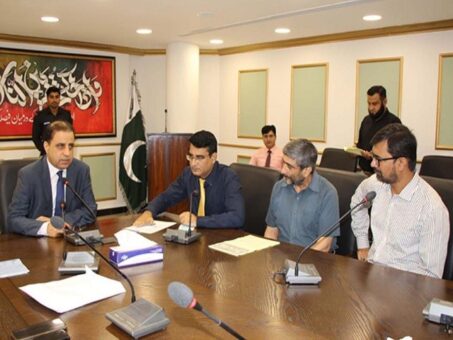
    In this regard a tri-partite agreement was signed at Large Taxpayers Office (LTO), Karachi. The agreement was signed by the representatives of sugar mills, Federal Board of Revenue (FBR) and the consortium AJCL/ Mittas/ Authentix for the implementation of Track & Trace System (TTS).

    Shahid Iqbal Baloch, the Chief Commissioner, LTO, welcomed the representatives and oversaw the signing ceremony.

    Speaking on the occasion, the Chief Commissioner highlighted the importance of the TTS.

    He believed that launching of the TTS will be a great stride towards accelerating digitisation of economic activity, improving revenue forecasting and curbing counterfeit products in the market.

    The Track and Trace Solution is to be rolled out in a multi-phasic manner across the Tobacco, Cement, Sugar and Fertilizer Sectors in Pakistan with a view to enhancing tax revenue, reducing counterfeiting and preventing the smuggling of illicit goods through the implementation of a robust, nationwide, electronic monitoring system of production volumes and by the affixation of more than 5 billion tax stamps on various products at the production stage, which will enable FBR to track the goods throughout the supply chain.

    Tariq Hussain Shaikh, the Project Director, (Track & Trace System), FBR reiterated the importance of the project and called it a game changer for improving revenue and curbing counterfeit products in the market.

    The meeting concluded with the handing over of the agreements by the Chief Commissioner to the representatives on behalf of FBR.