Tag: Federal Board of Revenue

The Federal Board of Revenue is Pakistan’s apex tax agency, overseeing tax collection and policies. Pakistan Revenue is committed to providing timely updates on the Federal Board of Revenue to its readers.

  • FBR tightens noose around electricity, gas consumers

    FBR tightens noose around electricity, gas consumers

    ISLAMABAD: The Federal Board of Revenue (FBR) has issued 650,000 notices to consumers of electricity and gas, who are not in the tax net, in its efforts to enhance tax compliance.

    The FBR said that data has been obtained from DISCOs and Gas Companies for broadening of tax base. More than 650,000 notices have been issued on the basis of data obtained from DISCOs and in lieu of these notices 129,541 returns have been enforced so far.

    The FBR has undertaken unprecedented enforcement measures to ensure filing of returns. Resultantly, the number of income tax return filers for TY2020 has crossed 3.1 million.

    Tax Asaan, has been launched which provides basic verification features like ATL, Online NTN/STRN inquiry, exemption certificates and sales tax registration. Facility for filing income tax returns for salaried class has also been included in the application.

    In order to develop 360 degree view of tax payers, data sources like banks, vehicles and real estate transactions have been captured and a Data Bank has been developed. Based on this data bank, notices to more than 200,000 high net-worth un-registered persons have been issued.

    To ensure proper declaration of sales by retailers and to realize due revenue from them, FBR has initiated the integration of all sales outlets of tier-1 retailers with FBR’s central computerized system. The system shall ensure that all sales are reported in real-time to FBR and are duly accounted for in monthly sales tax returns of such retailers.

    The scheme was initially launched for textile and leather retailers last year which has now been made mandatory for all tier-1 retailers with effect from 15th December 2019.

    The field offices have been directed to undertake surveys in their respective jurisdictions and ensure integration of all tier-1 retailers.

    In order to prevent leakage of revenue, under-reporting of production and sales, and to ensure proper payment of FED and Sales Tax on the manufacture and sale of specified goods/ products, FBR has initiated the implementation of Track and Trace System for specified goods/ products i.e. Tobacco, Cement, Sugar, Fertilizer and Beverages imported into or manufactured in Pakistan.

    Sectorial analysis of huge business concerns has been conducted across the country by Assessment & Processing Units in all field formations of IRS. Sectors like cement, sugar, cotton and tobacco remained under focus. Legal action has been initiated against the defaulting units.

    Legal actions (attachment of properties, arrests and seizures) has been made against huge tax-defaulters to create deterrence against tax-evaders.

    Establishment of Inland Revenue Enforcement Network (IREN) to check smuggling and counterfeit products. Inland Revenue Service and Pakistan Customs Service have joined hands for anti-smuggling field intelligence exercise.

    FBR has launched Maloomat (tax profiling system) on its web portal, containing data of 53 million citizens, giving access to the filers and non-filers to the information about their assets and bank accounts available with FBR.


  • Additional customs duty reduced to 2% on auto parts

    Additional customs duty reduced to 2% on auto parts

    ISLAMABAD: The Federal Cabinet on Tuesday approved a significant reduction in additional customs duty on the import of auto parts, lowering it from seven percent to two percent. This decision aims to boost the indigenous production of vehicles in Pakistan and promote local manufacturing.

    (more…)
  • KTBA demands barcode printing on sales tax notices

    KTBA demands barcode printing on sales tax notices

    KARACHI: Karachi Tax Bar Association (KTBA) on Tuesday demanded the tax authorities to implement printing of barcodes on all communication under the sales tax regime.

    In this regard, the KTBA has sent a letter to the chairman of the Federal Board of Revenue (FBR). The tax bar demanded the chairman of ensuring the implementation of barcode printing on all notices of sales tax.

    The KTBA and its members are consistently receiving unauthorized and designed notices/ communications from the field formations.

    In the year 2015, the FBR introduced a scheme of using barcodes on notices/communications under the income tax regime, which eliminated unauthorized notices.

    As of today, declarations under the sales tax regime are broadly regulated through old e.fbr portal; on the other hand, the field formations have started issuing notices for audit and late filing via IRIS. However, in addition to the above, notices on various counts are issues manually which subsequently are withdrawn for obvious reasons, the tax bar said.

    The KTBA recommended that the practice of communicating all notices and correspondence in the sales tax regime in manual should be replaced with a barcode methodology with an option to reply online as in the case of the income tax regime.

  • Tax authorities can take help from police, other agencies

    Tax authorities can take help from police, other agencies

    Section 178 of the Income Tax Ordinance, 2001, as amended by the Finance Act, 2021, empowers tax authorities to seek assistance from various entities, including the police, Customs officers, and other government agencies.

    (more…)
  • Commissioner can select taxpayers for audit

    Commissioner can select taxpayers for audit

    A commissioner of Inland Revenue has power to select taxpayers for audit under Section 177 of Income Tax Ordinance, 2001.

    (more…)
  • Commissioner empowered to call for any record

    Commissioner empowered to call for any record

    Section 176 of Income Tax Ordinance, 2001 explains that the commissioner is empowered to call for any records.

    The Federal Board of Revenue (FBR) issued the Income Tax Ordinance, 2001 updated up to June 30, 2021. The Ordinance incorporated amendments brought through Finance Act, 2021.

    Following is the text of Section 176 of Income Tax Ordinance, 2001:

    176. Notice to obtain information or evidence.— (1) The Commissioner may, by notice in writing, require any person, whether or not liable for tax under this Ordinance –

    “(a) to furnish to the Commissioner or an authorised officer, any information relevant to any tax leviable under this Ordinance or to fulfill any obligation under any agreement with foreign government or governments or tax jurisdiction, as specified in the notice; or”; and

    (b) to attend at the time and place designated in the notice for the purpose of being examined on oath by the Commissioner or an authorised officer concerning the tax affairs of that person or any other person and, for that purpose, the Commissioner or authorised officer may require the person examined to produce any accounts, documents, or computer-stored information in the control of the person; “or”

    (c) the firm of chartered accountants, or a firm of cost and management accountants as defined under the Cost and Management Accountants Act, 1966 (XIV of 1966), as appointed by the Board or the Commissioner, to conduct audit under section 177, for any tax year, may with the prior approval of the Commissioner concerned, enter the business premises of a taxpayer, to obtain any information, require production of any record, on which the required information is stored and examine it within such premises; and such firm may if specifically delegated by the Commissioner, also exercise the powers as provided in sub-section (4).

    “(1A) A special audit panel appointed under sub-section (11)of section 177, for any tax year, may, with the prior approval of the Commissioner concerned, enter the business premises of a taxpayer, to obtain any information, require production of any record, on which the required information is stored and examine it within such premises and such panel may if specifically delegated by the Commissioner, also exercise the powers as provided in subsection(4).”

    (2) The Commissioner may impound any accounts or documents produced under sub-section (1) and retain them for so long as may be necessary for examination or for the purposes of prosecution.

    (3) The person from whom information is required, may at his option, furnish the same electronically in any computer readable media. Where a hard copy or computer disk of information stored on a computer is not made available as required under sub-section (1), the Commissioner may require production of the computer on which the information is stored, and impound and retain the computer for as long as is necessary to copy the information required.

    (4) For the purposes of this section, the Commissioner shall have the same powers as are vested in a Court under the Code of Civil Procedure, 1908 (Act V of 1908), in respect of the following matters, namely: —

    (a) enforcing the attendance of any person and examining the person on oath or affirmation;

    (b) compelling the production of any accounts, records, computer-stored information, or computer;

    (c) receiving evidence on affidavit; or

    (d) issuing commissions for the examination of witnesses.

    (5) This section shall have effect notwithstanding any law or rules relating to privilege or the public interest in relation to the production of accounts, documents, or computer-stored information or the giving of information.

    (Disclaimer: The text of the above section is only for information. Team PkRevenue.com makes all efforts to provide the correct version of the text. However, the team PkRevenue.com is not responsible for any error or omission.)

  • Last date for return filing tax year 2021 may be extended

    Last date for return filing tax year 2021 may be extended

    ISLAMABAD: The last date for filing income tax return for the tax year 2021 may be extended as an online portal of the Federal Board of Revenue (FBR) was remained disturbed last month.

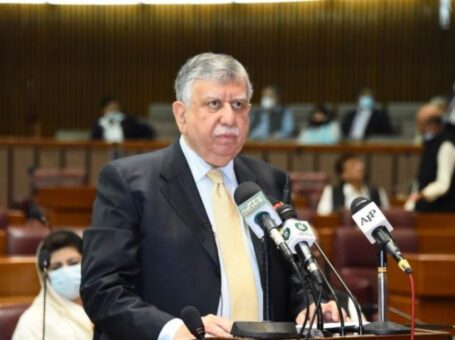
    The FBR system was not working for 10 days during the last month, said Shaukat Tarin at a press conference on Tuesday.

    “We will talk to the FBR to extend the date of filing tax returns,” he added.

    The finance minister said the government will start giving targeted subsidies from this month to the weak segments of society on essential commodities including sugar, flour and pulses.

    Addressing a news conference along with Minister of State for Information and Broadcasting Farrukh Habib and Special Assistant on Food Security Jamshed Cheema, he said the targeted subsidy will be in the form of cash assistance, which will cover thirty-five to forty percent population. 

    The Finance Minister said the government is also focusing on bolstering the agriculture productivity. In the medium to long term, commodity warehouses, cold storages and agri malls will be established with the aim to eliminate the role of middle man and ensure that the farmers get due price of their products. He said strategic reserves of major commodities are also being built in order to ensure smooth supplies in the market.

    The Finance Minister said that the prices of wheat will see decline in the coming days.

    Shaukat Tarin said the government has tried its level best not to fully pass on to the masses the impact of international increase in the prices of commodities.  He pointed out that sugar prices increased by forty eight percent in the world market but we only creased its price by eleven percent. Palm oil saw an increase of fifty percent but we increased the price by thirty three to thirty five percent. Similarly the prices of crude oil and wheat were not enhanced as per the international market.

    The Finance Minister said the government is also giving attention to enhance the incomes of the people to enhance their purchasing power.

    Shaukat Tarin said that Kamyab Pakistan Program will be launched this month in order to enable the weak segments of the society earn their livelihoods.

    Shaukat Tarin said that the results our growth strategy are visible and the revenue collection is increasing. He said we are on the track to achieve five percent growth during the current fiscal year.  This, he said, will also help reduce our debt to GDP ratio.

    As regards the State Owned Enterprises, the Finance Minister said we have to turn around them. He said a board is being established in the privatization in order to run the State Owned Enterprises on professional lines. He said these enterprises will be privatized after turning them around.

    Speaking on the occasion, Jamshed Iqbal Cheema said the prices of flour, sugar, Ghee and pulses would be reduced by December this year. He said the government is targeting on ensuring quality and affordable price of milk; and a program to this effect would be unfolded in two weeks.

    The Special Assistant said we are also shifting from non-promising crops to promising crops to meet the food demand of the country.

    He said there has been an increase in prices of energy, food and mettle from 34 percent to 129 percent in the world, which made an impact on the prices in Pakistan.

  • OTC payment allowed till Sept 30 to facilitate return filing

    OTC payment allowed till Sept 30 to facilitate return filing

    ISLAMABAD: The Federal Board of Revenue (FBR) has said that the alternate facility of making the payment over the counter (OTC) still allowed simultaneously along with the Alternate Delivery Channel (ADC) channel till September 30, 2021, so that no inconvenience is caused to the individual taxpayer for seamless filing of returns.

    FBR has launched single identifier number for all domestic taxes. Under this initiative, a taxpayer can use all applications under the Income Tax, Sales Tax and Federal Excise duty by mere use of CNIC if a taxpayer is an individual.

    In case of partnership firms and companies, National Tax Number (NTN) shall be the common tax identifier number. In this manner the Sales Tax, Income Tax and Federal Excise law have been harmonized.

    This is an important step toward ease of doing business and will substantially improve Pakistan’s rating on this count.

    FBR has also launched a facility whereby taxpayers can now make payments without visiting the bank. This facility is widely known as Alternate Delivery Channel (ADC) payment mode.

    The ADC allows taxpayer to pay all Federal taxes and duties i.e. Income Tax, Sales Tax, Customs duty and Federal Excise Duty from any commercial bank account through internet banking, ATM, mobile banking and Contact Centers.

    However, in the case of an individual taxpayer, the alternate facility of making the payment over the counter (OTC) has still been allowed simultaneously along with ADC channel till September 30, 2021, so that no inconvenience is caused to the individual taxpayer for seamless filing of returns.

  • FBR’s powers to enter taxpayers’ premises for search

    FBR’s powers to enter taxpayers’ premises for search

    Section 175 of Income Tax Ordinance, 2001 authorized officials of Federal Board of Revenue (FBR) to enter any premises of taxpayers for search and take possession of records.

    The Federal Board of Revenue (FBR) issued the Income Tax Ordinance, 2001 updated up to June 30, 2021. The Ordinance incorporated amendments brought through Finance Act, 2021.

    Following is the text of Section 175 of Income Tax Ordinance, 2001:

    175. Power to enter and search premises.— (1) In order to enforce any provision of this Ordinance (including for the purpose of making an audit of a taxpayer or a survey of persons liable to tax), the Commissioner or any officer authorised in writing by the Commissioner for the purposes of this section –

    (a) shall, at all times and without prior notice, have full and free access including real-time electronic access to any premises, place, accounts, documents or computer;

    (b) may stamp, or make an extract or copy of any accounts, documents or computer-stored information to which access is obtained under clause (a);

    (c) may impound any accounts or documents and retain them for so long as may be necessary for examination or for the purposes of prosecution;

    (d) may, where a hard copy or computer disk of information stored on a computer is not made available, impound and retain the computer for as long as is necessary to copy the information required; and

    (e) may make an inventory of any articles found in any premises or place to which access is obtained under clause (a).

    (2) The Commissioner may authorize any valuer or expert to enter any premises and perform any task assigned to him by the Commissioner.

    (3) The occupier of any premises or place to which access is sought under sub-section (1) shall provide all reasonable facilities and assistance for the effective exercise of the right of access.

    (4) Any accounts, documents or computer impounded and retained under sub-section (1) shall be signed for by the Commissioner or an authorised officer.

    (5) A person whose accounts, documents or computer have been impounded and retained under sub-section (1) may examine them and make extracts or copies from them during regular office hours under such supervision as the Commissioner may determine.

    (6) Where any accounts, documents or computer impounded and retained under sub-section (1) are lost or destroyed while in the possession of the Commissioner, the Commissioner shall make reasonable compensation to the owner of the accounts, documents or computer for the loss or destruction.

    (7) This section shall have effect notwithstanding any rule of law relating to privilege or the public interest in relation to access to premises or places, or the production of accounts, documents or computer-stored information.

    (8) In this section, “occupier” in relation to any premises or place, means the owner, manager or any other responsible person on the premises or place.

    (9) For the purpose of clause (a) of sub-section (1), the Board may make rules relating to electronic real-time assess for audit or a survey of persons liable to tax.

    175A. Real-time access to information and databases.- (1) Notwithstanding anything contained in any law for the time being in force, including but not limited to the National Database and Registration Authority Ordinance, 2000 (Ordinance VIII of 2000), and the Emigration Ordinance, 1979(Ordinance XVIII of 1979), arrangements shall be made to provide real-time access of information and database to the Board in the prescribed form and manner by-

    (a) the National Database and Registration Authority with respect to information pertaining to National Identity Card, Pakistan Origin Card, Overseas Identity Card, Alien Registration Card, and other particulars contained in the Citizen Database.

    (b) the Federal Investigation Agency and the Bureau of Emigration and Overseas Employment with respect to details of international travel;

    (c) the Federal Investigation Agency and the Bureau of Emigration and Overseas Employment with respect to details of international entry and exit of all persons and information pertaining to work permits, employment visas and immigration visas;

    (d) the Islamabad Capital Territory and provincial and local land record and development authorities with respect to record-of-rights including digitized edition of record-of-rights, periodic record, record of mutations and report of acquisition of right;

    (e) the Islamabad Capital Territory and provincial Excise and Taxation Departments with respect to information regarding registration of vehicles, transfer of ownership and other associated record;

    (f) All electricity suppliers and gas transmission and distribution companies with respect to particulars of a consumer, the units consumed and the amount of bill charged or paid:

    Provided that where the connection is shared or is used by a person other than the owner, the name and CNIC of the owner and the user shall also be furnished:

    Provided further that all electricity suppliers and gas transmission and distribution companies shall make arrangements by the 1st day of January, 2021 for allowing consumers to update the ratio of sharing of a connection or the particulars of users, as the case may be; and

    (g) any other agency, authority, institution or organization notified by the Board.

    (2) The Board shall make arrangements for laying the infrastructure for real-time access to information and database under sub-section (1) and aligning it with its own database in the manner as may be prescribed.

    (3) Until real-time access to information and database is made available under sub-section (1), such information and data shall be provided periodically in such form and manner as may be prescribed.

    (4) Subject to section 216, all information received under this section shall be used only for tax purposes and kept confidential.

    (Disclaimer: The text of the above section is only for information. Team PkRevenue.com makes all efforts to provide the correct version of the text. However, the team PkRevenue.com is not responsible for any error or omission.)

  • Taxpayers must maintain record of past 6 years

    Taxpayers must maintain record of past 6 years

    Section 174 of Income Tax Ordinance, 2001 explains the taxpayers must maintain records in form of accounts or documents, of past six years.

    The Federal Board of Revenue (FBR) issued the Income Tax Ordinance, 2001 updated up to June 30, 2021. The Ordinance incorporated amendments brought through Finance Act, 2021.

    Following is the text of Section 174 of Income Tax Ordinance, 2001:

    174. Records.— (1) Unless otherwise authorised by the Commissioner, every taxpayer shall maintain in Pakistan such accounts, documents and records as may be prescribed.

    (2) The Commissioner may disallow or reduce a taxpayer’s claim for a deduction if the taxpayer is unable, without reasonable cause, to provide a receipt, or other record or evidence of the transaction or circumstances giving rise to the claim for the deduction.

    (3) The accounts and documents required to be maintained under this section shall be maintained for six years after the end of the tax year to which they relate:

    Provided that where any proceeding is pending before any authority or court the taxpayer shall maintain the record till final decision of the proceedings.

    Explanation.— Pending proceedings include proceedings for assessment or amendment of assessment, appeal, revision, reference, petition or prosecution and any proceedings before an Alternative Dispute Resolution Committee”.

    (4) For the purpose of this section, the expression “deduction” means any amount debited to trading account, manufacturing account, receipts and expenses account or profit and loss account.

    (5) The Commissioner may require any person to install and use an Electronic Tax Register of such type and description as may be prescribed for the purpose of storing and accessing information regarding any transaction that has a bearing on the tax liability of such person.

    (Disclaimer: The text of the above section is only for information. Team PkRevenue.com makes all efforts to provide the correct version of the text. However, the team PkRevenue.com is not responsible for any error or omission.)