Tag: Federal Board of Revenue

The Federal Board of Revenue is Pakistan’s apex tax agency, overseeing tax collection and policies. Pakistan Revenue is committed to providing timely updates on the Federal Board of Revenue to its readers.

  • SBP directs banks to facilitate taxpayers in e-payment of duty, taxes

    SBP directs banks to facilitate taxpayers in e-payment of duty, taxes

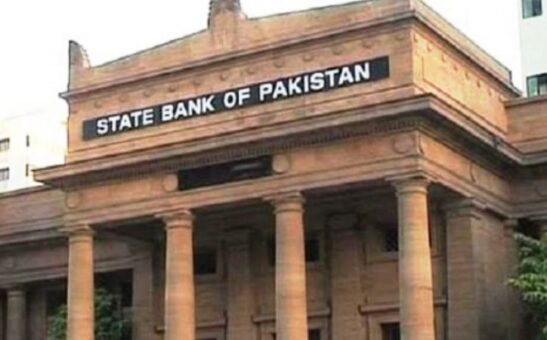
    KARACHI: The State Bank of Pakistan (SBP) on Thursday directed banks to facilitate taxpayers in their payments of duty and taxes through digital/electronic (e-payment) system.

    The SBP said that the collection of Federal Board of Revenue (FBR) taxes and duties through Alternate Delivery Channels (ADC) was initiated in March 2018 in parallel to the traditional paper based manual system.

    The ADC mechanism allowed the taxpayers to pay their taxes through internet/mobile banking, Automated Teller Machines (ATMs) or Over-the-Counter (OTC) of 16000 branches of commercial banks across the country.

    It also enabled FBR and Government Accounting Bodies to realize the tax proceeds on almost real time basis and record the transactions in their accounting system electronically.

    Considering the successful and smooth operations of ADC platform for over two years, FBR made it mandatory for Corporate Taxpayers to pay their taxes only through ADC mechanism from August 17, 2020.

    The other two categories i.e. Association of Persons (AOPs) and individual taxpayers will also be gradually shifted to the ADC mechanism thus completely eliminating the traditional tax collection system.

    As another step towards digitization of taxes and duties collections, the FBR and Pakistan Customs have decided that effective 20 January 2021, Custom Duties exceeding Rs.1 million will be collected through ADC mechanism only. FBR and SBP have conducted a number of webinars and awareness sessions for the business community to ensure a smooth transition to ADC mechanism.

    The SBP appreciated the effective role and contribution of banks in making this initiative a huge success, there are still complaints and concerns by the taxpayers about low awareness of banks’ field staff about the ADC particularly the OTC mechanism.

    It is therefore, advised and reiterated that following measures are taken on immediate priority:

    i. The banks’ branches have a fully functional OTC system integrated with 1Link to collect the Government taxes and duties. The branch staff should have full understanding of the system and should facilitate the tax payers in payment of taxes.

    ii. As the custom duty is dependent on exchange rate, it changes with the change in exchange rate. Thus, there may be cases where the taxpayer generates Payment Slip ID (PSID) on day 1 and approaches the bank for payment, the next day and thus the amount of duty reflected on the Taxpayer’s PSID is different from the one appearing on the bank’s terminal. In such cases if the Cheque presented is of lesser amount, the banks shall accept the additional amount in cash or Cheque as per the convenience of the taxpayer. Further, in case the Cheque amount is greater than the custom duty appearing on the bank’s terminal, the excess amount shall be credited in the tax payer’s account with the bank.

    iii. There have been complaints that the banks’ branches do not accept the Cheque drawn on another branch of their bank for payment of taxes and ask the taxpayer to visit the branch on which the Cheque is drawn. As all bank branches are online, the taxpayer can pay the taxes in any branch of his/her bank. The banks shall ensure that all their branches are accepting the taxes and duties through ADC mechanism and that their customer can pay the tax in any branch of his/her bank.

    iv. The banks shall send SMS or email messages to their clients informing them that “They can pay their taxes and custom duty through internet/mobile banking, ATMs or in any branch of their bank by submitting a Cheque of the tax/duty amount and PSID.”
  • FBR proposes CPEC chapter in Customs Rules

    FBR proposes CPEC chapter in Customs Rules

    ISLAMABAD: Federal Board of Revenue (FBR) on Wednesday issued draft customs rules for the introduction of a separate chapter on procedures for China Pakistan Economic Corridor (CPEC) related activities.

    In this regard the FBR issued SRO 47(I)/2021 to make amendment in the Customs Rules, 2001.

    Gwadar Tax Free Zone Rules have been introduced as a sub-chapter . According to these rules, an investor is required registration to operate under customs computerized system.

    The FBR said that goods imported into a free zone shall be examined and assessed in accordance with the provisions of the Customs Act, 1969 and rules made thereunder. The exemption granted under the act and ordinance shall be applicable to plant, machinery, equipment, appratues and materials to be used solely within the limits of a free zone and to goods imported into the zone by the investors.

    The FBR further said that entry of goods imported for free zone shall not be refused except when the goods are liable to restrictions or prohibitions imposed on grounds of public morality or order, public security, hygine or health or for sanitary or phyto-sanitary considerations, or relating to the protection of parents, trademarks, or intellectual property rights as envisaged in import policy order.

    Hazardous goods may be allowed to be admitted to a free zone only when a safe area specially designed for its storage has been made available within the free zone to the satisfaction of the licensing authority and customs as well as such conditions under relevant national laws have been complied with.

    The FBR said that duty and tax free vehicles shall be allowed to be imported by the concession holder and its operating company for construction, development and operating of Gwadar Port and free zone area under the regulatory mechanism. The regulatory mechanism for such vehicles, including the number and types importable, shall be devised by the ministry of Port and Shipping and FBR, in consultation with the provincial government if so required, and shall be notified by the FBR.

    The FBR further said that goods, excluding petty items, from the tariff area shall be admitted into the zone upon completion of export formalities which are observed for export to foreign countries.

  • FBR explains electronic payment for duty, taxes

    FBR explains electronic payment for duty, taxes

    ISLAMABAD: The Federal Board of Revenue (FBR) on Wednesday explained payment of duty and taxes through electronic mode to facilitate trade and industry.

    The FBR today (Wednesday) initiated e-payment for duty and taxes of Rs 1 million and above.

    The FBR answered following basic questions related to e-payment:

    What is PSID?

    Payment Slip ID (PSID) is a 17-digit unique number generated by WeBOC system for making payment of dues by the trader through internet banking, automated teller machines (ATM), bank’s mobile applications, Over the Counter (OTC), Easy Paisa, Jazz Cash etc.

    When is a PSID generated?

    Every time a payment is created against a particular GD after selecting E-Payment option, a PSID number will be generated. For every payment event (initial payment at the time of filing of GD and subsequent payment as a result of any reassessment) WeBOC system will generate a separate unique PSID.

    What are the modes of E-Payment available to a WeBOC user?

    — Bank’s internet portal

    — ATMs

    — Bank Mobile bill payment application

    — Over the Counter E-Payment against PSID

    — Easy Paisa, Jazz Cash etc.

    Would there be an option to view a PSID generated against a particular B/L or GD?

    Yes. A user will be able to see the PSID generated against a particular B/L or GD in the sub-menu of ‘View Generated PSIDs for E-Payment’ in the ‘Payment Management’ tab.

    Would there be an option to view the PSIDs against which payments have already been made?

    Yes. In sub-menu ‘Print Computer Generated Payment Receipt’ of the ‘Payment Management’ tab.

    Can I make E-Payment if I do not have internet banking facility?

    Yes. You can use the following options for making E-Payment against unique PSID generated by WeBOC system even if you do not use internet banking. 2

    — ATMs

    — Over the Counter E-Payment against PSID

    — Easy Paisa, Jazz Cash etc.

    Is there any facility to pay duty and taxes against a GD from multiple bank accounts available in E-Payment?

    For a single PSID, it is mandatory to pay duty / taxes from a single bank account. However, for subsequent payment of duty / taxes for the same GD via a new PSID, payment can be made from a different bank account.

    Is it possible to make payment of duty / taxes for a single GD through E-Payment as well as other payment modes such as pay order / cash?

    For a single payment event, it is mandatory to pay duty / taxes from one payment mode. However, for subsequent payment of duty / taxes for the same GD, payment can be made from a different mode of payment.

    What is the limit for payment through E-Payment mode?

    There is no limit and any amount of leviable duty and taxes can be paid through E-Payment via ATM or internet banking or mobile application or OTC.

    What if the trader account is debited but payment acknowledgement is not received by WeBOC system?

    There is a Dispute Resolution mechanism available in E-Payment System. In such cases, the customer will first contact his bank and then the Collectorate concerned who will forward the matter to M/s. 1LINK. The trader can report such issues to WeBOC team on the following email / phone numbers:

    [email protected]

    — 021-99214237 or 021-99210395

    — 051-111-772-772 Ext 2

    What type of GD processes are covered under E-Payment?

    All types of GD-related processes are covered under E-Payment.

    In case of IGM de-blocking, the facility for payment through E-Payment is available?

    Yes, IGM de-blocking payment can be made through E-Payment.

    At what time exchange rate will be updated for E-Payment?

    At 00:00 hours (midnight). It is therefore advisable to make E-Payment on the same day of generation of PSID to avoid the impact of exchange rate fluctuation.

    Is it advisable to pay duty and taxes through E-Payment mode between 11:30 p.m. to 12:00 midnight?

    No (due to change of exchange rate there could be an issue with reconciliation of transaction).

    What if the GD is re-opened by the user after the PSID number has been generated?

    In such cases, the PSID will be cancelled. The user will again select the payment mode

    At the time of opting for E-Payment, what other modes-of-payment are available to the user?

    — Bank (manual payment option through NBP)

    — PD Account

    — For E-Payment of Rs 1.0 million and above the option of bank counter of NBP shall not be available w.e.f 20.01.2021,

    After the launch of E-Payment, would the option for payment through PD Account remain available?

    E-Payment system is different from payment through PD account. The option to pay duty / taxes through PD account shall remain available.

    Would there be an e-CPR (Electronic Payment Receipt) generated like through PD Account?

    Yes, the WeBOC system shall generate e-CPR to the trader.

    WeBOC Help Desk

    — For payment related issues, contact your bank’s help desk.

    — For WeBOC related issues, contact us at

    email: [email protected]

    Tel: 021-99214237 or 021-99210395

    051-111-772-772 Ext 2

  • Tax collection from motor vehicle registration surges by 62 percent in 1HFY21

    Tax collection from motor vehicle registration surges by 62 percent in 1HFY21

    KARACHI: The collection of advance tax from the registration of new motor vehicles recorded a remarkable growth of 62 percent during the first half (July–December) of the current fiscal year (1HFY21), reflecting a rebound in economic activity and renewed demand in the automobile sector.

    (more…)
  • Pakistan improves ranking by 31 positions in ease of trading across border index: FBR

    Pakistan improves ranking by 31 positions in ease of trading across border index: FBR

    ISLAMABAD: Pakistan has improved its ranking by 31 positions (from 142nd to 111th) on the rank of trading across border index, according to a statement issued by the Federal Board of Revenue (FBR) on Tuesday.

    The FBR made trading across borders easier by focusing three crucial areas: enhancing the integration of various agencies in the Web-Based One Customs (WEBOC) electronic system; reducing the number of documents required for import / export clearances; enhancing capacities of Pakistan Customs officials for playing pro-active role in smoothly regulating border trade.   

    Climbing up the ladder in Trading Across Border Index has enabled Pakistan in jumping up 28 places – from 136th to 108th – in World Bank’s (WB)’s ‘Ease of Doing Business 2020’ and securing a place among the top 10 countries have done the most in the corresponding / past year to improve the ease of doing business in their countries.

    This milestone has led Pakistan to be the sixth global reformer and first in South Asia that has brought ease in doing business for the national / international trade.

    It is important to note that border facilitation is amongst the top priority areas as per the comprehensive policy laid down by the Government. Concerted efforts by Pakistan Customs, under FBR, led to impressive performance in terms of compliance to the provisions of World Trade Organization (WTO)’s Trade Facilitation Agreement; hence, complementing Pakistan’s rise in Trading Across Border Index. 

    Pakistan Customs has pursued implementation of effective customs controls so that compliant trade is thoroughly facilitated, while lesser / non-compliant trade is diverted to detailed scrutiny. This strategy worked well, as conceived by Pakistan Customs, and has gone a long way in reducing the dwell time (at the borders / ports) for imports / exports in Pakistan by increasing the percentage of clearances through Green Channel.

    For instance, the time required for documentary compliance to effect exports has been reduced from 55 hours to 24 hours, and the time required for overall border compliance to effect exports has also been reduced from 75 hours to 24 hours.

     Similarly, the time required for documentary compliance to effect imports has been reduced from 143 hours to 24 hours, and the time required for overall border compliance to effect imports has also been reduced from 120 hours to 24 hours.

    In order to further improve Pakistan’s position in Trading Across Border criterion, Federal Board of Revenue is pursuing simultaneous completion of Regional Improvement of Border Services (RIBS) and Pakistan Single Window.

    Regional Improvement of Border Services (RIBS) is being implemented at Torkham, Chaman, and Wahga and is the Flagship program that aims at improving border-crossing facilities which are key transit points to Afghanistan and India.

     Pakistan Single Window, on the other hand, would integrate online at least 46 departments / agencies in Pakistan and would make trading across border a hassle free and seamless operation.

  • Sales Tax Refund: FBR team to brief taxpayers on filing Annexure-H

    Sales Tax Refund: FBR team to brief taxpayers on filing Annexure-H

    KARACHI: A team of Federal Board of Revenue (FBR) will brief taxpayers about the procedure for filing Annexure-H which is mandatory for filing sales tax refunds.

    According to a circular, a technical committee of the FBR is scheduled to organize workshop/Webinar for orientation of SME manufacturers-cum-exporters and commercial exporters and tax consultants with regards to FASTER and procedure of filing of Annexure H on Wednesday January 20, 2021.

    The FBR team will brief how to file annexure H for smooth refund.

    Small and commercial exporters have been urged to join the workshop through Zoom meeting.

    https://us02web.zoom.us/j/8083005875?pwd=ZktTS2YrOE5oM2FTTzYwd2c5Q3NVUT09

    Annexure-H is a statement for providing stock position by taxpayers along with monthly sales tax return.

    The FBR from July 01, 2019 introduced expeditious payment of sales tax refunds within 72 hours subject to the true filing of Annexure – H.

    As per the Rules, refund will be treated as having been filed only after filing of Annexure H of the Sales Tax return, for which deadline of 120 days has been prescribed in the Rules and the same can be extended for a period of 60 days on the basis of approval from the Commissioner.

  • FBR obtains transaction information of stock members, brokers from NCCPL

    FBR obtains transaction information of stock members, brokers from NCCPL

    The Federal Board of Revenue (FBR) is set to gain direct access to transaction information of members, brokers, and investors within Pakistan’s equity market.

    (more…)
  • FBR chairman visits Karachi to boost revenue collection

    FBR chairman visits Karachi to boost revenue collection

    ISLAMABAD: The Chairman of Federal Board of Revenue (FBR) Muhammad Javed Ghani to hold meetings with senior officials of Inland Revenue and Pakistan Customs on Monday January 18, 2021 to discuss measures to boost revenue collection during second half of the current fiscal year.

    The chairman will hold meetings during his visit to Karachi on January 18, 2021.

    According to the visit schedule, the chairman will meet Chief Commissioners Inland Revenue of Large Taxpayers Office (LTO), Medium Tax Office (MTO), Corporate Tax Office (CTO), Regional Tax Office (RTO)-I and RTO-II.

    The chairman will also meet chief collector of Customs enforcement and chief collector of customs appraisement. The chairman will also meet director generals of Input-Outpu Coefficient Organization (IOCO), Transit Trade, Valuation and Research and Analysis.

    FBR sources said that the meetings would focus on revenue collection during the second half (January – June) of fiscal year 2020/2021.

    The FBR needs to collect tax at a difficult growth rate of 45.5 percent in second half (January – June) of fiscal year 2020/2021 to achieve full year revenue collection target of Rs4,963 billion.

    According to provision figures released by the FBR’s net collection for the first half (July – December) of fiscal year was at Rs2,204 billion as compared with Rs2,101 billion in the same period of the last fiscal year, showing a growth of five percent.

    The FBR also missed the revenue collection target for the first half by slight margin. The collection target for the first half of the current fiscal year was Rs2,210 billion.

  • Adjustment of expenses allowed against property income

    Adjustment of expenses allowed against property income

    ISLAMABAD: The Federal Board of Revenue (FBR) has said that adjustment of expenses on property income has been allowed if a taxpayer opted to pay income tax under the head of individual income.

    Sources in FBR said that through Finance Act, 2016, a dual tax treatment was introduced for property income of individuals/A0Ps and companies.

    Individuals and AOPs had to pay fixed amount of tax on gross rentals at the rates specified in Division VIA of Part-I of First Schedule.

    However, certain deductions were allowable for computing property income in case of a company.

    A new sub-section (7) was added to Section 15A through Finance Act, 2019 to enable Individuals/A0Ps to opt for normal tax regime and claim deductions against gross rentals as provided in the law.

    But that option was available only to those individuals and AOPs who derived income from property in excess of Rs.4 million.

    The Finance Act, 2020 has removed this condition by making amendment in sub-section 7 of section 15A.

    Now all individuals/A0Ps are allowed to claim deductions against gross rental income if they opt to pay tax at rates given in Divisions I of Part-I of First schedule to the Ordinance.

    Furthermore, deduction in respect of administration and collection charges under clause (h) of Section 15A has been reduced from 6% to 4% of the rent chargeable to tax.

  • Transfer of foreign assets required to be declared in annual return

    Transfer of foreign assets required to be declared in annual return

    ISLAMABAD: A person makes transaction or transfer of foreign assets during a tax year is required to declare the same in annual return.

    Officials in the Federal Board of Revenue (FBR) said that according to Income Tax Ordinance, 2001 a person having foreign assets or foreign income is required to file annual return of income and wealth statement.

    The law also makes mandatory for the person to declare any foreign assets transferred to any other person during the tax year and the consideration for the said transfer.

    Section 116A of the Income Tax Ordinance, 2001 explains the return filing requirement for a person having foreign income and assets statement.

    Section 116A. Foreign income and assets statement.

    (1) Every resident taxpayer being an individual having foreign income of not less than ten thousand United States dollars or having foreign assets with a value of not less than one hundred thousand United States dollars shall furnish a statement, hereinafter referred to as the foreign income and assets statement, in the prescribed form and verified in the prescribed manner giving particulars of—

    (a) the person’s total foreign assets and liabilities as on the last day of the tax year;

    (b) any foreign assets transferred by the person to any other person during the tax year and the consideration for the said transfer; and

    (c) complete particulars of foreign income, the expenditure derived during the tax year and the expenditure wholly and necessarily for the purposes of deriving the said income.

    (2) The Commissioner may by a notice in writing require any person being an individual who, in the opinion of the Commissioner on the basis of reasons to be recorded in writing, was required to furnish a foreign income and assets statement under sub-section (1) but who has failed to do so to furnish the foreign income and assets statement on the date specified in the notice.