Tag: LTO Karachi

  • LTO Karachi, PBC discuss tax issues

    LTO Karachi, PBC discuss tax issues

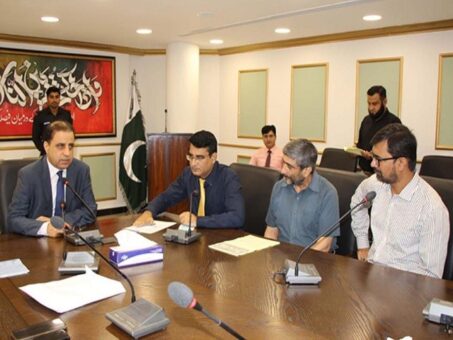
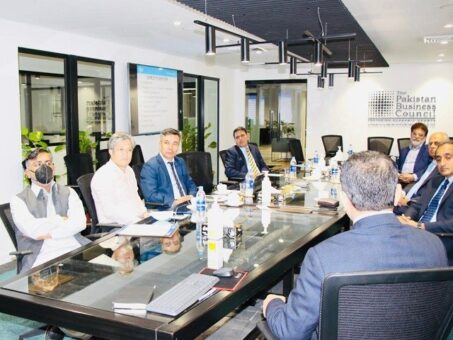
    KARACHI: A team of senior officials from Large Taxpayers Office (LTO) Karachi visited Pakistan Business Council (PBC) on Wednesday.

    Shahid Iqbal Baloch, Chief Commissioner Inland Revenue, Large Taxpayers Office (LTO) Karachi headed the team of tax officials. Kazi Hifzur Rehman, Commissioner Inland Revenue, Audit Zone-ll, LTO, Karachi also part of the team.

    LTO Karachi is the major revenue collecting arm of the Federal Board of Revenue (FBR).

    CEO PBC Ehsan Malik, Director Research PBC Samir S Amir and other member taxpayers of PBC attended the meeting.

    The chief commissioner highlighted the role of LTO, Karachi in collection of all domestic taxes particularly with reference to members of the PBC, who are the highest taxpayers of the country.

    The members of the Pakistan Business Council shared their views and issues of taxation with the Chief Commissioner-IR, LTO, Karachi who also ensured their timely completion and highlighted that the team of officers posted at LTO, Karachi are thorough professionals and it was reiterated that all their pending issues related to taxes shall be completed as per law accordingly.

    Aman Ghanchi, Company Secretary, Unilever Pakistan Limited proposed that to better understand various business cycles and processes, workshops may be arranged so that the department would better understand the trade of the taxpayers for effective implementation of the policies of the Board. That would also help improve the taxation within the country.

    Ehsan Malik, CEO, Pakistan Business Council also highlighted the exchange of industry notes by virtue of which old settled issues would not be repeated and resultantly there would be less pressure on the appellate side and precious time of the tax machinery as well as the businessmen would be saved.

    The members of the PBC appreciated the efforts of FBR in effective implementation of the policies of Government of Pakistan in a very effective and efficient manner.

  • Sugar mills agree to implement track, trace system

    Sugar mills agree to implement track, trace system

    KARACHI: The sugar mills have agreed to allow the tax authorities to monitor the production and supply through track and trace system.

    In this regard a tri-partite agreement was signed at Large Taxpayers Office (LTO), Karachi. The agreement was signed by the representatives of sugar mills, Federal Board of Revenue (FBR) and the consortium AJCL/ Mittas/ Authentix for the implementation of Track & Trace System (TTS).

    Shahid Iqbal Baloch, the Chief Commissioner, LTO, welcomed the representatives and oversaw the signing ceremony.

    Speaking on the occasion, the Chief Commissioner highlighted the importance of the TTS.

    He believed that launching of the TTS will be a great stride towards accelerating digitisation of economic activity, improving revenue forecasting and curbing counterfeit products in the market.

    The Track and Trace Solution is to be rolled out in a multi-phasic manner across the Tobacco, Cement, Sugar and Fertilizer Sectors in Pakistan with a view to enhancing tax revenue, reducing counterfeiting and preventing the smuggling of illicit goods through the implementation of a robust, nationwide, electronic monitoring system of production volumes and by the affixation of more than 5 billion tax stamps on various products at the production stage, which will enable FBR to track the goods throughout the supply chain.

    Tariq Hussain Shaikh, the Project Director, (Track & Trace System), FBR reiterated the importance of the project and called it a game changer for improving revenue and curbing counterfeit products in the market.

    The meeting concluded with the handing over of the agreements by the Chief Commissioner to the representatives on behalf of FBR.

  • POS installation offers reduced tax rates: LTO Karachi

    POS installation offers reduced tax rates: LTO Karachi

    KARACHI: Officials of Large Taxpayers Office (LTO) Karachi have apprised the business community that installation of Point of Sale (POS) offered reduced rate of sales tax.

    A team of tax officials from Large Tax Office (LTO) Karachi visited Pakistan Business Council (PBC) on Wednesday to discuss the integration of Tier-1 retailers, a statement said on Wednesday.

    The purpose of the visit was to listen and redress the grievances regarding the online integration of Tier-1 retailers / Point of Sale (POS) with the FBR system.

    It was apprised to the members that the POS integration of retailers does not involve new tax, rather it gives the benefit of reduced rate of sales tax to consumers who buy the goods from integrated Tier-1 retailers.

    The LTO Karachi team was comprised of officers included: Shakeel Ahmad Kasana, Commissioner-Inland Revenue (IR); Aijaz Hussain, Additional Commissioner-IR; Shoukat Ali Changezi, Additional Commissioner-IR; Abdul Hameed Mangrio Deputy Commissioner-IR; and Amjad Ali Moroojo, Audit Officer-IR.

    The representatives of the PBC were: Ehsan A. Malik, Chief Executive; Samir S. Amir, Director Research; and Aman Chanchi, Unilever Pakistan.

    The Commissioner-IR briefed the members regarding the scope and purpose of POS integration.

    A formal presentation was given by Abdul Hameed Mangrio, Deputy Commissioner which was followed by Q&A session.

    The delegation requested the members to encourage the Tier-1 retailers to get integrated with the FBR system for ease of reporting of sales and avoid unnecessary documentation besides enjoying reduced rates of tax on their supplies.

    The members of the Council appreciated the outreach efforts of FBR to remove the misconception and misgivings regarding the online integration of retailers with the FBR system.

    They appreciated the system and informed that Pakistan Business Council is always encouraged to promote documentation of the economy and Point of Sale (POS) is the right step in this direction.

    They also assured their active engagement for making the Point of Sale (POS) integration a success story for the larger interest of the country and the documentation of the economy.