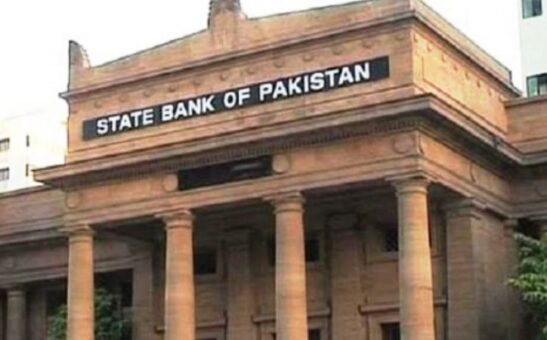
Tag: SBP

  • SBP issues regulations for electronic money institutions

    SBP issues regulations for electronic money institutions

    KARACHI: State Bank of Pakistan (SBP) on Monday issued regulations for electronic money institutions in order to promote financial inclusion in the country.

    In a statement, the central bank said that in order to foster innovation in the payments industry and promote financial inclusion in the country, it has been decided to license non-banking entities as E-Money Institutions (EMIs) as per the notified regulations under the powers conferred on SBP by Payment Systems and Electronic Fund Transfers Act, 2007.

    These regulations will remove entry barriers and provide level playing field to EMIs in payment’s arena which will eventually lead to the development of payments ecosystem in Pakistan.

    SBP therefore expects that the prospective EMIs shall offer convenient, cost effective, interoperable and secure digital payment products and services to end users in the country.

    These Regulations shall come into force with immediate effect.

    The objectives of the regulations are included:

    I. To provide regulatory framework for EMIs desirous of offering innovative payment services to the general public.

    II. To prescribe minimum service standards and requirements for EMIs to ensure delivery of payment services in a safe, sound and cost effective manner.

    III. To outline the permissible activities that can be carried out by an EMI and its agents’ network.

    IV. To provide a baseline for protection of EMI’s customers.

    V. To achieve the SBP’s objective of digital payments and financial inclusion.

    The SBP said that Payment Systems and Electronic Funds Transfer Act, 2007 defines e-money as monetary value stored on an electronic device or payment instrument issued on receipt of funds and accepted as a means of payment by entities other than issuer.

    E-money globally is widely used for making retail payments in an economy and has played a crucial role in digitizing different types of payments in various countries.

    Electronic Money Institutions (EMIs) are entities that offer innovative, user-friendly and cost effective low value digital payment prepaid instruments like wallets, prepaid cards, and contactless payment instruments including wearables.

    Globally, these innovative payment instruments have been instrumental in promoting cashless payments like merchant checkouts, e-commerce, transportation and toll payments etc.

    Traditionally, payment instruments in Pakistan are issued by banks without participation of non-banking entities.

    New technological innovations are now enabling non-banking sector to deliver innovative and efficient payment services to consumers at much lower cost.

    These regulations are primarily aimed at removing entry barriers for non-banking entities by providing them a guiding as well as an enabling regulatory framework for the establishment and operations of EMIs in Pakistan.

    These regulations also address potential risks in order to ensure consumer protection in line with legal framework of the country while promoting digital payments and financial inclusion.

  • SBP holds SaarcFinance seminar on audit

    SBP holds SaarcFinance seminar on audit

    KARACHI: State Bank of Pakistan (SBP) hosted a seminar on ‘Internal Audit: Emerging Challenges and Effective Practices in Central Banks’ under the aegis of SAARCFINANCE Forum at National Institute of Banking and Finance, Islamabad during 27-29 March 2019, a statement said on Saturday.

    Besides Pakistan, officials from SAARC central banks participated in the event.

    Qasim Nawaz, Executive Director, SBP inaugurated the seminar.

    While addressing the inaugural session, he stated that until a few years back, business process reengineering was at the core of innovation in banks.

    While advancements in technology have further transformed the horizon of financial services, these innovations are also raising challenges of their own.

    Adding further, he stated that the board and the senior management of State Bank are cognizant of the need to align its internal operations to the changing environment, and to promote innovation in the financial sector in a regulated environment.

    Horst Simon, the keynote speaker of the event, discussing technological risks faced by business around the world, highlighted the importance of risk culture inculcated within the organization.

    He emphasized on the roles and responsibilities of board, senior management and the employees to maintain a robust risk management mechanism.

    The seminar was also addressed by Zayeem Bin Alam, Senior Manager of PricewaterhouseCoopers.

    Zayeem discussed the risks of cyber security, social media, data privacy and third party risks and offered an IT auditor’s perspective of how to address those risks by discussing controls.

    Syed Sohail Javaad, Director Payment Systems Department shared the on going developments about digital payments, their importance, evolution, the benefits of disruptive technologies to regulators, the emerging risks and appropriate responses to them from the perspective of internal audit.

    Apart from these speakers, the delegates of the central banks also presented their country papers for the information of the audience.

  • SBP increases policy rate by 50bps to 10.75 percent

    SBP increases policy rate by 50bps to 10.75 percent

    KARACHI: State Bank of Pakistan (SBP) on Friday increased key policy rate by 50 basis points to 10.75 percent for next two months effective from April 01, 2019.

    (more…)
  • Foreign exchange reserves increase to $17.58bn

    Foreign exchange reserves increase to $17.58bn

    KARACHI: The total liquid foreign exchange reserves of the country have increased to $17.58 billion by March 25, 2019, State Bank of Pakistan (SBP) said on Thursday.

    The central bank received RMB 15 billion equivalent to US$2.2 billion on March 25 as proceeds of the loan obtained by the government of Pakistan from China.

    Accordingly, foreign exchange reserves held by the SBP stood at US$10.67 billion and total foreign exchange reserves of the country stood at US$17.58 billion.

  • SBP directs banks to facilitate duty, taxes payment

    SBP directs banks to facilitate duty, taxes payment

    KARACHI: State Bank of Pakistan (SBP) on Thursday directed banks to facilitate payment of duty and taxes on Saturday, March 30, 2019.

    The central bank in a statement said in order to facilitate the collection of Government receipts/duties/taxes, NIFT will provide special clearing facility on the advice of SBP on Saturday, March 30, 2019 at 8:00 pm.

    All banks are, therefore, advised to keep their concerned branches open on March 30, 2019 (Saturday) till such time that is necessary to facilitate the special clearing for the government transactions.

  • SBP sets up help desk for MNCs, domestic businesses

    SBP sets up help desk for MNCs, domestic businesses

    KARACHI: State Bank of Pakistan (SBP) has established a facilitation desk for foreign exchange related remittances to help multinational companies and domestic businesses.

    In a statement on Thursday, the SBP said it had established the facilitation desk to cater to the queries pertaining to foreign exchange related remittances to help all stakeholders including multinational companies and domestic businesses.

    The facilitation desk will provide assistance on foreign exchange related matters pertaining to areas including registration of equity, borrowing contracts, profit repatriation; acknowledgement and approval of royalty, franchise, technical and management services; training and development fees; operational and maintenance charges; lease rentals/maintenance reserves of airlines; legal and advisory services, visa and consulate fee; approval to issue guarantees and standby letter of credits; and any other foreign exchange related matters.

    Banks have been directed to devise benchmarks for processing and due diligence of each type of transaction and ensure compliance thereof.

    The facilitation desk has been established at Foreign Exchange Operations Department, Banking Services Corporation, I.I. Chundrigar Road, Karachi.

  • IMF mission chief holds talks with Pak authorities for new program

    IMF mission chief holds talks with Pak authorities for new program

    ISLAMABAD: IMF mission chief for Pakistan, Ernesto Ramirez-Rigo, visited Islamabad and Karachi during March 26-27, for introductory meetings with the authorities, said a statement on Wednesday.

    Ramirez-Rigo assumed Pakistan mission chief responsibilities earlier this month. This was his first visit to the country.

    In Islamabad, Ramirez-Rigo met with the Minister of Finance, Asad Umar, the Minister of Commerce, Razzak Dawood, the Minister of Power, Omer Ayub, the State Minister for Revenues Hammad Azhar, and several government senior officials, including the Finance Secretary, Younus Dagha, the Chairman of the Federal Board of Revenues, Jehanzeb Khan, and the Advisor to the Prime Minister on Institutional Reforms and Austerity, Ishrat Hussain.

    In Karachi, he met with the Governor of the State Bank of Pakistan Tariq Bajwa and other senior officials from the State Bank of Pakistan.

    Discussions focused on recent economic developments and prospects for Pakistan in the context of ongoing discussions toward an IMF-supported program.

  • Drug pricing mum on adjustment in foreign currency movement: SBP

    Drug pricing mum on adjustment in foreign currency movement: SBP

    KARACHI: The present drug policy is silent on adjustment of prices under foreign currency movement, State Bank of Pakistan (SBP) said in its latest report.

    “The latest drug pricing policy does not say anything about the adjustment of prices under foreign currency movements. The policy becomes ineffective in mitigating the external risk, given the origin of imported raw material is mostly different from India and Bangladesh,” the SBP said.

    Drug Regulatory Authority of Pakistan (DRAP) is the implementing body of the Drugs Act of 1976, which was promulgated to ensure availability of medicines at affordable prices.

    DRAP exerts control over all the aspects of drugs market. While the current policy regime has kept prices mostly at par with inflation in the medium term, the pricing policy is the cause of disagreement between the private sector and the regulator.

    The central bank said that pharmaceutical industry has extensive exposure to exchange rate risk. “Depreciation of the PKR has a direct impact on this industry. Its profitability gets squeezed, as producers are not allowed a timely and commensurable increase in the prices of their products,” the SBP added.

    The dependence on imported materials is a critical factor in limiting the growth potential of the industry under lagged adjustment of prices, it added.

    The SBP said that extensive delay in adjustment of prices has made investors, both foreign and domestic, wary of investing in pharmaceutical sector.

    The government fixes the maximum price of medicines based on the respective cost of production of each drug. A generic case involves a lengthy regulatory procedure (typically taking 1-2 years) to determine the prices of medicines.

    The process requires the eventual approval from the federal cabinet.

    Retrospective analysis of prices reveals interesting insights to the patterns of price adjustments, i.e. prolonged periods of low medicinal inflation, followed by periods of significant adjustments. These price corrections have been more frequent in recent times.

    In this regard, DRAP issued a new drug pricing policy in 2018. To overcome the lag issues, domestic price of medicines were linked with average price of the same dosage form and strength of the same brand in India and Bangladesh.

    Moreover, the policy also allowed annual price increments equal to 70 percent of the annual inflation rate with a cap of 7 percent.

    Whilst the latest policy has a more relaxed tone compared to the previous one, it still has some issues. First, it should be noted that compared to Pakistan, India has very different cost dynamics, as it is one of the largest producers and exporters of generic drugs and its raw material.

    On the other hand, Pakistan’s pharma industry is heavily reliant on raw material imports and its industry is inward looking.

    In addition to slow regulatory framework, another critical factor is the lack of government support for the industry, especially in R&D required for obtaining international certification from the US Food and Drug Administration (FDA).

    This certification is a prerequisite for exporting medicines to developed countries where profit margins are higher. On the contrary, India has state of the art research labs.

    It gains significant advantages by fast-tracking its FDA approvals as soon as patents expire. As a result, India’s pharmaceutical industry has not only attained economies of scale but helps in earning foreign exchange as well.

  • SBP to announce monetary policy on March 29; experts expect 75bps increase

    SBP to announce monetary policy on March 29; experts expect 75bps increase

    KARACHI: State Bank of Pakistan (SBP) will announce Monetary Policy for the next two months on Friday, March 29, 2019, a statement said on Wednesday.

    In the last monetary policy announcement, the central bank increased the policy rate by 25 basis points to 10.25 percent effective from February 01, 2019.

    The monetary policy committee (MPC) decided to increase the rate on the basis of: (i) the fiscal deficit is yet to show signs of consolidation despite a reduction in PSDP spending; (ii) although a gradual improvement in current account deficit is visible, it remains high; (iii) a marked shift in the pattern of government borrowing from scheduled banks to SBP entails inflationary concerns; and (iv) even as stabilization measures gradually work through the economy, underlying inflationary pressures persist.

    Analysts at Arif Habib Limited said that the SBP to increase policy rate by 75 basis points to 11.00 percent (Discount rate 11.50 percent) in the upcoming monetary policy statement.

    This might be the last rate hike before Pakistan enters the International Monetary Fund (IMF) program whereas inflation will remain moderate after making its peak in the ongoing month.

    The monetary tightening is expected on the back of i) rising inflationary pressure due to recovery in prices of petroleum products and essential food items, ii) mounting Fiscal deficit despite sharp cut in PSDP and rationalization of tariffs and duties, and iii) narrowing real interest rate as it declined to 1.6 percent compared to last four year average of 2.85 percent.

  • Restriction on non-filers for car buying considerably reduces own money

    Restriction on non-filers for car buying considerably reduces own money

    KARACHI: The restriction on non-filers to purchase cars during first half of current fiscal year has reduced the delivery time and also reduce the own money for immediate delivery in the grey market.

    (more…)