KARACHI, May 17, 2022 – The State Bank of Pakistan (SBP) has issued the official exchange rates for customers on Tuesday, May 17, 2022.
(more…)Tag: State Bank of Pakistan
-
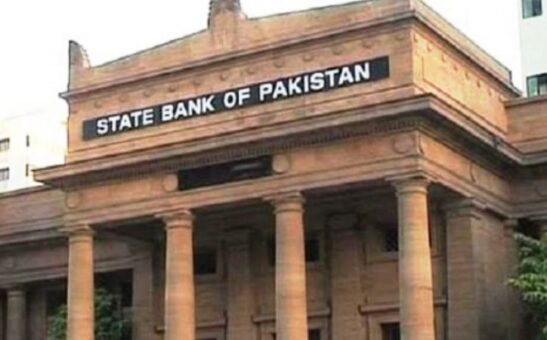
SBP issues KIBOR rates – May 17, 2022
KARACHI: The State Bank of Pakistan (SBP) on Tuesday issued the Karachi Interbank Offered Rates (KIBOR) as of May 17, 2022, providing crucial insight into the prevailing interbank borrowing costs within the financial sector. KIBOR serves as a benchmark for a variety of financial products and transactions, influencing everything from corporate lending to personal loans.
(more…) -
SBP may raise policy rate by 100bps to 13.25%
KARACHI: The State Bank of Pakistan (SBP) is scheduled to announce monetary policy on May 23, 2022 and may increase the key policy rate by 100 basis points to 13.25 per cent, analysts said on Tuesday.
According to the analysts at Arif Habib Limited, the monetary policy committee of SBP will convene on Monday (May 23rd, 2022) to announce the last scheduled monetary policy of 2021/2022.
READ MORE: SBP increases policy rate sharply by 250bps to 12.25%
They expect the central bank may increase the policy rate by 100 basis points to 13.25 per cent in the upcoming monetary policy statement.
To recall, in an emergency monetary policy meeting held on April 07, 2022, the SBP increased the benchmark policy rate by 250 basis points to 12.25 per cent.
The MPC stated that it believed that since the monetary policy meeting held in March 2022, the outlook for inflation had deteriorated and risks to external stability had risen.
Therefore, these developments necessitated a strong and proactive policy response.
READ MORE: Policy rate may rise as T-Bill yields increase sharply
To recall, headline inflation has remained in the double digits since November 2021 mainly on the back of uptick in food and energy prices.
This phenomenon still continues with headline number hitting almost two years high in April, clocking-in at 13.4 per cent with pressure mainly emanating from higher food and commodity prices.
In April’s MPS, SBP stated that the average inflation forecasts had been revised upwards to slightly above 11 per cent for fiscal year 2021/2022 before moderating in the next fiscal year.
Moreover, in the last policy (April 2022), SBP had termed its action of rate hike as ‘decisive’ and a timely measure to ensure that the goal of financial stability.
READ MORE: State Bank enhances frequency of MP reviews to eight
In addition, the Governor in post MPS (Analyst) Briefing had hinted at a ‘good news’ regarding IMF but conditional upon certain measures pending at government’s end.
The next round of meeting with the IMF starts from May 18th (source: news reports) so they expect government to soon consider rolling back of fiscal relief measures in order to get seventh review through, successfully.
However, this step of government is most likely to further augment inflationary pressure hence, SBP might want to act proactively and consider rate hike in the upcoming policy.
READ MORE: Key policy rate goes up to 9.75%; SBP raises 250bps in less than month
-
SBP issues KIBOR rates – May 16, 2022
The State Bank of Pakistan (SBP) on Monday announced the latest Karachi Interbank Offered Rates (KIBOR), reflecting the borrowing and lending rates in the interbank market as of May 16, 2022. KIBOR serves as the benchmark interest rate used by banks for lending to one another and is an essential indicator for the broader financial market.
(more…) -
SBP’s customer exchange rates – May 16, 2022
KARACHI, May 16, 2022 – The State Bank of Pakistan (SBP) has issued the official exchange rates for customers on Monday, May 16, 2022.
(more…) -

SBP governor assumes charge of Asian Clearing Union
KARACHI: Dr. Murtaza Syed, Governor (Acting) State Bank of Pakistan (SBP) has assumed the charge of Chairman of the Board of Directors of the Asian Clearing Union (ACU) in the 50th meeting of the ACU Board held in Islamabad on May 13, 2022 in both physical and virtual modes.
Established in 1974 with permanent headquarters in Iran, the Asian Clearing Union (ACU) is a payment arrangement system whereby member countries settle payments for intra-regional transactions among their central banks on a net multilateral basis. Currently, the Central Banks of Bangladesh, Bhutan, Iran, India, Maldives, Myanmar, Nepal, Pakistan and Sri Lanka are members of the ACU.
READ MORE: Dr. Murtaza assumes acting SBP governor charge
The main objectives of the clearing union are to facilitate payments among member countries for eligible transactions, thereby economizing on the use of foreign exchange reserves and transfer costs, as well as promoting trade and banking relations among the participating countries.
The Secretary General of ACU, Mrs. Lida Borhan Azad, presented the annual report on the operations of the union for the year 2020, which the Board approved and adopted.
READ MORE: Court judgment: Riba is Haram in any form
The Board reviewed progress on the ongoing projects being undertaken by the union. It reviewed a new web based messaging system and constituted a sub-committee to finalize the recommendations for its implementation within six months. The Board also considered the report on issues faced by traders under the ACU mechanism and decided to implement the recommendations in the next three months. While appreciating the report on the use of domestic currencies for settlement of trade transactions prepared by the Reserve Bank of India (RBI), the Board requested RBI to convene a virtual seminar to enable member countries to gain a fuller understanding of the proposed mechanism.
READ MORE: SBP imposes penalty of Rs109 million on four banks
The Governors and head of the delegations of the countries also gave a broad overview of the economic development in their respective economies and shared their experiences in addressing the challenges emerging in the post COVID-19 global landscape.
Governor Central Bank of Myanmar, Than Nyein, Vice Governor Central Bank of Iran, Dr.Mohsen Karimi, Chief Economist Central Bank of Bangladesh Md. Habib ur Rehman, and Executive Director Nepal Rastra Bank Ramu Paudel participated in the meeting physically. Governor Dr. P. Nandalal Weerasinghe, and Deputy Governor of Central Bank of Sri Lanka, T.M.J.Y.P Fernando, Governor Maldives Monetary Authority Ali Hashim, Ms. Yangchen Tshogel Central Bank of Bhutan and Executive Director RBI Mr. Radha Shyam Ratho, attended the meeting virtually.
READ MORE: IPS demands implementation of court judgment on Riba
At the conclusion of the Board meeting, Mrs. Lida Borhan Azad relinquished the charge of Secretary General of the ACU after distinguished service of the Union for 15 years.
While appreciating the services of Mrs. Lida Borhan, the Board appointed Farhad Morsali as the new Secretary General of the ACU, as recommended by the Central Bank of Iran.
The meeting ended with all member countries emphasizing their commitment to further enhancing their trade and banking relationships. It was decided that central bank digital currencies (CBDCs) would be the special topic on which research would be conducted during Pakistan’s chairmanship of the ACU over the next twelve months.
-

FAP suggests incentive to undeclared $3 billion
People have an undeclared amount of $2 billion to $3 billion foreign currency in their homes and personal bank lockers. They want to exchange with Pakistani Rupee (PKR) but due to certain restrictions they are unable to bring it out. The government should provide legal shelter for declaration of concealed dollars, which will help to boost the foreign exchange reserves.
READ MORE: Pakistan’s forex reserves fall to $16.37 billion
Malik Muhammad Bostan, President, Forex Association of Pakistan (FAP) commented these at a conference on present economic woes, especially falling rupee and depletion of foreign exchange reserves.
“Many people taking advantage of Economic Reform Act purchased huge amount of dollars from the local market during the period of 1993 to 2008 and deposited in the banks of foreign countries or retained the dollars at their homes or lockers,” he said.
READ MORE: Pakistan’s forex reserves dip to $16.55 billion
Prior to year 2008, there were many unlicensed money exchange companies were operating under Economic Reform Act. Those exchange companies were allowed to sale and purchase foreign currency without ‘Know Your Customer (KYC)’. SBP licensed exchange companies were required to conduct KYC on sale/purchase of above $10,000.
“Now those people want to sale their dollars through KYC but without identification,” he said, adding that the under Financial Action Task Force (FATF) conditions, the banks are required to obtain identification on sale/purchase of above $15,000.
READ MORE: SBP forex reserves shrink to 1.69 months import cover
“If this condition is relaxed then exchange companies will able to purchase huge amount of dollars and other foreign currency from public,” Bostan said.
FAP President said the government should allow purchase of gold from local market. “They may sale gold in international market and surrender foreign currency in the local market.”
Pakistan forex reserves inch up to $17.045 billion
There is need to channelize foreign currency invested in cryptocurrency, he said and demanded that the government should provide legal cover to bring foreign currency back home.
He suggested that banks should stop forward dollar selling and should be allowed to sale dollar equivalent to purchase.
Bostan said the State Bank of Pakistan (SBP) should imposed 100 per cent cash margin on all imports except for necessary items.
-
SBP issues KIBOR rates – May 13, 2022
KARACHI: State Bank of Pakistan (SBP) on Friday issued the Karachi Interbank Offered Rates (KIBOR) as on May 13, 2022.
Following are the latest KIBOR rates:
Tenor BID OFFER 1 – Week 12.28 12.78 2 – Week 12.40 12.90 1 – Month 12.90 13.40 3 – Month 14.62 14.87 6 – Month 14.75 15.00 9 – Month 14.68 15.18 1 – Year 14.67 15.17 -
SBP’s customer exchange rates – May 13, 2022
KARACHI, May 13, 2022 – The State Bank of Pakistan (SBP) has released the official exchange rates for customers on Friday, May 13, 2022.
(more…) -
Pakistan receives record monthly high $3 billion as remittances
KARACHI: Pakistan has received a monthly record workers’ remittance of $3.13 billion in the month of April 2022, the central bank said on Friday.
The State Bank of Pakistan (SBP) said the remittances grew by 12 per cent in April 2022 to $3.125 billion as compared with $2.79 billion received in April 2021. Meanwhile, the country received $2.81 billion in the month of March 2022.
READ MORE: SBP receives $2.2 bn as workers remittances in February
The inflow of remittances recorded 7.6 per cent growth to $26.08 billion during the first 10 months (July – April) 2021/2022 when compared with $24.23 billion in the corresponding months of the last fiscal year.
Pakistanis living in the USA have sent $2.556 billion during July – April 2021/2022, which is 20 per cent higher when compared with $1.4 billion in the same period of the last fiscal year.
READ MORE: Remittances increase to record $18 billion in 7 months
The SBP received an amount of $3.67 billion during the first ten months of the current fiscal year from Pakistani workers living in the UK as compared with $1.98 billion in the corresponding period of the last fiscal year, showing an increase of 9.9 per cent.
Pakistanis living in Saudi Arabia sent an amount of $6.41 billion during the period under review as compared with $5.32 billion in July – April 2020/2021, showing a growth of 1.6 per cent.
READ MORE: Pakistani overseas workers send $15.8 billion in 1HFY22
The inflows of remittances from the UAE, however, posted a decline of 3.6 per cent to $4.90 billion during the first 10 months of the current fiscal year as compared with $5.08 billion in the same period of the last fiscal year.
Pakistanis living in the EU countries have sent an amount of $2.80 billion during the first ten months of the current fiscal year as compared with $2.21 billion in the same period of the last fiscal year, showing a growth of 27.1 per cent.
READ MORE: PM Imran launches incentive program for remittances