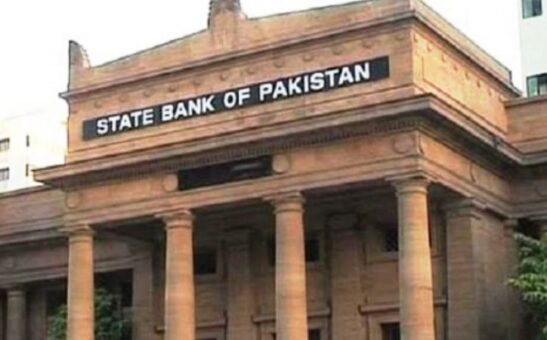
Tag: State Bank of Pakistan

  • Pakistan’ FDI declines by 52 percent in 10 months

    Pakistan’ FDI declines by 52 percent in 10 months

    KARACHI: Foreign Direct Investment (FDI) has declined by 52 percent during first 10 months of current fiscal year owing to higher repatriation of profits by corporate sector.

    The total FDI was recorded at $1.376 billion during July –April 2018/2019 as compared with $2.849 billion in the corresponding period of the last year, showing 51.7 percent decline, according to data released by State Bank of Pakistan (SBP) on Tuesday.

    The inflows under FDI registered 22 percent decline to $2.684 billion during first 10 months of current fiscal year as compared with $3.44 billion in the same period of the last fiscal year.

    The outflows on the other hand increased by 121 percent to $1.308 billion during July – April 2018/2019 as compared with $591 million in the same period of the last fiscal year.

    The total foreign private investment registered 64.3 percent decline to $968 million during July-April 2018/2019 as compared with $2.713 billion in the same period of the last fiscal year.

    The portfolio investment posted 200 percent decline during the period under review to outflow of $408 million as compared with the outflow of $136.2 million.

    Foreign public investment witnessed 140.4 percent decline to $2.45 billion during July – April 2018/2019 as compared with outflow of $990.6 in the same period of the last fiscal year.

  • SBP increases policy rate by 150 basis points in line with IMF directives

    SBP increases policy rate by 150 basis points in line with IMF directives

    KARACHI: State Bank of Pakistan (SBP) on Monday increased key policy rate by 150 basis points to 12.25 percent, which is inline with the direction of newly agreed loan program with the IMF.

    The SBP in a statement said that there have been three notable developments since the last Monetary Policy Committee (MPC) meeting in March 2019.

    First, the government of Pakistan has reached a staff-level agreement with the International Monetary Fund for 39-month long Extended Fund Facility of around US$ 6.0 billion.

    The program is designed to restore macroeconomic stability and support sustainable economic growth, and is expected to unlock considerable additional external financing.

    Second, trends in government borrowing reflect a widening fiscal deficit during the first nine months of FY19 when compared to the same period in FY18.

    In addition, a greater reliance on central bank financing of the deficit has acted to dilute the impact of previous monetary tightening. Finally, since the last MPC, the exchange rate has depreciated by 5.93 percent to PKR 149.65 per USD, at the close of 20th May 2019, reflecting a combination of underlying macroeconomic factors and market sentiment considerations.

    SBP’s estimates show that economic growth is expected to slow in FY19 but rise modestly in FY20.

    This slowdown is mostly due to lower growth in agriculture and industry. More than two-thirds of real GDP growth in FY19 is expected to come from services.

    Going forward, some gradual recovery in economic activity is expected on the back of improved market sentiment in the context of the IMF supported program, a rebound in the agriculture sector and government incentives for export-oriented industries.

    The current account deficit narrowed to US$ 9.6 billion in Jul-Mar FY19 as compared to a deficit of US$ 13.6 billion during the same period last year, a fall of 29 percent.

    The reduction is mainly driven by import compression and a healthy growth in workers’ remittances. This impact was partially offset by higher international oil prices.

    The non-oil trade deficit declined from US$ 13.7 billion in Jul-Mar FY18 to US$ 11.0 billion in Jul-Mar FY19 reflecting the impact of stabilization policies implemented so far.

    Recent indicators suggest export volumes have begun to grow although total export receipts have not grown due unfavorable prices.

    Despite the improvement in the current account and a noticeable increase in official bilateral inflows, the financing of the current account deficit remained challenging.

    Consequently, reserves declined to US$ 8.8 billion as of 10th May 2019 from US$ 10.5 billion at end-March 2019. The exchange rate also came under pressure in the last few days.

    In SBP’s view, the recent movement in the exchange rate reflects the continuing resolution of accumulated imbalances of the past and some role of supply and demand factors.

    SBP will continue to closely monitor the situation and stands ready to take measures, as needed, to address any unwarranted volatility in the foreign exchange market.

    Furthermore, the current level of reserves is below standard adequacy levels (equal to three months of imports cover). As noted in previous MPC statements, deep structural reforms are required to improve productivity and competitiveness of export-oriented sectors and improve the trade balance.

    The overall fiscal deficit is likely to be considerably higher during Jul-Mar FY19 as compared to the same period last year due to a shortfall in revenue collection, higher than budgeted interest payments and security related expenditures. From a monetary policy perspective, a growing portion of the fiscal deficit has been financed through borrowings from SBP.

    In absolute terms, the government borrowed Rs 4.8 trillion from SBP during 1st Jul-10th May FY19, which is 2.4 times the borrowing during the same period last year.

    A major portion of this borrowing from the SBP (Rs 3.7 trillion) reflects a shift away from commercial banks which were reluctant to lend to the government at prevailing rates.

    The resulting increase in monetization of the deficit has added to inflationary pressures.

    Despite the recent tightening of monetary policy, private sector credit rose 9.4 percent during 1st Jul-10th May, FY19.

    Much of the increase in credit was for working capital needs due to higher input prices. The expansionary impact of higher government borrowing and private sector credit on broad money supply (M2) was partly offset by a contraction in net foreign assets of the banking sector.

    In aggregate, broad money supply grew by 4.7 percent during 1st Jul – 10th May, FY19.

    The consumer price index (CPI) rose 9.4 percent in March 2019 and 8.8 percent in April 2019, on a y-o-y basis. Average headline CPI inflation reached 7.0 percent in Jul-Apr FY19 compared to 3.8 percent in the same period last year.

    Moreover, the annualized headline month-on-month inflation has risen considerably in the last three months due to the recent hike in domestic fuel prices and rising food prices and input costs.

    As such, inflationary pressures are likely to continue for some time. The most recent IBA-SBP consumer confidence survey also shows that most households expect higher inflation during the next six months.

    Taking into account the recent developments discussed above and outlook for key sectors, average headline CPI inflation is expected to be in the range of 6.5-7.5 percent in FY19 and it is anticipated to be considerably higher in FY20.

    This inflation outlook is subject to a number of upside risks from an expected rationalization of taxes in the upcoming budget, potential adjustments in electricity and gas tariffs, and volatility in international oil prices. The inflation outlook suggests a fall in real interest rates on a forward-looking basis.

    Taking into account the above considerations and the evolving macroeconomic situation, the MPC noted that further policy measures are required to address underlying inflationary pressures from (i) higher recent month-on-month headline and core inflation outturns; (ii) recent exchange rate depreciation; (iii) an elevated fiscal deficit and its increased monetization, and (iv) potential adjustments in utility tariffs.

    In this context, the MPC decided to increase the policy rate by 150 bps to 12.25 percent effective from 21st May 2019.

  • SBP may continue with monetary policy tightening; 100 basis points increase likely

    SBP may continue with monetary policy tightening; 100 basis points increase likely

    KARACHI: The State Bank of Pakistan (SBP) likely to increase key policy rate by 100 basis points in the next monetary policy announcement scheduled for May 20, 2019, analysts said.

    Analysts at Arif Habib Limited forecast another rate hike of 100bps in policy rate from 10.75 percent to 11.75 percent in the upcoming monetary policy.

    The aggressive monetary tightening is expected to continue by the central bank as it is going to be the seventh consecutive rate hike, they said.

    The monetary tightening is expected on the back of

    i) rising inflationary pressure due to rise in prices of petroleum products and essential food items coupled with continuous slide of PKR leading to surge in prices of imported and local products (sold on import parity),

    ii) mounting Fiscal Deficit despite sharp cut in PSDP and rationalization of tariffs and duties, and

    iii) narrowing real interest rate as it declined to 1.66% in May’19 compared to last four year average of 2.75%.

    The analysts believed the SBP is adopting a proactive stance to increase policy rate on account of higher inflation in upcoming months alongside attempting to curtail the current account deficit.

    Since October 2011, the analysts observed that during International Monetary Fund (IMF) period real interest rate (RIR) has always remained on the higher side at an average of 3.1 percent compared to an average of 2.2 percent in non-IMF period.

    “This depicts that the IMF expects an increase in discount rate for sustainability despite lesser CPI during the period,” they added.

    Furthermore, it seems like the money market has already incorporated the rate hike which is essential to fulfill the gap of 61bps between 12-M T-Bills (11.86 percent) and Discount Rate (11.25 percent).

    The analysts conducted a short survey with institutional investors regarding their view on 1) interest rate in the upcoming Monetary Policy Statement (MPS) and 2) outlook on interest rates going forward.

    Majority of the respondents (53 percent) are of the view that the interest rates are likely to see a 100 bps spike in the upcoming MPS.

    Only 12 percent of the respondents opined that the rates may see a 150 bps surge.

    With regards to whether interest rates have peaked, 71 percent of the respondents are of the view that the rate hike era is yet to halt and will see further hikes going forward.

    It is asked the poll respondents about their 1-Yr forward view on the interest rate cycle. About 48 percent of the respondents are of the view that interest rates will see a surge of 50-100 bps in the next one year.

    Around 29 percent of the respondents do not see any further rate hike following the upcoming MPS.

    The analysts believed that May 2019 inflation to settle at 9.59 percent YoY compared to 4.19 percent in May 2018 and 8.82 percent in April 2019, respectively.

    They said inflation to continue its upward trajectory in upcoming months amid low base effect of last year, sharp increase in prices of perishable goods (fresh vegetables and fresh fruits), lagged impact of adverse exchange rate movements and gradually increasing international oil prices which may result in higher prices of local petroleum products (MoGas and HSD). This may keep inflation in the range of 9.0-9.5 percent for the next four months.

  • SBP issues list of e-branches for obtaining fresh currency notes for Eid-ul-Fitr

    SBP issues list of e-branches for obtaining fresh currency notes for Eid-ul-Fitr

    KARACHI: State Bank of Pakistan (SBP) on Friday issued list of 1,718 e-branches for sending SMS and obtaining fresh currency notes for Eid-ul-Fitr.

    The SBP said that fresh currency notes will be available from designated commercial bank branches called “e-branches” and the sixteen field offices of SBP BSC.

    The booking of the service shall commence from May 19, 2019, while issuance of fresh currency through mobile SMS service will start from May 20 and continue till May 31, 2019.

    The service will be provided through 1702 e-branches & 16 SBP BSC offices in 142 cities across Pakistan to ensure maximum geographical coverage.

    The charges for the service are Rs. 1.50/- plus tax, per SMS.

    The branch IDs of designated e-branches are available at SBP website http://www.sbp.org.pk, PBA website http://www.pakistanbanks.org, commercial banks websites and will also be displayed prominently outside designated e-branches.

    It may be noted that the branch ID for e-branch is different from the existing branch/SWIFT code of banks.

    Under this facility, a person may send an SMS message comprising his/her 13 digits CNIC/Smart card number along with the desired e-branch ID [e.g. 32453-3454432-1(space)KHI001] to short code 8877.

    The list of the banks can be accessed to the link: List of e-branches.

    In return, the person will receive an SMS containing redemption code, e-branch address and the code validity period.

    Redemption code received by the customer will be valid for two (02) working days as per the mentioned dates in the SMS.

    The customer may then approach the concerned e-branch along with his/her original CNIC/Smart card, a photocopy of the CNIC/Smart card and transaction code received from 8877 to obtain fresh currency notes. An individual can obtain three (03) packets of Rs.10/- and one (01) packet each of Rs 50/- & Rs. 100/-.

    It is also notified that each CNIC/Smart card number or mobile phone number can only be used once.

    No transaction code will be issued to the sender in case he/she sends the same CNIC/Smart card number from different mobile numbers or sends different CNIC/Smart card numbers from same mobile number during the service.

    Further, the system shall provide the fresh currency notes on first come first serve basis and new bookings shall be closed once the system reaches its capacity.

  • SBP launches SMS service for issuance fresh currency notes for Eid-ul-Fitr

    SBP launches SMS service for issuance fresh currency notes for Eid-ul-Fitr

    KARACHI: State Bank of Pakistan (SBP) has launched SMS service for issuance of fresh currency notes to the general public for the celebration of Eid-ul-Fitr.

    The SBP on Friday said that the fresh currency notes will be available from designated commercial bank branches called “e-branches” and the sixteen field offices of SBP BSC.

    The booking of the service shall commence from 19th May, 2019, while issuance of fresh currency through mobile SMS service will start from 20th May and continue till May 31, 2019.

    The service will be provided through 1702 e-branches & 16 SBP BSC offices in 142 cities across Pakistan to ensure maximum geographical coverage. The charges for the service are Rs. 1.50/- plus tax, per SMS.

    The branch IDs of designated e-branches are available at SBP website http://www.sbp.org.pk, PBA website http://www.pakistanbanks.org, commercial banks websites and will also be displayed prominently outside designated e-branches. It may be noted that the branch ID for e-branch is different from the existing branch/SWIFT code of banks.

    Under this facility, a person may send an SMS message comprising his/her 13 digits CNIC/Smart card number along with the desired e-branch ID [e.g. 32453-3454432-1(space)KHI001] to short code 8877.

    In return, the person will receive an SMS containing redemption code, e-branch address and the code validity period. Redemption code received by the customer will be valid for two (02) working days as per the mentioned dates in the SMS.

    The customer may then approach the concerned e-branch along with his/her original CNIC/Smart card, a photocopy of the CNIC/Smart card and transaction code received from 8877 to obtain fresh currency notes. An individual can obtain three (03) packets of Rs.10/- and one (01) packet each of Rs. 50/- & Rs. 100/-.

    It is also notified that each CNIC/Smart card number or mobile phone number can only be used once.

    No transaction code will be issued to the sender in case he/she sends the same CNIC/Smart card number from different mobile numbers or sends different CNIC/Smart card numbers from same mobile number during the service.

    Further, the system shall provide the fresh currency notes on first come first serve basis and new bookings shall be closed once the system reaches its capacity. For any queries/complaints, the general public may contact the SBP BSC helpdesk at UAN (021) 111-008-877. The helpdesk facility will only be available during office hours.

  • forex reserves decline by $78 million to $15.89 billion

    forex reserves decline by $78 million to $15.89 billion

    The State Bank of Pakistan (SBP) announced on Thursday that the country’s foreign exchange reserves decreased by $78 million, bringing the total to $15.894 billion for the week ending May 10, 2019. This decline is attributed primarily to foreign debt payments.

    (more…)
  • SBP to announce monetary policy on May 20

    SBP to announce monetary policy on May 20

    KARACHI: State Bank of Pakistan (SBP) will announced monetary policy for next two months on Monday, May 20, 2019.

    A statement issued by the SBP on Thursday said that it would announce Monetary Policy on Monday, May 20, 2019.

    In the last monetary policy announcement on March 29, 2019, the central bank increased the policy rate by 50 basis points to 10.75 percent effective from April 01, 2019.

  • IMF to provide $6 billion to Pakistan under 39-month Extended Fund Arrangement

    IMF to provide $6 billion to Pakistan under 39-month Extended Fund Arrangement

    KARACHI: International Monetary Fund (IMF) will provide $6 billion under 39-month extended fund facility (EFF) to Pakistan, a statement said on Sunday.

    In response to a request by the Pakistani authorities, an IMF mission led by Ernesto Ramirez Rigo visited Islamabad, Pakistan from April 29 to May 11 to discuss IMF support for the authorities’ economic reform program.

    At the end of the visit, Mr. Ramirez Rigo made the following statement:

    “The Pakistani authorities and the IMF team have reached a staff level agreement on economic policies that could be supported by a 39-month Extended Fund Arrangement (EFF) for about US$6 billion.

    “This agreement is subject to IMF management approval and to approval by the Executive Board, subject to the timely implementation of prior actions and confirmation of international partners’ financial commitments. The program aims to support the authorities’ strategy for stronger and more balanced growth by reducing domestic and external imbalances, improving the business environment, strengthening institutions, increasing transparency, and protecting social spending.”

    The IMF said that Pakistan was facing a challenging economic environment, with lackluster growth, elevated inflation, high indebtedness, and a weak external position.

    “This reflects the legacy of uneven and procyclical economic policies in recent years aiming to boost growth, but at the expense of rising vulnerabilities and lingering structural and institutional weaknesses.

    “The authorities recognize the need to address these challenges, as well as to tackle the large informality in the economy, the low spending in human capital, and poverty. In this regard, the government has already initiated a difficult, but necessary, adjustment to stabilize the economy, including thorough support from the State Bank of Pakistan.

    “These efforts need to be strengthened. Decisive policies and reforms, together with significant external financing are necessary to reduce vulnerabilities faster, increase confidence, and put the economy back on a sustainable growth path, with stronger private sector activity and job creation.”

    The IMF said that the EFF aims to support the authorities’ ambitious macroeconomic and structural reform agenda during the next three years.

    “This includes improving public finances and reducing public debt through tax policy and administrative reforms to strengthen revenue mobilization and ensure a more equal and transparent distribution of the tax burden.

    “At the same time, a comprehensive plan for cost-recovery in the energy sectors and state-owned enterprises will help eliminate or reduce the quasi-fiscal deficit that drains scarce government resources.

    “These efforts will create fiscal space for a substantial increase in social spending to strengthen social protection as well as in infrastructure and human capital development. The modernization of the public finance management framework will increase transparency and spending efficiency. Provinces are committed to contribute to these efforts by better aligning their fiscal objectives with those of the federal government.”

    The IMF further said that the forthcoming budget for FY2019/20 is a first critical step in the authorities’ fiscal strategy.

    “The budget will aim for a primary deficit of 0.6 percent of GDP supported by tax policy revenue mobilization measures to eliminate exemptions, curtail special treatments, and improve tax administration.

    “This will be accompanied by prudent spending growth aimed at preserving essential development spending, scaling up the Benazir Income Support Program and improve targeted subsidies, with the goal of protecting the most vulnerable segments of society.”

    The IMF said that the State Bank of Pakistan will focus on reducing inflation, which disproportionately affects the poor, and safeguarding financial stability.

    “A market-determined exchange rate will help the functioning of the financial sector and contribute to a better resource allocation in the economy. The authorities are committed to strengthening the State Bank of Pakistan’s operational independence and mandate.”

    The IMF said that an ambitious structural reform agenda will supplement economic policies to rekindle economic growth and improve living standards.

    “Priority areas include improving the management of public enterprises, strengthening institutions and governance, continuing anti-money laundering and combating the financing of terrorism efforts, creating a more favorable business environment, and facilitating trade.

    “To improve fiscal management the authorities will engage provincial governments on exploring options to rebalance current arrangements in the context of the forthcoming National Financial Commission.”

  • Overseas Pakistanis send $17.87 billion in 10 months

    Overseas Pakistanis send $17.87 billion in 10 months

    KARACHI: Overseas Pakistanis have sent remittances worth $17.875 billion during first ten months (July – April) 2018/2019, which is 8.45 percent higher when compared with remittances in the same period of the last fiscal year, State Bank of Pakistan (SBP) said on Friday.

    Overseas Pakistani workers remitted $17.875 billion in the first ten months (July to April) of 2018/2019, showing a growth of 8.45 percent compared with $16.481 billion received during the same period in the preceding year.

    During April 2019, the inflow of worker’s remittances amounted to $1,778.90 million, which is 2 percent higher than March 2019 and 6 percent higher than April 2018.

    The country wise details for the month of April 2019 show that inflows from Saudi Arabia, UAE, USA, UK, GCC countries (including Bahrain, Kuwait, Qatar and Oman) and EU countries amounted to $427.82 million, $372.43 million, $269.56 million, $280.02 million, $175.44 million and $48.19 million respectively compared with the inflow of $399.56 million, $362.40 million, $250.91 million, $245.85 million, $167.68 million and $54.75 million respectively in April 2018.

    Remittances received from Malaysia, Norway, Switzerland, Australia, Canada, Japan and other countries during April 2019 amounted to $205.43 million together as against $197.72 million received in April 2018.

  • Pakistan’s forex reserves increase by $229 million

    Pakistan’s forex reserves increase by $229 million

    KARACHI: The foreign exchange reserves of the country have increased by $229 million to $15.972 billion by week ended May 03, 2019 as compared with $15.742 billion a week ago, State Bank of Pakistan (SBP) said on Thursday.

    The foreign exchange reserves held by central bank increased by $179 million to $8.984 billion as compared with $8.805 billion a week ago. The SBP said that the reserves were increased doe to official government inflows.

    The reserves held by commercial banks also increased by $51 million to $6.988 billion as compared with $6.937 billion a week ago.