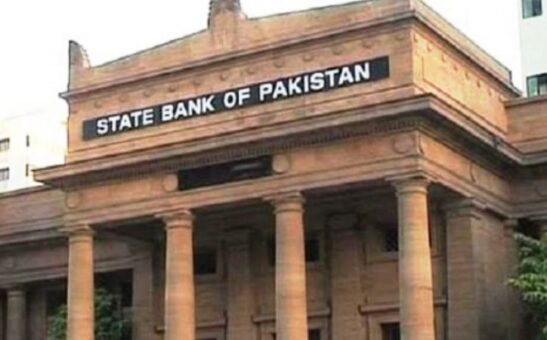
KARACHI: State Bank of Pakistan (SBP) has imposed penalty to the tune of Rs1,123 million during first quarter (July – September) of current fiscal year 2019/2020 for violating rules and regulations.
The SBP has taken penal action against three banks for violating procedures in the areas of Know Your Customer (KYC) and Customers Due Diligence (CDD) and imposed fine to the tune of Rs133.32 million during the month of September 2019, the central bank said on Friday.
The SBP imposed penalty of Rs56.61 million on Askari Bank, Rs63.805 million on Meezan Bank Limited and Rs12.906 million on MCB Islamic Bank Limited.
In addition to penal action, the banks have been advised to strengthen its process related to KYC/CDD, in order to avoid occurrence of similar violations in future.
The SBP imposed penalty amounting Rs805.1 million on 10 banks for violating anti-money laundering, due diligence of customers and foreign exchange regulations during the month of August 2019.
The central bank issued details on Friday about action taken by the SBP against banks in order to plug loopholes in the banking system.
The SBP initiated to make public the action taken by the central bank from July 2019 against commercial banks for violating prevailing rules and regulations and amount of penalty imposed on such banks.
In the latest release of enforcement measures by the SBP also included action against leading banks including Habib Bank Limited and MCB Bank etc.
The highest amount of penalty of Rs320.08 million has been imposed on Habib Bank Limited followed by MCB Bank of Rs159.152 million, Dubai Islamic Bank of Rs77.97 million.
Following of are the significant enforcement actions by SBP during August-2019.
01. Dubai Islamic Bank dated August 01 & 02, 2019:
Violations in the areas of AML/CFT, Asset Quality
Monetary penalty of Rs77.974 million was imposed mainly on deficiencies in the areas of AML/CFT. Moreover the bank has been advised timelines to rectify the operational lapses and improve the control environment to avoid recurrence of such lapses/violations in future.
02. Habib Bank Limited dated August 02 & 03, 2019:
Violations in the areas of AML/CFT, Consumer Protection
Monetary penalty of Rs320.08 million was imposed mainly on deficiencies in the areas of AML/CFT and erroneous deduction of service charges from customers. The bank has been advised timelines to bring improvements in its systems/controls to avoid recurrence of such lapses/violations in future.
03. MCB Bank Limited dated August 03, 2019:
Violations in the areas of AML/CFT, Asset Quality
Monetary penalty of Rs159.152 million was imposed mainly on deficiencies in the areas of AML/CFT. The bank has been advised timelines to improve the KYC/CDD processes and integrate eKYC system with core banking system.
04. Silkbank Limited dated August 03, 2019:
Violations in the areas of AML/KYC, Asset Quality
Monetary penalty of Rs53.879 million was imposed mainly on violations of non-surrendering of unclaimed deposits, non-classification of loans and adjustment lending. Moreover, the bank has been advised timelines to classify advances & create provision there against and conduct
05. Bank Alfalah Limited dated August 03, 2019
Violations in the areas of FX Operations
Monetary penalty of Rs52.795 million was imposed mainly on violations of foreign exchange regulations such as restrictions to remit import advance payments, export documentation and non-submission of documents against advance payments.
06. Allied Bank Limited dated August 03, 2019
Violations in the areas of AML/KYC, Asset Quality
Monetary penalty of Rs32.755 million was imposed on breach of various limits of Equity Investment/related party and deficiencies in customer due diligence process. The bank has been advised timelines to bring equity Investment and exposure to related party group within the prescribed limit and revise KYC/CDD process.
07. Sindh Bank Limited dated August 03, 2019
Violations in the areas of AML/KYC, Asset Quality, FX Operations
Monetary penalty of Rs15.088 million was imposed mainly on deficiencies in customer due diligence practices, imprudent lending practices, non-classification of loans. Moreover, in view of the strategic deficiencies in Transaction monitoring system & name screening process, the bank has been advised an action plan/timelines for replacement of their existing TMS and acquiring of name screening solution.
08. Summit Bank Limited dated August 03, 2019
Violations in the areas of AML/KYC, Asset Quality
Monetary penalty of Rs13.072 million was imposed mainly on deficiencies in customer due-diligence process, mis-utilization of loans and non classification of loans. The bank has been advised to timely update customer profiles & properly document the reasons of large value transactions.
09. JS Bank Limited dated August 05, 2019
Violations in the areas of AML/KYC, Asset Quality, Corporate Governance
Monetary penalty of Rs70.307 million was imposed mainly on deficiencies in customer due-diligence process, mis-utilization and non classification of loans etc. The bank has been advised timelines to enhance its systems/process for customer risk profiling (CRP), transaction monitoring and identification of Politically Exposed Persons (PEPs).
10. Habib Metropolitan Bank Limited dated August 19, 2019
Violations in the areas of FX Operations
Monetary penalty of Rs10 million was imposed mainly on a violation of foreign exchange regulations relating to splitting of the import advance payments into smaller transactions.
The SBP imposed penalty of Rs184.64 million upon four commercial banks for violating laws related to Anti-Money Laundering (AML)/Know Your Customer (KYC) during the month of July 2019.
The central bank on Thursday said that these penalty amount was imposed during the month of July 2019 against banks included: The Bank of Punjab; JS Bank Limited, Bank Al Habib Limited and Soneri Bank.
The SBP imposed penalty of Rs13.072 million against The Bank of Punjab on July 15, 2019 for violating in areas of foreign exchange operations.
In addition to penal action, the bank has been advised to improve its internal processes, the SBP said.
The Bank of Punjab was again penalized with Rs16.119 million on July 18, 2019 for violating in areas of AML/KYC, unclaimed deposits.
In addition to penal action, the bank has been advised for improvements in the areas of AML/KYC, the central bank added.
The SBP penalized JS Bank Limited with penalty amount of Rs48.211 million on July 23, 2019 for violating in areas of AML/KYC.
In addition to penal action, the bank has been advised to conduct a thorough review of relationship accounts, the SBP said.
The SBP imposed penalty of Rs51.75 million upon Bank Al Habib Limited on July 25, 2019 for violating in areas of AML/KYC, FX Operations.
In addition to penal action, the bank has been advised to update its systems and processes, and provide appropriate trainings to the concerned officials, the SBP said.
The SBP imposed penalty of Rs55.48 million upon Soneri Bank Limited on July 25, 2019 for violating in areas of AML/KYC, Asset Quality, FX Operations.
In addition to penal action, the SBP advised the bank to improve areas of AML/KYC and credit risk monitoring.