Month: March 2020

  • Budget Strategy: No amnesty schemes; individual tax threshold to be lowered for broadening of tax base

    Budget Strategy: No amnesty schemes; individual tax threshold to be lowered for broadening of tax base

    ISLAMABAD: The government has prepared budget strategy under which no more amnesty scheme will be offered in future. Meanwhile, the tax threshold to broaden the tax base.

    The medium term budget strategy paper 2020/2023 released by the ministry of finance stated that the government will increase the share of direct taxes in revenues by enforcing real-income based income tax, to be achieved by broadening of tax base.

    Documentation of the economy to increase taxation in wholesale and retail, real estate and speculation businesses is also a priority. “Amnesty schemes will no longer be offered, and exemptions will be curtailed. Income tax slabs will be rationalised, and thresholds will be lowered to broaden tax base.”

    Gradual phasing out of final tax regime will help in taxing real income. Through amendments in tax law, simplification of laws and regulations, and improvement in tax administration, a legal basis will be provided to risk-based audit system.

    Taxpayer facilitation measures include awareness campaign and taxpayer education facilitation. Investments in IT based customer relationship management system, support lines, emails and website will be strengthened.

    Measures will also be taken to encourage voluntary compliance through facilitation measures and increasing certainty of detection and enforcement of law.

    Proper targeted awareness campaign through official media houses, using commercial media means will be carried out.

    FBR is effectively using Information Technology support for efficient detection, monitoring and facilitation of the tax regime. Data on foreign bank accounts of Pakistani citizens is being received and analyzed to detect tax evasion.

    IT based databank regarding foreign bank accounts will be established. Tracking and tracing system for collection of Federal excises duty on cigarettes has commenced with the issuance of licenses. Electronic monitoring of production and sales of various sectors will also commence in due course of time.

    Installation of point-of-sale (PoS) integration on all Tier-I retailers has been enforced since 15 December 2019.The online integration of the prescribed registered persons with PoS will be enforced through effective monitoring. FBR is developing IT strategy for this.

    The recently launched app “Tax Asaan” will be improved and more features will be introduced to make it user friendly. Introduction of Corporate Income Tax (CIT) reform will result in fewer exemptions and crediting schemes.

    The practice of issuing new preferential tax treatments or exemptions will be discontinued so that tax exemptions as a tool for philanthropy and social, investment and export promotion are discouraged.

    Exemptions will be phased out except basic food and nutrition items and provisions of health sector. Harmonization between Federal and Provincial taxation regimes is to be achieved by removing duplication of taxation and introducing uniform laws and procedures.

    The constitution assigns income taxes (except for agriculture income), the General Sales Tax on goods, customs duties, federal excises, and the capital gains tax to the federal level to be collected by the Federal Board of Revenue (FBR).

    While, GST on services, tax on professions, Agricultural Income Tax, Motor Vehicle Tax, Urban Immovable Property Tax, and other taxes related to real estate (e.g. stamp duty, Capital Value Tax) are assigned to the provinces.

    This arrangement fragments Pakistan into five tax jurisdictions in the services sector, with consequences such as double taxation, cascading effects of taxes and high compliance burden.

    Work on a unified tax portal with standardised forms that will enable taxpayers to file and pay federal and provincial taxes with less cost and compliance time will be completed.

    In 2020-2021, FBR will be working on removal of structural anomalies in the taxation regime such as anomalies from SROs (Statutory Regulatory Orders) / aligning certain SROs with the main statute and Rules, Simplified tax returns and forms.

  • PM Corona Relief Fund set up; source of money not to be asked

    PM Corona Relief Fund set up; source of money not to be asked

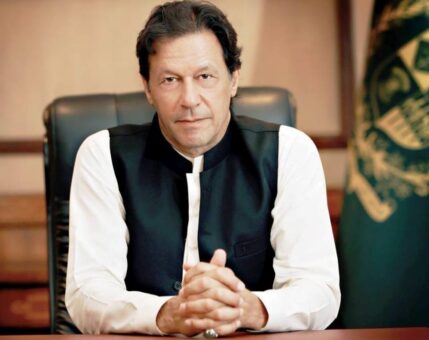
    ISLAMABAD: Prime Minister Imran Khan on Monday set up a fund to generate money for helping people affected by coronavirus lockdown.

    The fund has been set up at National Bank of Pakistan (NBP) at Karachi.

    The prime minister in his address to the nation said that authorities would not ask source of the money donated to this fund.

    Further, the money donated to this fund will also be tax exempted, he added.

    The prime minister also constituted Tiger Force to fight coronavirus. He said that the force would go to affected areas due to lockdown and would provide food and other essential items.

    The tiger force will also aware people about the coronavirus.

    Imran Khan said that aged people and weak persons were more vulnerable to this virus. However, normal persons will have no threat from this virus and they can be recovered by self-quarantine.

    He again said that Pakistan cannot afford lockdown in entire country and there is not comparison of Pakistan with other developed nations.

    The prime minister said that around 80 to 90 people of Pakistan have not sufficient food for them. Any lockdown will further aggravate situation for them, he added.

  • Equity market ends down by 86 points on falling global prices

    Equity market ends down by 86 points on falling global prices

    KARACHI: The equity market has lost 86 points on Monday owing to lowering international oil prices and bearish regional markets, analysts said.

    The benchmark KSE-100 index of Pakistan Stock Exchange (PSX) closed at 28,023 points as against 28,110 points showing a decline of 86 points.

    Analysts at Arif Habib Limited said that the market opened on a negative note today with -127 points and continued trending down throughout the session to realize a loss of -642 points.

    Slump in international crude oil prices as well as bearish performance of Regional Stock markets caused selling pressure at PSX. Cement sector came out as the winner, following on the trajectory shown on the last trading day on account of possible relief package for real estate construction sector.

    Resultantly, MLCF hit upper circuits, whereas DGKC also traded near upper circuit. Due to significant price reductions during the later half of the outgoing month also gave hope to the Investors of a reduction in monthly CPI number.

    Power sector led the volumes with 41 million shares, followed by Cement (29.5 million) and Banks (18 million). Among scrips, KEL topped the chart with 35 million shares, followed by MLCF (9.6 million) and HASCOL (7.2 million).

    Sectors contributing to the performance include E&P (-133 points), Banks (-95 points), Tobacco (-19 points), Cement (+136 points), Power (+47 points), Pharma (+12 points).

    Volumes declined from 169.5 million shares to 159.4 million shares (-6 percent DoD). Average traded value also by 0.3 percent to reach US$ 25.4 million as against US$ 25.6 million.

    Stocks that contributed significantly to the volumes include KEL, MLCF, HASCOL, UNITY and SMBL, which formed 41 percent of total volumes.

    Stocks that contributed positively to the index include LUCK (+65 points), FFC (+38 points), HUBC (+32 points), DGKC (+18 points) and FCCL (+17 points). Stocks that contributed negatively include PPL (-73 points), OGDC (-46 points), UBL (-35 points), UBL (-20 points), and PAKT (-19 points).

  • PCDMA urges FBR to withdraw notices amid coronavirus lockdown

    PCDMA urges FBR to withdraw notices amid coronavirus lockdown

    KARACHI: Commercial importers have resented to the notices sent by Federal Board of Revenue (FBR) despite realizing severe economic crisis amid lockdown in the country to control spread of coronavirus.

    Pakistan Chemicals & Dyes Merchants Association (PCDMA) chairman and former director Karachi Stock Exchange Amin Yousuf Balgamwala in a statement on Monday demanded to waive all notices including income tax, sales tax, WHT and all proceeding in this regard for two months due to the worst economic crisis, as due to coronavirus pandemic, all the business activities have stopped and commercial importers are already facing huge financial crises.

    Balgamwala said we are surprised on receiving FBR notices, as whole country is lockdown for prevention of coronavirus pandemic, so chairman FBR to issue directives to chief commissioner and all RTOs to stop harassment to commercial importers, so that import activities could be restored after the lockdown period.

    “If wheel of trade and industry will continue to rotate, will create more opportunities for employment as the country develops,” he said

    PCDMA chairman further said that if all notices including income tax, sales tax, WHT and other proceeding not stopped for at least 2 months then the textile industry will be badly affected which is the backbone of the domestic economy as commercial importers are the largest means of providing raw materials to the textile industry to continue production activities.

    Amin Yusuf Balgamwala also demanded to defer the condition of the CNIC on the sale of goods to unregistered persons for six months so that the business community, especially small traders should be protected from destruction.

  • FBR seeks exemption for its officials during coronavirus lockdown

    FBR seeks exemption for its officials during coronavirus lockdown

    ISLAMABAD: Federal Board of Revenue (FBR) on Monday sought exemption for its officials during lockdown to prevent spread of coronavirus pandemic.

    In a circular the FBR said that in view of the COVID-19 pandemic, the federal and provincial governments had introduced various measures to contain the spread of the virus, which included lockdowns across the country.

    The FBR said that the personnel of essential services and few other agencies had been exempted from these lockdowns.

    FBR, in this last quarter of the financial year, through its multiple field formations (Inland Revenue/Customs) across the country is making all out efforts to consolidate and ensure maximum revenue collection, the FBR said.

    Needless to say, money/funds are urgently required by the federal and provincial governments to wage this war against the coronavirus pandemic.

    The revenue body said in these circumstances, it is imperative that all field offices of FBR, engaged in revenue collection remain open and are fully operational.

    However, due to the lockdowns enforced through the country, the officers and staff are unable to reach their offices and perform their duties.

    This has therefore, critically effected the operational preparedness of this organization and is also adversely affecting the revenue collection.

    The FBR asked all relevant federal and provincial agencies to exempt from lockdown the officers/staff of FBR who are in possession of permission letters from their respective chief commissioner-IR / Chief Collector Customs/Heads of Operational offices to reach their offices in order to perform their duties.

  • FBR extends time limit to 25 days for GD filing

    FBR extends time limit to 25 days for GD filing

    KARACHI: Federal Board of Revenue (FBR) on Monday extended time limit for filing goods declaration to facilitate traders and importers, who were facing difficulties due to lockdown.

    The FBR extended the time limit for filing of goods declaration from the existing 10 days of arrival of goods to further 15 days (total 25 days) for all Import General Manifest (IGMs) filed between March 17, 2020 and April 07, 2020.

    The FBR said that the customs collectorates across the country were operating normally, however, on account of the ongoing lockdown by provincial governments to address the prevailing pandemic of COVID-19, the importers and clearing agents were facing hardship in filing of goods declaration within the time limit prescribed under Customs Act, 1969.

    The consequent penalty on this account is causing undue hardship to the traders as the circumstances for late filing, which was beyond their control.

    The FBR said that it had received requests from the Federation of Pakistan Chambers of Commerce and Industry (FPCCI) and Karachi Chamber of Commerce and Industry (KCCI) for extension in the time limit for filing of goods declaration.

  • Rupee ends down by 60 paisas against dollar

    Rupee ends down by 60 paisas against dollar

    KARACHI: The Pak Rupee ended down by 60 paisas against dollar on Monday on uncertain global and domestic financial conditions.

    The rupee ended Rs166.14 to the dollar from last Friday’s closing of Rs165.54 in interbank foreign exchange market.

    Currency analysts said that the rupee was remained under pressure due to outflow of foreign investment due to easing in monetary policy stance and global financial crisis after large scale spread of coronavirus.

    The State Bank of Pakistan (SBP) cumulatively brought down the policy rate by 2.25 percent to 11 percent considering severe impact of coronavirus on the economy.

    However, lowering the policy rate the foreign investors opted to sell their exposures in treasury bills after the reduction in the policy rate.

    Currency experts said that the lower international oil prices however would help the local currency to recovery in the coming days as Pakistan’s import bill would reduce significantly.

  • Shanghai Electric allows to make offer for K-Electric till June 26

    Shanghai Electric allows to make offer for K-Electric till June 26

    KARACHI: Securities and Exchange Commission of Pakistan (SECP) has granted extension of 90 days to make public announcement of offer by Shanghai Electric Power Company Limited to acquire shares of K-Electric.

    In an announcement on Monday, K-Electric with reference to the public announcement to acquire 66.4 percent shares of K-Electric Limited made by the acquirer on September 30, 2019, Arif Habib Limited is acting in the capacity of Manager to the Offer for the acquisition.

    As part of the acquisition process, the acquirer had requested an extension of 90 days in making public announcement of offer which was to be made by March 28, 2020 as per the law.

    In this regard SECP granted extension of 90 days up to June 26, 2020.

  • Commissioner (Appeals) barred from issuing adverse orders

    Commissioner (Appeals) barred from issuing adverse orders

    LAHORE: Punjab Revenue Authority (PRA) has barred commissioner appeals from issuing any adverse order against taxpayers, who failed to appear due to lockdown for prevention of coronavirus.

    The PRA in an office order dated March 25, 2020 said that in view of the prevailing circumstances in the wake of coronavirus spread, no adverse orders may be passed due to non-appearance of any party, lawyer or authorized representatives, as the case may be, fixed for hearing before the Commissioner (Appeals), Punjab Revenue Authority with immediate effect and till further orders.

    In another office order, the PRA said that in order to facilitate the taxpayers, lawyers, chartered accountants and tax consultants/authorized representatives because of the closure of office due to coronavirus outbreak, it has been urged upon the taxpayers to file their appeals before the Commissioner (Appeals), Punjab Revenue Authority electronically.

    For this purpose, the taxpayers may submit their appeals through emails at [email protected]

    The taxpayers have also been advised that the appeals may be filed/sent through courier or mail as well.

  • FBR urged to defer CNIC condition for six months

    FBR urged to defer CNIC condition for six months

    KARACHI: Business community has urged Federal Board of Revenue (FBR) to defer CNIC condition on purchases above Rs50,000 for at least six months.

    In a statement Saquib Fayyaz Magoon, Convener of Federation of Pakistan Chambers of Commerce and Industry (FPCCI) standing committee on Sales Tax and Chairman Indenters Association of Pakistan (IAOP), urged Government to pay attention on economic crises due to lockdown for prevention of coronavirus pandemic and has demanded Prime Minister to defer CNIC Condition for 6 months on sale of goods to unregistered persons in view of the current economic crisis.

    Magoon Said due to situation caused by the coronavirus, all payments to exporters have been stopped and export orders canceled while the economic activities have also stopped. While there has been a severe crisis of cash flow in the market, therefore, by defer the condition of the CNIC will improve the cash flow situation, otherwise there will be another major financial crisis.

    He also requested the government to accept sales tax returns without CNIC and said that in the current economic crisis, now we will depend largely on the local consumer industry, who are already in crisis due to the CNIC condition.

    Prime Ministers adviser on commerce Abdul Razzaq Dawood in which he assured that cash flow would not be affected by the Coronavirus.

    So if he wants the cash flow not affected then CNIC Condition must defer for minimum six months so that business activities can be restored as usual.

    Magoon pointed to the difficulties facing the businessman community over the ban on courier companies due to the lockdown, said the original document of import shipment could not be reached in the banks.

    So as long as the lockdown is in place, the State Bank should issue clear instructions to the banks that the EIF be approved on the copy of the document to ensure uninterrupted clearance of imported goods. Because the original documents are required for EIF approval.

    Due to not being provided original documents is causing constraints and importers are not able to file a GD which is causing consignment storage and shed charges.

    Saquib Fayyaz Magoon appealed the Prime Minister Imran Khan that in view of the serious situation caused by the coronavirus, a directive should be issued to the State Bank that the EIF be approved on the copy of the document at the time of payment by the importers to the banks.