
Month: April 2021

  • Banks may accept container detention, demurrage charges

    Banks may accept container detention, demurrage charges

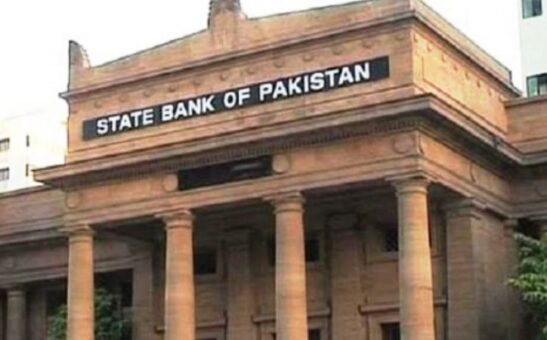
    KARACHI: The State Bank of Pakistan (SBP) has issued draft amendment to Foreign Exchange Manual under which banks may be allowed to accept container detention charges and demurrage charges in order to facilitate trade in payments.

    The SBP issued the draft amendments and invite stakeholders’ comments before finalizing the foreign exchange manual.

    According to the draft amendments made to 14 chapter:

    4A –Remittances of Container Detention Charges by Foreign Shipping Companies

    i. Authorized Dealers may accept container detention charges (CDC) directly from the customers of shipping companies/ agents (having valid shipping/agency license as stated under Para 1 (iv) ibid and valid agency agreement) in a separate PKR account opened for this purpose only. No other deposits whatsoever shall be made in such accounts by ADs.

    ii. Authorized Dealers may allow monthly remittance of CDC (net of disbursements, refunds, and income tax paid/payable) of up to USD 50,000/- on Form-M to foreign principals of those foreign shipping companies/agents which are collected in the above mentioned accounts on submission of application along with the following documents: –

    a. Applicable Tariff Rate Sheet;

    b. Summary of Detention Charges along with copy of invoices

    c. F.P Shipment & Breakdown of Disbursement

    d. Copiesy of Tax payment Rreceipt, agency agreement, valid customs shipping agent license.

    e. Auditors’ certificate from QCR rated audit firm confirming payment of income tax, genuineness of transactions and no duplication of payments (only for remittance beyond foreign exchange equivalent to PKR 1 Million or equivalent/-)

    f. Any CDC invoice involving detention charges above 100 days will require valid justification along with documentary evidence.

    g. An undertaking to repatriate back to Pakistan, the amount found by the State Bank, on post-facto checking, to have been remitted in excess of the entitlement.

    h. In case of Transit Trade, PRC evidencing receipt of equivalent PKR from the final destination country.

    Applications for monthly remittances beyond USD 50,000/- shall be forwarded to FEOD as per prescribed format along with relevant documents for approval.

    4B – Remittances of Demurrage Charges

    Authorized Dealers may allow monthly remittance of demurrage charges (net of allowed lay time and other deductions-if any, and income tax paid/payable) upto USD 50,0000 on Form-M to the Owner/Operator/Commercial Operator of vessels/ships/tankers on submission of application along with the following documents: –

    a. Valid charter party agreement (if applicable),

    b. Copy of the Invoice/ debit note

    c. Lay time calculation time sheet verified from third party

    d. Port statement of fact

    e. Copy of B/L, GD, Bill of Entry.

    f. Proceeds Realization Certificate (PRC) for port disbursement charges

    g. F.P Shipment & Breakdown of Disbursement

    h. An undertaking to repatriate back to Pakistan, the amount found by the State Bank, on post-facto checking, to have been remitted in excess of the entitlement.

    Applications for remittances beyond USD 50,000/- shall be forwarded to FEOD as per prescribed format along with relevant documents for approval.

    4C – Remittances of Surplus Port Disbursement Funds by Foreign Shipping Companies

    Authorized Dealer may allow remittance of surplus amount of port disbursement funds held by local offices of shipping companies/ agents back to their principals on Form-M, subject to valid Agency agreement/authorization letter and shipping license, after the payment of port dues/charges and duly reported on the F.P. Statement upon submission of application along with the following documents: –

    a. Customs & Port Charges Clearance with invoices

    b. Proceed Realization Certificate in Original

    c. Copy of Swift Message

    d. Copy of Schedule J/O-3

    e. F.P Shipment & Breakdown of Disbursement

    4D – Disbursement of Cash to Master of Ship arriving at Pakistani Ports

    Authorized Dealer may disburse cash to master of ship arriving in Pakistan out of remittance received by them from owner of the ship/ shipping lined abroad on submission of application along with the following documents: –

    a. Copy of Passport of the Master of the Vessel

    b. Copy of Crew List containing their names, passport numbers, country etc.

    c. Proceed Realization Certificate in Original

    d. Copy of Swift Message for amount realized

    Authorized Dealers will retain all the documents mentioned in Para 4 and its subparagraphs along with Form ‘M’ submitted by foreign shipping companies/ agents. The original Form ‘M’ shall be submitted as usual through schedule E-4 while reporting the transaction in the monthly Foreign Exchange Returns

    Any irregularity detected and advised by the State Bank shall be rectified by the concerned shipping company/agent within ninety days or the amount under objection will be repatriated or adjusted from subsequent remittance, as applicable.

    Authorized Dealers shall also ensure proper due diligence of the above mentioned remittances from AML/CFT and foreign exchange risk perspective through Compliance or Risk Management Department including but not limited to particulars of remitter/ beneficiary and shall determine the ultimate beneficial ownership/ relationship between entities.

  • SBP issues five-year strategic plan for growth of Islamic banking

    SBP issues five-year strategic plan for growth of Islamic banking

    KARACHI: State Bank of Pakistan (SBP) on Monday issued third five-year Strategic Plan for the Islamic Banking Industry.

    The strategic plan has set headline targets for Islamic banking industry to be achieved by 2025. These include: (i) 30 percent share in both assets and deposits of overall banking industry, (ii) 35 percent share in branch network of overall banking industry, and (iii) 10 percent and 8 percent share of SMEs and Agriculture financing respectively, in private sector financing of Islamic banking industry.

    In order to steer the growth of Islamic banking on sound footings, SBP has been providing proactive guidance through issuance of Strategic Plans for the Islamic banking industry; so far, two five-year Strategic Plans have been issued.

    This third Strategic Plan for Islamic banking industry (2021-25) aims to set a strategic direction for the industry to strengthen the existing progressive momentum and lead the industry to the next level of growth. The plan has been developed in close coordination and consultation with all key relevant stakeholders.

    The strategic plan envisages achieving the aforementioned specified targets by focusing on six strategic pillars namely: (i) strengthening legal landscape, (ii) enhancing conduciveness of regulatory framework, (iii) reinforcing comprehensive Shariah governance framework, (iv) improving liquidity management framework, (v) expanding outreach & market development, and (vi) bolstering human capital & raising awareness.

    The Islamic banking industry has widened its footprint in banking system of the country. Currently, 22 Islamic banking institutions (5 full-fledged Islamic banks and 17 conventional banks having standalone Islamic banking branches) are offering Shariah compliant products and services through a network of 3,456 branches and 1,638 Islamic banking windows (dedicated counters at conventional branches) spread across 124 districts of the country. In terms of share, the Islamic banking industry has acquired a market share of 17 percent and 18.3 percent in assets and deposits of overall banking industry, respectively by end December 2020.

    State Bank aims at making Islamic banking one third of the overall banking industry by 2025. Keeping in view the potential towards ensuring broad based economic growth and development, Islamic banking has remained a top priority area for the SBP. The plan provides a consensus based agenda and strategy to make Islamic banking an efficient and practical solution for consumers. It also contains an extensive focus on improving the public perception of Islamic banking as a distinct and viable system capable of catering to the varied financial services needs of various segments of the society that would significantly contribute to increasing overall financial inclusion in Pakistan.

    The plan also emphasizes that Islamic banking institutions must develop  innovative products based on distinctive Shariah characteristics to cater to underserved sectors particularly SMEs and Agriculture, which are critical for growth of the country’s economy.

    The Islamic banking industry is expected to fully capitalize on the potential of Islamic finance to attain the shared vision of a vibrant and sustainable Islamic banking sector in Pakistan.

  • Stock market sheds 753 points on concerns over coronavirus spread

    Stock market sheds 753 points on concerns over coronavirus spread

    KARACHI: The stock market fell by 753 points on Monday as investors seen uncertain about the fast spread of coronavirus in the third wave.

    The benchmark KSE-100 index of Pakistan Stock Exchange (PSX) closed at 43,548 points as last Friday’s closing of 44,301 points, showing a decline of 753 points.

    Analysts at Arif Habib Limited said that the market took a major slide of 830 points during the session and closing the session -753 points.

    Although overall leverage has come down, the stocks which sustained high levels of leverage positions (including NETSOL, TRG, ATRL and NRL) came crashing down after failing to make forward move.

    Besides lockdown concerns due to rapid spread of Corona in Punjab, investors became perturbed due to IMF conditionalities (post resumption of Program) that hints of rising cost of production for the industries as well as withdrawal of tax exemptions that has seen no end, unless the matter is deliberated and finalized in the Finance Act  (i.e. upcoming Budget).

    Selling pressure was witnessed across the board, with major contribution from Technology & Banking sector stocks. Among scrips, TRG topped the volumes with 24.3 million shares, followed by DSL (24.3 million) and SILK (20 million).

    Sectors contributing to the performance include Technology (-142 points), Banks (-136 points), Cement (-88 points), E&P (-60 points) and Textile (-48 points).

    Volumes increased from 266.8 million shares to 302.8 million shares (+13 percent DoD). Average traded value on the contrary declined by 7 percent to reach US$ 87.3 million as against US$ 93.6 million.

    Stocks that contributed significantly to the volumes include TRG, DSL, SILK, BYCO and PRL, which formed 34 percent of total volumes.

    Stocks that contributed positively to the index include ENGRO (+44 points), KAPCO (+5 points), EFUG (+3 points), HCAR (+1 points) and ABOT (+1 points). Stocks that contributed negatively include TRG (-94 points), SYS (-47 points), HBL (-42 points), LUCK (-41 points) and UBL (-32 points).

  • Yarn traders demand restoring turnover tax rate at 0.1pc

    Yarn traders demand restoring turnover tax rate at 0.1pc

    KARACHI: Pakistan Yarn Merchants Association (PYMA) has informed the Federal Board of Revenue (FBR) that present turnover tax rate for yarn traders is very high and many traders may resort to shutdown their factories at this high rate.

    Farhan Ashrafi, Vice Chairman of Pakistan Yarn Merchants Association(PYMA) & convener FPCCI’s Central Standing Committee on Yarn Trading and Khurram Bharaa, former SVP, have demanded Muhammad Javed Ghani, Chairman Federal Board of Revenue (FBR) to withdraw 1.5 turnover tax imposed on yarn traders and restore the previous rate of 0.1 percent.

    “Otherwise, the majority of yarn traders will be forced to close their businesses, which are already badly affected by the Corona epidemic and are facing severe financial crunch.”

    A letter to FBR chairman, Farhan Ashrafi informed that PYMA members, who are yarn traders have brought attention towards this important issue, as they were doing business in large volume but unfortunately at nominal rate of profit margin which is 1pc even less.

    By virtue of SRO.333 (I) 2001 dated 02.05.2011, the traders of yarn had been subject to turnover tax at concessional rate 0.1pc, which constitutes about 10pc of their margin. Provision of rate of minimum tax 0.1pc was made under clause 45 (A) second schedule to the income tax ordinance 2001.

     “Because of some oversight traders of yarn were not included in the purview of minimum tax under the first schedule Part-1 (Division IX) of the Income tax ordinance 2001, which would be the correct approach to treat the levy of concessional rate on yarn traders, as is the case with various other sectors and persons”, they added. Due to this lacuna a state of confusion remains about the levy of tax and frequent changes are made in the rate of turnover tax without consultation with stakeholders.

    Khurram Bharaa said that to compound the misery of yarn traders an amendment was made through Finance Act 2020, whereby Yarn Traders have been taken out of the scope of clause 45A (Part IV of 2nd Schedule) and the exemption from application of minimum turnover tax under Section 113 has been withdrawn, which prescribes 1.5pc turnover tax.

    Accordingly, the yarn traders are how subject to turnover tax at the rate of 1.5pc, which is way above their actual margin. Consequently, many traders of yarn have to discontinue their business unless the previous rate of 0.1pc is restored.

    Farhan Ashrafi asked to FBR chairman to remove the anomaly by insertion of the provision of minimum turnover tax at 0.1pc for the yarn traders in the first schedule Part-1 Division IX (exempting yarn traders from minimum 1.5pc tax under section 113 of income tax ordinance 2001).

    He requested Javed Ghani for intervention in the matter will help to rescue the complaint tax-prayers, who are conducting a large volume of trade and sustaining the textile sector of Pakistan.

  • Rupee ends down by 11 paisas on rising import bill

    Rupee ends down by 11 paisas on rising import bill

    KARACHI: The Pak Rupee fell by 11 paisas against the dollar on Monday owing to rise in trade deficit and demand from corporate buyers.

    The rupee ended Rs153.66 to the dollar from last Friday’s closing of Rs153.55 in the interbank foreign exchange market.

    Currency experts said that the market was under pressure due to significant rise in import bill during the month of March 2021.

    The import bill has recorded an unprecedented growth of 70 percent in March 2021 as compared with the same month of the last year, according to data released by Pakistan Bureau of Statistics (PBS).

    The country spent $5.63 billion on the imports during March 2021 as compared with $3.31 billion in the same month of the last year.

    The experts said that due to quarter ending on March 31, 2021 the corporate buyers were also seen active in purchasing dollars for repatriating profit and dividends to their parent companies abroad.

  • Import bill sharply grows by 70pc in March

    Import bill sharply grows by 70pc in March

    ISLAMABAD: The import bill has recorded an unprecedented growth of 70 percent in March 2021 as compared with the same month of the last year, according to data released by Pakistan Bureau of Statistics (PBS).

    The country spent $5.63 billion on the imports during March 2021 as compared with $3.31 billion in the same month of the last year.

    Experts attributed the phenomenal rise in import bill during March 2021 due to significant decline in foreign trade in the same month of the last year because of restrictions imposed after coronavirus spread.

    In March 2020 the government put a complete lockdown throughout the country in order to prevent spread of COVID-19.

    Similarly in the month of March 2021, the exports recorded a sharp increase of 30.44 percent to $2.36 billion as compared with $1.81 billion in the same month of the last year.

    Pakistan’s trade deficit has widened by 20 percent in first nine months (July – March) 2020/2021 owing to surge in import bill after ease in coronavirus related restrictions.

    The trade deficit ballooned to $20.83 billion during first nine months of the current fiscal year as compared with $17.35 billion in the corresponding period of the last fiscal year.

    The import bill for the period of July – March 2020/2021 increased to $39.51 billion as compared with $34.79 billion in the corresponding period of the last fiscal year, showing a rise of 13.57 percent.

    On the other hand exports also increased by 7.12 percent to $18.68 billion during the first nine months of the current fiscal year as compared with $17.44 billion in the corresponding period of the last fiscal year.

  • FBR officials given access to declarations filed under amnesty scheme

    FBR officials given access to declarations filed under amnesty scheme

    ISLAMABAD: The senior officials of the Federal Board of Revenue (FBR) have been authorized to access declarations of undisclosed income and assets under amnesty scheme of year 2019.

    The FBR issued SRO 369(I)/2021 to notify Assets Declaration Rules, 2021 dated March 31, 2021. Under rule 15 access has been authorized to declarations under the act i.e. Assets Declaration Act, 2019.

    According to the rule 15: Member Information Technology and Member IR (Operations) are authorized by the FBR to access the declarations under Section 14 of the Act, on their own or when a request by the concerned chief commissioner IR, supported with reasons, is forwarded to any of the aforementioned Members for provision of a copy of the declaration.

    Rule 8 of the notified SRO explained about treatment of asset, income or expenditure in a declaration. According to it the amount of asset, income or expenditure in a valid declaration for and upto tax year 2018 shall not be included in a taxable income of the declarant for any tax year under the Income Tax Ordinance, 2001.

    The FBR explained: “For removal of doubt it is clarified that any assets, income or expenditure that can be plausibly traced as sourced in assets or income declared in a valid deduction shall not be called into question.”

    Rule 9 has explained about the proceedings under the Income Tax Ordinance, 2001 in respect of the information received other than under Common Reporting Standards (CRS).

    Sub Rule 1 stated that subject to sub-rule (2), no proceedings under any provisions of the Income Tax Ordinance, 2001 shall be initiated on the basis of any information relating to any asset, income or expenditure as the 30th day of June 2018 or any prior period, if the information relates to a declarant under the Asset Declaration Act, 2019 and the declarant files an irrevocable written statement along with documentary evidence to the effect that the source of the asset, income or expenditure in the received information has been the assets, income or expenditure declared under the Act. The declarant shall file such a statement on a notice under Section 176 of the Income Tax Ordinance, 2001 along with the related documentary evidence.

    Sub-Rule 2 of Rule 9 stated that the nature and source of asset, income or expenditure shall not be treated as explained and the Commissioner Inland Revenue or his delegate shall be entitled to proceed under Section 111 of the Income Tax Ordinance, 2001, on the basis of definite information acquired from any source other than a valid declaration itself, in following cases:

    (a) where the value of asset, income or expenditure, as at the 30th day of June 2018 or before as per the definite information is in excess of value as per declaration; and

    (b) where the source of asset, income or expenditure relates to a person other than the declarant.

    Sub-Rule 3 of Rule 9 stated that where an action under Section 111 of the Income Tax Ordinance, 2001 as undertaken in accordance with the sub-rule (2) results in invalidation of the declaration then such an action cannot be initiated without prior approval, for reasons to be recorded in writing, of the chief commissioner inland revenue as defined in clause (11B) of the Section 2 of the Income Tax Ordinance, 2001.

    Rule 10 explained declaration filed and the information received under CRS. According to sub-rule 1 of the Rule 10, where a foreign asset or income is reported to the FBR under CRS, then prior to any action under any provision of the Income Tax Ordinance, 2001, the FBR shall ensure compliance of the condition under the protocol for CRS including exchange of information by the person whose information has been received. On completion of that process, following procedure shall be followed:

    (a) the commissioner inland revenue of the concerned person or delegate of the commissioner shall issue a notice under section 176 of the Income Tax Ordinance, 2001;

    (b) the notice referred in clause (a) of this sub-rule shall enquire as to whether or not such asset, income or expenditure has been declared under the Voluntary Declaration of Domestic Assets Act, 2018 and the Foreign Assets (Declaration and Repatriation) Act, 2018 or Asset Declaration Act, 2019;

    (c) if the taxpayer informs the commissioner Inland Revenue or his delegate that the asset, income or expenditure, as reported under the CRS has been declared in a declaration, the commissioner Inland Revenue or his delegate shall require the taxpayer to provide a copy of the declaration; and

    (d) the taxpayer on receipt of such notice under section 176 of the Income Tax Ordinance, 2001 shall:

    (i) provide a copy of his declaration where such asset, income or expenditure, as the case may be, has been declared; and

    (ii) provide a copy of the declaration of another person, being the beneficial owner, where the asset, income or expenditure referred to in the CRS has been declared.

    Sub-Rule 2 of the Rule 10 stated that subject to the provision of Section 11 of the Asset Declaration Act, 2019, in case the information received under CRS as referred above are in agreement then a confirmation in writing shall be issued by the Commissioner Inland Revenue or his delegate that the asset, income or expenditure to the extent referred to in the letter has been declared under the respective declaration law.

    Through Rule 11, the FBR explained the beneficial ownership. The sub-rule 01 of Rule 11 stated that in case of matter relating to legal or beneficial ownership of an asset, income or expenditure, the claim of beneficial ownership shall not be questioned unless there is definite information that the asset was created out of sources of a person other than the person claiming the beneficial ownership.

    The sub-rule (2) of the Rule 11 stated where in the case of a foreign trust the source of contribution to the trust is claimed by any person other than settler, beneficiary or the trustees, the person so claiming shall be entitled to declare his contribution under the Asset Declaration Act, 2019. Such declaration shall not be called in question merely on account that such person is not the settler, beneficiary or trustee of the trust.

    Provided that where the asset, income or expenditure is reported under CRS in the name of settler, beneficiary of the trust or any person, proceedings shall be initiated against such person in the absence of a declaration by such settler, beneficiary or other persons;

    Provided further that in such a case any claim, by a third person as contributor to the asset, income or expenditure, shall only be considered if supported with documentary evidence.

    Through Rule 12, the FBR also explained declaration made by relatives of holder of public office. Sub-rule 1 of the Rule 12 stated that the status of a person as to the holder of public office or otherwise and the period during which a person remained holder of public office shall not be questioned or challenged by the commissioner Inland Revenue or his delegate if the same is confirmed by the relevant office.

    Sub-rule 2 of the Rule 12 stated that no declaration by a person entitled to file a declaration under the Asset Declaration Act, 2019 shall b questioned only for the reason that the declarant is a relative other than spouse and dependent children of the declarant of a person being a holder of public office unless it is confirmed through a definite information that the asset, income or expenditure have been created out of the undisclosed sources of a holder of public office.

  • SBP revises instructions for financing wheat procurement

    SBP revises instructions for financing wheat procurement

    KARACHI: The State Bank of Pakistan (SBP) has issued notification to revise instructions regarding bank financing for wheat procurement by the private sector.

    The SBP issued circular No. 02 of 2021 for amending the instructions issued on March 19, 2021 for financing wheat procurement by the private sector.

    Following amendments have been notified by the SBP:

    I. For private sector participation in the wheat procurement season 2021, banks are required to strictly fulfill the following minimum conditions for extending financing to eligible borrowers (licensed and functional flour mills duly evidenced by some documentation or licensed wheat traders registered with concerned authority/department);

    a. Fresh financing for procurement of wheat shall start from commencement of wheat procurement season 2021 in respective provinces. Banks will provide financing to eligible borrowers for the procurement of indigenous wheat for the harvest season of 2021 (April 01-June 30, 2021). The financing facility would be extended to the eligible borrowers for procurement of indigenous and imported wheat from July 01, 2021 subject to other conditions mentioned in this circular.

    b. Banks may provide financing facility to functional flour mills for purchase of indigenous wheat from their authorized representative and respective Food Department against supply of wheat by them. Quantum of such loan shall not be more than the value of wheat to be supplied by the respective Food Department or actual purchase from wheat traders, commensurate to the milling capacity of each mill. Banks will also monitor that existing stock of wheat purchased by the concerned functional flour mill, has been grinded and that the by-products of wheat (financed against bank loan) have also been released to the market gradually to repay the loans so obtained.

    c. Banks will ensure that the subject financing will be used only for intended purposes. However, there is no restriction on banks for extending financing to flour mills for purpose other than procurement of wheat. Banks may provide financing to flour mills for general requirements like overhead expenses, however, banks will ensure that such financing is not used for procurement of wheat or to acquire wheat stocks/by-products of wheat.

    d. Financing to private sector for procurement of wheat shall be provided against pledge of fresh wheat stock only and hypothecation / charge of moveable or immovable property would not be acceptable as collateral for such financing. Moreover, banks will ensure that no revaluation of the pledged stock is considered for release of any differential financing amount to the borrowers against stock of wheat already pledged with the banks.

    e. Banks are also allowed to provide financing facilities for wheat procurement by the seed processing plants duly evidenced by the testing certificates issued by the Federal Seed Certification and Registration Department, in line with their lending policies and the capacity/production plans of the seed processing plants ensuring that such stock of wheat will be used for processing purposes.

    f. These loans will be fully settled on or before 31st March 2022, positively.

    g. In order to curb the possibility of hoarding, banks shall:

    i. require client(s) to disclose their storage location and verify the same.

    ii. strictly monitor the wheat stock held by the client vide periodical and random inspections of wheat pledged with the bank as well as the gradual release of wheat stock to generate cash for the purpose of repayment of bank loan. SBP may acquire stock reports from banks to verify their authenticity/genuineness as and when desired.

    iii. be under obligation to immediately recall the advances allowed to the private sector in case of hoarding of wheat.

    iv. ensure that no financing is allowed to client for retirement of loans availed from other banks.

    v. ensure that their clients are in strict compliance with the guidelines of respective government (Federal/Provincial) for release of wheat stock and are not involved in any other activity which may cause speculation of wheat/flour price in market.

    h. The lending shall be in compliance with applicable laws, Prudential Regulations and other instructions of SBP issued from time to time.

    II. Banks will submit a monthly statement in respect of financing to private sector for wheat procurement to this department as per attached format (Annexure-A) within ten working days from the close of the relevant month.

    III. Any violation of the above instructions will attract administrative and/or penal action under the provisions of BCO, 1962 and other relevant laws.

  • FTO proposes initiating criminal prosecution against smugglers

    FTO proposes initiating criminal prosecution against smugglers

    ISLAMABAD: Federal Tax Ombudsman (FTO) has recommended that tax authorities should initiate criminal prosecutions against persons involved in smuggling or selling non-duty paid goods.

    In its proposals for budget 2021/2022, the FTO recommended measures on the issues of smuggling, misdeclarations, under-invoicing and non-transparent auctions.

    In order to effectively check the smuggling, it was recommended that criminal prosecution should be initiated against the persons/owners of the showrooms involved in business of Non-Duty Paid (NDP) vehicles, fuel pumps of smuggled oil and storage godowns of other smuggled items, from whom the NDP goods were recovered as provided in the Customs Act, 1969 read with the Prevention of Smuggling Act, 1977.

    Installation of scanners on the ports was recommended to be given top priority. It was emphasized that if government invested herself in this project, it will raise the potential of higher revenue and more effective check on misdeclaration of description or quantity of imported goods.

    So far two scanners have been added at Karachi Ports in addition to one already installed there. Two scanners have also been installed at Jamrud and Torkham, Peshawar.

    It was recommended to provide a mechanism in law for cross-matching of value declared on export documents of exporting station to import documents at importing station.

    Federal Board of Revenue (FBR) was asked to prescribe Model Auction Rules for auction through electronic means and prepare/operationalize an auction module in the WeBOC system to bring transparency and efficiency in the auctions.

    According to FBR, under the WeBOC-Glo initiative (an enhanced version of WeBOC), an electronic auction module has been developed and deployed in the system. This module envisages online registration of bidders who can bid for all auctionable goods displayed on website by the Customs authorities. Pilot is being run at Karachi Port (South Asia Port Terminal only).

    In view of constant complaints about delayed clearance at the border stations, generators should be provided on priority for speedy passengers/goods clearances and maintenance of IT and infrastructure support.

  • List of exemptions from total income withdrawn through ordinance

    List of exemptions from total income withdrawn through ordinance

    KARACHI: officials in the Federal Board of Revenue (FBR) have said that through Tax Laws (Second Amendment) Ordinance, 2021 various clauses of Second Schedule of Income Tax Ordinance, 2001 have been deleted that have allowed tax exemptions from total income.

    (more…)