Month: April 2021

  • Customs needs to improve performance: Karachi Chamber

    Customs needs to improve performance: Karachi Chamber

    KARACHI: The performance of Pakistan Customs is not at par with expectations of trade and industry. This mismatch between expectations and delivery should be resolved effectively, said Shari Vohra, President, Karachi Chamber of Commerce and Industry (KCCI).

    He said while exchanging views with a delegation of Senior Collectors of 31st Mid-Career Management Course from Directorate General of Training & Research (Customs) who were led by Additional Director Junaid Usman Akram during their visit to Karachi Chamber.

    The meeting was also attended by Senior Vice President Saqib Goodluck, Vice President Shamsul Islam Khan and KCCI Managing Committee Members.

    Shariq Vohra was of the opinion that the Customs Department has to improve its efficiency as per international standards and must stay abreast with global changes and technological advancements as staying confined to traditional and obsolete practices for clearance of goods would never yield positive results in terms of expediting procedures for clearance of goods.

    “Although Customs Department is a tax collector but it has to be a facilitator as well,” he added.

    He was of the opinion that free dwell time of five days usually expires because of slow pace of Customs Department that causes severe losses to the business community on account of demurrage and detention charges on a daily basis which not only makes the imported goods uncompetitive in the local markets but also affects the exports.

    “At times, many consignments carrying essential raw material for export-oriented industries are also held up by Customs authorities for long which raises the cost of raw material and eventually increases the cost of exportable goods.

    “This is a very serious issue which requires special attention as it makes many Pakistani products uncompetitive in the international markets,” he explained.

    Additional Director Directorate General of Training & Research Junaid Usman Akram, while appreciating KCCI for regularly holding interactions with Customs Officers of Mid-Career Management Course, stated that it was very important to hold frequent interactions between Customs Officials and the business community as such interactions were a perfect source for having access to first-hand knowledge which helps in better understanding the issues and accordingly devising strategies for creating an enabling business environment.

    He said that the Customs Department, despite limited human resource, was sincerely working to facilitate the business community even in extraordinary situations.

    “Despite the outbreak of COVID-19 pandemic and subsequent lockdown last year when employees of most of the organizations starting working from homes, the Customs Department remained fully operational and not a single day leave was taken by any official that clearly shows the sheer commitment and dedication of the entire department,” he added.

    Speaking on the occasion, Senior Vice President KCCI Saqib Goodluck briefed the delegation about the overall operations of Karachi Chamber and how effectively it has been raising voice for resolving issues being faced by the business and industrial community, besides giving the valuable Budget Proposals which were compiled after consultation with all the stakeholders including all industrial town associations and sector-specific trade bodies.

  • Ministry releases Rs2.5 billion under DLTL to support exporters

    Ministry releases Rs2.5 billion under DLTL to support exporters

    ISLAMABAD: The ministry of commerce has released Rs2.5 billion under Drawback of Local Taxes and Levies (DLTL) to support the exporters in resolving liquidity issues.

    Abdul Razak Dawood, Adviser to Prime Minister of Pakistan for Commerce and Investment, in a tweet on Friday said that the ministry of commerce had released Rs1.15 billion for the non-textile sector and Rs1.35 billion for the textile sector under DLTL schemes.

    “Hope this will resolve the liquidity issues of our exporters and enable them to enhance exports,” Razak Dawood said.

  • Stock market sheds 223 points on coronavirus restrictions

    Stock market sheds 223 points on coronavirus restrictions

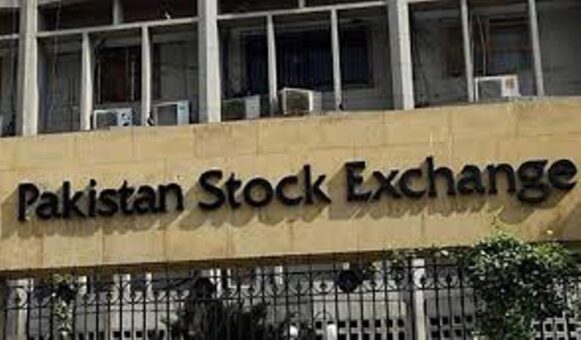
    KARACHI:  The stock market fell by 223 points on Friday as investors were upset on further restrictions imposed by the government to prevent spread of coronavirus.

    The benchmark KSE-100 index of Pakistan Stock Exchange (PSX) closed at 44,707 points from previous day’s closing of 44,930 points, showing a decline of 223 points.

    Analysts at Arif Habib Limited said that the market declined further by 566 points during the session, again in anticipation of lock down at national level that caused investors to adopt cautious approach and avoid taking new positions. KAPCO announced financial results today, which had little impact on stock price due to non-declaration of dividend against market expectation.

    O&GMCs, E&P, Cement and Steel sector stocks saw selling pressure induced by institutional investors. Among scrips, GGL topped the volumes with 38.7 million shares, followed by WTL (24.1 million) and TRG (23.6 million).

    Sectors contributing to the performance include E&P (-54 points), Chemical (-40 points), Fertilizer (-38 points), Power (-32 points) and Textile (-28 points).

    Volumes declined from 328.9 million shares to 240.5 million shares (-27 percent DoD). Average traded value also declined by 26 percent to reach US$ 76.6 million as against US$ 103.5 million.

    Stocks that contributed significantly to the volumes include GGL, WTL, TRG, UNITY and BYCO, which formed 43 percent of total volumes.

    Stocks that contributed positively to the index include TRG (+49 points), HMB (+30 points), AICL (+15 points), NBP (+12 points) and PSX (+5 points). Stocks that contributed negatively include OGDC (-31 points), COLG (-31 points), HUBC (-27 points), ENGRO (-16 points) and HBL (-12 points).

  • SBP imposes Rs96 million as monetary penalties on top banks

    SBP imposes Rs96 million as monetary penalties on top banks

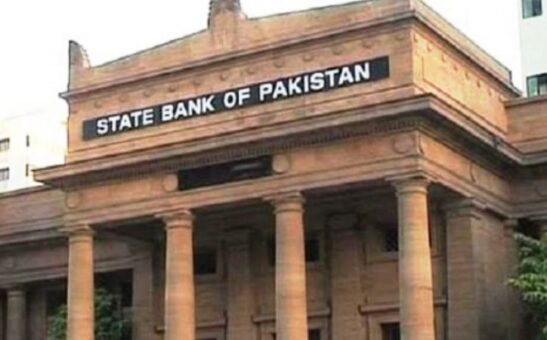
    KARACHI: The State Bank of Pakistan (SBP) has imposed around Rs96 million as monetary penalties on top banks for violating regulatory instructions, including instructions related to anti-money laundering (AML) and combating financing of terrorism (CFT), a notification said on Friday.

    The SBP imposed these penalties during quarter ended March 31, 2021 on Habib Bank Limited, MCB Bank Limited, MCB Islamic Bank Limited and United Bank Limited.

    The details shows that the central bank imposed an amount of Rs39.77 million on Habib Bank Limited for violating regulatory instructions pertaining to Foreign Exchange and General Banking Operations. The SBP, in addition to penal action, directed to strengthen its process with respect to identified areas.

    The SBP imposed penalty of Rs10 million on MCB Bank Limited for violating the regulatory instructions pertaining to general banking operations. In addition to penal action the bank has been advised to strengthen its processes with respect to identified areas.

    The central bank imposed monetary penalty of Rs37.09 million on MCB Islamic Bank Limited for violating the regulatory instructions pertaining to AML/CFT, Foreign Exchange and General Banking Operations. In addition to penal action, the bank has been advised to conduct an internal inquiry on breaches of regulatory instructions and take disciplinary action against the delinquent officials.

    The SBP imposed an amount of Rs10.71 million as monetary penalty on United Bank Limited for violating the regulatory instructions pertaining to CDD/KYC and general banking operations. In addition to penal action the bank has been advised to strengthen its processes to avoid recurrence of such violations.

    The SBP from July 2019 started public disclosure of penal action against banks. “Enforcement actions are an integral part of regulatory regime which involves imposition of monetary penalties and other actions against institutions and individuals for violations of laws, rules, regulations, guidelines or directives issued by SBP from time to time,” according to a circular issued by the central bank.

    In order to bring more transparency and strengthen market discipline, SBP has decided to publicly disclose significant enforcement actions.

  • Rupee weakens by 41 paisas on import, corporate payment demand

    Rupee weakens by 41 paisas on import, corporate payment demand

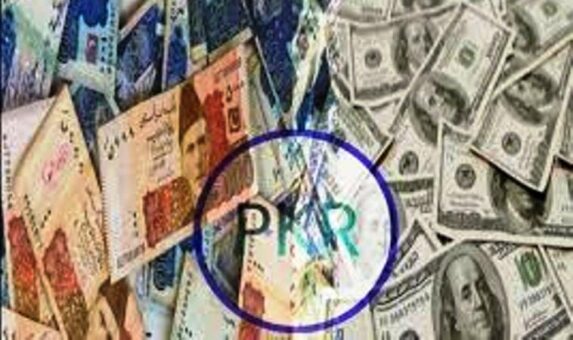
    KARACHI: The Pak Rupee fell by 41 paisas against the dollar on Friday owing to higher demand for import and corporate payments ahead of weekly holidays.

    The rupee ended Rs153.87 to the dollar from previous day’s closing of Rs 153.46 in the interbank foreign exchange market.

    Currency dealers said that the market witnessed demand for the foreign currency due to two weekly holidays ahead. They said that corporate sector was seen engaged in buying the greenback to repatriate profit and dividends to their parents companies abroad.

    They however said that the buffer stock of foreign exchange reserves, home remittances and export receipts would help the local currency to make gain in coming days.

  • Tourists allowed retaining motor vehicles without duty, taxes for six months

    Tourists allowed retaining motor vehicles without duty, taxes for six months

    ISLAMABAD: The Federal Board of Revenue (FBR) has introduced a major relief for tourists visiting Pakistan by allowing them to bring their vehicles into the country without paying any customs duty or taxes, and retain them for a longer period. As per the new regulations, tourists can now keep their vehicles in Pakistan for up to six months, doubling the previous limit of three months.

    (more…)
  • Pak Suzuki posts sharp 285pc growth in first quarter

    Pak Suzuki posts sharp 285pc growth in first quarter

    KARACHI: Pak Suzuki Motors Company Limited on Thursday announced an unprecedented growth of 285 percent in gross profit to Rs2.21 billion during the first quarter (January – March) of 2021.

    The company declared the gross profit of Rs573 million in the same quarter of the last year.

    The sales of the company sharply grew to Rs36.1 billion for the quarter ended March 31, 2021 as compared with Rs17.74 billion in the same quarter of the last year.

    With the higher sales, the distribution and marketing expenses of the company also increased to Rs710 million during the quarter under review as compared with Rs320 million in the same quarter of the last year.

    The company declared profit from operations at Rs1.12 billion during January – March 2021 as compared with loss of Rs1.32 billion in the same quarter of the last year.

    The net profit of the company was at Rs778 million during first quarter of 2021 as compared with net loss of Rs941 million in the corresponding quarter of the last year.

    The company declared earnings per share at Rs9.45 for the period ended March 31, 2021 as compared with net loss of Rs941 million in the corresponding period of the last year.

  • Premature reversal of tax exemption hurt investors’ sentiment: PBC

    Premature reversal of tax exemption hurt investors’ sentiment: PBC

    KARACHI: Pakistan Business Council (PBC) has said that the premature reversal of tax exemption hurt the investor sentiments.

    In a letter sent to Finance Minister Shaukat Tarin, the PBC said that the recent reversal of tax exemptions, some which had just a few years to run, and others which were conceptually aimed at promoting scale and consolidation through formation of groups, wider shareholding through listing, and resultant improved governance and formalization of the economy have hurt the investor sentiment.

    “We urge you to restore the incentive to list companies, exempt inter-corporate dividends from tax (and from withholding tax), allow corporate players in agriculture to avail the same tax benefits as the unincorporated and restore the tax benefits on income arising from use of intellectual property abroad. The earlier termination of tax credits on investment in plant and machinery also needs to e reversed,” the PBC said.

    The business council about the fiscal targets said that a 27 percent increase in the tax target for fiscal year 2021/2022, in an economy forecast to grow at a nominal rate of under 14 percent, with little evidence of improvement in FBR’s capability to broaden the tax base, bodes ill for existing tax-payers.

    “Successive governments have lacked the political will to pursue non-taxpayers. Relying on existing taxpayers for additional revenue accelerates the informalization of the economy,” it said.

    The PBC has long advocated for the separation of fiscal policy from collection of taxes and for addressing the talent and technology gaps that prevent the FBR from broadening the tax base.

    “Unrealistic tax targets is putting the cart before the horse. Taxing the already taxed is akin to killing the goose that lays the golden eggs,” the PBC said.

    Fundamental fiscal reforms will take time to deliver, and the benefits will be sustainable. We must not be distracted by short-term targets.

    Regarding energy costs, the PBC said that the mooted 27 percent increase in power tariff, on top of the already uncompetitive energy cost, the burden of which will fall entirely on the shoulders of honest customers, is not a growth driver.

    The narrative on denying the five main export sectors of energy at a regionally competitive cost and forcing the captive power producers to switch to the grid, reliability of which is yet unproven, does not portend well for exports.

    Efforts should instead be focused on fixing the inefficiency and losses of transmission and distribution. Ominously, the delay in settlement of the agreed dues of the IPP’s threatens the gains made on renegotiating capacity charges. Industry, both export oriented and domestic is the engine of employment.

    Burdening it with the cost of systemic inefficiencies and cross subsidies to residential users impedes its competitiveness and restricts its capability to create jobs.

    Subsidies are best addressed through the Ehsaas Programme. Allow industry to create livelihoods and generate taxable revenues. Facilitate the major export sector through the much-awaited Textiles Policy.

    The PBC is encouraged by the State Bank of Pakistan’s differentiated treatment of demand-pull and supply/utility cost-push inflation. However, if the latter causes remain unchecked, there is a high risk of a multiplier effect on core inflation. Higher borrowing costs on this account will also sap growth.

    The business council said that the Temporary Economic Refinance Facility (TERF) which lapsed in March led directly to over Rs400 billion investment in plant and machinery and indirectly to an approx. Rs300 billion investment in land and industrial buildings.

    This will add jobs, enhance exports, and strengthen “Make-in-Pakistan.” The cost of the interest subsidy will more than be covered by additional tax revenues. At least retaining a version of TERF should be considered for medium sized businesses. Beyond the immediate timeframe, SME and longer-term lending can be taken over by properly configured and resourced development finance institutions which need to be established.

    It said that the current fiscal policy discourages incorporation of businesses by levying tax on dividends and subjecting gains on sale of shares to CGT, irrespective of the holding period. Unincorporated businesses escape both these taxes. Manufacturers suffer from taxation at each stage of the value-chain whilst commercial importers benefit from presumptive tax at the import stage. Minimum tax based on turnover, besides being inequitable, also acts as a barrier to entry of new players by increasing the capital investment required to fund the tax liability until their businesses become profitable. Incentives hitherto available to motivate business with the formal sector have been removed.

    The PBC urged a comparative study of the fiscal policy affecting corporatization and the manufacturing sector.

    The rate at which import tariffs on raw and intermediate industrial inputs is being reduced could be accelerated to promote domestic manufacturing.

    Food shortages and inflation risk hunger, unrest and law and order stability. Higher cost of food also reduces discretionary spending, lowering demand, a critical driver of growth. The government should walk the talk on “agriculture emergency,” especially on wheat and cotton. These have the greatest impact on hunger, jobs, and exports.

    Impeding investment, cost, and ease of doing business are colonial-era, complex, time consuming, paper-based, and personal interaction-reliant bureaucratic processes. Fragmentation between the federal and provincial authorities has further made doing business more complex – taxation and unharmonized food standards are just two examples. We are encouraged by the government’s resolve under the Pakistan Regulatory Modernization Initiative (PRMI) and Civil Service Reforms to address the regulatory environment. The recent move to unify reporting of federal and provincial GST on a common portal and the Single Window initiative to speed up clearance of consignments portend well for the economy. The Raast and Roshan digital initiatives undertaken by the SBP also hold potential to promote financial inclusivity, visibility, speed, and cost of transactions. The lessons on digital “Know-Your-Customer” can be emulated in the wider economy – in opening of bank and broker accounts, for instance. Supplemented by fiscal incentives, digital transactions would also help broaden the tax base.

    The continued bleeding of revenue by State-Owned Enterprises (SOEs) remains a lingering concern. This depletes the amount that the government can invest in socio-economic development. Several attempts to restructure and dispose SOEs have failed. Impeding this process are: PPRA regulations, public sector recruitment rules and fear of action by the National Accountability Bureau (NAB). These and other factors that thwarted the success of Sarmaya-e-Pakistan need to be addressed to arrest the bleeding of SOEs.

    Reform of the NAB law is necessary to address the near paralysis of decision making by the bureaucracy. Two examples, from just the critical energy sector are delay in settlement of amounts due to IPPs and decisions affecting K-Electric.

  • Engro Corp announces Rs14.8 billion profit after tax in first quarter

    Engro Corp announces Rs14.8 billion profit after tax in first quarter

    KARACHI: Engro Corporation Limited has announced Rs14.8 billion profit after tax during first quarter (January – March) 2021 as compared with Rs5.9 billion in the same quarter of the last year, showing about 150 percent growth.

    According to a statement issued on Thursday, Engro’s consolidated revenue grew by 58 percent from Rs 44,977 million during Q1 2020 to Rs 70,866 million in Q1 2021.

    The Company posted a consolidated Profit After Tax (PAT) of Rs 14,779 million compared to Rs 5,940 million for the similar period last year.

    Profit attributable to the owners was recorded at Rs 8,337 million compared to Rs 3,317 million for the prior period, resulting in an Earnings per Share (EPS) of Rs 14.47 compared to Rs 5.76. This growth in the results is primarily attributable to the higher profitability reported by Engro Fertilizer and Engro Polymer & Chemicals.

    On a standalone basis, the Company posted a PAT of Rs 3,586 million against Rs 780 million for the same period last year, translating into an EPS of Rs 6.22 per share. The Company announced an interim cash dividend of Rs 12 per share for the first quarter.

    Financial Performance – Segmental Perspective:

    Fertilizers: Domestic market witnessed strong agricultural sector performance in Q1 as farm economics continued to improve, driven by better farm output prices and enhanced support pricing. The Company produced 523 KT of Urea vs. 572 KT for the comparative period due to a turnaround in one of the plants.  The Company delivered quarterly Urea sales of 582 KT vs. 169 KT and Phosphate sales of 74 KT vs. 36 KT during the same period last year. As a result, the PAT for the Company stood at Rs 5,741 million for Q1 2021 as compared to Rs 571 million in the same period last year.

    Petrochemicals: During Q1 2021, international prices of PVC rose to an unprecedented level of USD 1,670 per ton as the winter storm in the US drove multiple unplanned shutdowns and forced majority of the PVC capacity offline. Furthermore, the Company announced commercial operations of the new PVC plant on 1st March 2021, which increased the total capacity to 295,000 MT per annum.

    During Q1 2021, the Company recorded a revenue of Rs 15,671 million as compared to Rs 7,058 million in Q1 2020. With increased volumetric sales, efficient operations and higher international prices, the Company posted a PAT of Rs 4,143 million compared to a PAT of Rs 193 million for the same period last year. This is the highest quarterly profit ever achieved by Engro Polymer and Chemicals.

    Connectivity: Engro continued to invest and progress in its Connectivity vertical through Engro Enfrashare strengthening its footprint to a portfolio size of 1,577 operational sites (1,265 sites in 2020), while hosting 1,681 tenancies (1,362 tenancies in 2020) and catering to all Mobile Network Operators (MNOs) in Pakistan. This portfolio expansion has led to a significant increase in the market share as an Independent TowerCo from 41 percent in 2020 to 44 percent during Q1 2021.

    Energy & Power:

    Mining and power plant operations at Thar continued smoothly, with over a million tons of coal being supplied by the mine. The plant remained fully operational and achieved 81 percent availability with a load factor of 76 percent and a dispatch of 987 GwH to the national grid during the quarter. Meanwhile, the expansion of the mine at Thar to increase output to 7.8 million tons per annum is underway.

    The Qadirpur Power Plant operates on permeate gas and is currently facing gas curtailment from the Qadirpur gas field as it continues to deplete. To make up for this shortfall, the plant has been made available on mixed mode. The Plant dispatched a Net Electrical Output of 190 GwH to the national grid with a load factor of 41 percent compared to 37 percent during similar period last year. The business posted a PAT of Rs 399 million for the current period as compared to Rs 895 million for Q1 2020, which is mainly attributable to retirement of debt component.

    Terminals: Profitability of both the LNG and chemicals terminal remained healthy for the current quarter. The LNG terminal handled 18 cargoes, delivering 52.8 bcf re-gasified LNG in to the SSGC network. The chemicals terminal had an actual throughput of 286 kT vs. 246 kT during the similar quarter last year. The increase was primarily observed in chemical volumes, offset by lower LPG handling.

  • Equity market witnessed decline of 377 points on rising coronavirus cases

    Equity market witnessed decline of 377 points on rising coronavirus cases

    KARACHI: The equity market fell by 377 points on Thursday owing to rising concerns of investors over fast spread of coronavirus in the third wave.

    The benchmark KSE-100 index of Pakistan Stock Exchange (PSX) closed at 44,930 points as against previous day’s closing of 45,306 points, showing a decline of 377 points.

    Analysts at Arif Habib Limited said that concern over growing cases of Corona and incidence in major cities thereof kept the investors perturbed the second day as well, where despite healthy earnings posted by companies announced today, the index eventually went down by 424 points. At the close, the index registered a decline of 377 points.

    E&P, Cement, Steel scrips contributed the most to the decline, whereas banking sector stocks saw pick up today. Notable scrips declaring results today includes ENGRO and UBL, which made the announcement at the beginning of the session that included dividend declaration, however, selling pressure brought the stock prices down by the end of session. Among scrips, GGL topped the volumes with 36.3 million shares, followed by TRG (30.2 million) and WTL (26.8 million).

    Sectors contributing to the performance include E&P (-94 points), Cement (-79 points), Textile (-55 points), Technology (-45 points) and Autos (-34 points).

    Volumes declined from 387.9 million shares to 328.9 million shares (-15 percent DoD). Average traded value also declined by 18 percent to reach US$ 103.5 million as against US$ 126.3 million.

    Stocks that contributed significantly to the volumes include GGL, TRG, WTL, UNITY and TELE, which formed 38 percent of total volumes.

    Stocks that contributed positively to the index include UBL (+56 points), HBL (+45 points), ENGRO (+27 points), BAFL (+11 points) and BAHL (+8 points). Stocks that contributed negatively include OGDC (-40 points), MCB (-29 points), PPL (-26 points), SYS (-25 points) and LUCK (-20 points).