Author: Mrs. Anjum Shahnawaz

  • FBR imposes $5,000 cash carrying limit for foreign travel

    FBR imposes $5,000 cash carrying limit for foreign travel

    ISLAMABAD: Federal Board of Revenue (FBR) on Tuesday imposed cash carrying limit of $5,000 for travelling abroad.

    The FBR issued SRO 2201(I)/ 2022 dated December 12, 2022 to make part of law the amendment made to Baggage Rules, 2006. Previously, draft amendments to the rules were introduced through SRO 2043(I)/2022 on November 15, 2022.

    READ MORE: FBR exempts CVT on assets of Reko Diq Mining Company

    According to the latest notification, any person travelling abroad (except to Afghanistan) is allowed to take out Pakistan US Dollars or equivalent thereof in other foreign currencies as per the limits give below:

    For individuals 18 years and above, the maximum limit per person per visit in US$ (or equivalent in other foreign currencies) is $5,000 and annual limit per person in US$ (or equivalent in other foreign currencies) is $30,000.

    For individuals below 18 years, the maximum limit per person per visit in US$ (or equivalent in other foreign currencies) is $2,500 and annual limit per person in US$ (or equivalent in other foreign currencies) is $15,000.

    READ MORE: FBR chairman directs chief commissioners to meet December collection target

    In case of passengers travelling to Afghanistan, the maximum limit per person per visit (US$ or equivalent in other foreign currencies) is $1,000 and annual limit per person (US$ or equivalent in other foreign currencies) is $6,000.

    The FBR said that the annual limits for outbound passengers for the respective countries mentioned above for a calendar year starting from the year 2023. However, for calendar year 2022, the existing annual limits in vogue before the issuance of this notification will continue to be effective till December 31, 2022.

    READ MORE: SRB says cases worth Rs 80 billion stuck in litigation

    The FBR further stated that any person taking foreign currency or any other prohibited or restricted item out of Pakistan shall file a declaration before or at the time of departure, electronically in the WeBOC or pass track or manual at the airport.

    According to the amendments to Baggage Rules, 2006, the incoming passenger when in possession of foreign currency exceeding $10,000 or equivalent, or any other prohibited restricted items, shall also file a declaration.

    READ MORE: Customs appraising officer awarded major penalty for inefficiency

  • SECP company registration tops 182,598 by November 2022

    SECP company registration tops 182,598 by November 2022

    ISLAMABAD: The total number of registered companies with Securities and Exchange Commission of Pakistan (SECP) increased to 182,598 by end of November 2022, a statement said on Monday.

    The SECP registered 2,380 new companies in November, 2022, indicating an increase of 10 per cent as compared to corresponding period last year.

    Total capitalization (paid-up-capital) of the newly incorporated companies is PKR1.9 billion.

    READ MORE: Floor tile production halts on LC restrictions, gas shortage

    Among the newly incorporated companies, about 59 percent were registered as private limited companies, 39 percent as single member companies and 2 percent were public unlisted companies, not for profit associations, trade organizations and limited liability partnership (LLP).

    About 99.9 percent of companies were registered online. In November, the SECP also registered three investment companies / micro finance companies with paid-up capital of Rs.255 million.

    READ MORE: PVC market growing with wide array of downstream applications

    In November, the real estate development & construction sector took the lead with incorporation of  407  companies followed by the information technology with 347 and trading with 300 companies subsequently, services with 258, food & beverages with 87, education with 82, tourism with 81, corporate agricultural farming with 76, ecommerce with 70, marketing & advertisement with 63, engineering with 62, textile with  57, pharmaceutical with 50, healthcare with 43, mining & quarrying with 38, chemical with 37, fuel & energy with 35, transport with 31, power generation with 30, communications with 27, cosmetics and toiletries and lodging with 18 each, broadcasting & telecasting with 14, auto & allied and paper & board with 13 each, cables and electrical goods with 12,  arts and culture with 9, and 102 companies in other sectors.

    READ MORE: ABHI, Chase Up join hands to extend earned wage access

    Foreign investment has been reported in 85 new companies from Afghanistan, Austria, Australia, Canada, China, Germany, Hongkong, Jordan, Korea South, Mauritius, Nigeria, Norway, Oman, Singapore, South Africa, Spain, Tunisia, Turkey, UAE, UK and the US.

    As a result of SECP’s eServices integration with FBR and various provincial departments, 2,211 companies were registered with FBR for generation of NTN, 57 companies with EOBI, 32 companies with PESSI/SESSI and 43 companies with excise and taxation department.

    READ MORE: Daraz highlights problem of cross-border payments

  • FBR exempts CVT on assets of Reko Diq Mining Company

    FBR exempts CVT on assets of Reko Diq Mining Company

    KARACHI: Federal Board of Revenue (FBR) on Monday exempted capital value tax (CVT) on all assets of Reko Diq Mining Company.

    The FBR issued SRO 2200(I)/2022 to announce that the federal government had exempted all assets of the Reko Diq Mining Company (Private) Limited (formerly) Tethyan Copper Company Pakistan (Private) Limited from the whole of the capital value tax payable under sub-section of section 8 to the Finance Act, 2022.

    READ MORE: FBR chairman directs chief commissioners to meet December collection target

    It is worth mentioning that the Economic Coordination Committee of the Cabinet (ECC) a day earlier took important decisions regarding Reko Diq.

    The ECC considered and approved two important agenda items related to Reko Diq project, thus paving the way for early start of the Reko Diq Project. Ministry of Energy (Petroleum Division) submitted a summary on accrued interest with respect to the amount held in an escrow account in connection with the Reko Diq Project dispute settlement.

    READ MORE: SRB says cases worth Rs 80 billion stuck in litigation

    It was presented that government of Pakistan (GoP) and Provincial Government of Baluchistan (GoB) entered into an out-of-court dispute settlement with M/s Tethyan Copper Company Pvt Limited- a consortium of Barrick Gold Corporation of Canada and M/s Antofagasta PLC of Chile, in respect of Reko Diq Copper-Gold Project in Chaghai district of Baluchistan.

    As per settlement terms, Government of Pakistan has to clear liabilities to Antofagasta PLC. In the light of the terms of agreed settlement, the ECC allowed Finance Division to direct GHPL (for its own as well as GoB’s share), OGDCL and PPL to deposit the aggregate amount of interest to the sum of US$ 22,718,173/- in the escrow account from March 31, 2022 to December 15, 2022.

    READ MORE: Customs appraising officer awarded major penalty for inefficiency

    The ECC further allowed Finance Division to arrange the interest payable for GoB’s share amounting to US$ 8,519,314 /- from the loan of Rs. 65 billion already raised by the GHPL with the GoP guarantee.

    Further, the ECC allowed the concerned Divisions of GoP and the SOEs to act in such a manner to ensure that the deposited amount alongwith interest deposited by the SOEs in the escrow account to form part of the consideration for share purchase of Reko Diq Mining Company Limited.

    READ MORE: Further tax collection on pharmaceutical products unlawful: KTBA

    The ECC also considered and approved a proposal of Finance Division through a summary on funding plan of Government of Pakistan for share of Government of Baluchistan in Reko Diq Project.

    As per proposal, overall funding commitment of US$ 717 million over the period of 6 years by GoP in respect of GoB SPV Project Capital Commitment to be provided by the Government of Pakistan.

  • Ericsson study highlights benefits of 5G connectivity in emerging markets

    Ericsson study highlights benefits of 5G connectivity in emerging markets

    ISLAMABAD: A major new Ericsson (NASDAQ: ERIC) commissioned study by management consulting firm Analysys Mason highlights the potential economic, consumer and environmental benefits of 5G connectivity in 15 national emerging markets.

    With regulatory and government support, all fifteen countries could benefit from GDP growth between 0.3 and 0.46 per cent through 2035, with an estimated three-to-seven-fold cost-to-benefit ratio.

    Called the Future Value of Mobile in Emerging Markets, the report examines the impact of multiple 5G spectrum deployment options to facilitate enhanced mobile broadband and fixed wireless access (FWA) across consumer, industry, logistics, rural and public services clusters, and spanning several business case options, including verticals.

    The detailed methodology included using national government statistics and reports, Ericsson network insights and innovative mapping techniques – based on population density distribution and existing national infrastructure such as, road and rail networks, and agriculture – to create a cost-to-benefit model across the different deployment options.

    Deployment options are based on the starting assumption of having 5G baseline rollout added to existing mobile radio network sites.

    Additional options explore the extra benefits of adding Low-Band 5G spectrum coverage beyond the baseline (delivering wider geographical coverage at the lower end of 5G capabilities and suited to agriculture or logistics deployments) or Mid-Band 5G spectrum coverage – delivering smaller geographical coverage per site, but with higher capacity and speed, suitable for manufacturing, automation, industry and advanced services.

    Expanded Mid-Band 5G coverage is identified as the key success factor – with the potential to deliver about 80 percent of the economic benefits. Benefits from the Smart Industry and Smart Rural clusters account for 85-90 percent of the total economic benefits in each emerging market.

    Agriculture is a significant sector in all 15 countries – accounting for up to 10 percent of GDP in some markets.

    The report estimates that enhanced rural 5G coverage could deliver up to 1.8 percent uplift in long-term GDP from agriculture. 5G will also promote sustainable farming methods, increase efficiency and reduce agricultural waste.

    Study findings include:

    •             Baseline 5G deployment cost is estimated between USD 3-8 billion per country. An additional 20-35 percent investment is required to extend coverage

    •             Extending coverage beyond the baseline can generate significant GDP benefits from industrial adoption, especially from mid-band coverage extension

    •             Most countries are expected to generate overall economic benefits (GDP) three-to-seven times higher than the incremental cost of extending coverage

    •             Results suggest 5G mobile broadband can generate consumer surplus between USD 1-10 billion per country, with coverage extension giving 20-30 percent extra consumer surplus

    •             The social benefits enabled by 5G will be greatest from 5G-based FWA, smart factories, freight and logistics, agriculture and healthcare use cases

    •             Adopting 5G can help reduce emissions by supporting digital transformation in agriculture, freight and logistics, smart factories and construction

    The study highlights how governments, regulators and policy makers can support the 5G ecosystem to deliver the benefits.

    These include treating 5G as a national infrastructure with a 5G national strategy and roadmap; implementing 5G spectrum policies that facilitate speedier and widespread deployment, including trading off spectrum fees for deployment targets that meet connectivity policy objectives; implementing policies and procedures to make infrastructure deployment and site upgrades easier; working with communications services providers to enhance coverage in areas where commercially-led solutions are not viable; incentivizing the use and prominence of 5G in industry and manufacturing; promoting 5G in the public sector and promoting the environmental benefits of 5G solutions.

    Andrew Lloyd, Head of Government and Policy Advocacy, Ericsson, says: “This Analysys Mason Future Value of Mobile in Emerging Markets report provides a detailed breakdown, based on comprehensive research into realistic and achievable scenarios in each of the 15 countries, of the potential economic, social, environmental and national benefits of 5G in these markets. With the backing of governments, regulators and policy makers, each of these 15 countries, and their citizens, stand to benefit significantly from 5G connectivity. In addition to economic benefits, 5G can also reduce climate impact, increase social inclusion, wellbeing and tackle the digital divide in areas where fixed infrastructure availability is poor.”

    Janette Stewart, Partner, Analysys Mason, says: ”The study highlights the benefits from having the right spectrum available for 5G deployment, both for geographic coverage, for which the low-bands are very suitable, and in the 3.5GHz band where most of the high-capacity 5G deployments in other markets are already taking place.”

    The countries addressed in the report research are Bangladesh, Brazil, Chile, Colombia, Egypt, India, Indonesia, Malaysia, Mexico, Morocco, Nigeria, Pakistan, South Africa, Thailand and Turkey.

  • Pakistan Customs to auction Toyota, Suzuki motor cars on Dec 14

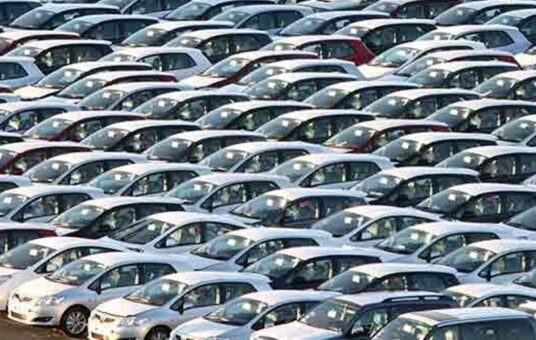
    Pakistan Customs to auction Toyota, Suzuki motor cars on Dec 14

    ISLAMABAD: Pakistan Customs has announced auction Suzuki and Toyota motor vehicles, which will be held on December 14, 2022 at Sukkur.

    Following is the list of auction of vehicles lying in State Warehouse, Sukkur to be held on December 14, 2022:

    01. Suzuki Kie Car, bearing Registration No. Without Number, Chassis No.HZ22S-675401, Engine No.K6A, Model 2006.

    READ MORE: Non-filers will not be included in ATL 2022

    02. Toyota Aqua Car, bearing Registration No.BJU-862, Chassis No.NHP10-6298404, Model 2014 and Engine Capacity 1490 CC.

    03. Toyota TZ Prado Jeep, bearing RegistrationNO.BD-8408 (Sindh), Chassis No.JTEBU25J005029572, Model 2005 (as per japani website) and Engine Capacity 4000 CC.

    04. Toyota Prius Car, bearing Registration No.BGH-417, Chassis No.ZVW30-1358220, Engine No.2ZR-1230757, Model 2011 and Engine Capacity 1797 CC.

    05. Toyota Axio Saloon Car, bearing Registration No.AXJ-090, Chassis No.NZE141-6015839, Engine No.1NZ-C484965, Model 2009 and Engine Capacity 1490 CC. (As per Running Page).

    READ MORE: FBR directs BS-21 officers to submit declaration of assets

    06. Toyota Corolla Fielder Car, Bearing Reg. No.BPU-210, Chassis No.ZZE122-0010909, Engine No.IZZ-FE, Model 2000 and Engine Capacity 1800 CC.

    07. Suzuki Swift Car, Bearing Reg. No.LED-1475 (Pujab), Chassis No.ZC11S-107422, Model-2004, (as per Japani website) and Engine Capacity 1298 CC.  

    08. Toyota Premio Car, bearing Registration No.BEZ-654 (Sindh), Chassis No. AZT240-0021231, Model 2005-06 (as per japani website) and Engine Capacity 2000 CC.

    09. Suzuki Swift Car, bearing Registration No.AZK-119, Chassis No.ZC11S-157917, Engine No.M13A, Model 2009 and Engine Capacity 1248 CC.

    READ MORE: Customs Intelligence Gwadar auctions motor vehicles on December 12

    10. Toyota Prius Car, Bearing Reg No.BAT-685, Chassis No.ZVW30-5064179, Model-2009 (as per japani website and seat belt) and Engine Capacity 1800 CC.

    11. Toyota Prius Car, Bearing Reg No.BAW-474, Chassis No.ZVW30-1041423, Model-2009 and Engine Capacity 1800 CC

    12. Toyota Vitz Car, Bearing Reg No.ALT-499, Chassis No.SCP13-0026906, Model-2003 and Engine Capacity 1297 CC.

    READ MORE: Separate property declaration under Section 7E only for returns already filed

    13. Toyota Surf Bearing Reg No.U-2683, Chassis No.KZN130-9039907, Engine No.1KZ0189302, Model-1994, and Engine Capacity 2982 CC.

    14. Suzuki Swift Car, Bearing Reg No.AWX-616, Chassis No.ZC72S-101701, Model-2012.

  • Non-filers will not be included in ATL 2022

    Non-filers will not be included in ATL 2022

    KARACHI: Non-filers of income tax return will not be included in the Active Taxpayers List (ATL) 2022, officials in the Federal Board of Revenue (FBR) said.

    The last date for filing income tax returns for tax year 2022 is December 2022. The date has already been extended twice. The actual last date for filing income tax return for tax year 2022 was September 30, 2022. But it was extended up to October 31, 2022 and then up to November 30, 2022.

    READ MORE: FBR directs BS-21 officers to submit declaration of assets

    The FBR officials said that according to tax laws persons failing to file annual returns would not be included in the ATL.

    The ATL for tax year 2022 will be issued on March 01, 2023.

    Section 182A of the Income Tax Ordinance, 2001 explained repercussions of return not filed within due date.

    READ MORE: Customs Intelligence Gwadar auctions motor vehicles on December 12

    The text of the section is as follow:

    182A. Return not filed within due date.—(1) Notwithstanding anything contained in this Ordinance, where a person fails to file a return of income under section 114 by the due date as specified in section 118 or by the date as extended by the Board under section 214A or extended by the Commissioner under section 119, as the case may be, such person shall—

    (a) not be included in the active taxpayers’ list for the year for which return was not filed within the due date:

    READ MORE: Separate property declaration under Section 7E only for returns already filed

    Provided that without prejudice to any other liability under this Ordinance, the person shall be included in the active taxpayer ‘ list on filing return after the due date, if the person pays surcharge at Rupees-

    (i) twenty thousand in case of a company;

    (ii) ten thousand in case of an association of persons;

    (iii) one thousand in case of an individual.

    “Explanation.—For the removal of doubt it is clarified that the provisions of this section shall apply from tax year 2018 and onwards for which the first Active Taxpayers List is to be issued on first day of March, 2019 under Income Tax Rules, 2002; and

    READ MORE: Tax on deemed income from immovable property under Section 7E

    (b) not be allowed, for that tax year, to carry forward any loss under Part VIII of Chapter IV;

    (c) not be issued refund during the period the person is not included in the active taxpayers’ list; and

    (d) not be entitled to additional payment for delayed refund under section 171 and the period the person is not included in the active taxpayers’ list, shall not be counted for computation of additional payment for delayed refund.

  • United States, Croatia sign income tax treaty

    United States, Croatia sign income tax treaty

    WASHINGTON: The United States and Croatia on Wednesday signed a comprehensive income tax treaty between the two countries, according to an official statement issued by US Department of the Treasury.

    In a ceremony held at the US Department of State today, Under Secretary of State for Economic Growth, Energy and the Environment Jose W. Fernandez and Croatia’s Minister of Finance Dr. Marko Primorac signed the treaty.

    The new tax treaty is the first of its kind between the United States and Croatia.

    “I am honored to sign the US-Croatia income tax treaty with you today, Finance Minister Primorac,” said Under Secretary Fernandez. “We look forward to taking this monumental step towards further strengthening trade and commercial ties between the United States and Croatia.”

    “The Treasury Department is pleased to conclude this new tax treaty with Croatia.  It is the first comprehensive tax treaty that the United States has signed in over ten years and reflects our current tax treaty policies and is a milestone in the Treasury’s efforts to expand the U.S. tax treaty network. We appreciate the collaboration Croatia showed throughout the negotiations,” said Lily Batchelder, Assistant Secretary (Tax Policy).

    The new tax treaty closely follows the US Model income tax treaty.  Key aspects of the new treaty include:

    Elimination of withholding taxes on cross-border payments of dividends paid to pension funds and on payments of interest;

    Reductions in withholding taxes on cross-border payments of dividends other than those paid to a pension fund, as well as royalties;

    Modern anti-abuse provisions intended to prevent instances of non-taxation of income as well as treaty shopping;

    Robust dispute resolution mechanisms including mandatory binding arbitration; and

    Standard provisions for the exchange of information to help the revenue authorities of both nations carry out their duties as tax administrators.

    The new tax treaty will enter into force after the United States and Croatia have notified each other that they have completed their requisite domestic procedures, which in the case of the United States refers to the advice and consent to ratification by the US Senate.

  • Pakistan hosts 21st APICTA Awards 2022

    Pakistan hosts 21st APICTA Awards 2022

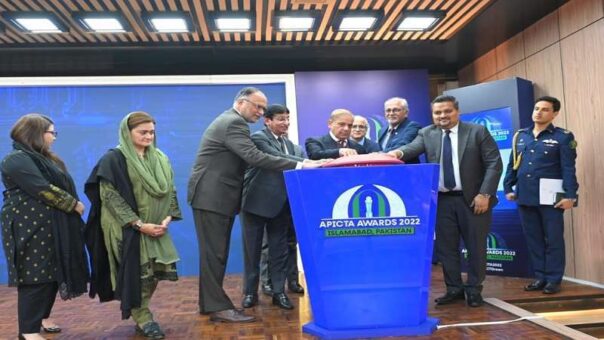
    Recognized as the Oscars of the Asian IT industry, popularly called the APICTA Awards, the 2022 edition is taking place in Islamabad, from December 7-11, 2022.

    The 21st APICTA Awards of the regional economies are being held in Pakistan for the first time since the inception of the alliance. They are being organized by the Pakistan Software Houses Association (P@SHA) and TechDestination for IT and ITES, in collaboration with the Ministry of Information Technology and Telecommunication (MoITT).

    The event will be attended by 15 economies of the region, with 150+foreign delegates from economies including Malaysia, Australia, Singapore, etc.

    A special meeting of the delegates was held at the Prime Minister’s House. The Honorable Prime Minister of Pakistan, Shahbaz Sharif, on the occasion, appreciated P@SHA’s vision and its support by the Federal Minister for Information Technology and Telecom Syed Amin Ul Haque, for bringing APICTA to Pakistan.

    “IT is one of the fastest growing industries and Pakistan is now ready to maximize its IT exports. A platform like that of APICTA will surely provide the needed engagements between international and Pakistani companies.’’

    Federal Minister for Information Technology and Telecom Syed Amin Ul Haque stated ‘’ I have complete faith in the potential that Pakistan’s IT industry has and am waiting for the international world to realize the strengths that we as a country, have to offer.”

    Chairman APICTA, Stan Singh-Jit, is a strong advocate of the entire Asia Pacific Region and is extremely excited to be in Pakistan. “Pakistan has been a surprise and I am so happy to have the Awards here this year. I have gained a new understanding of market strength in this country and hope to see it become very prominent globally.

    “Post-Covid this is the first Award that we are holding physically and hope to see it go a long way as the Global Digital Economy is fast evolving and is driven by a knowledge-based culture.”

    P@SHA, M. Zohaib Khan, said, “It is an honor for us as Pakistanis to host this mega event to allow leaders in the ICT world to explore Pakistan’s growing IT potential, particularly for investment, partnership, and engagement with the local companies specializing in IT and IT-enabled services.”

    The Judges and the participants are excited about the prospects and praised the APICTA Pakistan team, Badar Khushnood,(Convenor APICTA) Dr. Shoab A Khan (Chief Judge) and Hira Zainab (Project Director) most profusely for their efforts in this regard and wished them well for the upcoming event.

    The days ahead will see distinguished and experienced IT professionals judging various projects of participating companies to select winners based on live presentations and demonstrations of specialized work.

    Showcasing the strengths of Pakistan and its culture is one of the highlights of the event and, therefore, the 5-day event will comprise many socials including a gala night, cultural shows, business networking sessions, tours for foreign delegates, and will give way to bilateral trade.

  • Daraz highlights problem of cross-border payments

    Daraz highlights problem of cross-border payments

    Daraz, a leading online marketplace operating in Pakistan, has brought to the forefront significant issues related to cross-border payments. During a high-level meeting with Finance Minister Ishaq Dar on Wednesday, Ehsan Saya, Managing Director of Daraz, along with a delegation, discussed these operational challenges in detail.

    (more…)
  • Global trade restrictions rising amid economic uncertainty, Ukraine War: WTO

    Global trade restrictions rising amid economic uncertainty, Ukraine War: WTO

    A report released by World Trade Organization (WTO) on Tuesday showed that trade restrictions are increasing in a context of economic uncertainty exacerbated by the COVID-19 pandemic, the war in Ukraine and the food security crisis.

    According to the latest WTO Trade Monitoring Report presented at a meeting of the Trade Policy Review Body, WTO members are introducing restrictions at an increased pace, particularly on food, feed and fertilizers. The stockpile of import restrictions in force also continues to grow.

    WTO Director-General Ngozi Okonjo-Iweala called on WTO members to refrain from adopting new trade-restrictive measures, particularly export restrictions, that can further contribute to a worsening of the global economic outlook and urged them to cooperate to keep markets open and predictable in order to allow goods to move around the world to where they are needed.

    “Members have increasingly implemented new trade restrictions, in particular on the export side, first in the context of the pandemic and more recently in the context of the war in Ukraine and the food security crisis. Although some of these export restrictions have been lifted, many others persist,” she said.

    “Out of the 78 export restrictive measures on food, feed, and fertilizers introduced since the start of the war in late February, 57 are still in place, covering roughly USD 56.6 billion of trade. These numbers have increased since mid-October, which should be a cause for concern.”

    “As I told G20 Leaders at their summit in Indonesia a few weeks ago, lifting those export restrictions is fundamental to reduce price spikes and volatility and to allow goods to flow to where they are urgently needed,” she added.

    During the review period for the report, from mid-October 2021 to mid-October 2022, WTO members introduced more trade-facilitating (376) than trade-restrictive (214) measures on goods (unrelated to the pandemic), with the average number of trade-facilitating measures per month at its highest since 2012.

    Most of the facilitation happened on the import side while most of the restrictions were on the export side. For the first time since the beginning of the monitoring exercise in 2009, the number of export restrictions outpaced that of import restrictions.

    The trade coverage of the trade-facilitating measures was estimated at USD 1,160.5 billion, and that of the trade-restrictive measures at USD 278.0 billion. The stockpile of import restrictions in force also continued to grow. By mid-October 2022, over 9 per cent of global imports continue to be affected by import restrictions implemented since 2009 and which are still in force.

    Initiations of trade remedy investigations declined sharply during the review period (10.9 initiations per month, the lowest since 2012) after reaching its highest peak in 2020 (36.1 initiations per month).

    These actions remain an important trade policy tool for many members, accounting for 37.4 per cent of all non-COVID-19-related trade measures on goods recorded. Anti-dumping continues to be the most frequent trade remedy action in terms of initiations and terminations.

    The implementation of new COVID-19-related trade measures decelerated over the past 12 months, with 45 such measures recorded on goods and four on services. Additional information communicated by WTO members mainly consisted of termination of existing measures or amendments of others.

    The number of new COVID-19-related support measures by WTO members and observers to mitigate the social and economic impacts of the pandemic fell sharply over the review period.

    Since the outbreak of the pandemic, 443 COVID-19-related trade and trade-related measures in the area of goods have been introduced. Most were trade-facilitating (246 or 56 per cent), while the rest were trade-restrictive (197 or 44 per cent). During the review period, members continued to phase out the pandemic-related measurers, and in particular the restrictive ones.

    According to information received by the WTO Secretariat, as of mid-October 2022, 79.2 per cent of the COVID-19-related trade restrictions have been repealed, leaving 27 export restrictions and 14 import restrictions in place. Although the number of the pandemic-related trade restrictions still in place has decreased, their trade coverage remains important at USD 134.6 billion.

    Since the outbreak of the pandemic, a consistent feature of the trade and trade-related measures taken in response to the COVID-19 crisis has been the frequent changes, adjustments and gradual roll-back of such measures to reflect the evolving situation.

    The updated lists of measures implemented in the context of the current pandemic are available on the COVID-19 page of the WTO website and cover the areas of goods, services and intellectual property as well as measures communicated by members on general economic support.