Category: Automotive

PkRevenue provides stories related to automotive industry. We focus on auto policy of Pakistan. The coverage also includes sales of domestic manufacturing.

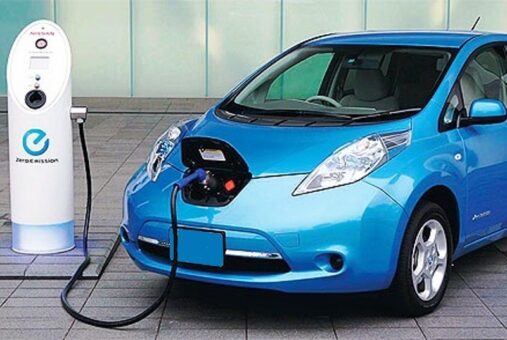
  • Electric vehicles to reduce 60pc fuel cost: Amin Aslam

    Electric vehicles to reduce 60pc fuel cost: Amin Aslam

    KARACHI: The use of electric vehicles will reduce fuel cost by 60 percent and it will also resolve environmental issues caused by pollution, Malik Amin Aslam, Advisor to Prime Minister for Climate Change, said on Thursday.

    Addressing at a press conference, Amin Aslam said that the government had approved first ever Electric Vehicle Policy and the industry would start working soon.

    “The owners of motor cycles, three-wheelers and buses can reduce their monthly fuel cost by 60 percent with uses of electric vehicle technology,” he said.

    He said that on Saturday he would meet the Prime Minister and after that meeting the electric motor vehicle industry would start operation.

    The modern technology will help the country to save around $2 billion foreign exchange, which are being spent on oil import.

    He said that the country had facing environmental issues. He said that such projects would be successful for clean environment such as in Lahore city.

    He said that the electricity generation in the country had improved.

    The country is facing large import bill especially for oil import bill. He said in case 30 percent vehicles converted to electric mechanism than the country will able to save around $2 billion.

  • Electric vehicles to help in saving $2 billion oil import payment: adviser

    Electric vehicles to help in saving $2 billion oil import payment: adviser

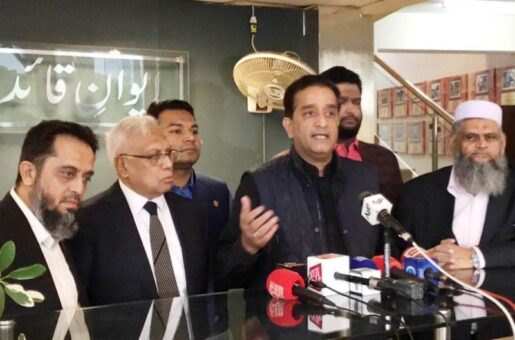
    ISLAMABAD: The launch of electric vehicles in the country will help the country to save around $2 billion foreign exchange, which is spend on annually on oil import, Malik Amin Aslam, Prime Minister’s Adviser on Climate Change, said on Thursday.

    Besides, adopting electric vehicle, the consumers could save over 30 percent cost of vehicle maintenance, because these do not require petrol or gas, no engine oil and driving them is highly comfortable, and affordable.

    Addressing a press conference on Thursday along with private electric vehicle manufacturing stakeholders/investors, he told media that introduction of electric vehicles in Pakistan following the EV policy, which was framed after consultation with all relevant stakeholders from government and non-governmental sectors, are going to be a big change for the people to switch from fuelling at the pump to fuelling at an outlet.

    He said that electric vehicle (EV) Policy would help revolutionize overall transport sector of the country in coming years and urban outlook with introduction of better, sustainable and environmental-friendly transport facility.

    He also said that this policy, which has been approved by the Cabinet this year on November 5, would also significantly help boost pollution-free transport facilities in the country in a way that are not harmful to environment and do not emit any smoke and cause noise pollution.

    From the running costs of electric cars to being very environmental-friendly, introduction of electric vehicles in the country will help cut country’s oil import bill, yield countless benefits for both environment and the people and their overall lifestyle and the way our cities look, the adviser said.

    “Electric vehicles do not emit vehicle emissions and these are cleaner, do not cause noise pollution and eliminate your fuel costs. Besides, EVs are fun to drive and these have instant torque and offer a very smooth ride,” he explained while counting on the benefits of the electric vehicles.

    The adviser Malik Amin Aslam noted that periodic trips to the gas station to fuel up your car are considerably expensive and time consuming for the people, particularly when the ever-fluctuating price of gasoline is high.

    However, by choosing an electric vehicle, one can forget about paying for gasoline and being at the mercy of fuel prices.

    “Not only is electricity less expensive than gasoline, it also has a much more stable price point, meaning that rapid price swings are all but eliminated by going electric,” he further explained.

    Malik Amin Aslam stated that humans have historically had a very negative impact on our environment. “Carbon dioxide emissions from traditional vehicles contribute to greenhouse gases in the atmosphere and accelerate climate change and overall environmental degradation and hurt public health. Conversely, all-electric vehicles don’t produce climate change-causing carbon dioxide into the atmosphere, when any of us drives them.

    Besides, hybrid electric vehicles use their battery to greatly improve the distance you can travel with a gasoline-powered engine,” he elaborated while highlighting environmental benefits of the electric vehicles.

    Given the backdrop, switching to an electric vehicle is one way to reduce further damage to the earth, cut individual carbon and transport sector’s footprints, the prime minister’s adviser on climate change.

    He said that with implementation of electric vehicle policy of Pakistan, a new economic sector will emerge, introducing a new electric vehicle producing industrial sector and thousands new jobs.

    Talking about electric public transport system, he told media that as part of the policy goal, provincial governments are being approached to usher in launch mass transit system in urban areas, under which electric buses would be introduced to provide pollution, noise-free, comfortable and cheaper transport facilities to the masses, particularly women.

    For this, federal government would provide every possible help to the provincial governments to introduce such mass transit system, Malik Amin Aslam added.
  • Pakistan spends $531mn on vehicle import in 4 months

    Pakistan spends $531mn on vehicle import in 4 months

    KARACHI: Pakistan has spent $531 million on vehicle import in the first four months (July – October) of the current fiscal year, according to official data released on Wednesday.

    (more…)
  • Honda Atlas Cars declares 50 percent drop in after tax profit

    Honda Atlas Cars declares 50 percent drop in after tax profit

    KARACHI: Honda Atlas Cars (Pakistan) Limited on Thursday announced 50 percent drop in net profit for the quarter ended September 30, 2019.

    According to financial results of the company the profit after tax for the quarter (July – September) 2019 fell to Rs509.69 million as compared with the net profit of Rs1,030 million in the corresponding quarter of the last year.

    The sales of the company fell to Rs11.64 billion for the quarter under review as compared with Rs25.81 billion in the corresponding period of the last year, posting 55 percent decline.

    The gross profit of the company declined to Rs1.21 billion for the quarter ending September 30, 2019 as compared with Rs1.65 billion in the same period of the last year.

    The company declared profit of Rs1.1 billion for the half year (April – September) 2019 as compared Rs3.24 billion in the same half of the last year.

    The sales of the company during the half fell to Rs29.52 billion as compared with Rs49.67 billion in the same half of the last fiscal year.

  • Policy recommends import of used electric vehicles

    Policy recommends import of used electric vehicles

    KARACHI: The import of used electric vehicles has been proposed under ‘National Electric Policy’ for at least two years for giving time to local auto manufacturers to prepare development plans.

    According to recently introduced ‘National Electric Policy’ it is proposed:

    For the first two years i.e. 2019-2021 up to 3 years old ‘used’ all-electric vehicles will be allowed for import.

    This time will give local auto manufacturers to prepare their EV development plans and will also help acclimatize local consumers with a lower upfront cost and will help in establishing charging infrastructure.

    If locally manufactured EVs are available by 2021, then this import allowance can be withdrawn

    However, if there are no locally manufactured EVs by year 2021 the decision to extend this allowance may be pondered upon.

    According to the policy the category of EVs include passenger and commercial cars, jeeps, SUVs, vans and small delivery vehicles of up to one ton cargo hauling i.e. Categories M1 and N1 of UNECE Vehicle Classification.

    Although the car market has developed in Pakistan, there is virtually no EV penetration in the country.

    Therefore, some aggressive steps are required to create an EV market and then reap its benefits.

    The capital cost of electric cars is still high for masses and many countries provide tax breaks, incentives and trade-ins to encourage purchase of electric cars.

    While the cost is high at this time, it is expected to go down steadily and by 2023-24 the cost of electric cars is projected to be at par with their Fossil Fuel Vehicle (FFV) counterparts.

    For Pakistan to create an EV market some good incentives are needed to bring the cost of purchase of EVs down.

    In view of the above the Government of Pakistan, in collaboration with relevant entities shall take the following measures:

    • 1. All existing incentives of the Auto Development Policy 2016-2021 are to remain intact. However, government will give the following further incentives to jump start EV manufacturing in Pakistan only for local manufacturing units:

    • a. All EVs manufactured in Pakistan will be sold at less than one percent General Sales Tax (GST) for the next seven years to bring the purchase price of EVs down.

    • b. Pakistan manufactured EVs will be exempted from registration fees and annual token tax to encourage prospective buyers. Imported EV’s shall receive the same benefit for next 5 years.

    • 2. EV specific parts and components, not being manufactured locally compliant to UNECE 1958 Agreement ‘WP.29’ standards as well as equivalent international standard applied by the United States, European Union and other major EV manufacturers, will be allowed import at one percent custom duty for the next two years until 2021.

    • 3. Registration number plates of EVs will have a distinct color/design to create EV specific zones in high density areas and to introduce distinct incentives for EVs.

    • 4. The State Bank of Pakistan may initially allow new EVs to be purchased under Green Banking Guidelines and may further evolve an incentive scheme push down the price of local EV manufacturing through a better financing scheme. Again this will encourage EV penetration in the country and will reduce upfront cost of EVs.

  • Import of used vehicles: changes to payment of duty, taxes approved

    Import of used vehicles: changes to payment of duty, taxes approved

    ISLAMABAD: The government has approved changes to payment of duty and taxes system for clearance of used vehicles, which are allowed to import under three different schemes.

    The Economic Coordination Committee (ECC) of the Cabinet on Wednesday on a proposal by the Commerce Division, took up the import of used vehicles under personal baggage, transfer of residence and gift schemes which require the payment of duties and taxes to be paid out of foreign exchange arranged by Pakistani nationals themselves or local recipients producing proof of conversion of foreign remittance to local currency, and allowed the importers to meet any shortfall in arrangement of required foreign remittance for payment of duties and taxes through local sources in case of a scenario where the Pak rupee depreciates or government increases the import duties and/or taxes after the receipt of remittance and before the filing of the good declaration, which results in shortfall of remitted amount vis-a-vis payable duties and taxes.

    The ECC decision would help clear up a total of 1017 vehicles currently stuck at Karachi port because either no foreign remittance had been received or the remitted amount had been rendered insufficient due to depreciation of PKR before the filing or goods declaration or increase in the rate of duty in the Finance Act 2019.

    On another proposal by the Commerce Division, the ECC accorded ex-post approval to an SRO issued by Commerce Division on August 21, 2019 for extending till August 31, 2019 the implementation of quality standards on the import of solar PV equipment into Pakistan under an SRO issued by the Commerce Division on May 28, 2019.

    The Commerce Division had issued the SRO in late August following instructions from the Prime Minister to resolve the issue of several containers stuck up at ports due to lack of clarity amongst stakeholders, pre-shipment companies and border agencies regarding documents required for observance and implementation of the quality standards introduced on May 28, 2019 as per a decision of the federal cabinet.

  • FBR allows reduced duty rates for import of certain CBU vehicles

    FBR allows reduced duty rates for import of certain CBU vehicles

    KARACHI: Federal Board of Revenue (FBR) has allowed reduced rate of customs duty on import of certain automotive vehicles in Completely Built Units (CBUs) under Automotive Development Policy 2016-2020.

    Following are the automotive vehicles, which are granted reduced customs duty rates on import:

    1. Agricultural Tractors, having an engine capacity exceeding 26 kW but not exceeding 75kW (PCT code 8701.9220, 8701.9320) at 15 percent.

    2. Agricultural Tractors (other than mentioned at S. No. 1 above) (PCT Code 8701.9100, 8701.9400, 8701.9500) at 10 percent.

    3. Fully dedicated LNG buses (CBU) (PCT Code 8702.9030) at one percent

    4. Fully dedicated LPG buses (CBU) (PCT Code 8702.9040) at one percent

    5. Fully dedicated CNG buses (CBU) (PCT Code 8702.9050) one percent.

    6. Hybrid Electric Vehicle (HEV) (CBU) (PCT code 8702.2090, 8702.3090) at one percent.

    7. Hybrid Electric Vehicle (HEV) (CBU) (PCT code 8704.2214, 8704.2294, 8704.2340, 8704.3240) at one percent.

    8. Trailers (PCT code 87.16) at 15 percent

  • Ministry opposes suggestions to allow commercial import of used cars

    Ministry opposes suggestions to allow commercial import of used cars

    ISLAMABAD: The ministry of industries and production has opposed the suggestions to allow commercial import of used and old motor cars into Pakistan.

    In an office memorandum, the ministry said that a meeting was held earlier this month with the car dealers federation to analyse suggestions to devise import and re-export of used vehicles policy 2019/2029 wherein it was unanimously observed that the dealers were interested in commercial import of used/old cars.

    The ministry said that as for the investment plan of $3.2 billion, the same seems irrational as importers do not plan to build any manufacturing facilities in near future. The Engineering Development Board (EDB) has therefore opined that proposed plan will negatively affect existing OEMs, new entrants and auto part manufacturers.

    The ministry further said that it is important to consider that Auto Development Policy (ADP) 2016-2021 has attracted investment of more than $1.3 billion so far from foreign investors who are at various stages of setting up their projects.

    Under ADP 2016/2021, fifteen new investors have been granted Greenfield status and under Brownfield category two closed down units have been revived, the existing OEMs are enhancing their capacities, their production and other new entrants are expected to start their production/complete their manufacturing facilities shortly. As per business plans, few new entrants have planned to export as well.

    “In view of above, allowing commercial import for domestic market would be against the spirit of Automotive Development Policy 2016/2021, which was prepared in consultation with Board of Investment, FBR and Ministry of Commerce etc.”

    It is also pertinent to point out that import of used cars would be at odds with the relevent import policy provision, hence it is requested to reject the proposal.

  • Procedure for import of motor vehicles into Pakistan

    Procedure for import of motor vehicles into Pakistan

    KARACHI: Pakistani nationals residing abroad including dual nationals can import old and used vehicles into Pakistan under three different schemes, according to a guide issued by Federal Board of Revenue (FBR).

    (more…)
  • Import of used motor cars decline by 36 percent in seven months

    Import of used motor cars decline by 36 percent in seven months

    KARACHI – The import of Completely Built Unit (CBU) motor cars has witnessed a significant decline of 36 percent, primarily attributed to the restrictions imposed on non-filers of income tax returns, according to data released by the Pakistan Bureau of Statistics.

    (more…)