Category: National

  • Dealers threaten shutting down petrol pumps from July 18

    Dealers threaten shutting down petrol pumps from July 18

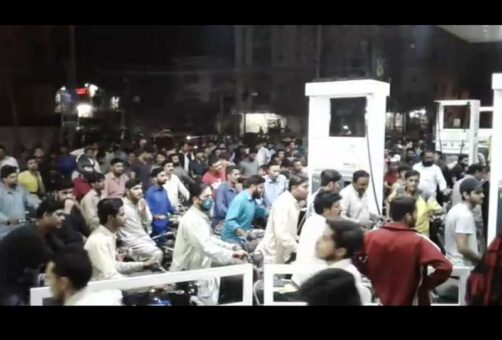
    KARACHI: Pakistan Petroleum Dealers Association (PPDA) on Saturday announced a complete shutdown of petrol pumps from July 18, 2022 in protest of rise in cost of doing business and falling dealers margin.

    READ MORE: NA approves levy on petroleum products up to Rs50/liter

    Abdul Sami Khan, Chairman, PPDA at a meeting discussed the current dealers margin, which were forcing petroleum dealers to shut down their business. The association demanded that the dealers margin should be enhanced to 6 per cent.

    Sami Khan said that due to high cost of electricity their profit margin declined drastically. Besides, massive hike in prices of petroleum products also affected their business adversely.

    READ MORE: New prices of petroleum products in Pakistan from July 01, 2022

    He further added, the protest shut down would continue till the demands were accepted. He said that fuel stations could not continue supply while sustaining continuous losses. At present the dealers are receiving margin after deduction of tax at Rs3.20 per liter on diesel and Rs3.90 on petrol per liter.

    READ MORE: Petroleum levy to generate Rs750 billion

    He also recalled the promise of increasing margin to 4.5 per cent given by the previous PTI government but due to increased prices of diesel and petrol, the PPDA is facing many problems in operating the fuel stations.

    The chairman threatened the present coalition government led by PML-N to close down the fuel stations if the demand of increasing margin to 6 per cent is not accepted.

    READ MORE: What are new petroleum prices in Pakistan?

  • Petroleum prices in Pakistan push inflation 13-year high

    Petroleum prices in Pakistan push inflation 13-year high

    KARACHI: The continuous rise in petroleum prices in Pakistan have pushed headline inflation up 13-year high at 21 per cent in June 2022.

    (more…)
  • New prices of petroleum products in Pakistan from July 01, 2022

    New prices of petroleum products in Pakistan from July 01, 2022

    ISLAMABAD: The government of Pakistan has announced another raise in prices of petroleum products effective from July 01, 2022.

    The new prices of petrol have been increased by Rs14.85 per liter to Rs248.74 from Rs233.89.

    The rate of high speed diesel has been increased by Rs13.25 per liter to Rs276.54 from Rs263.31.

    The rate of kerosene oil has been increased by Rs18.83 per liter to Rs230.26 from Rs211.43.

    READ MORE: New petroleum prices in Pakistan from June 16, 2022

    Similarly, the rate of light speed diesel has been increased by Rs18.68 per liter to Rs226.15 from Rs207.47.

    The National Assembly on Wednesday passed the Finance Bill 2022, which enabled the government to impose petroleum levy up to Rs50 per liter on petroleum products.

    At present the government is not charging a levy on sale of petroleum products.

    Besides, the sales tax is also at the minimum level of zero per cent on petroleum products.

    READ MORE: Petroleum prices in Pakistan may rise from July 01, 2022

    The previous government of PTI had kept both the petroleum levy and sales tax at zero in order to provide relief to the masses. The PTI government also provided a huge subsidy on prices of petroleum products in order to lower the rates and provide relief to the masses.

    However, former Prime Minister Imran Khan was removed through a vote of no-confidence motion on April 10, 2022.

    Since then the new coalition government led by PML-N increased the prices of petroleum products sharply on three different occasions.

    READ MORE: New petroleum prices in Pakistan from June 03, 2022
    The new government of Prime Minister Shehbaz Sharif increased the prices of petroleum products on May 26, 2022, June 02, 2022 and June 15, 2022. Cumulatively, the government increased the price of petrol by 84 per liter in these price hikes.

    The present government in the budget estimated to collect Rs750 billion as petroleum levy during the fiscal year 2022/2023. As this fiscal year is starting from July 01, 2022, it is likely that the government will opt to impose the levy from this date.

    Shaukat Tarin, former finance minister during PTI tenure said that on the demand of the International Monetary Fund (IMF) the government was increasing the rates of petroleum products. The government will further increase the prices of petroleum products to Rs300 per liter.

    READ MORE: Petroleum prices in Pakistan from June 01, 2022

    In a Tweet he said: “IMF wants more prior actions before they even consider taking the proposal to their board. Rs 855 billion Petroleum Development Levy (PDL) and 11 per cent sales tax. Will push cost to Rs300+/litre. Immediate increase in electricity prices. Rs800 billion provincial surpluses signed off by provinces, when they showed only Rs80 billion.”

    Previously, the government announced the increase of the price of diesel to Rs263.31 per liter effective from June 16, 2022. The rate of high speed diesel had been increased by Rs59 per liter. The rate of this product was Rs144.16 as of May 26, 2022. A cumulative increase of Rs119 during the past 20 days. Similarly, the price of petrol increased by Rs84 to Rs233.89 from Rs149.89 as of May 26, 2022.

    READ MORE: Petroleum levy to generate Rs750 billion

  • Petroleum prices in Pakistan may rise from July 01, 2022

    Petroleum prices in Pakistan may rise from July 01, 2022

    KARACHI: The prices of petroleum products in Pakistan are likely to increase due to planned implementation of petroleum levy and sales tax from July 01, 2022.

    The National Assembly on Wednesday passed the Finance Bill 2022, which enabled the government to impose petroleum levy up to Rs50 per liter on petroleum products.

    READ MORE: New petroleum prices in Pakistan from June 16, 2022

    At present the government is not charging a levy on sale of petroleum products.

    Besides, the sales tax is also at the minimum level of zero per cent on petroleum products.

    The previous government of PTI had kept both the petroleum levy and sales tax at zero in order to provide relief to the masses. The PTI government also provided a huge subsidy on prices of petroleum products in order to lower the rates and provide relief to the masses.

    READ MORE: New petroleum prices in Pakistan from June 03, 2022
    However, former Prime Minister Imran Khan was removed through a vote of no-confidence motion on April 10, 2022.

    Since then the new coalition government led by PML-N increased the prices of petroleum products sharply on three different occasions.

    The new government of Prime Minister Shehbaz Sharif increased the prices of petroleum products on May 26, 2022, June 02, 2022 and June 15, 2022. Cumulatively, the government increased the price of petrol by 84 per liter in these price hikes.

    READ MORE: Petroleum prices in Pakistan from June 01, 2022

    The present government in the budget estimated to collect Rs750 billion as petroleum levy during the fiscal year 2022/2023. As this fiscal year is starting from July 01, 2022, it is likely that the government will opt to impose the levy from this date.

    Shaukat Tarin, former finance minister during PTI tenure said that on the demand of the International Monetary Fund (IMF) the government was increasing the rates of petroleum products. The government will further increase the prices of petroleum products to Rs300 per liter.

    In a Tweet he said: “IMF wants more prior actions before they even consider taking the proposal to their board. Rs 855 billion Petroleum Development Levy (PDL) and 11 per cent sales tax. Will push cost to Rs300+/litre. Immediate increase in electricity prices. Rs800 billion provincial surpluses signed off by provinces, when they showed only Rs80 billion.”

    READ MORE: Petroleum levy to generate Rs750 billion

    Previously, the government announced the increase of the price of diesel to Rs263.31 per liter effective from June 16, 2022. The rate of high speed diesel had been increased by Rs59 per liter. The rate of this product was Rs144.16 as of May 26, 2022. A cumulative increase of Rs119 during the past 20 days. Similarly, the price of petrol increased by Rs84 to Rs233.89 from Rs149.89 as of May 26, 2022.

    New prices of petroleum products with effect from June 16, 2022 are as follows:

    i. MS ( Petrol) Rs. 233.89/Liter

    ii. High Speed Diesel(HSD) Rs. 263.31/Liter

    iii. Kerosene (SKO) Rs. 211.43/Liter

    iv. Light Diesel Oil (LDO) Rs. 207.47/Liter.

  • Pakistan’s central bank launches digital financial literacy for farmers

    Pakistan’s central bank launches digital financial literacy for farmers

    KARACHI: The State Bank of Pakistan (SBP) on Wednesday said it launched a series of videos about agriculture financing products for farmers.

    The central bank in a statement said it had launched a series of videos in national and regional languages about agriculture financing products and procedures to create awareness among the farming communities across the country, especially in the underserved areas.

    READ MORE: Meezan Bank installs 1000th ATM

    These videos will be disseminated through social media and digital platforms of SBP and all agriculture lending banks.

    Lack of awareness among farmers about agriculture financing products and services remains one of the challenges for banks to access rural markets and extend outreach of formal financial services to the farming communities.

    Capacity building & awareness creation is, therefore, an important area of focus amongst SBP’s various initiatives for promotion and development of agriculture financing in the country.

    READ MORE: Pakistan banks to remain closed on July 01, 2022

    SBP has been organizing various awareness and capacity building programs for farmers; however, farming communities still lack awareness at the grassroots level to avail and optimally utilize formal financial services.

    In order to address this lack of awareness and to broaden the scope of SBP’s campaigns, the potential of digital media is being explored.

    Rapid penetration of internet and increased usage of smartphones across the country has presented an opportunity to harness digital platforms for disseminating information instead of relying on conventional awareness sessions, which have limited outreach.

    The use of digital medium is not only helpful in spreading the message to a wider audience in a timely and cost effective way, but also enables such messages to have higher rate of comprehension and retention.

    The first video in this series covers the overall agriculture financing landscape of the country, SBP’s initiatives and GoP’s schemes, all from a farmer’s perspective.

    READ MORE: Standard Chartered facilitated by BenchMatrix

    Keeping in view the need for enhancing accessibility of credit in the diverse underserved areas, this video has also been translated into three regional languages apart from Urdu, i.e. Sindhi, Balochi and Pashto.

    The next two videos in the series focus on crop and non-crop sector, including information regarding agriculture loan products, and diving deeper into the procedures and documentation required for both segments.

    READ MORE: Pakistan-issued prize bonds expire on June 30, 2022

    It is expected that these videos will help the farming community to overcome their reluctance in availing credit from banks.

    Moreover, to augment SBP’s initiative and achieve greater reach, agriculture lending banks will also share these videos on their respective social and digital media channels which will encourage banks to develop similar informative videos on product and financing opportunities to agro-based businesses as well.

  • GIZ Pakistan organizes certificate award ceremony

    GIZ Pakistan organizes certificate award ceremony

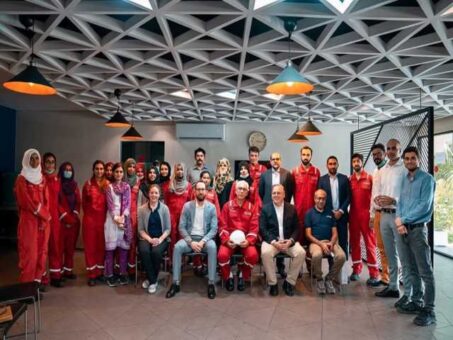
    LAHORE: Deutsche Gesellschaft fur Internationale Zusammenarbeit (GIZ) Pakistan has organized certificate award and showcasing programme achievements ceremony under clean power purchasing development project.

    A certificate award ceremony for Master Trainers in Entrepreneurial Skills trained at the Professional Development Center of National University of Science & Technology (NUST) Islamabad under the Clean Power Purchasing Development project. The project is being implemented by Deutsche Gesellschaft fur Internationale Zusammenarbeit (GIZ) as part of the DeveloPPP.de Programme of German Federal Ministry for Economic Cooperation & Development (BMZ).

    Chief Operating Officer TEVTA Punjab, Zaheer Abbas was the chief guest at the occasion who distributed the certificates to the master trainers along with Ms. Iris Cordelia Rotzoll, Head of Programme TVET Sector Support Programme GIZ, Muhammad Ishaq Bhatti, Chairperson Solar Quality Foundation (SQF), Faisal Mahmood, Regional Coordinator (Punjab) and DV Clean Power Purchasing Development Project, and Haseeb Saadat CEO Allied Solar Private Limited & local partner of Power One for One Germany.  Other senior officials and heads of institutes from Punjab TEVTA were also present at the occasion.

    The DV Clean Power Purchasing Development Project, Faisal Mahmood presented the programme achievements over the last three years. The project has trained 37 Master Trainers on technical skills related to design, installation, O&M of solar PV plants, 30 Assessors in CBT&A to support implementation of National Vocational Qualification in Solar PV, and 40 TVET Professionals from TEVTA Punjab and PVTC on Entrepreneurial Skills to promote entrepreneurship in the Solar PV sector. A 10-kW grid-connected pilot solar PV plant was installed with the support of project partner Power One for One at TEVTA Government Technical Training Institute, Gulberg Lahore for education purpose.

    Addressing to the participants, the Head of TVET Sector Support Programme GIZ, Ms. Iris Cordelia Rotzoll, stated that all these efforts not only lead to a new beginning and small steps toward sustainable energy generation and management, but also open avenues to promote the trend of green skills in Pakistan. The master trainers, trainers and assessors trained in Solar PV technology will create a pathway for internal and external buy-in among more and more TVET trainers and managers.

    Speaking at the ceremony Zaheer Abbas appreciated the role of German cooperation for promotion of clean energy in Pakistan through DeveloPPP Programme. He highlighted the fact that promotion of green skills is inevitable to fight the global climate change and save the environment while also conserving the natural resources. He expressed his resolve that master trainers trained under the project will be utilized to support implementation of solar PV training courses in Punjab and increase the quality & access to trained human resource for solar companies.

  • OTP requirement abolished for USC purchases

    OTP requirement abolished for USC purchases

    ISLAMABAD: The government has abolished the requirement of One-Time Password (OTP) for purchases from Utility Stores Corporate (USC) at subsidized rates.

    Keeping in view the plight of the public, Prime Minister Shehbaz Sharif has abolished the One Time Password System used for purchases at utility stores, according to a statement issued on Sunday.

    READ MORE: ECC approves Ramzan relief package worth Rs8.28 bn

    Original ID cards will now have to be displayed at the counter for purchasing subsidized items at utility stores.

    The photocopy requirement has also been removed and declared to receive a confirmation SMS to the customer’s registered mobile number after purchase.

    READ MORE: USC, NBP complete integration for Ehsaas Rashan

    The Utility Stores Corporation is pursuing a strategy of transparent transfer of federal government subsidies to the real beneficiaries.

    Under the federal government subsidy, sugar is available at 70 rupees per kg, ghee at 300 rupees per kg and a 10 kg bag of flour at 400 rupees at all utility stores across the country.

    READ MORE: USC automation to ease provision of targeted subsidy

    Rice and pulses are also being subsidized.

    In addition, more than 1,500 standard items are available at a much lower price than the general market.

    READ MORE: USC to announce special discount package for Ramazan

  • Leadership’s role crucial for Pakistan’s progress: Arif Alvi

    Leadership’s role crucial for Pakistan’s progress: Arif Alvi

    ISLAMABAD: The role of leadership is very crucial in challenging times; it is about understanding issues and being persistent in the pursuit of solutions. If the leadership is clear-headed, it can lead the nation on the path to progress.

    Dr. Arif Alvi, President of the Islamic Republic of Pakistan said in an exclusive interview with Muhammad Azfar Ahsan, CEO and Founder CORPORATE PAKISTAN GROUP and Nutshell Group.

    The President said that stability in the economy does not happen overnight; it needs sustainable efforts for an elected government based on competent people with the right skill set to address issues of public interest. In Pakistan, unfortunately, public representatives become part of the assemblies on the basis of relationships in different communities.

    Dr. Alvi said that the Charter of Economy seems a very promising idea for the stability of the economy, but it is challenging in a country where different political parties have starkly different political ideologies; however, the best course of action for economic progress is a democratic setup which is empowered through votes.

    Pakistan has fared far better than world economies during the last few years, particularly during the COVID-19 pandemic, the President said. He hoped that Pakistan will soon get out of the ongoing crisis, which has a lot to do with global inflationary trends as well as domestic uncertainties.

    “I am optimistic that the situation will get better in Pakistan, which was first the victim of a long wave of terrorism that kept the foreign investors at bay. By the grace of God, we fought well against terrorists and prevailed. Then the COVID-19 pandemic came, and Pakistan fought that battle well too,” the President further said.

    He emphasized that the adoption of knowledge and technology in the system is needed to bring change in our society, and this can be pursued better by the private sector than government institutions, but the policies should be consistent, and their implementation should be speedy.

    Dr. Alvi said that he is a firm believer that the focus of Parliament and leadership should be on access to education for the masses. “There is a huge gap in education in Pakistan; it is going to be the single biggest issue in the next ten years. Uneducated people should receive suitable skills, and those with a mediocre educational background should be equipped with a better skill set,” he added.

    The President praised the overseas Pakistanis for their unwavering support and valuable contribution to the economy, urging them to provide intellectual support for the empowerment of the Pakistani people, mainly through education.

    The overseas Pakistani diaspora comprises workers, largely in the Middle Eastern countries, but a significant section, of up to 10%, is well settled in different countries; they can play a significant role for the development of Pakistan, the President said. “I requested them to adopt health and education institutions in Pakistan as the world needs human intellect. For instance, in cyber defense and cyber protection, the world needs 80 million professionals. I told them that every professional they train in this field will get work. There are so many other fields that need human resources,” he added.

    Speaking about the geopolitical situation, Dr. Alvi opined that Pakistan should follow a smart approach which must be independent, while avoiding a definite tilt towards a specific bloc. To withstand pressures from different sides, he said that the economy needs to stand on its own feet. Plus, we must prefer sovereignty (khuddari) for the nation.

    To a question about the growing polarization in Pakistani society and what should his role be as the head of the state, Dr. Alvi replied that he may not be able to convince the most polarized people to change their views, but he can unite the less polarized people around national causes.

    “In COVID times, I did my best to keep Ulemas on board, and it worked very well. What we decided with the religious fraternity in Pakistan, the Muslim world followed the same later, e.g. keeping the mosques open for prayer during the pandemic,” Dr. Arif Alvi said.

    He mentioned that the Presidency played a role in raising its voice on the issue of women’s right to inheritance. It also provided significant support to the PM Digital Skills Program, in which 24 million people participated, and a significant number out of them is making good money to support their families.

    Regarding the future of Pakistan, Dr. Alvi said that the country is destined for development and prosperity due to its remarkable potential, but its institutions should be strengthened on a sustainable basis. A knowledge-based Pakistan needs less brick-and-mortar investment and more intellectual investment, he said.

    The nation should elect a good leadership, and it is then up to the leadership to establish institutions and rid Pakistan of people with the vested interests, he concluded.

  • Social media erases line of truth, lies: Khurram Dastagir

    Social media erases line of truth, lies: Khurram Dastagir

    KARACHI: Social media has erased the line between truth and lies, and this is in my view is extreme reporting.

    “Where facts, reality are manufactured but only if you have sufficient manpower and resource, you can alter reality,” said Federal Minister of Power Khurram Dastagir Khan at the keynote address on the second day of the two-day conference on ‘Extreme Reporting: Conflict and Peace in the Digital Age’ held at the Centre of Excellence in Journalism at the Institute of Business Administration (CEJ-IBA) on Sunday.

    “Extreme reporting is an endeavor that requires bravery and strength and courage. If you look at Pakistan’s history there have been courageous men and women who have tried to express the truth and they have suffered for it. For example, Journalists have been shot in broad daylight, kidnapped and what not.

    “But the media has failed to save the public from lies. It has put us in a difficult position. It might be an exaggeration to say so but this erasure of the line between truth and lies is endangering democracy worldwide. But in this country, where democracy is a one leaf plant, is crushed every so often. The media’s challenges are immense – almost the same as those as elected representatives because there are certain truths that cannot be said in this country and that is a fact. Just look at Balochistan…why are we not allowed to talk about its truth,” he added. 

    The federal minister touched upon the civil military relationship and how it impacts the economy, the 2018 elections, ownership of media outlets, evolving technology and what is the truth. He also recited a couplet by Allama Iqbal.

    Peace Award

    As the conference concluded, the CEJ-IBA recognized and awarded journalists with the Peace Journalism awards which were a part of the Peace Journalism Program held by the CEJ in collaboration with US Consulate Karachi.

    Mehreen Burney from Lok Sujag, PTV World reporter Tayyaba Nisar Khan, freelance journalist Afifa Nasarullah (Best Multimedia Story), Lok Sujag’s Kaleemullah received awards for their outstanding stories.

    Reporter Faiza Gillani received the Best Acknowledgement Award and Swat’s Asmat Ali Akhun of Daily Jehan got the Special Mention Award.

    Speaking at the award ceremony, US Consul General Mark Stroh said: “It has been a really fascinating couple of days. The US is supporting this Centre and training because we are committed to supporting journalists in Pakistan. We are proud to support this training programs at the CEJ-IBA. A strong professional press is important – especially in conflict – and it is through such trainings and conferences where journalists can play their role in shaping the discourse.”

    The day ended with dinner and a musical performance by The Sketches.

    The second day of the conference kicked off with a session on reporting from a conflict zone. The session was moderated by seasoned journalist Aamer Ahmed Khan. The panel included CNN’s Sophia Saifi, journalist and editor Raza Hamdani, WIONews bureau chief Anas Malick, TNN’s Khalida NAz and BBC’s Sahar Baloch.

    The panel discussed at length the dangers of reporting from a conflict zone and shared their personal experiences. They talked about the importance of safety trainings and mental health check ins.

    ‘Woman have to think about additional safety measures when reporting in conflict zones’, said Ms Saifi.

    “You are never prepared enough to be in a conflict zone, regardless of how well you know the region or how much you’ve studied or learnt over the years,” said Mr Malick.

    BBC Urdu correspondent Sahar Baloch agreed with Mr Malick and said that anything can happen in the field.

    Talking about the pressure from the desk while reporting in a conflict zone, Ms Baloch said that there is a style guide but “we are still told what to say. There is a lot of pressure. In print, it is easier as you can write it but on TV or on camera it is different. It sets a tone for your entire coverage. Also look at social media which does set another narrative. Each and every situation, however, is different,” she added.

    The second session of the day, ‘Beyond Conflict?’ was moderated by media personality and lawyer Ayesha Tammy Haq. She was joined on stage by journalist and researcher Iftikhar Firdous, author and communication specialist Shahzad Sharjeel, journalist and writer Umber Khairi and journalist Zia Ur Rehman on the panel.

    The panel discussed reporting in a post conflict world and the need for media houses to invest in their reporters.

    Talking about how the panel and participants were born in times of conflict and are products of conflict, Ms Khairi said that conflict is everywhere, the entire country is in conflict. “Yesterday at a session, we saw two politicians who had so much conflict in their tones and what they were talking about. I think it is important that when you look at conflict, you need to have some form of a reconciliation process as well.

    For journalist Zia Ur Rehman, he only remembers conflict. “I was born in Karachi, my entire upbringing – school and university, everything was and still is in conflict. I don’t think conflict has ended, I think it has transformed and has a new face,” he said.

    “If you look at Karachi, the conflict might look like its gone away but it has just been pushed into the background. The political, ethnic and sectarian conflict still exists but is not mainstream right now. We haven’t tried to understand or investigate why,” he added.

    The last session of the day was ‘Is The Future Now?’ which was moderated by Dawn.com’s editor and chief digital strategist, Jahanzaib Haque. He was joined on stage by policy analyst and editor of The Friday Times and Naya Daur Raza Rumi, Balochistan Voices’ Adnan Amir, TV producer and co-founder of The Current Mehmal Sarfaraz and the founder of The Centrum Media, Talha Ahad.

    “Digital media is not the future, it is the present. Legacy media is out. In less than a decade or so you will see less public trust in legacy media and their business sense as well. On the other hand, social media has its own issues and digital has its own issues,” said Rumi.

    For journalist and researcher Adnan Amir, when he started his career in journalism in Quetta, there was no space for him to contribute and mainstream media was not interested in covering Balochistan much.

    “So me and a few other journalists got together and started our own platform ‘Balochistan Voices’ to get the news out. It is in English so our news would be accessible to a wider audience. We focus on different stories. For example, we did a data journalism piece on highway deaths in Balochistan and found out that more people die on the highway than terrorism,” he said.

    This conference is a part of the Peace Journalism program, held by the CEJ in collaboration with US Consulate Karachi, that began in May 2021 and will conclude this month. The program included online workshops on peace and conflict reporting, mobile journalism, data journalism, social media & photojournalism. The program also offered a mentorship with senior journalists.

    Around 63 journalists from all over Pakistan were trained as a part of this program. The program was divided into trainings and mentorships. The theoretical, technical and optional trainings were conducted by journalists, editorial consultants, documentary filmmakers, editors and photojournalists including: Beena Sarwar, VOA Bureau Chief for Afghanistan & Pakistan Ayesha Tanzeem, Shahzad Sharjeel, Hina Ali and Independent Urdu’s Social Media Editor Saqib Tanveer, Shahzeb Ahmed Hashim, Director of the Pakistan Initiative at the Atlantic Council’s South Asia Center Uzair Younus, VICE World News South Asia Editor Sahar Habib Ghazi, Founder and CEO of The Centrum Media (TCM) Talha Ahad, US-based photojournalist Sally Ryan, and Khaula Jamil. 

    The participants of this program were mentored by senior journalists Shahzad Sharjeel, Lok Sujag’s Badar Alam, Beena Sarwar and Ayesha Tanzeem. Under the guidance of these mentors, the participants worked on their stories which were published on different media outlets and platforms.

    The published stories were then judged by a panel of judges, Umber Khairi, Former Producer BBC, Zeeshan Haider, Editor BBC Urdu and Raza Hamdani, Former Consultant Editor, The Independent.

  • SBP seeks Supreme Court guidance on Riba case judgement

    SBP seeks Supreme Court guidance on Riba case judgement

    KARACHI: The State Bank of Pakistan (SBP) on Saturday said it had approached Shariat Appelate Bench of the Supreme Court for guidance on decision of Federal Shariat Court in Riba case.

    In a statement the central bank said the SBP welcomes the Federal Shariat Court’s Judgement of April 28, 2022 on Riba case, as has already been done by the Honorable Finance Minister. In particular, we appreciate the substantive part of the decision. 

    READ MORE: IPS demands implementation of court judgment on Riba

    As the prime custodian and regulator of the financial and monetary framework of the Islamic Republic of Pakistan, SBP is deeply committed to ensuring compliance with the injunctions of Islam, in particular those pertaining to riba, while protecting the stability and security of the financial sector of the country that functions as part of the global financial system. 

    In this context, SBP has always remained at the forefront in promoting Islamic banking in the country. SBP is among the few regulators across the globe where comprehensive legal, regulatory and Shariah Governance frameworks have been successfully developed and implemented. 

    READ MORE: Court judgment: Riba is Haram in any form

    Currently, 22 Islamic Banking Institutions (5 full- fledged Islamic banks and 17 conventional banks having standalone Islamic banking branches) with a branch network of 3,983 branches along with 1,418 Islamic banking windows (Islamic banking counters at conventional branches) are operational across the country. The industry now accounts for 19.4 percent of the country’s overall banking system in terms of assets while in terms of deposits the share is 20 percent (as of March 31, 2022).

    READ MORE: FSC reserves judgment in Riba free banking case

    In addition, SBP has also been taking measures to bring the legal and regulatory infrastructure in compliance with Shariah principles.

    After detailed review of the judgment and based upon the advice of our Chief Legal Adviser and external counsel, we have sought guidance from the honorable Shariat Appelate Bench of the Supreme Court in terms of its implementation and practicalities involved.