Find top stories in this section. Pakistan Revenue brings you the latest and most important news from Pakistan and around the world, keeping you informed with key updates and insights.
ISLAMABAD: The federal government on Wednesday announced an increase of 15 per cent in salaries of employees from BS-1 to BS-19.
A statement issued by the Finance Division, an arm of the Finance Ministry, said that the government had decided to give 15 per cent disparity allowance on running basic pay to less privileged employees from BS-1 to BS-19 with effect from March 01, 2022. The above package is also recommended to the provinces for adoption from their own funds.
Further, a summary for timescale promotion has been initiated by the Finance Division to mitigate the hardship being faced by employees stuck in the same grade for a long time.
The matter of upgradation of posts on the analogy of Khyber Pakhtunkhwa will be decided based on the findings of the study being conducted by MS Wing of the Establishment Division by end April 2022.
Further, the merger of Adhoc Relief/Allowances into pay will be decided on report of pay and pension commission and will be merged in basic pay as per agreement.
ISLAMABAD: The federal government has expanded the list of goods for export to Afghanistan and through Afghanistan to Central Asian Republics without requirement of E-form and against Pakistan Rupee (PKR).
In this regard the ministry of commerce issued SRO176(I)/2022 dated February 04, 2022 to amend Export Policy Order 2020.
As per the export policy order, export goods to Afghanistan and through Afghanistan to Central Asian Republics are allowed against Pakistan currency on filing of regular shipping bills without the requirement of E-form.
Prior to the amendment, the allowed goods are included: fruits; vegetables; dairy products; and meat. However, after the amendment more number of goods have been added to the list, which included: rice; fish and fish products; poultry, meat and products; sugar confectionary and bakery products; fruits, nuts and other edible parts of plants; oilcake and other solid residues; vegetable materials and vegetable waste; salt; cement; pharmaceuticals; matches; textile and textile articles; building stone; and surgical instruments.
As per the Export Policy Order, 2021, the goods are not entitled to: zero rating of sales tax on taxable goods; rebate of central excise duty; and payment of drawback of customs duty.
ISLAMABAD: Pakistan’s fiscal deficit during the first half (July – December) of 2021/2022 has contracted at 2.1 per cent as compared with 2.5 per cent in the same half of the last fiscal year, the finance ministry said on Wednesday.
The reduction in deficit mainly contraction in expenditure during the half.
The revenue to the GDP ratio fell to 6.2 per cent during the first half of the current fiscal year as compared with 7.4 per cent in the same half of the last fiscal year.
The expenditure to the GDP ratio also declined to 8.2 per cent during the first half of the current fiscal year as compared with 9.9 per cent in the same half of the last fiscal year.
The GDP size during the first half of the current fiscal year has been measured at Rs63.978 trillion as compared with Rs45.567 trillion in the same half of the last fiscal year.
According to the fiscal operation for first half (July – December) 2021/2022 released by the finance ministry, the total revenue was recorded at Rs3.95 trillion, out of which, the tax revenue was at Rs3.19 trillion and non-tax revenue was Rs764.93 billion.
Total expenditure during the first half of the current fiscal year has been recorded at Rs5.32 trillion. The current expenditure has been recorded at Rs4.67 trillion, out of which Rs520 billion was spend on defence. An amount of Rs571 billion was spent for development expenditure and net lending.
To meet the budget deficit of Rs1.372 trillion, the government borrowed Rs 1.025 trillion from external sources and remaining Rs346 billion arranged from domestic sources.
ISLAMABAD: The Federal Board of Revenue (FBR) on Tuesday said that all the offices of Inland Revenue (IR) will work on Saturdays to meet the revenue collection target.
The FBR in an official memo said that in order to enhance the efforts to meet the revenue target for the current financial year 2021/2022, all field formations will remain open and observe normal working hours on Saturdays with effect from February 12, 2022 till further orders.
The FBR directed the Chief Commissioners IR to ensure that COVID-19 preventive SOPs are strictly followed.
So far the FBR has successfully maintained momentum of its growth trajectory in revenue collection.
According to the provisional figures FBR collected net revenue of Rs 3,352 billion during July, 2021 to January, 2022 of current Financial Year 2021-22, which has exceeded the target of Rs 3,090 billion by Rs 262 billion. This represents a growth of about 30.4 per cent over the collection of Rs. 2,571 billion during the same period, last year.
The net collection for the month of January, 2022 realized Rs. 430 billion representing an increase of 17.2 per cent over Rs 367 billion collected in January, 2021. These figures would further improve before the close of the day and after book adjustments have been taken in to account.
On the other hand, the gross collections increased from Rs 2,705 billion during July, 2021 to January, 2022 to Rs 3,533 billion in current Financial Year July, 2021 to January, 2022, showing an increase of 30.6 per cent.
Likewise, the amount of refunds disbursed was Rs 182 billion during July, 2021 to January, 2022 compared to Rs 134 billion paid last year, showing an increase of 35.9 per cent.
KARACHI: The State Bank of Pakistan (SBP) has imposed penalty of Rs58 million on five commercial banks for violating regulatory provisions during quarter ended December 31, 2021.
According to an official note released on Tuesday, the SBP said it had imposed penalty on five commercial banks, included: Bank Alhabib Limited, The Bank of Punjab, Standard Chartered Bank (Pakistan) Limited), Askar Bank Limited and National Bank of Pakistan.
The central bank said that the penalty was imposed on the banks for violating regulatory instructions pertaining to general banking operations.
The details of monetary penalties on the banks are: Bank Alhabib Limited, Rs13.684 million; The Bank of Punjab, Rs12.545 million; Askari Bank Limited, Rs10.300 million, National Bank of Pakistan, Rs10.26 million.
The SBP said that in addition to penal action, the bank has been advised to strengthen processes with respect to identified areas.
The total monetary penalty on banks during past six months (July – December) 2021 has increased to Rs523 million.
Previously, the SBP imposed monetary penalty of Rs455 million on four banks for the quarter ended September 30, 2021. During this quarter the SBP imposed heavy penalty of Rs280.51 million on National Bank of Pakistan (NBP) for violating regulator instructions pertaining to AML/CFT. Similarly, an amount of Rs132.437 has been imposed on Silk Bank Limited for violating provisions of anti-money laundering and counter financing of terrorism.
Furthermore, the central bank imposed penalties of Rs38.55 million and Rs13.54 million on United Bank Limited and Industrial and Commercial Bank of China-Pakistan Branches.
The Federal Board of Revenue (FBR) has executed a significant reshuffle within the Inland Revenue Service (IRS), affecting officers holding the rank of BS-20.
ISLAMABAD: The Federal Board of Revenue (FBR) has invited applications for 952 vacant posts for up to BS-14 in Pakistan Customs across the country.
The last date for submission of applications is February 26, 2022.
According to the FBR, applications have been invited for about 73 vacant posits in Directorate General of Transit Trade, Karachi. These included: Data entry operators (DEO) (BPS-14), three vacancies; sepoy (BS-05), 63 vacancies; and driver (BS-04), seven vacancies.
For vacant posts in Directorate of Transit Trade, Peshawar, the FBR invited applications for 23 posits, which included: DEO BS-14, two vacancies; sepoy BS-05, 48 vacancies; and driver BS-04, three vacancies.
The FBR announced 79 vacant posts at Directorate of Transit Trade, Quetta, which included: sepoy BS-05, 76 vacancies; and driver BS-04, three vacancies.
About 52 vacant posts have been announced at the Directorate of Transit Trade, Gwadar, which included: DEO BS-14, one vacancy; sepoy BS-05, 48 vacancies; and driver BS-04, three vacancies.
The applications have been invited for 24 vacant posts at the Directorate of Transit Trade, SOST, which included: DEO BS-14, one vacancy; sepoy BS-05, 22 vacancies; and driver BS-04, one vacancy.
The FBR invited applications for 58 vacant posts in the Directorate of Transit Trade, Lahore, which included: DEO BS-14, one vacancy; sepoy BS-05, 54 vacancies; and driver BS-04, three vacancies.
The applications have been invited for 347 vacant posts at the Collectorate of Customs Enforcement, Peshawar, which included: sepoy BS-05, 346 vacant posts; and driver BS-04, one vacancy.
About 153 vacant posts are created at the Collectorate of Customs Enforcement, Quetta, which included; sepoy BS-05, 150 vacant posts; and driver BS-04, 03 vacant posts.
The FBR invited applications for 50 vacant posts of sepoy BS-05 at the Collectorate of Customs, Gwadar.
Similarly, applications have been invited for 20 vacant posts of sepoy BS-05 at the Collectorate of Customs Enforcement, Multan.
The FBR invited applications for 15 vacant posts of sepoy BS-05 at the Directorate of Intelligence and Investigation-Customs, Quetta.
For Directorate of Intelligence and Investigation-Customs, Multan, applications have been invited for 05 vacant posts of sepoy BS-05.
The applications have been invited for 20 vacant posts of sepoty BS-05 in the Directorate of Intelligence and Investigation-Customs, Peshawar.
One vacant post of DEO-BS-14 is at Directorate of Law and Prosecution, Lahore.
Another one vacant post of DEO-BS-14 is at Directorate of Law and Prosecution, Peshawar.
Likewise, one vacant post of DEO-BS-14 is at Directorate of Law and Prosecution, Quetta.
REQUIRED QUALIFICATIONS, EXPERIENCE, AGE LIMIT FOR THE ADVERTISED POSTS:
S.#
Name of Post
Qualification/Experience
Age limit (including 5 years general relaxation)
1
Data Entry Operator (BPS-14)
i. 2nd Class or Grade “C” Bachelor’s Degree with Computer Science/ Physics/ Mathematics/ Statistics/ Economics from a recognized University. ii. Speed of 10,000 key depressions per hour on computer.
18-30
2
Sepoy (BPS-05)
Matric. Physical standard: (Male: Height 5’.6”, Chest 32” with expansion of 1.5”), (Female: Height 5’.2”).
18-30
3
Driver (BPS-04)
i. Primary. ii. Valid driving license holder and well versed in the traffic rules.
18-35
GENERAL INFORMATION / INSTRUCTIONS:
1. The eligible candidates are advised to apply online through National Job Portal Link https://njp.gov.pk . Candidates applying for more than one post should apply online separately for that post.
2. The candidates having domiciles of the relevant Region/ Province/ District under the jurisdiction of each Customs Collectorate/ Directorate (as mentioned in the column of Provincial / Regional Quota under the name of each Field Office) are eligible to apply against the posts vacant in the desired Field Offices. Both male and female candidates are eligible.
3. Candidates will be required to bring Original Documents and two (02) set of attested copies of document at the time of interview.
4. Skill test will be conducted for the post of DEO and Driver.
5. Physical standard (Height & Chest measurement alongwith any other physical tests that the Recruitment Committee deems necessary i.e. Running, Pushups, Chinups etc.) for the posts of Sepoy will be conducted for pre-screening of the candidates. Female candidates will also have to undergo Physical Standard (Height and other aforementioned test). In running test, male candidates will have to cover one Kilometer distance in 07 minutes while female candidates will have to cover one Kilometer distance in 10 minutes.
6. Only short-listed candidates on the basis of skill tests and physical standard will be called for test / interview. No TA / DA will be admissible for the Test / Interview.
7. 10% quota for Women, 5% quota for Minorities and 2% quota for disabled persons (if applicable) will be observed as per government instructions.
8. The Federal Government reserves the right not to fill any vacancy or to increase or decrease the number of vacancies if the circumstances so warranted.
9. The candidates working in Government / Public Sector Departments / Organizations should apply through proper channel.
10. Five (05) years general relaxation in upper age limit has already been included in the column of Age limit. In addition to the 5 years general age relaxation by the Government, any other age relaxation would be admissible as under:-
S#
Category of candidates
Age relaxation admissible
i)
(a) Candidates belonging to Scheduled Castes, Buddhist Community, recognized tribes of the Ex-FATA/PATA, Azad Kashmir and Gilgit-Baltistan for all posts under the Federal Government. (b) Candidates belonging to Sindh (R) and Balochistan for posts in BPS-15 and below under the Federal Government.
03 Years 03 years
ii)
Released or Retired Officers/ Persons of the Armed Forces of Pakistan.
15 years or the number of years actually served in the Armed Forces of Pakistan whichever is less.
iii)
Government Servants who have completed 02 years continuous Government Service on the closing date of receipt of applications.
10 Years, up-to the age of 55 years.
iv)
Disabled persons for appointment to posts in BPS 15 and below.
10 years
v)
Widow/ Widower, son or daughter of a deceased civil servant who dies during service.
05 years
11. Minimum and Maximum age shall be calculated on the closing date for receipt of applications.
12. Information provided while applying online will be verified. In case of any false or forged information, FBR reserves the right to cancel candidature of any person at any stage (even after employment, if so revealed later) and to initiate legal action against the applicant.
13. All candidates will be provisionally allowed to appear in the test/ interview subject to scrutiny of their eligibility after the recruitment process.
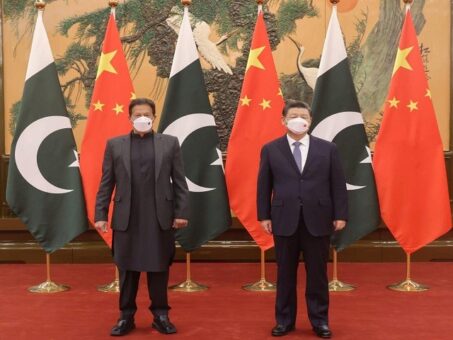
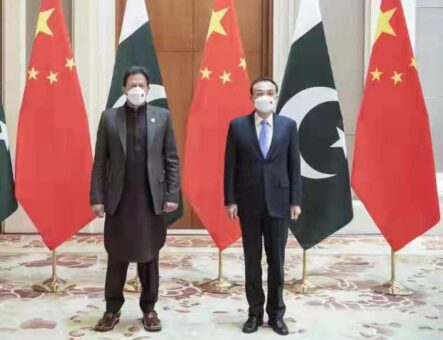
ISLAMABAD: Pakistan Prime Minister Imran Khan met Chinese President Xi Jinping at the Great Hall of People in Beijing on Sunday. The two leaders reaffirmed their resolve to building of the Pakistan-China Community for Shared Future in the New Era.
The Prime Minister renewed his invitation to President Xi Jinping to undertake a visit to Pakistan at his early convenience.
This was the first meeting of the two leaders since the Prime Minister’s visit to China in October 2019.
The two leaders reviewed the entire gamut of Pakistan-China bilateral cooperation and exchanged views on regional and global issues of mutual interest, in a warm and cordial atmosphere.
Prime Minister Imran Khan congratulated the leadership and people of China on successful hosting of the 24th Olympic Winter Games in Beijing and extended his best wishes on the Chinese Lunar New Year.
The Prime Minister underscored that China was Pakistan’s steadfast partner, staunch supporter and Iron Brother. The All-Weather Strategic Cooperative Partnership between Pakistan and China had withstood the tests of times and the two nations firmly stood side by side in realizing their visions and shared aspirations of peace, stability, development and prosperity.
The Prime Minister briefed President Xi on people-centered geo-economics vision and his Government’s policies for Pakistan’s sustained growth, industrial development, agricultural modernization, and regional connectivity.
He lauded China’s continued support and assistance to Pakistan’s socio-economic development which had greatly benefitted from the high quality development of CPEC.
The Prime Minister welcomed increased Chinese investments in CPEC’s Phase-II which centered on industrialization and improving people’s livelihoods. The Prime Minister shared his views with President Xi on growing polarization in the world which threatened unraveling of global developmental gains, and posed serious risks to the developing countries.
He highlighted that insurmountable challenges like climate change, health pandemics and growing inequalities could only be tackled though unqualified cooperation of all nations in accordance with the purposes and principles of the UN Charter.
In this regard, he lauded President Xi’s visionary Belt and Road and Global Development Initiatives which called for collective action for sustainable development and win-win outcomes.
The Prime Minister highlighted that atrocities being perpetrated in the Indian Illegally Occupied Jammu and Kashmir, and the persecution of minorities in India in advancing the Hindutva mindset of RSS-BJP, was a threat to regional peace and stability.
He added that rapid militarization of India was undermining regional stability.
Prime Minister Imran Khan highlighted that partnership between Pakistan and China was an anchor for peace and stability in the region and thanked China for its unwavering support to Pakistan’s sovereignty, territorial integrity, independence and national development.
The Prime Minister also reaffirmed Pakistan’s full support to China on all issues of its core interest. Both leaders acknowledged that a peaceful and stable Afghanistan would promote economic development and connectivity in the region and called on the international community to promptly assist the Afghan people in averting a humanitarian catastrophe.
Both leaders appreciated the signing of a number of agreements covering industrial cooperation, space cooperation, and vaccine cooperation.
BEIJING: Pakistan Prime Minister Imran Khan held wide-ranging talks with Li Keqiang, Premier of the State Council of the People’s Republic of China on Saturday.
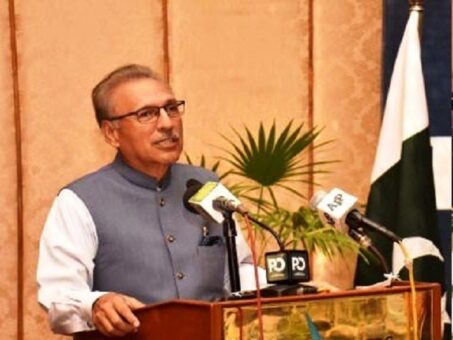
ISLAMABAD: The President of Pakistan, Dr. Arif Alvi has rejected the plea of the Federal Board of Revenue (FBR) in maladministration cases.
President Arif Alvi while upholding the decisions of Federal Tax Ombudsman regarding maladministration of FBR officials in processing refund cases has directed the FBR to implement FTO ‘s recommendations.
The departmental plea regarding bar on jurisdiction of FTO in such cases has also been set aside by the president .He has directed The commissioner –IR , Commission West ZONE Islamabad and commissioner I-R Enforcement 11- CTO Karachi their orders by exercising powers conferred U/S 122 A ,as per law and report compliance within 30 days.
In all three cases the background of the case was similar as under: In the first case pertaining to Sahiwal against order framed under section 170(4) of the income Tax Ordinance, 2001 (the ordinance) for tax year 2018 by commissioner I.R Sahiwal Nazir Ahmad Proprietor of M/s Bilal Commission Shop.
He filed a complaint before the Federal Tax Ombudsman against failure to dispose of refund application for tax year 2018 which was disposed of vide findings with the recommendations that FBR may direct the commissioner –IR, Sahiwal Zone to complete the verification and settle complainants refunds for tax years 2018,after providing him opportunity of hearing as per law.
In the second Case an individual filed return of income for tax year 2020 under section 114(1) of the ordinance claiming refund amounting to Rs 0.188 million and e-filed refund application for tax year 2020. He contended that the department issued notice under section 170(4) of the ordinance for functioning supporting evidence. Although short time was allowed but he made compliance whereas the unit officer without considering reply of the complainant passed the impugned order, in terms of section 170(4) of the ordinance whereby by the refund application was rejected. He therefore took up the matter with the Federal Tax Ombudsman by filing complaint under section.
Federal Tax Ombudsman thrashed the matter, directed FBR: It is an admitted position that the complaint e-filed refund application for tax year 2020. Evidently, the unit officer issued notice, under section 170(4) of the ordinance requiring the complainant to submit supporting evidence. Although the notice issued was in contravention of the FBR’S circular ,observed from perusal of the impugned order reflects that what to talk of providing statutory opportunity of impugned order passed under section 170 (4) of the ordinance.
In case No 3, Yousuf Irshad Hussain, (the complainant) a proprietor concern, filed returns of income for tax years 2016 to 2019 under section 114 (1) of the income tax ordinance ,2001 the ordinance claiming refund amounting to Rs 0.051 million, Rs 0.048 million, Rs 0.063 million and Rs 0.063 million and Rs 0.072 million.
He e-filed refund applications for tax years 2016 and 2019 along with evidence of tax deduction .however, despite his persistent efforts the zonal CIR failed to serve on the complainant orders in writing of the decisions in terms of section 170(4) of the ordinance within the stipulated time .he therefore took up the matter with FTO by filing complaint under section 10(1) of the FTO ordinance.