Category: Top stories

Find top stories in this section. Pakistan Revenue brings you the latest and most important news from Pakistan and around the world, keeping you informed with key updates and insights.

  • IMF outlines actions for Pakistan to release $1.059bn

    IMF outlines actions for Pakistan to release $1.059bn

    ISLAMABAD: The International Monetary Fund (IMF) on Monday outlined prior actions for Pakistan for the release f $1.059 billion under Extended Fund Facility (EFF).

    The IMF stated that its mission led Ernesto Ramirez Rigo held virtual discussions during October 4–November 18, 2021 in the context of the sixth review of the authorities’ reform program supported by the IMF’s Extended Fund Facility (EFF).

    The IMF said that it had reached a staff level agreement with the Pakistan authorities on policies and reforms needed to complete the sixth review under the EFF.

    The agreement is subject to approval by the Executive Board, following the implementation of prior actions, notably on fiscal and institutional reforms.

    Completion of the review would make available SDR 750 million (about US$1,059 million), bringing total disbursements under the EFF to about US$3,027 million and helping unlock significant funding from bilateral and multilateral partners.

    An additional SDR 1,015.5 million (about US$1,386 million) was disbursed in April 2020 to help Pakistan address the economic impact of the COVID-19 shock.

    Despite a difficult environment, progress continues to be made in the implementation of the EFF-supported program. All quantitative performance criteria (PCs) for end-June were met with wide margins, except for that on the primary budget deficit.

    Notable achievements on the structural front include the finalization of the National Socio-Economic Registry (NSER) update, parliamentary adoption of the National Electric Power Regulatory Authority (NEPRA) Act Amendments, notification of all pending quarterly power tariff adjustments, and payment of the first tranche of outstanding arrears to independent power producers (IPPs) to unlock lower capacity payments fixed in renegotiated power purchase agreements (PPAs).

    The authorities have also made progress in improving the anti-money laundering and combating the financing of terrorism (AML/CFT) framework, although some additional time is needed to strengthen its effectiveness.

    On the macroeconomic front, available data suggests that a strong economic recovery has gained hold, benefiting from the authorities’ multifaceted policy response to the COVID-19 pandemic that has helped contain its human and macroeconomic ramifications.

    The Federal Board of Revenue’s (FBR) tax revenue collection has been strong. At the same time, external pressures have started to emerge: a widening of the current account deficit and depreciation pressures on the exchange rate—mainly reflecting the compound effects of the stronger economic activity, an expansionary macroeconomic policy mix, and higher international commodity prices.

    In response, the authorities have started to adjust policies, including by gradually unwinding COVID-related stimulus measures.

    The State Bank of Pakistan (SBP) has also taken the right steps by starting to reverse the accommodative monetary policy stance, strengthening some macroprudential measures to contain consumer credit growth, and providing forward guidance.

    In addition, the government plans to introduce a package of fiscal measures targeting a small reduction of the primary deficit with respect to last fiscal year based on: (i) high-quality revenue measures to make the tax system simpler and fairer (including through the adoption of reforms to the GST system); and (ii) prudent spending restraint, while fully protecting social spending.

    These policies will help safeguard the positive near-term outlook, with growth projected to reach, or exceed, 4 percent in FY 2022 and 4.5 percent the fiscal year after that.

    However, inflation remains high, although it should start to see a declining trend once the pass-through of rupee depreciation is absorbed, and temporary supply-side constraints and demand-side pressures dissipate.

    However, the current account is expected to widen this fiscal year despite some export growth, reflecting the rising import demand and international commodity prices.

    However, this economic outlook continues to face elevated domestic and external risks, while structural economic challenges persist.

    In this regard, and looking beyond the near term, discussions also focused on policies to help Pakistan achieve sustainable and resilient growth to the benefit of all Pakistanis.

    On the fiscal policy front, staying on course on achieving small primary surpluses remains critical to reduce high public debt and fiscal vulnerabilities. Continued efforts to broaden the tax base by removing remaining preferential tax treatments and exemptions will help generate much-needed resources to scale up critical social and development spending.

    Monetary policy needs to remain focused on curbing inflation, preserving exchange rate flexibility, and strengthening international reserves.

    As economic stability becomes entrenched and the independence of the SBP is strengthened with the approval of the SBP Act Amendments, the central bank should gradually advance the preparatory work to formally adopt an inflation targeting (IT) regime in the medium term, underpinned by a forward-looking and interest-rate-focused operational framework.

    While some key elements of IT are already in place, including a medium-term inflation objective and prohibition of monetary financing, additional efforts are needed, to modernize the SBP’s operational framework as well as to strengthen monetary transmission and communication.

    Advancing the strategy for the electricity sector reforms, agreed with international partners, is important to bring the sector to financial viability, and tackle its adverse spillovers on the budget, financial sector, and real economy. In this regard, steadfast implementation of the Circular Debt Management Plan (CDMP) will help guide the planned management improvements, cost reductions, timely alignment of tariffs with cost recovery levels, and better targeting of subsidies to the most vulnerable.

    Substantially lowering supply costs, however, will require a modern electricity policy that: (i) ensures that PPAs do not impose a heavy burden on end-consumers; (ii) tackles the poor and expensive generation mix, including a wider use of renewables; and (iii) introduces more competition over the medium term.

    Strengthening the medium-term outlook, including by unlocking sustainable and resilient growth, creating jobs, and improving social outcomes, hinges on ambitious efforts to remove structural impediments and facilitate the structural transformation of the economy. To this end, increased focus is needed on measures to strengthen economic productivity, investment, and private sector development, as well as to address the challenges posed by climate change:

    Improving the governance, transparency, and efficiency of the state-owned enterprise (SOE) sector: Putting Pakistan’s public finances on a sustainable path—while leveling the playing field of firms across the economy and improving the provision of services—requires following through with the current reform agenda, especially with the: (i) creation of a modern legal framework; (ii) better sectoral oversight by the state, supported by regular audits, especially of the largest SOEs; and (iii) reduction of the footprint of the state in the economy, based on the recently completed comprehensive stocktaking.

    Fostering the business environment, governance, and the control of corruption:The business climate would benefit from simplifying procedures for starting a business, approving FDI, preparing trade documentation, and paying taxes; and the empowerment of people and production of more complex goods from investing more in education and human capital. Ensuring a level playing field and the rule of law also remains essential, mainly by bolstering the effectiveness of existing anti-corruption institutions and accountability of high-level public officials and by completing the much-advanced action plan on AML/CFT.

    Boosting competitiveness, and exports: To this end, key objectives include: (i) implementing the approved national tariff policy, based on time-bound strategic protection; (ii) negotiating new free trade agreements; and (iii) facilitating the integration in global supply chains by improving firms’ reliability and product quality, and registering firms with all necessary entities for tax and business purposes.

    Promoting financial deepening and inclusion: To better channel savings toward productive investment, improve the allocation of resources, and diversify risks, key policies remain: (i) entrenching macroeconomic stability; (ii) strengthening institutional and regulatory frameworks; (iii) creating conditions that allow for a greater role of private credit; and (iv) boosting financial coverage of underserved segments of the population and SMEs.

    Stepping up to climate change: Worldwide, Pakistan ranks both among the top 10 countries with the largest damages from climate-related disasters and top 20 countries with the largest greenhouse gas (GHG) emissions. Critical next climate policy steps are: (i) accelerating the finalization of the authorities’ National Adaptation Plan (NAP); and (ii) implementing an adequate set of measures to meet the COP26 Nationally Determined Contribution (NDC) targets and securing sufficient financing, including from international partners.

  • PM Imran directs facilitating Chinese industrialists

    PM Imran directs facilitating Chinese industrialists

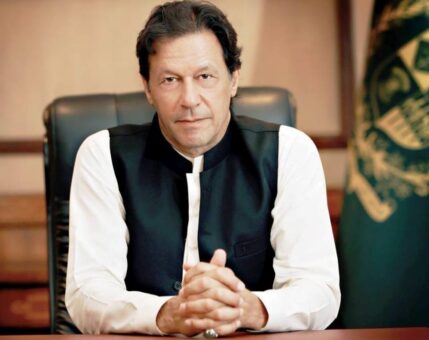
    ISLAMABAD: Prime Minister Imran Khan on Saturday directed the authorities to ensure all facilities on a priority basis to Chinese industrialists, who are ready to start operation in the country.

    In a meeting with Chinese businessmen, the prime minister said the country will support Chinese businesses in Pakistan on a priority basis and are grateful to them for their keen interest in accelerating their investment in Special Economic Zones (SEZs).

    The Chinese business delegation led by Chen Yan from Challenge Fashion (Pvt) Ltd.

    During the meeting, the prime minister was told that Chinese businessmen are almost ready to start operations in the glass, ceramics and information technology sectors.

    The prime minister said that Pakistan and China were connected not only in the past or present but would remain united through their future generations too.

    “We appreciate the valuable relationship of the peoples of the two countries,” he added.

    It is worth mentioning that OPPO, one of the leading tech manufacturers in the world, is going to establish a local mobile manufacturing unit and a research and development centre in Pakistan.

    It would not only save a lot of foreign exchange reserves on the import of smartphones annually but would also create employment opportunities for our tech graduates.

    The meeting was also attended by Energy Minister Muhammad Hammad Azhar, Advisor on Commerce Abdul Razzak Dawood, SAPM on Political Communication Dr Shahbaz Gill, SAPM on CPEC Affairs Khalid Mansoor and Chinese Ambassador Nong Rong along with senior officers concerned.

    In his remarks, Chinese Ambassador in Pakistan Nong Rong said that he was very happy as since the prime minister’s previous meeting with the Chinese businessmen on September 13, a lot of issues had been resolved and great progress had been achieved.

    He said that the Chinese entrepreneurs were encouraged and hoping great progress after this meeting.

    “We will send more positive information to China to encourage more Chinese businessmen to make decision to invest in Pakistan,” he commented.

    A Chinese entrepreneur representing OPPO, said that the company had already been present in Pakistan for more than seven years and had made around $150 million investment in the country.

    He said like other companies, for OPPO too, it was a very good environment in Pakistan to continue to invest there and the interaction with the prime minister helped the swift resolution of the issues.

    He thanked the prime minister for helping the Chinese businessmen by extending facilitation to them.

    “If anybody comes to me and ask should they invest in Pakistan, I will say yes,” he remarked.

  • SBP increases policy rate by 150 basis points to 8.75%

    SBP increases policy rate by 150 basis points to 8.75%

    KARACHI: The State Bank of Pakistan (SBP) on Friday decided to increase the key policy rate by 150 basis points to 8.75 per cent for next two months from the existing 7.25 per cent.

    At today’s meeting, the Monetary Policy Committee (MPC) decided to raise the policy rate by 150 basis points to 8.75 percent. This reflected the MPC’s view that since the last meeting, risks related to inflation and the balance of payments have increased while the outlook for growth has continued to improve, the SBP said.

    The heightened risks related to inflation and balance of payments stem from both global and domestic factors. Across the world, price pressures from Covid-induced disruptions to supply chains and higher energy prices are proving to be larger and longer-lasting than previously anticipated.

    In response, central banks have generally begun to tighten monetary policy to keep inflation expectations anchored. In Pakistan too, high import prices have contributed to higher-than-expected CPI, SPI, and core inflation outturns.

    At the same time, there are also emerging signs of demand-side pressures on inflation, and inflation expectations of businesses have risen on account of further upside risks from domestic administered prices.

    With respect to the balance of payments, the current account deficits in September and October have been larger than anticipated, reflecting both rising oil and commodity prices and buoyant domestic demand. The burden of adjusting to these external pressures has largely fallen on the rupee.

    As a result of these developments, the balance of risks has shifted away from growth and toward inflation and the current account faster than expected. Accordingly, the MPC was of the view that there is now a need to proceed faster to normalize monetary policy to counter inflationary pressures and preserve stability with growth.

    Today’s rate increase is a material move in this direction. Looking ahead, the MPC reiterated that the end goal of mildly positive real interest rates remains unchanged and, given today’s move, expects to take measured steps to that end.

    In reaching its decision, the MPC considered key trends and prospects in the real, external and fiscal sectors, and the resulting outlook for monetary conditions and inflation.

    The economic recovery underway since the start of FY21 continues, as reflected in most high-frequency indicators of domestic demand―including automobile sales, POL (petroleum, oil and lubricants) sales, and electricity generation―as well as the strength of imports and tax revenues.

    Notwithstanding some moderation in September due to a high base effect and some supply chain disruptions, LSM registered broad-based growth of 5.2 percent (y/y) in Q1-FY22, led by production of consumer goods (both durable and non-durable), construction-allied, and export industries.

    In agriculture, production levels of all major Kharif crops except cotton are estimated to have reached all-time highs. Cotton production has also rebounded, with arrivals at ginneries growing by 80 percent as of 1st November compared to the same period last season. Overall, the economic recovery appears increasingly durable and self-sustaining, against the backdrop of rapidly falling Covid cases and the government’s vigorous vaccination roll-out.

    Looking ahead, rising input costs and normalization of macroeconomic policies are likely to lead to some moderation in the growth of industrial activity. Nevertheless, this could be more than offset by the improved outlook for agriculture, such that risks to the growth forecast of 4-5 percent in FY22 are tilted to the upside.

    Persistently high international commodity prices and strong domestic activity kept the current account deficit elevated at $3.4 billion in Q1-FY22.

    The deficit widened to$1.66 billion in October from $1.13 billion in September due to high energy prices and an uptick in services imports, despite some moderation in non-energy imports. There was also a moderate month-on-month decline in exports and remittances.

    The current account deficit for FY22 is expected to modestly exceed the previous forecast of 2-3 percent of GDP.

    While the market-based exchange rate has played its due role as a shock absorber, it has borne a considerable burden in terms of adjusting to the widening current account deficit. The rupee has depreciated by a further 3.4 percent since the last MPC meeting. The US dollar also appreciated against most emerging market currencies since May as expectations of tapering by the Federal Reserve have been brought forward. However, the fall in the value of the rupee since May has been comparatively large. As other adjustment tools normalize, including interest rates and fiscal policy, pressures on the rupee should abate.

    The overall fiscal deficit improved to 0.8 percent of GDP in Q1-FY22 from 1 percent in the same period last year. This was driven by the above-target growth in FBR tax revenues (38.3 percent (y/y)) despite higher refunds and a significant reduction in the sales tax rate on POL. However, non-tax revenue fell by 22.6 percent (y/y) due to a sharp decline in petroleum development levy (PDL) collection. In addition, the primary surplus was 28.6 percent lower than in Q1-FY21, due to a 33 percent (y/y) growth in non-interest spending. Looking ahead, it will be important to achieve the fiscal consolidation plan in the budget to help restrain domestic demand. A higher-than-planned primary fiscal deficit would likely worsen the outlook for inflation and the current account and would undermine the durability of the recovery.

    Real money supply growth has accelerated in recent months to above-trend levels.  With the economic recovery on a sound footing, there is a need to pare back this growth as part of the broader move toward normalizing monetary conditions. The MPC noted that the recent increase in banks’ cash reserve requirements would help in this regard.

    Inflationary pressures have increased considerably since the last MPC meeting, with headline inflation rising from 8.4 percent (y/y) in August to 9 percent in September and further to 9.2 percent in October, mainly driven by higher energy costs and a rise in core inflation.

    The momentum of inflation has also picked up significantly, with average m/m inflation in the last two months at an elevated 2 percent and all sub-components of the CPI basket showing an acceleration. Core inflation has also picked up in the last two months, rising to 6.7 percent (y/y) in both urban and rural areas on the back of house rents, cloth and garments, medicines, footwear, and other components.

    In addition, inflation expectations of households remain elevated and those of businesses have risen sharply. Looking ahead, global commodity prices and potential further upward adjustments in administered prices of energy pose upside risks to the average inflation forecast of 7-9 percent in FY22.

    The MPC will continue to carefully monitor developments affecting medium-term prospects for inflation, financial stability and growth and stands ready to respond appropriately.

  • Dollar goes up to Rs175.24 at interbank closing

    Dollar goes up to Rs175.24 at interbank closing

    KARACHI: The dollar is again reached above Rs175 near an all-time high despite efforts made by the central bank to stabilize the local currency, dealers said on Friday.

    The Pak Rupee (PKR) depreciated by 57 paisas to close at Rs175.24 to the dollar as compared with the previous day’s closing of Rs174.67 in the interbank foreign exchange market.

    The State Bank of Pakistan (SBP) last week announced to increase the average Cash Reserve Requirement (CRR), to be maintained during a period of two weeks by scheduled banks, from 5 percent to 6 percent and minimum CRR to be maintained each day from 3 percent to 4 percent.

    The rupee made recovery for continuous three sessions following this announcement. The announcement was made on November 12, 2021 when the rupee hit the all-time low of Rs175.73 to the dollar.

    However, the local unit lost Rs1.5 against the dollar during the past two sessions on a statement of the finance advisor that he could not give a certain date for inflows from the IMF.

  • Pakistan, Iran barter trade to start in a month

    Pakistan, Iran barter trade to start in a month

    ISLAMABAD: Pakistan and Iran have reached an agreement and barter trade between the two countries will start in a month, a top official said on Thursday.

    This was stated by the Commerce Secretary before the Standing Committee on Commerce of the Senate.

    To the question of Senator Fida Mohammad, the Commerce Secretary apprised the Standing Committee on Commerce, which met here at Parliament House on Thursday under the Chairmanship of Senator Zeeshan Khanzada, that being on the grey list had not any negative concussion on Pakistan’s exports.

    Due to the lack of banking channels with Iran, there exist some issues in trading with Tehran. The barter trade issue with Iran has been resolved, he informed.

    An agreement has been reached with Iran regarding barter trade, he added further. He said that barter trade with Iran would start in a month.

    Commerce Adviser, Razzaq Dawood briefed the Committee on GSP Plus status( Generalised Scheme of Preferences). He noted that Pakistan’s exports to Europe have reached 9 billion dollars.

    The Commerce Adviser informed the committee that the European Union (EU) was assuaged with Pakistan’s implementation of the GSP Plus terms.

    Pakistan had kowtowed with most of the 27 conventions. He underlined that Pakistan had already addressed issues like eradication of Child Labour, Freedom of Speech, Rights of journalists, Rights of Women, and others as per assigned indicators.

    He asserted that the EU asked for expanding the range of exports to European markets but exports to the EU have not inflated as they should have because of weaknesses of our exporters.

    While responding to a question asked by the Chairman Committee, Abdul Razzaq Dawood remarked that under GSP Plus, 66 per cent of Pakistan’s tariff lines were on zero duties. EU exports increased by 47 per cent, he said, adding that trade with the EU is in Pakistan’s interest.

    For maximum participation of all members and inclusive discussion, the detailed deliberation on GSP plus status and briefing by the Pakistan Cotton Standards Institute (PCSI) were recessed for the next meeting.

    The Commerce Adviser also lauded the role of the Senate Standing Committee on Commerce in passing the (Geographical Indications) GI Act.

    Apart from Senator Fida Mohammad, Senator Saleem Mandviwala, the commerce Adviser Abdul Razzaq Dawood, Secretary Commerce, Additional Secretary Commerce, and officials from Pakistan Cotton Standards Institute attended the meeting.

  • PM Imran launches automation of power of attorney

    PM Imran launches automation of power of attorney

    ISLAMABAD: Prime Minister Imran Khan on Thursday launched the automation of power of attorney for overseas Pakistanis at a ceremony held at Prime Minister House.

    The Prime Minister said that it was a historic day for overseas Pakistanis as the digitalization of Power of Attorney will facilitate around 75,000 overseas Pakistanis annually.

    While stressing the need for digitalization, he said that technology helps in the simplification of procedures and the government was taking all possible measures for digitalization of various sectors.

    The issuance of the Succession Certificate by NADRA was also a step in this direction. The Prime Minister added that Overseas Pakistanis were an asset to the country.

    They were the largest source of foreign remittances and their services must be recognized. The Prime Minister stressed that Overseas Pakistanis needed to be facilitated by all possible means.

    Foreign Minister Shah Mahmood Qureshi, Foreign Secretary Sohail Mahmood, and Chairman NADRA Muhammad Tariq Malik were also present.

    The Foreign Minister, in his remarks on the occasion, congratulated the teams of the Ministry of Foreign Affairs as well as NADRA for making the project a success.

    He highlighted that this project involved extensive legislative and technological work and was completed in a very short span of time.

    Qureshi reiterated that the government attached utmost importance to the welfare of overseas Pakistanis under the guidance of the prime minister.

    He stated that the welfare of the Pakistani community was one of the major functions of our Missions abroad along with economic diplomacy.

    During the ceremony, an agreement was signed between the Ministry of Foreign Affairs and NADRA, under which NADRA will provide 24/7 uninterrupted online services for attestation of Power of Attorney.

    Automation of attestation of Power of Attorney has been a longstanding demand of the Overseas Pakistanis and will facilitate those who have to travel long distances from different cities and far-off places to the Missions.

    This automated system will reduce costs and minimize hassle by providing attestation services at the doorsteps.

    The automation of Power of Attorney has been initially launched as a pilot project in ten Pakistan Missions/Sub-Missions in the United States and the United Kingdom and will be replicated shortly at all Pakistan Missions Abroad.

  • Key policy rate may up by 100bps in hawkish stance

    Key policy rate may up by 100bps in hawkish stance

    KARACHI: The State Bank of Pakistan (SBP) is set to announce monetary policy on November 19, 2021 and analysts believe the central bank may remain hawkish.

    Analysts at Arif Habib Limited said that the monetary policy committee of SBP will convene on Friday, November 19, 2021 to announce the monetary policy for the next two months.

    The analysts expect that SBP to remain hawkish, raising its policy rate for the second time since the beginning of the current fiscal year 2021/2022 and at a much higher magnitude of 100 basis points – the highest hike in almost 2.3 years – taking the total cumulative increase in FY22TD to 125bps. With this, the revised policy rate is expected at 8.25 per cent.

    To recall, the SBP, continuing with its tightening policy, recently announced a 100bps hike in Cash Reserve Requirement too.

    A shift towards ‘a more hawkish stance’ from the earlier ‘gradual and calibrated’ might be evident in this monetary policy meeting as inflation worries are rumbling more clearly than before.

    Inflation in Pakistan has increased markedly with the resumption of economic activities – but as supply-side inflation has subsided, demand-side inflation has overshot.

    Headline inflation initially remained low averaging at 8.7 per cent during the first four months of the fiscal year 2021/2022, but now with waning base effect, it has started accelerating, raising concerns.

    Clearly, the inflationary pressures reflect the upside arising in global energy and commodity prices and moreover, do not look ready to subside anytime soon.

    We have seen some of the central banks in the regional markets reacting as consumer prices are being pressured by global supply-chain disruptions and costlier energy and food supplies.

    Domestically, there has been a positive development on the COVID front, in terms of reduced infections/deaths and faster vaccinations.

    The overall improved healthcare conditions coupled with the economic performance of high-frequency indicators (such as auto and cement sales) as well as LSM numbers (2MFY22: +7.3% YoY) evidently signal that the overall economic activity is on the cusp of a strengthening revival.

    The domestic recovery that is likely to push GDP growth higher than initially anticipated is adding to inflationary pressures and thus, the prudent policy approach for the SBP would be to tack in a more hawkish path to manage these risks.

  • PM Imran to launch online sugar monitoring on Nov 23

    PM Imran to launch online sugar monitoring on Nov 23

    ISLAMABAD: Prime Minister Imran Khan will inaugurate the electronic monitoring of production and supply of sugar on November 23, 2023, a spokesman of the Federal Board of Revenue (FBR) said on Tuesday.

    “PM will inaugurate the Track & Trace System (TTS) of FBR for sugar industry on November 23, 2021,” the spokesman said through a Tweet.

    TTS will ensure electronic monitoring of manufacturing and sales of products of important sectors i.e tobacco, fertilizers, sugar and cement.

    The FBR on November 11, 2021 taken a major step for electronic monitoring of sugar production and supply by banning the movement of sugar bags from mills.

    The FBR banned the removal of sugar bags from mills without affixation of tax stamps / Unique Identification Marking (UIMs). The condition is applicable from November 11, 2021. The monitoring has been launched for sugar crushing season 2021/2022.

    In this regard, the FBR issued Sales Tax General Order (STGO) No. 05 of 2021-2022.

    The FBR said that sugar bags must have tax stamps, which are to be procured from FBR’s Licensee M/s. AJCL/MITAS/Authentix Consortium.

    Previously, the FBR through a notification on February 26, 2019, issued rules for the implementation of the track and trace system. Further, in March 11, 2021 the revenue board issued a Sales Tax General Order (STGO) to notify that the monitoring system

    According to the rules, all manufacturers of sugar products are warranted under the law to make necessary arrangements for importation of application and other equipment required for successful installation and implementation of track and trace systems at their production facilities.

    The electronic monitoring would help the FBR to record the actual quantity of sugar production and utilization of raw material by the sugar millers.

    By implementing the track and trace system, the FBR would get data of online monitoring from the sugar mills when they commence purchasing sugarcane from growers and start production of sugar products and subsequent selling to their dealers.

    The FBR has planned online monitoring of production lines of five sectors, including tobacco products, beverages, sugar, fertilizer and cement.

  • Wave-Singer receives Rs1.44 bn order from Coca Cola

    Wave-Singer receives Rs1.44 bn order from Coca Cola

    KARACHI: Wave Singer Pakistan Limited has received a corporate order worth around Rs1.44 billion from Coca-Cola, according to information shared with Pakistan Stock Exchange (PSX) on Tuesday.

    The company said that for the second consecutive year since its approval as a manufacturer for the supply of Coca-Cola branded Freezers, Waves Singer Pakistan has secured the largest corporate order from Coca-Cola.

    For fiscal year 2022, WSPL has received order for supply of 25,000 units of chest coolers and visi coolers worth around Rs1.44 billion.

    Last year, the company obtained orders for 22,850 units of chest coolers and visi coolers worth Rs944 million from Coca- Cola after approval of the factory consequent to detailed audits.

    Waves Singer Pakistan Limited has become a merged company with the acquisition of Cool Industries (Pvt) Limited by Singer Pakistan during 2017. After the approval of the Scheme of Merger by Sindh High Court, the combined company has acquired the name of Waves Singer Pakistan Limited.

    Singer’s history dates back to 1850, when Isaac Merritt Singer manufactured the first ever sewing machine in Boston, USA. I. M Singer & Company was duly incorporated during the same year.

    The name of the company was changed to Singer Manufacturing Company during 1853 when the factory of the Company was also relocated to New York, USA. Singer established its presence in the Indian sub-continent during 1877.

    Over the years, and after the independence of Pakistan, Singer continued its business of sewing machines in the country, but also started dealing in domestic consumer appliances, besides manufacturing and assembling light engineering products. In 1985, the Company became a public listed company.

    Singer Pakistan’s retail network has 140 shops in Pakistan alone, and covers every small town and metropolitan city of the country. Under the Singer brand, the Company produces a variety of consumer appliances-including refrigerators, air conditioners, LED TVs, washing machines, microwave ovens, in addition to its more traditional offerings of sewing machines, water heaters and gas ovens etc.

  • CNG valuation up by 84% for sales tax collection

    CNG valuation up by 84% for sales tax collection

    The Federal Board of Revenue (FBR) in Pakistan has declared a substantial 84% increase in the valuation of Compressed Natural Gas (CNG) for the purpose of sales tax collection.

    (more…)