Category: Top stories

Find top stories in this section. Pakistan Revenue brings you the latest and most important news from Pakistan and around the world, keeping you informed with key updates and insights.

  • PM Imran Khan announces food subsidy package

    PM Imran Khan announces food subsidy package

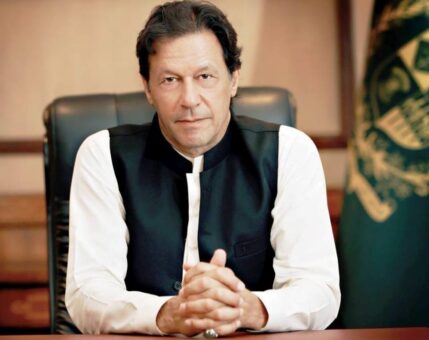
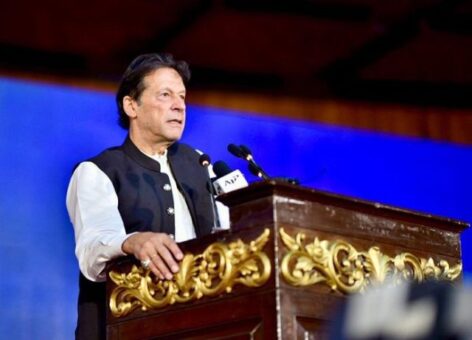
    ISLAMABAD: Prime Minister Imran Khan on Wednesday announced food subsidy package of Rs120 billion providing 30 percent discount at ghee, flour and pulses.

    The prime minister, in his televised address to the nation, said 20 million families would benefit from the subsidy package to be funded jointly by the federal and provincial governments.

    Under the package, the beneficiaries would avail a 30 per cent discount on the said three food commodities for next six months.

    He said the subsidy package was apart from the ongoing different programs under Ehsaas Initiative worth Rs 260 billion affecting 120 million families.

    The prime minister particularly thanked the Ehsaas team for compiling the national database of households to enable the government provide direct subsidy to the entitled families.

    “Today, we have a data and now I am in the position to announce… country’s biggest ever welfare program,” he remarked.

    The prime minister also announced Rs 1400 billion for Kamyab Pakistan Program aimed at providing interest free business loans to the entitled four million families.

    The package consists of interest free loans for house construction, Rs 0.5 million each loan for farmers and businesses besides skill training to a member of the entitled family.

    He said under Kamyab Jawan Program had so far given Rs 30 billion loan to 22,000 businesses. The program also featured a program to provide six million scholarship and stipends to the students.

    Calling it his dream project, the prime minister the Health Insurance Card has been extended to whole of KP province and would be replicated in Punjab, AJK, GB and federal capital by March next year.

    The prime minister also asked the Sindh government to launch the program to provide Rs 1 million health insurance cover to every family.

    Imran Khan said the government had inherited a Pakistan with the biggest ever fiscal deficit, foreign debt burden, heaviest mark up, reserves touching the lowest mark, and the kitty with no money to pay back debts.

    He thanked Saudi Arabia, UAE and China which supported the country in difficult time to save the country from default.

    He said it took almost a year to stabilize the economy which unfortunately followed the outbreak of COVID pandemic – the biggest ever crisis the world faced during last century.

    The prime minister felt proud for his team in the NCOC comprising top doctors, cabinet members and Pakistan Army which took bold decisions based on the data and made the country steered through the crisis effectively.

    “On one side it was the fear of overcrowding of hospitals like India while the other fear was that the lockdown would destroy the economy. Pakistan opted for the middle course which also involved risks,” he said.

    The prime minister recalled that he was pressured to impose India-like blanket lockdown but he said Pakistan was among few countries which successfully sailed through the situation which was also acknowledged by the World Bank, World Health Organization, World Economic Forum as well as the international media including The Economist magazine.

    Giving an overview of the COVID impact on world economy, the prime minister the United States spent $4,000 billion to support its economy while Pakistan could only scrape $8 billion to avert the burden of unemployment and support the industry, construction and agriculture.

    The prime minister said owing to the government’s prudent policies, the country witnessed a 13.8 per cent growth in rice production, pulses 8 per cent, sugarcane 22 per cent, wheat 8 per cent and cotton 81 per cent growth.

    Moreover, an additional Rs1100 billion went to the farmers which was manifested by the record sale of motorbikes, tractors and urea.

    He said following the incentives announced by the government, the construction projects worth Rs 600 billion were going on in the country and large scale manufacturing achieved record growth. Moreover, the profit of engineering sector increased by 350 per cent, textile sector 160 per cent, automobiles 138 per cent, cement 113 per cent and oil and gas 75 per cent.

    Besides, the country’s tax collection also grew by 37 per cent as the government had already surpassed the set target.

    “Our (economic) indicators are on right course. IT achieved 47 per cent growth last year and this year it will touch 75 per cent. This is good news for youth,” he remarked.

    The prime minister said no doubt the inflation was an issue but instead of merely criticizing like opposition, the media should also teach the people about the worldwide inflation.

    Quoting the Bloomberg Commodity Price Index, the prime minister said commodities’ prices grew by 50 per cent in a year against just 9 per cent in Pakistan.

    He said Turkey, US, China and Germany had been facing highest inflation. The gas prices surged by 116 per cent in US, 300 per cent in Europe but Pakistan had made no increase except for the one being imported.

    He said oil prices in the global market had increased by 100 per cent  but Pakistan shifted only 33 per cent of the burden. Even in India oil prices surged to Rs 250, Bangladesh 200 while it was yet at Rs138 in Pakistan.

    The government avoided to shift burden from the masses which otherwise could bring in additional Rs 450 billion revenue to the government.

    However, the prime minister said the government would have to increase the oil prices which otherwise would lead to swelling the deficit.

    Giving a comparison of food commodities in the region, the prime minister said flour rate was Rs83per kg in India while Pakistan had half of the world’s average price. Moreover, Daal Moong was being sold at Rs338 in India against Rs 162 in Pakistan.

    Despite that, the government decided to launch the subsidy program in order to avert the burden of inflation from the people, he remarked.

    The prime minister particularly appealed the industrialists and businessmen to take special care of labour class and give them a pay raise considering the inflation.

    Commenting on the opposition’s criticism against the government, the prime minister committed to bring down prices of food commodities to half if the opposition leaders’ families brought back even half of the money to the country they had looted over last three decades.

    According to the details of the subsidy package provided by the PM Office, the federal cabinet had approved the program on Tuesday which would affect 53 per cent of the country’s population.

    Under the package, a subsidy of Rs. 1,000 a month would be given to each of the 20 million families with a poverty score of less than 39 and an income of Rs. 31,500 per month.

    Ehsaas has developed a digitally enabled mobile point of sale system in collaboration with National Bank of Pakistan (NBP) to serve beneficiaries through a network of Kiryana stores designated by NBP, all over the country.

    This system will digitize parts of the retail sector; there will be use of real time data for decision making. This process will help make beneficiaries and storeowners more digitally adept.

    The participating Kiryana store owners will be required to open bank accounts which will help further increase financial inclusion and settlement payments made through RAAST will help increase scale of digital transactions in Pakistan.

    For online registration of beneficiaries, Ehsaas will open a registration portal next week.

    In interest of transparency, the registered Kiryana stores and beneficiaries will undergo a rigorous verification process to minimize the incidence of fraud.

    The federal government and all participating federating units will share fiscal resources in the ratio of 35/65.

    The governments of Punjab, Khyber Pakhtunkhwa, Gilgit Baltistan and AJK have already agreed to participate in the programme.

    In other federating units, federal share of subsidy worth Rs. 350 per month will be given for each eligible household.

  • SBP selects eight banks for collateral-free loan scheme

    SBP selects eight banks for collateral-free loan scheme

    KARACHI: State Bank of Pakistan (SBP) has selected eight banks for lending collateral-free loan to Small and Medium Enterprises (SMEs), a statement said on Wednesday.

    Governor State Bank of Pakistan, Dr. Reza Baqir announced that banks have shown overwhelming response to an innovative financing scheme for collateral free lending to SMEs introduced by the State Bank and supported by the Government of Pakistan.

    This is the first time a comprehensive collateral free SME lending scheme has been introduced by SBP in the country.

    Out of 20 banks that competed for participating in this scheme, 8 banks under four categories have been selected on the basis of highest amount of finance and highest number of SME clients to be served.

    These categories include large banks, mid-sized banks, small banks, and banks in collaboration with fintechs.

    The winning banks are Habib Bank Ltd, United Bank Ltd, Allied Bank Ltd, Meezan Bank Ltd, Bank Alfalah Ltd, The Bank of Punjab, JS Bank Ltd and The Bank of Khyber. These banks have been selected through a transparent bidding process based on prescribed criteria.

    While appreciating banks’ enthusiastic response, Dr. Reza Baqir, Governor State Bank emphasized early roll out of the scheme by banks.

    He also underscored the importance of extensive awareness and marketing of the scheme for the SMEs to fully utilize its benefits.

    Access to finance for SMEs remains low in Pakistan due to a number of factors including lack of collateral and perceived high risk due to non-availability of track-record.

    To address these issues, SBP adopted an innovative approach by designing SME Assan Finance, commonly known as SAAF which refers to the collateral free nature of finance. SAAF has been developed after thorough consultation with stakeholders.

    To implement this scheme, the SBP decided that rather than advising all banks to offer this product, only willing banks will be encouraged to be part of this initiative and develop their expertise through a transparent process.

    SAAF was launched in August 2021 and bids were solicited from the interested banks. Under SAAF, SBP will provide refinance to the banks at 1 per cent per annum (p.a.) for onward lending to SMEs at a maximum end-user rate of up to 9 per cent p.a.

    The end user rate under SAAF would be attractive for SMEs when compared with usual cost of financing for them from informal sources which can run 25 per cent – 50 per cent p.a.

    The margin available to banks will help them to make an upfront investment in human resources, technology and processes to cater to promote SME finance.

    This incentive has been provided to banks for the first three years of this scheme after which it is expected to become self-sustaining.

    Additionally, under SAAF, risk coverage of up to 60 percent is being provided by Government of Pakistan. Under the SAAF scheme, SMEs can avail collateral free financing of up to Rs 10 million to meet their long-term capital expenditure and short-term working capital needs.

    Governor Baqir also emphasized that a Shariah compliant version of SAAF is also available.

    SBP has allocated refinance limits to eight winning banks for three years. Currently, these banks are finalizing their roll out plans for successful implementation of the scheme.

    It is expected that selected banks will shortly roll out their SAAF programs through public announcements and marketing campaigns so that SME borrowers can approach any of these eight banks to request collateral free financing.

  • PM to launch single sales tax portal this month

    PM to launch single sales tax portal this month

    ISLAMABAD: Prime Minister Imran Khan is likely to launch the single sales tax portal this month, the Federal Board of Revenue (FBR) said on Thursday.

    “Building further on its vision to facilitate taxpayers through automation, digitization, and minimization of human interaction with taxpayers, the FBR is all set to launch Single Sales Tax Portal. Prime Minister is likely to unveil the mega national initiative, later this month,” it said.

    This landmark initiative has been made possible after thorough discussions with the provincial revenue authorities of Punjab, Sindh, KPK, Baluchistan, and AJK.

    This facility will enable taxpayers to file single monthly Sales Tax returns instead of multiple returns (6 in the past) on different portals; thereby, significantly reducing the time and cost of compliance, and thus achieving maximum efficiency.

    The system would be intelligent enough to sift and collect revenues from a single taxpayer and distribute the same among multiple revenue agencies.

    This unique project would also help in resolving the long outstanding issues of input tax adjustment among relevant stakeholders. With the proposed launch of Single Sales Tax Portal later this month, the existing cumbersome and tedious processes would be replaced with an efficient & automated system of tax adjustments, with minimum human involvement.

    The Portal would also be beneficial for tax collectors in having a 360-degrees view of taxpayers’ business activities across the country in order to maximize revenue potential and tax compliance.

    By all standards, this is a giant leap forward in taxpayers’ facilitation and at the same time, a significant step in harmonization of taxes between federal and provincial governments.

  • Pakistan’s import bill surges by 65% in four months

    Pakistan’s import bill surges by 65% in four months

    ISLAMABAD: The import bill of Pakistan surged by 65.15 per cent during the first four months (July – October) of 2021/2022, according to official statistics released on Tuesday.

    The import bill increased to $25.06 billion during the first four months of the current fiscal year as compared with $15.17 billion in the same period of the last fiscal year, according to data of Pakistan Bureau of Statistics (PBS).

    On the other hand, exports of the country registered a growth of 24.71 per cent to $9.44 billion during the first four months of the current fiscal year as compared with $7.57 billion in the corresponding months of the last year.

    The trade deficit of the country swelled by 105.43 per cent to $15.62 billion during July – October of the current fiscal year as compared with the deficit of $7.60 billion in the same period of the last fiscal year.

    The trade deficit widened by 117 per cent to $3.88 billion in October 2021 when compared with the deficit of 1.789 billion in the same month of the last year.

    The import bill during the month of October 2021 increased by 63 per cent to $6.334 billion as against $3.89 billion in the same month of the last year.

    Similarly, the exports exhibited a growth of 16.52 per cent to $2.45 billion in October 2021 as compared with $2.1 billion in the same month of the last year.

  • SBP rejects reports of financial losses in cyber attack

    SBP rejects reports of financial losses in cyber attack

    KARACHI: State Bank of Pakistan (SBP) has strongly rejected the media reports of financial losses or data stolen in the recent cyber attack.

    In a tweet on Monday, the SBP said some fake news regarding cyber security attack on banks is in circulation including remarks attributed to Chief Spokesman Abid Qamar.

    According to these fake news, nine banks have been affected by the attack and that money has been withdrawn and data stolen.

    “SBP rejects these news [reports].”

    No bank, other than the National Bank of Pakistan (NBP), has faced a cyber attack.

    “Further, no financial loss or data breach has been observed so far,” the SBP added.

    The SBP is monitoring the situation closely and it will share any update or information about the incident through its official channels, according to the tweet.

    Earlier, on October 30, 2021, the SBP in another tweet stated that the NBP had reported a cybersecurity-related incident that is being investigated. “NBP has not observed any data breach or financial loss. No other bank has reported any such incidence,” the SBP said adding it was monitoring the situation closely to ensure the safety and soundness of the banking system.

  • FBR defers digital payment provision for one month

    FBR defers digital payment provision for one month

    ISLAMABAD: The Federal Board of Revenue (FBR) has deferred the implementation of a digital mode of payment for one month.

    The digital mode of payment has been made mandatory for the corporate sector, which was to be implemented from November 01, 2021.

    The FBR issued Circular No. 09 of 2021-22 on Monday to allow an extension in the deadline for implementation of digital mode of payment up to November 30, 2021.

    The new provision was introduced through Tax Laws (Third Amendment) Ordinance, 2021.

    The FBR in its explanation through Circular No. 07 dated September 23, 2021 said: to improve documentation, a new clause (la) has been inserted in section 21 of the Ordinance.

    Previously payments under a single head account exceeding two hundred and fifty thousand rupees, made by any taxpayer were required to be made through crossed cheque or crossed baking instruments including digital payments.

    “Through this amendment, payments made by a company under a single head of account exceeding two hundred and fifty thousand rupees other than by digital means from business bank account of the taxpayer notified to the Commissioner under section 114A of the Ordinance shall not be admissible as deductions.”

    However, certain expenditures on account of utility bills, freight charges, travel fare, and payment of taxes and fines would continue to be admissible even though paid in cash or via traditional banking instruments.

    The purpose behind this legislative enactment is to encourage digital payments and discourage traditional mode of transactions by the corporate sector in the first phase.

    However, owing to lack of total digital readiness by some corporate taxpayers, the corporate taxpayers are allowed to switch to this mode w.e.f. 01.11.2021.

    In the intervening period they may use digital payments or continue with the existing procedure of making payments by a crossed cheque drawn on a bank or by crossed bank draft or crossed pay order or any other crossed banking instrument showing transfer of amount from the business bank account of the taxpayer.

    Furthermore, any salary paid or payable exceeding twenty five thousand rupees per month has to be made through cross cheque or direct transfer of funds to the employee’s bank account under clause (m) of section 21 of the Ordinance. In order to bring this provision in conformity with newly inserted clause (la) ibid, in case of payments against salary in excess of twenty five thousand rupees per month, the mode of digital payment has been added to the available modes referred to above.

    The Pakistan Tax Bar Association (PTBA) last week in a letter to the FBR chairman stated that the implementation of digital payment was not practical at the moment.

    The PTBA made the following submissions to substantiate its claim:

    (i) It is impossible to make payment to goods carriage/transport sector by the digital means, which will create complete unrest in the goods carriage and transport sector.

    (ii) Presently, port terminal charges, wharfage charges, charges for clearance of delivery orders are paid in advance through crossed cheques or payorders. It will not be out of place to mention here that the port terminal operators and shipping lines, are unaware and are not ready for implementation of the ‘digital mode of payment.’

    (iii) It is routine business practice that advance against delivery of goods, the buyer submits its payment by way of post-dated cheques, which normally accepted by the other party and inherently a secured way of making payment. We are afraid that this law of ‘digital mode of payment’ is surely going to hamper the business activities, as it does not cater the situation and solution of such transactions.

    (iv) The similar issues are likely to arise and are to be faced by the companies for making payments to the growers of various agricultural crops such as fruits, sugarcane, rice, cotton, wheat, etc.

    (v) The various banks have fixed their own limitation on the quantity of making digital / online payments in a day and have also fixed the threshold of the amount and they do not allow to exceed the threshold limit fixed by them. In our view, this also needs a proper campaign without which the implementation of the law is not possible.

    (vi) The digital mode of payment is also impractical and is likely to affect the business transaction in the cases where petty cash payments, in aggregate exceed millions of rupees, which cannot be made digitally.

    (vii) It will not be out of place to mention that online transactions are still considered as unsecured mode, due to various type online frauds and hacking of software.

    Furthermore, a cyber attack on Pakistan’s leading bank last Friday also made the implementation in jeopardy. The PTBA has also pointed its concerns about the cyber security issue.

  • Headline inflation increases by 9.2% in October

    Headline inflation increases by 9.2% in October

    ISLAMABAD: The headline inflation based on Consumer Price Index (CPI) has increased by 9.2 per cent on Year on Year (YoY) basis in October.

    The CPI inflation was 9.0 per cent in the previous month and 8.9 per cent in October 2020, the Pakistan Bureau of Statistics (PBS) said on Monday.

    On month-on-month (MoM0 basis, it increased by 1.9 per cent in October 2021 as compared to increase of 2.1 per cent in the previous month and an increase of 1.7 per cent in October 2020.

    CPI inflation Urban, increased by 9.6 per cent on year-on-year basis in October 2021 as compared to an increase of 9.1 per cent in the previous month and 7.3 per cent in October 2020. On month-on-month basis, it increased by 1.7 per cent in October 2021 as compared to increase of 2.0 per cent in the previous month and an increase of 1.3 per cent in October 2020.

    CPI inflation Rural, increased by 8.7 per cent on year-on-year basis in October 2021 as compared to an increase of 8.8 per cent in the previous month and 11.3 per cent in October 2020. On month-on-month basis, it increased by 2.2 per cent in October 2021 as compared to increase of 2.3 per cent in the previous month and an increase of 2.4 per cent in October 2020.

    Sensitive Price Indicator (SPI) inflation on YoY increased by 15.2 per cent in October 2021 as compared to an increase of 16.6 per cent a month earlier and an increase of 12.3 per cent in October 2020. On MoM basis, it increased by 2.1 per cent in October 2021 as compared to increase of 2.7 per cent a month earlier and an increase of 3.0 per cent in October 2020.

    Wholesale Price Index (WPI) based inflation on YoY increased by 21.2 per cent in October 2021 as compared to an increase of 19.6 per cent a month earlier and an increase of 5.1 per cent in October 2020. WPI inflation on MoM basis increased by 4.2 per cent in October 2021 as compared to an increase of 3.2 per cent a month earlier and an increase of 2.9 per cent in corresponding month i.e. October 2020.

  • FBR allows tax exemption on import of Chinese drones

    FBR allows tax exemption on import of Chinese drones

    The Federal Board of Revenue (FBR) has announced income tax exemption on the import of drones donated by the Chinese Ministry of Agriculture and Rural Affairs.

    (more…)
  • E-banking transactions of Rs86.48 trillion made in FY21

    E-banking transactions of Rs86.48 trillion made in FY21

    KARACHI: The e-banking transactions recorded a significant increase during the fiscal year 2020/2021 as transactions worth Rs86.48 trillion were recorded through these channels.

    According to a report recently issued by the State Bank of Pakistan (SBP), during 2020/2021, about 1.2 billion transactions of valuing Rs86.5 trillion were processed through retail e-banking channels.

    These transactions showed growth of 30.6 per cent and 31.1 per cent in volume and value of transactions, respectively when compared with 905.9 million and Rs65.98 trillion during the last fiscal year.

    In total e-banking transactions, Real-Time Online Branches (RTOBs) transactions accounted for the largest share of 77.8 per cent in value of transactions with a volume share of 15.8 per cent whereas ATMs have the largest share of 50.6 per cent in volume of transactions with a value share of 9.3 per cent only.

    RTOB Transactions

    RTOB channel provides online banking facility to all its customers across the whole branch network of the same bank. During the year under review, this channel processed 186.6 million transactions of Rs 67.3 trillion. These transactions depicted YoY growth of 7.4 per cent and 23.7 per cent in volume and value of transactions respectively.

    During FY21, in terms of the number of transactions, cash deposit transactions have the highest share of 46.6 per cent (86.9 million) in total RTOB transactions volume-wise whereas intra-bank funds transfer transactions to other branches have the highest share of 70.0 per cent (Rs 47.1 trillion) in terms of the value of total RTOB transactions.

    ATM Transactions

    Pakistan is one of those countries where cash is still the dominant mode of making payments and performing transactions. It is evident from a significant increase in ATM transactions that ATMs are still the most widely used payment channel across the country, particularly for cash withdrawal transactions.

    As on end June 2021, the total number of ATMs was 16,355 in the country. This accounts for approximately 7.7 ATMs touchpoints for every 100,000 people. During FY21, ATMs processed 598.7 million transactions with a value of Rs 8.1 trillion. It amounts to a YoY change of 16.9 per cent by volume and 25.6 per cent by value. During the year under review, the average size of ATM transactions was approximately Rs 13,489 per ATM transaction and 36,607 transactions were processed per ATM, compared with the average size of Rs 12,555 per ATM transaction and 32,801 transactions processed per ATM last year.

    Further, the ratio of On-Us versus Off-Us Cash withdrawal was approximately 60:40 by volume and 67:33 by value which shows that customers mostly prefer to withdraw cash from their own bank’s ATMs.

    Internet Banking Transactions

    Banks are offering a variety of financial services through Internet Banking (IB) like Intra-bank & Interbank Fund transfer, scheduled fund transfers, Utility Bills Payments, Mobile Airtime top-ups, Intra-bank credit card payments, school fee payments, etc.

    As on end June 2021, 27 banks were offering Internet Banking and there were 5.2 million registered Internet Banking Users with these banks. During the year FY21, this channel processed 93.4 million transactions amounting to Rs 5.7 trillion.

    These transactions showed a YoY growth of 65.1 per cent and 91.7 per cent by volume and value respectively. In the total Internet Banking transactions, the share of Intra-Bank Funds transfer transactions is 35.0 per cent (32.7 million) and 36.8 per cent (Rs 2,084.2 billion) in volume and value of transactions respectively whereas the share of Inter-Bank Funds transfer transactions in volume and value of transactions is 41.5 per cent (38.8 million) and 43.1 per cent (Rs 2440.3 billion) respectively.

    Utility Bills Payments contributed 18.1 per cent (16.9 million) in volume and 8.2 per cent (Rs 464.5 billion) in value of transactions and the residuals share is contributed by other miscellaneous payments including merchant payments, mutual funds payments, zakat, charities, etc. The substantial growth witnessed during the last few years in the Internet Banking channel is quite encouraging.

    The push received from COVID-19 last year also resulted in remarkable growth in internet banking transactions in FY21.

    Mobile Banking Transactions

    Mobile Phone/App-based Banking is being offered by 27 Banks/ MFBs to 10.8 million registered users as of June 2021. This Channel processed 193.4 million transactions worth Rs 4.9 trillion during FY21 showing a YoY growth of more than double the volume and value of transactions, more precisely, it registered a YoY growth of 133.6 per cent and 178.7 per cent in volume and value of transactions respectively.

    In the last 5 years, significant progress has been observed in the usage of Internet Banking and Mobile Banking channels showing annualized transaction growth of 38.3 per cent and 106.1 per cent respectively.

    Intra-bank and Inter-bank fund transfers were the main contributors in total Mobile Phone Banking transactions. Intra-bank fund transfers contributed 20.1 per cent (38.9 million) transactions by volume and 34.6 per cent (Rs 1,702.8 billion) transactions by value while Interbank fund transfers contributed 44.8 per cent (86.6 million) transactions by volume and 51.2 per cent (Rs 2,516.0 billion) transactions by value.

    Utility Bills Payments had the volume of 31.1 per cent (60.1 million) transactions and 2.2 per cent (Rs 106.2 billion) transactions by value within overall Mobile Banking volume and value of transactions respectively and insignificant residual share is contributed by miscellaneous payments using Mobile Phone Apps.

    The channel depicted a growing trend of transactions. During the year, FY21, it showed a substantial growth compared to the previous years, as is evident from the trend shown in figure 2.5 above.

    It is quite evident that Mobile Banking has been the preferred source of conducting transactions and making payments by the consumers, just because of the fact that the channel has observed more than double increase in terms of both volume and value of transactions during the year under review.

    Call Center/ IVR Banking Transactions

    During the year FY21, Call Centers/ IVR Banking Channel processed 0.3 million transactions amounting to Rs 8.1 billion. This channel facilitates both Intra and Inter-Bank Funds transfers. Mostly Banks/MFBs high valued customers are also allowed to use this channel for Utilities Bill Payments. As on the end-June 2021, there were 33.4 million Call Centers/IVR Banking Channel registered users.

    Digital Adaption by Merchants

    Despite the economic downturn during the COVID-19 pandemic, it is quite promising that e-commerce transactions during recent years have seen continuous growth, leading to the belief that the general consumers are realizing the benefits of paying through cards instead of paying through cash, which includes transparency in payments, no hassle of carrying change, paying any amount directly from the account, and avoiding unnecessary carrying of cash at all times.

    Card Present – POS Transactions

    In Pakistan 5 banks are in the business of open-loop POS acquiring whereas, 4 banks are providing closed-loop services on POS.

    The turnover of 88.8 million POS transactions valuing Rs 453.1 billion was recorded in FY21 as compared to 70.3 million transactions valuing Rs 364.2 billion in FY20, showing a YoY growth of 26.3 per cent by volume and 24.4 per cent by value of transactions.

    POS transactions have a 7.5 per cent share in the total volume of transactions with a value share of 0.5 per cent showing low uptake of merchant onboarding and insignificant usage of debit cards for retail transactions. The increase in POS transactions can be attributed to the reopening of shops and markets as the lockdown was gradually lifted on an on-and-off basis.

    Card-not-Present – e-Commerce

    There were 3,003 locally registered e-Commerce Merchants having their merchant accounts in 6 banks as of end-June 2021 compared to 1,707 Merchants last year, showing significant growth of 75.9 per cent boarding of e-Commerce merchants in the country.

    In Pakistan, International Payment Gateway Services (IPGs) are being provided by 4 banks, whereas 2 microfinance banks were also working as merchant aggregators and are providing e-commerce gateway to their clients while leveraging on 4 IPGs in Pakistan. Consumers carried out 21.9 million online transactions worth Rs 60.6 billion on these locally registered e-Commerce Merchants during the year FY21 through cards. These transactions showed significant YoY growth of 114.8 per cent and 74.1 per cent by volume and value of transactions respectively.

    In addition to the above, domestically issued Debit, Credit, and Pre-paid cards collectively processed 33.6 million transactions of Rs 124.6 billion on local and international e-commerce merchants. Debit cards took the lead with the highest share of transactions i.e., 67.0 per cent (22.5 million) in volume; when it comes to value, credit cards registered the highest share with 49.8 per cent (Rs 62.0 billion).

    It is worth mentioning that the number of transactions per debit card issued (0.75 transactions) is very less when compared with e-commerce transactions processed per credit card issued (6.4 transactions), leaning to infer that credit cards still remain the preferred instrument to perform e-commerce transactions.

    Payment Cards Transactions

    In Pakistan, payment cards can be categorized as Credit, Debit, Proprietary ATM, Social Welfare, and Pre-Paid Cards. As on end-June 2021, there were 45.9 million total cards in circulation. Collectively, these cards processed 708.7 million transactions amounting to Rs 8.4 trillion.

    Credit Cards

    As on end-June 2021, the number of reported Credit Cards in circulation is 1.7 million. These cards processed 47.4 million transactions of value Rs 270.1 billion during the year FY21. The total volume of Credit Card transactions has 76.2 per cent share on POS transactions and 23.1 per cent share in e-Commerce transactions whereas in terms of value, these transactions have 75.8 per cent share of usages on POS, 23.1 per cent share of usage for e-Commerce and the residual share of transactions pertains to ATMs.

    The average transactions size of Credit Cards is Rs 5,699 (down from Rs 5,770 last year) whereas, on average, each credit card conducted 28 transactions (up from 25 transactions last year).

    Debit Cards

    The number of debit cards at the end of FY 2021 has been 29.8 million, observing a YOY growth of 11.8 per cent, whereas exhibiting annualized growth of 13.8 per cent during the last 4 years. It is point worthy to note that the number of debit cards increased mainly due to the mandate given by SBP to issue more secure Europay Master Visa (EMV) Chip and PIN Compliant cards, thus adding more security without compromising customer experience.

    During the year under review, these debit cards processed 634.1 million transactions worth Rs 7.9 trillion, showing a YoY growth of 24.0 per cent by volume and 30.1 per cent by value of transactions. In the total volume of transactions processed by Debit Cards, ATMs transactions have 86.3 per cent share with a value share of 95.8 per cent whereas POS transactions have a 10.2 per cent share in volume and 3.4 per cent share in the value of transactions. The residual share of Debit Cards is contributed by e-Commerce transactions for online purchases of the Card Not Present (CNP) environment. The average transactions size by Debit Cards is Rs 12,395 whereas 21 transactions on average were processed by a single card.

    Proprietary ATMs only Cards

    Proprietary ATMs only cards are issued by 12 banks for cash withdrawals on ATMs. As on end-June 2021, there were 5.7 million ATMs only cards in circulation and these cards processed 25.1 million transactions worth Rs 278.1 billion.

    These transactions showed a YoY decline of 45.3 per cent and 44.5 per cent by volume and value of transactions respectively, mainly due to the fact that the banks are in the continuous process of migrating their existing ATM-only card portfolio towards EMV Chip and PIN cards.

    Social Welfare Cards

    Social welfare cards are issued by the Government of Pakistan or provisional governments to support needy and disaster-affected people. As on end-June 2021, there were 8.4 million Social Welfare cards in circulation. During the year FY21, these cards processed 1.5 million transactions worth Rs 5.6 billion.

    Prepaid Cards

    Prepaid cards are being issued by a few banks in Pakistan in order to ensure that customers can enjoy flexibility while paying at merchant locations or online e-commerce portals. As on end-June 2021, there were 0.13 million cards in circulation. These cards processed 0.6 million transactions worth Rs 2.3 billion during the year FY21.

    With the growth of digital access points, the associated risks are also evolving. SBP has been cognizant of the inherent risks in digital payments, therefore, it has been strengthening the oversight functions to ensure the security of digital payment systems and consumer protection.

  • FBR’s collection up by 30.5% to Rs440 billion in Oct 2021

    FBR’s collection up by 30.5% to Rs440 billion in Oct 2021

    The Federal Board of Revenue (FBR) has reported a significant achievement in revenue collection for the month of October 2021, surpassing the figures from the same period last year.

    (more…)