Tag: commerce ministry

  • Pakistan lifts ban on import of cars, phones, luxury items

    Pakistan lifts ban on import of cars, phones, luxury items

    ISLAMABAD: Pakistan on Friday lifted ban on all import of luxury and non-essential items amid serious foreign exchange crisis.

    The ministry of commerce issued SRO 1562(I)/2022 for lifting the ban on luxury and non-essential items, including motor vehicles, mobile phones and home appliances.

    The government on May 19, 2022 through a circular No. 598 (I)/2022 imposed the complete ban on import of such items in the wake of serious balance of payment crisis and to prevent fall in rupee value.

    Despite the ban, the rupee fell to the historic low of Rs239.94 against the dollar on July 28, 2022.

    It is worth mentioning that the foreign exchange reserves were drastically decreased despite imposition of ban on imported luxury items.

    READ MORE: Pakistan decides to lift ban on imported goods

    Pakistan’s foreign exchange reserves have increased by $52 million by week ended August 12, 2022. The foreign exchange reserves of the country have recorded at $13.613 billion by week ended August 12, 2022 as compared with $13.561 billion a week ago i.e. August 05, 2022.

    The country’s foreign exchange reserves hit all-time high of $27.228 billion on August 27, 2021. Since then the foreign exchange reserves have declined by $13.615 billion.

    The official foreign exchange reserves of the State Bank witnessed an increase of $67 million to $7.897 billion by week ended August 12, 2022 as compared with $7.83 billion a week ago.

    READ MORE: 15% surcharge imposed for clearance of banned items

    The foreign exchange reserves held by the central bank witnessed a record high at $20.146 billion by week ended August 27, 2021. Since then the official reserves of the SBP declined by $12.249 billion.

    The country has taken the decision in order to fulfil the condition of International Monetary Fund (IMF) to get loans.

    Addressing a press conference a day earlier alongside members of the government’s economic team, Miftah Ismail said that the import ban on non-luxury items was placed in line with the IMF’s demands.

    Miftah said that after much back-and-forth, the IMF has finally announced that its board meeting will take place on August 29 — for considering Pakistan’s request for the release of the $1.17 billion tranche.

    The finance minister noted that the government has also fulfilled all the pre-requisites of the lender, while the funding gap of $4 billion has also been met — after friendly countries agreed to help Pakistan financially.

    He said that after the import ban, it became easier for the government to import necessary commodities, which were essential for the masses. “When we have limited dollars and we have to feed a huge population, our priority automatically becomes [the nation]. We had to choose between importing cars and wheat — that’s why we imposed a ban.”

    READ MORE: Pakistan allows release of banned items stuck up at ports

    The finance minister said the government was scrapping the import ban as it was an international requirement, but noted that the regulatory duty that will be imposed on the non-essential imported items will be three times higher than the current levels.

  • Pakistan allows conditional import of CBU vehicles

    Pakistan allows conditional import of CBU vehicles

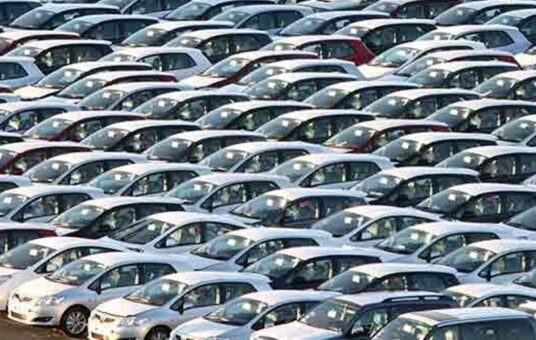
    ISLAMABAD: Pakistan has allowed conditional import of Completely Built Unit (CBU) motor vehicles, which have been banned through SRO 598(I)/2022.

    The country on May 19, 2022 banned import of luxury and non-essential items in order to save foreign exchange and support the local currency, which depreciated massively.

    READ MORE: Raw materials excluded from import banned items list

    Through SRO 598(I)/2022 issued May 19, 2022, the ministry of commerce imposed ban on CBU vehicles which are importable under 49 tariff lines.

    However, the ministry of commerce clarified that prohibition of import would not apply on import of CBU vehicles if the imports in Pak Rupee (PKR) or imports through barter mechanism by land routes.

    The ministry of commerce on May 21, 2022 issued a press release stating that in order to address the balance of payments (BOP) situation in the country resulting from the increase in current account deficit (CAD) during the first 10 month of the current FY-22, import of certain luxury and non-essential items has been prohibited, vide SRO 598(I)/2022 dated 19th May, 2022.

    READ MORE: Dollar weakens for 5th straight day; ends at Rs197.59

    However, to address the concerns of certain business quarters with regard to the implementation of the said SRO, it is clarified that in terms of proviso to the paragraph-4 of the Import Policy Order, 2022, the imports where Bill of Lading (B/L) or irrevocable Letter of Credit (L/C) was issued or established prior to the notification of the SRO 598(I)/2022 dated 19.05.2022 shall be exempt from the operation of the SRO.

    Hence, imported goods for which B/L or irrevocable L/C was established prior to 19th May, 2022 shall not be subject to the prohibitions contained in the said SRO.

    Moreover, the business community and the general public are invited to share their concerns, proposals or any anomalies with respect to the said SRO at [email protected].

  • Raw materials excluded from import banned items list

    Raw materials excluded from import banned items list

    ISLAMABAD: The ministry of commerce on Monday excluded raw materials from the list of items, which were banned through SRO 598(I)/2022.

    The ministry issued an office memorandum to issue clarification with regard to the SRO 598(I)/2022 dated May 19, 2022.

    Through the SRO 598(I)/2022, the federal government imposed ban on import of certain luxury and non-essential items.

    The ministry said that the decision has been taken in view of the concerns expressed by different trade organizations and the domestic industry regarding import of raw materials, intermediate goods and industrial equipment falling under Pakistan Customs Tariff (PCT) codes listed in the SRO.

    “The SRO 598(I)/2022 dated May 19, 2022 shall not apply on the import of raw materials, intermediate goods and industrial equipment/machinery required by industrial / manufacturing concerns and foreign grant-in-aid projects,” the ministry said.

    Prior to this, the ministry of commerce issued another clarification related to the banned imported items on May 26, 2022.

    Through this clarification, the ministry said that in order to address concerns of the citizenry and certain anomalies out of implementation of the said SRO, it is clarified:

    READ MORE: Banned items: FBR deputes officers 24X7 to facilitate passengers

    The SRO 598(I)/2022 dated May 19, 2022 shall not apply on import of goods for which an airway bill has been issued prior to the issuance of the said SRO.

    Import of following PCT codes description ‘others’ shall be exempted from the prohibition contained in the SRO if they are:

    PCT Code 2309.9000: Other than cat and dog food

    PCT Code 9405.1090: Energy savers.

  • List of goods export to Afghanistan in PKR, no E-form

    List of goods export to Afghanistan in PKR, no E-form

    ISLAMABAD: The federal government has expanded the list of goods for export to Afghanistan and through Afghanistan to Central Asian Republics without requirement of E-form and against Pakistan Rupee (PKR).

    In this regard the ministry of commerce issued SRO176(I)/2022 dated February 04, 2022 to amend Export Policy Order 2020.

    READ MORE: Pakistan establishes Afghanistan relief fund

    As per the export policy order, export goods to Afghanistan and through Afghanistan to Central Asian Republics are allowed against Pakistan currency on filing of regular shipping bills without the requirement of E-form.

    READ MORE: Pakistan donates 50,000MT wheat to Afghanistan

    Prior to the amendment, the allowed goods are included: fruits; vegetables; dairy products; and meat. However, after the amendment more number of goods have been added to the list, which included: rice; fish and fish products; poultry, meat and products; sugar confectionary and bakery products; fruits, nuts and other edible parts of plants; oilcake and other solid residues; vegetable materials and vegetable waste; salt; cement; pharmaceuticals; matches; textile and textile articles; building stone; and surgical instruments.

    READ MORE: FBR rebuts currency smuggling to Afghanistan

    As per the Export Policy Order, 2021, the goods are not entitled to: zero rating of sales tax on taxable goods; rebate of central excise duty; and payment of drawback of customs duty.

    READ MORE: Index gains 346 points on better Afghanistan situation

  • MoC invites tariff proposals for budget 2022/2023

    MoC invites tariff proposals for budget 2022/2023

    The Ministry of Commerce (MoC) has opened the floor for budget proposals for the fiscal year 2022/2023, specifically focusing on potential changes in customs tariff rates.

    (more…)
  • Commerce ministry issues guidelines for joining Amazon

    Commerce ministry issues guidelines for joining Amazon

    ISLAMABAD: The ministry of commerce has issued guidelines for local businessmen to join Amazon – one of the world’s largest e-Commerce platform – as Pakistani seller.

    (more…)
  • Monthly exports in March 2021 highest in decade: Razak Dawood

    Monthly exports in March 2021 highest in decade: Razak Dawood

    In a significant economic development, Pakistan’s exports soared to $2.345 billion in March 2021, marking a remarkable 13.4 percent increase compared to February 2021.

    (more…)
  • Ministry issues import, export of e-commerce rules

    Ministry issues import, export of e-commerce rules

    ISLAMABAD: The ministry of commerce has issued rules for assessment and clearance of imported or exported goods through e-commerce.

    The ministry issued SRO 14(I)/2021 for the application of the rules that will apply for assessment and clearance of imported or exported goods of business to consumer (B2C) transactions through authorized dealer via designated customs stations.

    However, these rules will not apply on the following goods:

    (a) Goods requiring testing of samples;

    (b) Animals;

    (c) Perishable goods;

    (d) Food stuff including beverages;

    (e) Medicines of any sort;

    (f) Alcoholic drinks;

    (g) Restricted items subject to fulfillment of import and export regulations under the relevant law;

    (h) Prohibited under sections 15 and 16 of the Customs Act, 1969 along with allied law; and

    (i) Import and export goods which are intended for clearance from customs stations or airport other than at which arrived.

    The ministry defined the e-commerce as buying and selling of goods or services including digital products through electronic transactions conducted via the internet or other computer mediated (online communication) networks.

    According to the rules, the registered courier shall file the prior arrival manifest of e-commerce goods. The risk management system shall be applied at the manifest filing stage.

    A consumer shall provide the details of shipment and e-commerce importer. E-commerce goods of the consumer shall be cleared upon provision of information prior to the manifest or post arrival of the goods.

    The goods declaration shall be filed by the registered courier on behalf of e-commerce importer and exporter on the specified type of goods declaration for the purpose of e-commerce.

    The goods shall be cleared upon examination and assessment through WeBOC system upon decision by the RMS.

    Duty and taxes shall be paid by the e-commerce importer and exporter through methods, included: self payment by the e-commerce importer and exporter through a unique payment ID; or payment through authorized registered courier.

  • Ministry approves DLTL claims worth Rs213 million: Razak Dawood

    Ministry approves DLTL claims worth Rs213 million: Razak Dawood

    ISLAMABAD: The ministry of commerce has approved Rs213 million against claims of drawback of local taxes and levies (DLTL) by non-textile sector, Abdul Razak Dawood, Adviser to Prime Minister for Commerce and Investment.

    “These are now with State Bank of Pakistan (SBP) and will soon be disbursed to the relevant exporters,” the adviser said this on his official twitter account.

    “Our policy is not to put any working capital constraints for our exporters, he said.

    “I hope that this will facilitate them” he added.

  • Import policy amended to allow radiation apparatus

    Import policy amended to allow radiation apparatus

    ISLAMABAD: The ministry of commerce has amended the Import Policy Order 2020 and allowed the import of radiation apparatus with a condition of prior approval of Pakistan Nuclear Regulatory Authority.

    (more…)