Tag: FBR

FBR, Pakistan’s national tax collecting agency, plays a crucial role in the country’s economy. Pakistan Revenue is committed to providing readers with the latest updates and developments regarding FBR activities.

  • Customs chemical examiner awarded ‘removal from service’

    Customs chemical examiner awarded ‘removal from service’

    ISLAMABAD: Federal Board of Revenue (FBR) has awarded major penalty of ‘removal from service’ upon a chemical examiner of Pakistan Customs Service (PCS) on the charges of misconduct and inefficiency.

    According to details received on Monday, disciplinary proceedings were initiated against Tahir Jamal, Deputy Assistant Chemical Examiner (BS-16), Collectorate of Customs Appraisement-West, Karachi under the Civil Servants (Efficiency & Discipline) Rules, 2020.

    READ MORE: President Alvi retains major penalty on NAB official

    Saad Atta Rabbani, Additional Collector (BS-19), Collectorate of Customs Appraisement (West), Karachi was appointed as Inquiry Officer vide Order of Inquiry dated August 04, 2021 who conducted inquiry under the Civil Servants (Efficiency & discipline) Rules, 2020 and submitted inquiry report to the FBR on January 05, 2022 with the findings and conclusion that the charges of “Inefficiency” and “Misconduct” stand fully established against the accused officer.

    On the basis of Inquiry Report, a Show Cause Notice was issued on March 31, 2022 to Tahir Jamal, Deputy Assistant Chemical Examiner (BS-16), Collectorate of Customs Appraisement (West), Karachi.

    READ MORE: Customs officer awarded ‘major penalty’ for corruption

    He submitted reply to the Show Cause Notice, which was received in the Board on April 15, 2022, wherein he stated that the Order of Inquiry dated August 04, 2021 is illegal and requires to be withdrawn.

    He further stated that he has challenged the Order of Inquiry by filing an appeal before the Federal Service Tribunal (FST). He also requested for personal hearing enabling him to explain his case in person as well.

    The Member (Admn/HR) / Authority afforded an opportunity of personal hearing to the accused on May 23, 2022.

    The Member (Admn/ HR) / Authority having carefully considered the record of the case, the Inquiry Report, reply to the Show Cause Notice and the submissions made by the accused during the personal hearing, has found no solid evidence and merits in the stance of the accused for submitting wrong/misleading laboratory test reports and remaining away from office w.e.f. August 07, 2018 till date.

    READ MORE: FBR terminates job of IRS officer on misconduct

    Accordingly, the Member (Admn/ HR) / Authority has observed that charges of “Inefficiency” and “misconduct” under Rule 3(a) and (b) of Civil Servants (E&D) Rules, 2020 stand established against the accused.

    The Authority has, therefore, imposed major penalty of “Removal from Service” upon Tahir Jamal, Deputy Assistant Chemical Examiner (BS-16), Collectorate of Customs Appraisement (West), Karachi under Rule 4(3)(d) of the Civil Servants (E&D) Rules, 2020.

    He will have a right to file appeal against this Order to the Appellate Authority under Civil Servants (Appeals) Rules, 1977 within a period of 30 days from the date of communication of this Notification.
    READ MORE: Customs officer awarded ‘dismissal from service’

  • RTO-II Karachi seals Baklava Palace for integration failure

    RTO-II Karachi seals Baklava Palace for integration failure

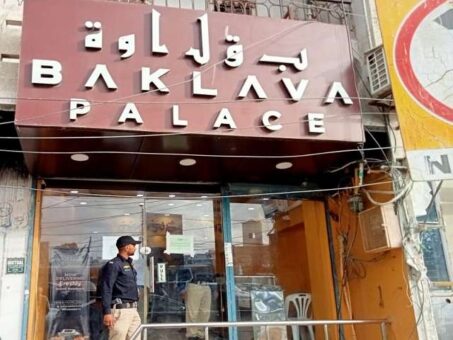
    KARACHI: Regional Tax Office (RTO) – II, Karachi on Monday sealed a sweet shop i.e. M/s. Baklava Palace for failure to mandatory integrate with online system.

    RTO – II, Karachi, an arm of the Federal Board of Revenue (FBR), while continuing its crackdown against non-compliant Tier-1 retailers, sealed the business premises of M/s. Baklava Palace, located at Khayaban-e-Shamsheer, DHA Phase V, Karachi.

    READ MORE: RTO-II Karachi seals electronics shop for integration failure

    The RTO –II Karachi during its drive against non-compliant Tier-1 Retailers had sealed many other retail outlets including Dhamtal and Rafi Electronics.

    According to officials at Zone-III, RTO-II, Karachi said that the tax office had already passed an order on January 01, 2022 against the Tier-1 retailer for mandatory integration.

    “M/s. Baklava Palace (NTN 2668310-5) is conducting taxable activities as a retailer and comes under the purview of Tier-1 retailer as defined under clause (a) and (e) of Section 2(43A) of the Sales Tax Act, 1990.

    READ MORE: FBR issues procedure for restoration of input tax adjustment

    “As per 2nd provisio of Section 3(9A) of the Sales Tax Act, 1990, read with clause (2) of Rule 150ZEA of the Sales tax Rules, 2006, they were required to integrate their Point of Sale (POS)/retail outlet with the FBR’s computerized system for real-time reporting of sales in the mode and manner prescribed in Chapter XIV-AA of the Sales Tax Rules, 2006.

    “The taxpayer is also included in STGO No. 16 of 2022 dated May 06, 2022. However, record shows that M/s. Baklava Palace has not integrated their POS / retail outlet till date,” the official told PkRevenue.com

    All the Tier-1 retailers are required to integrate with the FBR under Section 33 of the Sales Tax Act, 1990. The RTO-II had warned the Tier-1 retailer that in case it failed to integrate in the manner as required under the Sales Tax Act, 1990 and the rules made thereunder, the business premises will be sealed.

    READ MORE: POS service fee issue hampers sales tax return filing

    Under the Sales tax Act. 1990: it is an offence: “A person required to integrate his business as integrated under sub-section (9A) of Section 3, who fails to get himself registered under the Act, and if integrated, fails to integrate in the manner as required under the law and rules made thereunder.”

    The penalties for the offence are included as:

    (i) penalty of five hundred thousand rupees for first default;

    (ii) penalty of one million rupees for second default after fifteen days of order for first default;

    (iii) penalty of two million rupees for third default after fifteen days of order for second default;

    (iv) penalty of three million rupees for fourth default after fifteen days of order for third default:

    READ MORE: FBR issues list of 185 retailers for mandatory integration

    Notwithstanding above, the business premises of such person shall be liable to be sealed by an officer of Inland Revenue in the manner prescribed.

    Provided that if the retailer integrates his business with the Board’s Computerized System before imposition of penalty for second default, penalty for first default shall be waived by the Commissioner.

  • FBR may defer duty collection through special order

    FBR may defer duty collection through special order

    Section 21A of Customs Act, 1969 has empowered Federal Board of Revenue (FBR) to defer imposition of custom duty through especial order.

    READ MORE: Govt. may exempt customs duty in emergency situation

    The Federal Board of Revenue (FBR) issued updated Customs Act, 1969 up to June 30, 2021. The act has been updated by making amendments brought through Finance Act, 2021.

    Following is the text of section 21A of the Customs Act, 1969:

    READ MORE: FBR’s power to notify customs tariff

    21A. Power to defer collection of customs-duty.- (1) Subject to such conditions, limitations or restrictions as it thinks fit to impose, the Board may, in such general cases as may be prescribed by rules or in particular cases by special order, defer the collection of customs-duties either in whole or in part.

    (2) Where deferment of customs-duties is allowed by the Board under sub-section (1), a surcharge not exceeding KIBOR plus three per cent per annum shall also be payable on the deferred amount from such date and in the manner as the Board may by rules prescribe.

    READ MORE: Detention of goods violating customs act

    (Disclaimer: The text of above section is only for information. Team PkRevenue.com makes all efforts to provide the correct version of the text. However, the team PkRevenue.com is not responsible for any error or omission.)

    READ MORE: Rate of customs duty in Pakistan on imports

  • FBR issues list of 113 retailers for mandatory integration

    FBR issues list of 113 retailers for mandatory integration

    ISLAMABAD: The Federal Board of Revenue (FBR) has issued a list of 113 retailers and directed them to integrate by June 10, 2022 otherwise action will be taken as per law.

    The FBR issued Sales Tax General Order (STGO) No. 18 of 2022 related to Tier-1 retailers for integration with FBR’s Point of Sale (POS) system.

    READ MORE: FBR issues list of 185 retailers for mandatory integration

    The Finance Act, 2019 added sub-section (6) to Section 8B of the Sales Tax Act, 1990 whereby a Tier-1 Retailer who did not integrate its retail outlet in the manner prescribed under Sub-Section (9A) of Section 3 of the Sales Tax Act, 1990 during a tax period, its adjustable tax for that period would be reduced by 15 per cent. The figure of 15 per cent has been substituted by 60 per cent vide Finance Act, 2021.

    READ MORE: FBR issues list of 1,358 retailers for mandatory POS

    In order to operationalize this important provision of law, a system-based approach has been adopted whereby all Tier-1 Retailers who were liable to integrate but have not yet integrated, with effect from July 2021 (Sales Tax Returns filed in August 2021) are not be dealt as per the procedure laid down in STGO No/ 1 of 2022 issued on August 3, 2021.

    READ MORE: Prize scheme on invoices issued by retailers

    Under this STGO, a list of 113 identified Tier-1 Retailers has been placed on FBR’s web portal allowing them to integrate with FBR’s system by June 10, 2022 and the procedure of exclusion from this list of 113 identified Tier-1 Retailers shall apply as laid down in STGO 17 of 2022 dated May 05, 2022.

    The FBR said that upon filing sales tax return for the month of May 2022 for all hereby notified Tier-1 Retailers not having yet integrated, their input tax claim would be disallowed as above, without any further notice or proceedings, creating tax demand by the same amount.

    READ MORE: FBR decides penal action against defaulting retailers

  • Compliance cost much higher for corporatization: PSX

    Compliance cost much higher for corporatization: PSX

    KARACHI: Pakistan Stock Exchange (PSX) has said that tax rates for compliance by corporate entities is much higher than the persons out of the tax net.

    The PSX in its proposals for budget 2022/2023 submitted to Federal Board of Revenue (FBR), said corporate business profits are taxed twice. Once at company level at 29 per cent and on dividend distribution at 15 per cent.

    READ MORE: FBR suggested reduction in tax rates for equity funds

    As compare to 44 per cent of total tax in case of companies, unincorporated businesses are being taxed from 0 per cent to 35 per cent in slabs.

    This inequality in taxation is discouraging corporatization and documentation as unincorporated businesses are subject to substantially lower taxes.

    Absence of clarity in tax laws is causing issues of taxation of Limited Liability Partnership (LLPs) as companies whereas LLPs are essentially AoPs with perpetual life.

    Removal of exemption on inter-corporate dividend under section 59B of the Income Tax Ordinance, 2001 is unfavorable to potential corporate groups discouraging compliance with the best practices of corporate governance requirements.

    READ MORE: PSX proposes tax exemption on property transactions

    The PSX said that inequality of taxation of business shall gradually be removed by reducing corporate tax rate/increasing tax rates for AoPs [First Schedule Part 1, Division I, II, IIA & III].

    Restoration of exemption on inter-corporate dividend between companies eligible for group taxation under section 59B of the Income Tax Ordinance, 2001.

    Giving rationale to the proposal, the PSX said that equality of tax regime will promote corporatization culture leading towards documentation and will therefore generate more tax revenue.

    Adding clarity with respect to status of LLP will encourage more business particularly in services sector to opt for this perpetual business structure. It will also help in increasing tax revenue from these segments.

    READ MORE: SMEs should be given tax credit to encourage listing

    Definition of AoP in section 80(2) of Income Tax Ordinance, 2001 be amended to include LLP till the time same tax rates are not applied to all forms of business.

    Part I, Second Schedule, clause 103C reinstated as follows:

    “Dividend income derived by a company, if the recipient of the dividend, for the tax year is eligible for group relief under section 59B.”

    READ MORE: FBR urged to eliminate minimum tax for listed companies

  • FBR suggested reduction in tax rates for equity funds

    FBR suggested reduction in tax rates for equity funds

    KARACHI: The Federal Board of Revenue (FBR) has been suggested to reduce income tax rates for private equity funds in the upcoming budget 2022/2023.

    Pakistan Stock Exchange (PSX) in its proposals for budget 2022/2023, stated that Revamped regulations in 2015 introduced different types of Private Funds by replacing Private Equity and Venture Capital (PE&VC) Regulations.

    READ MORE: PSX proposes tax exemption on property transactions

    Currently, pass-through status under the Income Tax Ordinance 2001 is available to only PE&VCs category. Moreover, current sunset clause up to June 2024 for PE&VC is detracting long-term investors from participating.

    A private fund (alternate fund) investing in listed securities attract Capital Gain Tax (CGT) at the rates that applies to unlisted securities (redemption of units of alternate funds will attract treatment of unlisted security under CGT regime, which is significantly higher for corporate investors).

    READ MORE: SMEs should be given tax credit to encourage listing

    The PSX suggested to insert proper definition of Private Fund referring to 2015 regulations. It also suggested to reinstate exemption to PE&VC as provided under clause 101 of part I of Second Schedule; in addition to: inclusion of Private Fund; and no sun-set clause.

    The PSX recommended that specific rate of 12.5 per cent CGT be provided in Division VII of 1st Schedule of the Income Tax Ordinance, 2001 as provided for mutual funds, CIS and REITs (if more than 70 per cent invested in listed equity securities and/or debt securities).

    READ MORE: FBR urged to eliminate minimum tax for listed companies

    The stock exchange also sought exemption provided in sub-clause (xii) of clause 11A and clause 47B of Part IV of the second schedule to include Private Fund.

    Giving rationale to the proposals, the PSX said that this sector can be developed with rational taxation. So far only 4 registered PE&VC funds will be unable to meet funding needs of SMEs/startups & to attract foreign investors. Revenue impact will be neutral to positive as only CIVs will be exempted but the investors will still be obliged to pay tax. The amendment will exempt private funds from applicability of withholding tax as it is a pass through entity.

    READ MORE: PSX proposes rationalizing tax rates for listed companies

  • PSX proposes tax exemption on property transactions

    PSX proposes tax exemption on property transactions

    KARACHI: Pakistan Stock Exchange (PSX) has proposed tax exemption on transactions of immovable properties to Real Estate Investment Trusts (REITs) in order to promote documentation.

    The PSX in its proposals for budget 2022/2023 submitted to the Federal Board of Revenue (FBR), said REITS are an ideal instrument to document and help develop the real estate sector, a priority for the government.

    READ MORE: SMEs should be given tax credit to encourage listing

    They also allow smaller investors to gain exposure to the real estate sector, an important step to reduce wealth inequality in Pakistan.

    The PSX proposed exemption from advance tax on property transfer to/from a REIT Scheme u/s 236C and 236K of Income Tax Ordinance, 2001. It also suggested to remove sunset clause i.e. June 2023 for all categories of REIT. Besides, it is also suggested to reduce minimum tax rate applicable to REIT Management Companies (RMCs) u/s 153 in line with Asset Management Companies i.e. 3 per cent.

    READ MORE: FBR urged to eliminate minimum tax for listed companies

    The PSX said that it will promote documented real-estate will attract more investments particularly by companies with disclosure of actual prices and income. Revenue impact will be positive as it will generate indirect and additional revenues from allied businesses.

    Appropriate amendment to be made in the Income Tax Ordinance, 2001.

    READ MORE: PSX proposes rationalizing tax rates for listed companies

    For proposal relating to sun-set clause, remove “June 30, 2023” from clause 99A of Part I of Second Schedule of the Income Tax Ordinance, 2001.

    For proposal relating to Minimum Tax on RMCs, Clause (2)(i) of Division III of Part III of First Schedule of the Income Tax Ordinance, 2001 shall include “service rendered by RMCs.”

    READ MORE: PSX suggests grandfather tax provisions for listed companies

  • RTO-II Karachi seals electronics shop for integration failure

    RTO-II Karachi seals electronics shop for integration failure

    KARACHI: Regional Tax Office (RTO) – II, Karachi on Saturday sealed a shop of electronics goods for failure to mandatory integrate with online system.

    RTO – II, Karachi, an arm of the FBR, while continuing its crackdown against non-compliant Tier-1 retailers, sealed the business premises of M/s. Rafi Electronics located at Gulshan e Iqbal, Karachi.

    READ MORE: FBR issues procedure for restoration of input tax adjustment

    The tax authorities also imposed an amount of Rs500,000 as penalty for non-compliance.

    According to officials at Zone-III, RTO-II, Karachi said that the tax office had already passed an order on January 01, 2022 against the Tier-1 retailer for mandatory integration. Further, the penalty amount of Rs500,000 was also imposed for non-compliance.

    “The retailer despite receiving the order has failed to install Point of Sale (POS) and integrate the unit till the sealing of the unit,” an official said.

    READ MORE: POS service fee issue hampers sales tax return filing

    All the Tier-1 retailers are required to integrate with the FBR under Section 33 of the Sales Tax Act, 1990. The RTO-II had warned the Tier-1 retailer that in case it failed to integrate in the manner as required under the Sales Tax Act, 1990 and the rules made thereunder, the business premises will be sealed.

    Under the Sales tax Act. 1990: it is an offence: “A person required to integrate his business as integrated under sub-section (9A) of Section 3, who fails to get himself registered under the Act, and if integrated, fails to integrate in the manner as required under the law and rules made thereunder.”

    The penalties for the offence are included as:

    (i) penalty of five hundred thousand rupees for first default;

    READ MORE: FBR issues list of 185 retailers for mandatory integration

    (ii) penalty of one million rupees for second default after fifteen days of order for first default;

    (iii) penalty of two million rupees for third default after fifteen days of order for second default;

    (iv) penalty of three million rupees for fourth default after fifteen days of order for third default:

    Notwithstanding above, the business premises of such person shall be liable to be sealed by an officer of Inland Revenue in the manner prescribed.

    Provided that if the retailer integrates his business with the Board’s Computerized System before imposition of penalty for second default, penalty for first default shall be waived by the Commissioner.

    READ MORE: Adjustment restrictions hamper return filing by retailers

  • SMEs should be given tax credit to encourage listing

    SMEs should be given tax credit to encourage listing

    KARACHI: Pakistan Stock Exchange (PSX) has urged the tax authorities to allow tax credit to Small and Medium Enterprises (SMEs) to encourage listed on the stock exchange.

    The PSX in its proposals for budget 2022/2023 submitted to the Federal Board of Revenue (FBR), said SMEs contribute immensely to Pakistan’s employment, export and GDP growth, and provide 80 per cent of all employment in the country.

    READ MORE: FBR urged to eliminate minimum tax for listed companies

    A well-functioning SME segment at the Stock Exchange offers a range of benefits including greater access to growth capital for innovative SMEs, documentation, good governance, new jobs through entrepreneurship, more investment opportunity for domestic investors and local venture capitalists.

    PSX has launched an SME board to attract smaller companies to get listed on the exchange. The aim is to facilitate SMEs with an alternative to bank financing for their expansion growth and projects.

    READ MORE: PSX proposes rationalizing tax rates for listed companies

    In order to encourage small and medium enterprises to get listed on the SME Board, it is proposed that the rate of tax for such listed SME companies be permanently lowered by giving tax credit of 50 per cent of tax payable for 3 to 4 years of listings and then onwards 20 per cent of the tax payable.

    The PSX said that the share of the manufacturing sector in the job market is only 14 per cent. This is very low because 80 per cent of the manufacturing investments in large scale industries provide less than 20 per cent of the manufacturing jobs. Over 80 per cent jobs are provided by SMEs.

    READ MORE: PSX suggests grandfather tax provisions for listed companies

    There are significant fiscal tax credit benefits in Spain, Kenya, Brazil, Argentina and other parts of the world for SMEs.

    The PSX proposed: In clause (iii), Division II, Part I of the First Schedule to the Income Tax Ordinance, 2001 after a colon the following proviso shall be added, namely:

    READ MORE: PSX proposes launch of saving, investment accounts

    “Provided that where a tax payer is a small or medium sized company as defined under the Third Schedule of the Companies Act, 2017 and is also listed on the registered Stock Exchange in Pakistan, the tax credit @ 50% of the tax payable on the taxable income of such company, other than a banking company, shall be allowed for the tax year 2021 and onwards.”

  • FBR urged to eliminate minimum tax for listed companies

    FBR urged to eliminate minimum tax for listed companies

    KARACHI: The Federal Board of Revenue (FBR) has been urged to eliminate minimum tax regime for listed companies in order to encourage documentation of economy.

    The PSX in its proposals for budget 2022/2023, submitted to the FBR stated that through the concept of minimum tax is prevalent in a few other countries, however, in other countries, as a principle, it is levied only in cases where high-income taxpayers don’t pay any tax due to different tax exemptions available to them.

    READ MORE: PSX proposes rationalizing tax rates for listed companies

    It suggested that minimum tax regime should be eliminated from listed companies as such companies are strongly compliant towards specific documentation requirements of various statues.

    The application of minimum tax on listed companies has resulted in discouraging documentation of the economy. Listed companies have significant documentation and regulatory requirements and need to engage external auditors to audit their business affairs.

    READ MORE: PSX suggests grandfather tax provisions for listed companies

    The stringent regulations keep the listed companies strongly complaint towards filing of income tax / sales tax returns, paying quarterly advance taxes, adjustment of withholding taxes on sales and purchases and consequently filing withholding statements, statements on final taxation and fulfilling various other requirements which resultantly align their books of accounts with the statutory requirements and provide a comfort zone to the authorities and stakeholders over the reported numbers.

    READ MORE: PSX proposes launch of saving, investment accounts

    However, the levy of minimum tax puts downward impact on the earnings of listed company despite having current and brought forward losses.

    Appropriate amendment to be made in the Income Tax Ordinance, 2001.

    READ MORE: Income tax audit should be once in three years