ISLAMABAD: Turkish Government has further eased quarantine regulations for Pakistani nationals intending to travel to Turkey.
Announced on September 2, these regulations will become effective from September 4, says a press release received here on Friday Ankara.
Irrespective of vaccination status, all passengers will submit a negative PCR test result that should be made at most 72 hours before their entry into Turkey.
As per the new regulations, passengers arriving from Pakistan who will have documentary proof of COVID-19vaccination will be exempted from quarantine.
Such vaccination should be of two doses approved by the World Health Organization (except for Johnson & Johnson which is a single dose).
Quarantine exemption will be applied to those vaccinated whose last dose was administered at least 14 days before their travel.
Pakistani travelers who cannot provide proof of vaccination will be quarantined in their residences or addresses that they will declare, tourists will quarantine at their booked hotels.
They will be PCR tested on the 10th day of the quarantine period and in case of a negative result, the quarantine application will be terminated.
The persons who do not take a PCR test on the 10th day will be kept under quarantine for 14 days. In case the test results are positive, the case will be dealt with as per the guidelines of the Turkish Ministry of Health.
Before the Turkish Government announced these revised regulations, the Pakistan Embassy was in constant touch with the relevant Turkish authorities, sharing the status of vaccination and measures in place in Pakistan for controlling the spread of COVID-19 infections.
The Pakistan Missions in Turkey are available to assist our nationals to the best of our abilities. An English translation of the complete notification of the Ministry of Interior of the Turkish Republic is attached for reference.
ISLAMABAD: The federal government on Tuesday announced a reduction in prices of all petroleum products for next fortnight.
A statement issued by the Finance Division the new reduced prices will take effect from September 01, 2021.
According to the notification the price of petrol has been reduced by Rs1.50 to Rs118.30 per liter from Rs119.80.
The price of high speed diesel (HSD) has been reduced by Rs1.50 to Rs115.03 per liter from Rs116.53.
Similarly, the rate of kerosene oil has been reduced by Rs1.50 to Rs86.80 per liter from Rs88.30.
The price of light diesel has been reduced by one rupee to Rs84.77 per liter from Rs85.77.
The statement issued by the finance division said that despite international price fluctuation in petroleum products and anticipated increase in future prices, the government has reduced the price in order to provide maximum relief to the consumer.
The government is firmly committed to ensure stability in prices of essential commodities and has sustained the price pressure in line with its commitment to the common man.
It is pertinent to mention that petroleum levy is kept at minimum which is a clear reflection that the government is fully cognizant of the impact of fuel prices on the prices of basic items that affect people directly.
BIEJING: Pakistan International Airlines (PIA) on Sunday carried fresh batch of 12 million doses of Sinovac vaccines through special flights from Beijing, to Capital International Airport of Islamabad.
The PIA airlifted the Sinovac vaccines obtained from China and brought it to Pakistan for the people under government’s ongoing prevention and control drive against Covid-19.
The PIA Country Manager for China said, “PIA special flights PK-6852, PK-6853, PK-6854 and PK-6856 transported 12 million doses of Sinovac vaccine procured from China for vaccination of people under government’s ongoing prevention and control drive against Covid-19 pandemic.”
He further said that under able leadership of its Chief Executive Officer, Arshad Malik, the national flag carrier had so far airlifted 57 million doses of anti-Covid-19 vaccine through 47 special flights.
He added,“Till now, PIA has brought around 17 million doses of Sinopharm and 40 million doses of Sinovac and CanSino vaccines from China to Pakistan.”
It is worth mentioning that the government under its mass vaccination drive has set a target to vaccinate 75 million population by end of 2021.
So far, over 32 million vaccines have been administered with a maximum of 1.07 million doses in a day on August 02.
Chinese vaccines namely Sinopharm, Sinovac and CanSino besides other vaccines are being used in the mass vaccination drive.
The health authorities launched the nationwide vaccination drive with around a million doses of Sinopharm vaccine donated by China, starting with older people and frontline healthcare workers, in March this year.
KARACHI: State Bank of Pakistan (SBP) on Friday said that Prime Minister Imran has launched a new housing scheme to facilitate Non-Resident Pakistanis (NRPs) in buying houses for themselves and their families.
The central bank in a statement said that the prime minister praised the efforts and hard work of the SBP and government agencies in crossing another impressive milestone of $2 billion in deposits in Roshan Digital Accounts (RDA) and developing an exclusive product, Roshan Apna Ghar, for Overseas Pakistanis’ investment in housing in Pakistan.
He said that RDA has provided an excellent platform to overseas Pakistanis to digitally connect to Pakistan’s banking system and meet their financial services needs in Pakistan.
The prime minister was addressing a gathering of Ministers, Presidents and CEOs of Banks, SBP officials and other distinguished guests at the launch of Roshan Apna Ghar – an initiative of SBP for overseas Pakistanis.
The Prime Minister expressed optimism that Roshan Apna Ghar would facilitate overseas Pakistanis to buy a house for themselves and / or their families in Pakistan, which has been quite difficult for many of them due to host of manual procedures, mandatory physical visits to Pakistan with long stay to complete the process and the hassle of trips to many offices.
He said that with the introduction of Roshan Apna Ghar, an end to end digital process right from submission of application to the bank to disbursement of funds by banks, overseas Pakistanis would find it much easier to buy a housing unit in Pakistan for themselves or their loved ones either through their own savings or bank financing.
In his welcome address, Governor SBP, Dr. Reza Baqir thanked the Prime Minister for his vision and firm resolve to integrate the overseas Pakistani community with the country’s economy.
Highlighting the performance of Roshan Digital Account, he said that RDA is now a very well established brand, which has so far connected over 215,000 expats with the country’s banking system and attracted over $2,050 million since its launch in September last year. He said it took about 8 months to cross the first major milestone of $1 billion whereas the next 1 billion were received in less than 4 months, which is indicative of the increasing momentum.
Introducing the new product, Dr. Baqir said that Roshan Apna Ghar is an initiative of SBP for Non Resident Pakistanis (NRPs)to buy, build or renovate their homes in Pakistan through own investment or bank financing.
Complete information on the initiative as well as directions on how to avail it are available at the SBP portal. Overseas Pakistanis will be able to complete their transaction completely remotely and digitally and their investment will be fully repatriable.
He elaborated that financing is available in both conventional and Shariah compliant variants at attractive rates for a period of three to 25 years.
Through the Roshan Apna Ghar initiative, overseas Pakistanis will also be able to obtain financing under the Mera Pakistan Mera Ghar scheme of the government as well that has been exclusively designed for those who do not already own a house and offers financing at economical rates starting from 3 percent.
Governor Baqir emphasized that SBP, with the support of all stakeholders, will continue to bring as much ease as possible for overseas Pakistanis.
Speaking at the occasion, the Minister for Finance and Revenue, Shaukat Tarin, said that the innovation of Roshan Digital Account has proved to be a huge success and instrumental in receiving substantial investment of over $1.4 billion in Naya Pakistan Certificates.
He lauded the introduction of Roshan Apna Ghar by State Bank and said that it is another splendid idea of SBP and will attract substantial investment in the real estate sectorby overseas Pakistanis.
He went on to add that both NPCs and the Roshan Apna Ghar are here to achieve the greater goal of attracting investments by overseas Pakistanis, which are more sustainable and reliable.
He said that Ministry of Finance with the help of State Bank will make every effort to introduce new avenues of investments for overseas Pakistanis.
Under Roshan Apna Ghar, two types of financing facilities are being offered. First, Standard Financing in which both lien based and non-lien based financing is available.
In lien-based financing, the NRPs can obtain house finance facility against lien on their RDA deposit balances or Naya Pakistan Certificates. Banks can finance up to 100 per cent of the property value for purchase or construction of a house; for renovation of house, financing is capped at 40 per cent of the property value.
Non-lien based financing is the typical housing finance offered against mortgage of the property to be purchased; banks may fund up to 85% of the property value for purchase or construction of house, and up to 30% of the property value for renovation of house.
Second, the house financing facility under Mera Paksitan Mera Ghar (Government Mark-up Subsidy Scheme) is also available for RDA holders under Roshan Apna Ghar product as per already defined criteria under respective tiers.
In this case, the financing rates applicable to the Mera Pakistan Mera Ghar scheme would apply.Insurance of the property, up to the extent of financing amount, is also free.
The airline recorded net revenue of Rs27.64 billion for the half year (January – June) 2021 as compared with Rs51.47 billion in the same half of the last year.
However, the losses of the company reduced sharply during the period. The net losses of the airline came down to Rs25 billion for the half year ended June 30, 2021 as compared with Rs36.536 billion in the corresponding half of the last year.
The airline said the cost of services reduced to Rs36.84 billion for the half year under review as compared with Rs55.7 billion in the same half of the last year.
Out of cost of services, the cost on aircraft fuel fell to Rs7.63 billion as compared with Rs14.65 billion.
Meanwhile, other costs of services, including salaries, wages and allowances also came down to Rs29.21 billion in the first half of 2021 as compared with Rs41 billion in the same half of the last year.
Administrative expenses fell to Rs2.59 billion when compared with Rs3.09 billion.
The airline made an exchange gain of Rs1.32 billion as compared with loss of Rs9.76 billion in the same half of the last year.
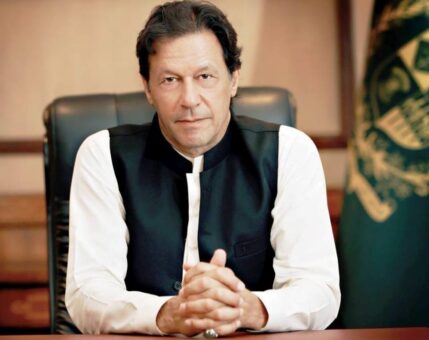
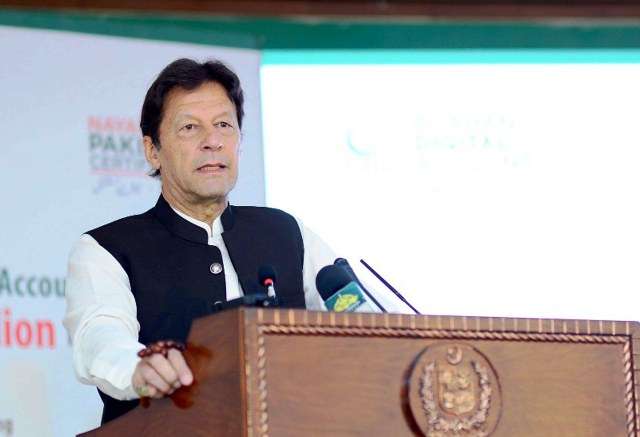
ISLAMABAD: Prime Minister Imran Khan on Thursday said that his government has put the economy on right track despite various challenges, including COVID-19.
Presenting three years performance of Pakistan Tehrik e Insaaf (PTI) government, the prime minister said during the last three years, the current account deficit has been significantly reduced from $20 billion in 2018 to $1.8 billion, foreign exchange reserves increased from $16.4 billion to $27 billion, revenue collection from Rs 3800 billion to Rs. 4700 billion, workers’ remittances from $19.9 billion to $ 29.4 billion.
Imran said that when the present government took reign of affairs in 2018, the country with the highest ever $20 billion of current account deficit was close to default and rupee was depreciating.
“If the friendly countries including Saudi Arabia, UAE and China did not help Pakistan, rupee in the country would have further depreciated,” he added.
The Prime Minister also mentioned 18 per cent growth in the Large Scale Manufacturing (LSM) sector as well as 42 per cent increase in cement sale during the previous fiscal and said it showed enhanced industrial activity.
He said that the receipt of an additional income of Rs 1100 billion by the farmers in agriculture sector and the historic sales of motorbikes, cars and tractors during the previous fiscal also depicted prosperity in rural areas.
The Prime Minister said that the government’s successful strategy to deal with the COVID-19 pandemic also led to saving the economy and poor masses, adding, the international institutions including the World Economic Forum and the World Health Organization appreciated Pakistan’s strategy on COVID-19.
He said that despite the criticism by opposition parties, the government did not go for complete lockdown of the economy, which, if opted, would have caused increase in poverty and hunger like in India.
The Prime Minister appreciated the National Command and Operations Center (NCOC) for its timely and effective decisions to tackle the COVID-19 pandemic.
The Prime Minister said his message to the youth was to follow the sublime path, set by Allah Almighty and Last Prophet Muhammad (PBUH). “We have to learn from the life and teachings of the Holy Prophet (PBUH).”
He said sports did inspire him to never give up and keep on striving and cited the example of Quaid-e-Azam who strove for a great cause and succeeded in creating Pakistan.
He said due to economic mismanagement of the past, the people had to endure price hike and inflation and the government had to take loans from International Monetary Fund (IMF) on stringent conditionalities.
He thanked Pakistan Army and Pakistan Air Force for countering aggression of India after the Pulwama incident and said there was no reason to have critical views about national institutions.
He said the PTI government was fully committed to its three guiding principles of humanity, rule of law and self-respect.
He said no country could progress if there was no of rule of law. He recalled that Asif Ali Zardari landed in jail because of his corrupt practices whenever the PPP government was ousted in the past.
He said the countries got weakened when the ministers indulged in corruption and cited the Holy Prophet’s system of justice of the Riyasat-e-Madinah.
He referred to a UN report which pointed out that $1000 billion was being transferred from developing countries to the developed ones every year which resulted in a widening gap between the rich and the poor.
According to another report, $10 billion was sent from Pakistan every year to bank accounts abroad to purchase properties there, he added.
He said the anti-corruption department of Punjab had recovered only Rs 2.5 billion during the regime of Pakistan Muslim League-Nawaz while in the tenure of present government, its recoveries stood at Rs 450 billion. Similarly, the recoveries of National Accountability Bureau (NAB) rose to Rs 519 billion in the last three years from Rs 290 billion in 18 years, he added.
Imran Khan said for the first time, the PTI government launched Ehsaas programme and enhanced the social sector allocation from Rs 110 billion to Rs 260 billion.
The World Bank declared Pakistan’s Ehsaas programme as the third best in the world, he said and added the programme played a vital role in taking care of the poor during the coronavirus pandemic.
Additional funds were allocated for scholarships of girls as compared to the funds for boys, the PM said and added the government empowered women with renewed focus on their education.
He said the government took steps to fully facilitate women in getting succession certificates and share of inheritance.
Under the Kamyab Naujwan Programme, he said, youth of four million poor families would be given interest-free loans, health insurance cards, and skills training.
Easy interest-free loans were given so that low income groups could build affordable houses, he said, adding 30 percent of the country’s population consisted of the youth.
Imran Khan said farmers would be given subsidy through Kisaan Card so that they could buy fertilizers, pesticides and other agriculture inputs.
Ten reservoirs including Mohmand and Dassu dams would be built to meet water requirements, he added.
He said uniform curriculum would be introduced and Seerat-e-Nabi courses would be taught in classes from eight to ten.
Expressing concern over the rising crimes against women and children, he underlined the need for character building of the youth with imbibing moral values.
He told the audience about Rs1300 billion special packages for merged tribal areas of Khyber Pakhtunkhwa, and districts of Balochistan, Sindh and Gilgit-Baltistan to eliminate backwardness and deprivation of local people.
The Prime Minister said the past leaderships did compromise dignity of the country by begging and getting loans from other states. Pakistan could make rapid progress by developing its agriculture, industry, mining, tourism and banking sectors, he opined.
He said today business confidence had markedly improved in the country while foreign remittances were on the rise.
He recalled Pakistan sided with the United States in the war on terror but latter carried out 480 drone attacks on its soil.
Over 70,000 Pakistanis lost their lives in the war fought on behalf of another country, he added.
The Prime Minister said the Afghan defence forces declined to fight for their corrupt leaders.
He called upon the world to support the Taliban as they wanted an inclusive government in Afghanistan, and declared general amnesty for all, besides assurance that no one would be allowed to carry out terrorist attacks from their soil against other countries.
He said the world community should help the Taliban to maintain peace in Afghanistan.
Imran Khan recalled that Sindh Governor Imran Ismail, folk singer Attaullah Khan Esakhailvi, Ibrarul Haq and many others played an important role in taking forward Pakistan Tehreek-i-Insaf (PTI).
He thanked the allies including Pakistan Muslim League (Quaid), Muttahida Qaumi Movement and Grand Democratic Alliance for extending support to the PTI government during the last three years.
Facebook in collaboration with Zindagi Trust launched a campaign in Pakistan to educate the public about the harm caused by sharing child abuse material online, and the importance of reporting it through proper channels.
This campaign follows research conducted by Facebook, the National Center for Missing and Exploited Children (NCMEC) and Professor Ethel Quayle, a world leading clinical psychologist who specializes in sex offenders, to understand why people share child exploitation content.
Researchers conducted an investigation of 150 individuals who shared child exploitative content on Facebook in July and August of 2020 and January 2021. Based on a thorough analysis of these individuals’ behaviors on Facebook, child safety experts believe that more than 75 per cent did not exhibit an intent to harm children. Instead, they appeared to share child exploitation content for other reasons, such as outrage or poor humor.
Based on this analysis, the company developed the campaign, together with child safety partners such as Zindagi Trust to encourage people to report child sexual abuse material and not share it. The campaign reminds people not to reshare this content because no matter the context it is being shared in – whether it’s outreach, condemnation or even ill humour – any sharing of child exploitation content causes further harm and is illegal.
Shehzad Roy–Founder of Zindagi Trust said, ‘It is great to see Facebook taking an initiative towards preventing the spread of online child abuse material. We must understand that child protection needs to extend to all spaces, including digital. By advocating for changes in state policy we have helped prohibit corporal punishment, introduce Life Skills Based Education (LSBE) in schools and reform performance evaluations for teachers. Now we will advocate for effective policy recommendations to safeguard children from cybercrime. However, it will be vital for government institutions and social media companies to remain engaged in this dialogue and take action.’
Speaking about the partnership, Sehar Tariq – Public Policy Manager, Pakistan— Facebook said; “Preventing and eradicating online child sexual exploitation and abuse requires a cross-industry approach, and Facebook is committed to doing our part to protect children on and off our apps. We are taking a research-informed approach to develop effective solutions that disrupt the sharing of child exploitation material. We are delighted to partner with Zindagi Trust on the campaign, leveraging their extensive experience in championing reforms for child protection.”
Program officer at Zindagi Trust, Ali Aftab shared “Child abuse content shared in Pakistan is often accompanied by captions that implore law enforcement agencies to take notice and pursue action. Our campaign will also focus on educating the community on how to report content directly to relevant local authorities. We will work with NGOs, law enforcement and government agencies to improve the efficacy of existing mechanisms so that help and support can be provided to children and their families in a timely manner.”
The campaign will be built upon videos, both instructional and informational, along with policy dialogues with key stakeholders. These dialogues aim to identify policy recommendations that can be given to the concerned government bodies as well as Facebook. However, everyone in the community has to play their part to make this effort achieve significant results.
BEIJING: China has shown willingness to share its experience to bring green revolution in Pakistan.
Pakistan is suffering from challenges of climate change, pandemic, and population growth. Smarter agriculture is the way forward for many countries including China.
“The integration of information technology and agriculture will bring about the third green revolution: agricultural digital revolution,” said Zhao Chunjiang from China’s National Engineering Research Center for Information Technology in Agriculture.
“By 2025, China’s digital agro economy will exceed a $100 billion”.
In the past, farmers laboured for hours in the fields. But now farm work can be done with internet systems, said a staff member of the exhibitor, Ningxia Green Pioneer (Lvxianfeng) Agricultural Mechanical Services Company, which has transformed local farming model with drones, precision hole-sowing machine, driverless harvesters and plant protecting devices, remote surveillance equipment, etc. supported by the Internet of Things, cloud technology, big data, etc.
“Spraying at a speed of 4.5 meters a second, each drone can complete what was used to be done by 25-30 workers per day, saving 80 per cent water, 30 per cent cost of plant protection, and 20 per cent-25 per cent pesticides,” company staff introduced to China Economic Net (CEN). “They can be used in rice, wheat, and maize. Take rice as an example, about $60 can be saved for each hectare.”
To better take the advantage of the efficient digital equipment that excels on vast stretches of land, the company takes a step further to push forward scale operation by bring the scattered lands together through land trusteeship, transfer, and shareholding.
A remote monitoring command service center has been set up for visible, standard, and digital farming. Soil, seedlings, pests, diseases, and disasters are monitored, early warnings are sent in case of abnormalities, and automatic solutions can be identified. From sowing, cultivating, to harvesting, the crops grow under close and accurate supervision.
“Under this whole-process land trusteeship, $230 can be saved per hectare”, revealed the company staff.
“Not all farmers trust in this new model at the beginning, but after getting to know and see what it can achieve, they started to acknowledge its benefits.”
If there is a chance, we are willing to join the Special Economic Zones (SEZs) under CPEC, company staff said.
BEIJING: Pakistan and other countries have cooperated in the initiative of Belt and Road Initiative (BRI) besides exploring the Digital Silk Road, which reaped fruitful benefits.
Li Yikai, Deputy Director of Centre for International Economic and Technological Cooperation had a 2021 Online Silk Road Conference at Yinchuan, the northwest city of China.
The Deputy Director said, “From 2019 to 2020, there are notable achievements in digital development in BRI countries. For example, the Beidou Navigation Satellite System (BDS) was deployed in Pakistan’s airports, providing accurate timing services for the operations.”
Pakistan and China have cooperated for the satellite navigation system across a major area between both of the countries.
Pakistan has signed a contract with China’s Wuhan Landing Medical High-tech Co., Ltd. To introduce their artificial intelligence (AI) for screening cervical cancer in Pakistan.
In the 18 years of experience in the IT sector of Ericsson (China), Shoukat told CEN, “From 2019 to 2020, there are notable achievements in digital development in BRI countries. For example, the Beidou Navigation Satellite System (BDS) was deployed in Pakistan’s airports, providing accurate timing services for the operations.”
He further said, “Pakistan has a lot of potential in the IT sector. When Pakistani IT talents have the opportunity to venture abroad and work in countries like China, they will definitely bring very good results.”