Category: Top stories

Find top stories in this section. Pakistan Revenue brings you the latest and most important news from Pakistan and around the world, keeping you informed with key updates and insights.

  • Tax slabs reduction may be considered: FBR chairman

    Tax slabs reduction may be considered: FBR chairman

    KARACHI: Dr. Muhammad Ashfaq Ahmed, chairman, Federal Board of Revenue (FBR) on Tuesday said reduction in income tax slabs may be considered.

    Addressing the business community at Federation of Pakistan Chambers of Commerce and Industry (FPCCI) said that existing income tax slabs were implemented after due consideration.

    Earlier, the business community pointed out high number of tax slabs in the Income Tax Ordinance, 2001.

    READ MORE: Withholding tax should be on income: FBR Chairman

    Commenting on requirement of Computerized National Identity Card (CNIC) on transactions, he said this condition was introduced three years ago. The FBR has gathered bulk of information due to this condition. Further, many cases of using fake CNICs for making transactions were also reported, he added.

    The FBR chairman said that retailers had positively responded to integration of Point of Sales (POS) in Karachi. “Many issues will be resolved with improvement in supply chain,” he added.

    The business community raised the issues of audit notices. Dr. Ashfaq said that action would be taken if audit notices were not responded. “The audit notices should be responded with documentary evidence,” he said.

    READ MORE: UAE favorite hiding for Pakistan assets: Dr. Ashfaq

    About the tax laws, he said that foreign companies investment in Pakistan are unaware about our domestic laws, he said and assured that the FBR would facilitate both local and foreign investors to understand tax laws.

    Earlier, Anjum Nisar, Chairman, Businessmen Panel (BMP) said that delay in tax refunds create liquidity issues for industries. He said if taxpayers delays in compliance then he is subject to penalty and surcharges. Similarly, this should be apply to tax officials, he added.

    Irfan Iqbal Sheikh, President FPCCI, put forward the concerns and complaints of the business, industry and trade community of Pakistan to the Federal Board of Revenue during the detailed visit of its Chairman, Dr. Ashfaq Ahmed; along with the top brass of FBR.

    READ MORE: FBR explains cash discount under sales tax laws

    FPCCI President said that excessive and unsubstantiated tax notices; maladministration and corrupt elements; requirement of buyers’ CNIC copy; huge backlog of refund cases; double taxation; misuse of erstwhile FATA & PATA exemptions; higher rates of corporate, sales and withholding taxes; mandatory POS integration with FBR; multiplicity of income tax slabs and SRO culture are the major impediments in reforming the taxation system and broadening of the tax base.

    Irfan Iqbal Sheikh added that 29 percent corporate tax and 17 percent sales tax are too high for economic growth, industrialization and employment generation; and, rates of these taxes should be gradually and progressively brought down. He elaborated that no country of the world has ever progressed in the absence of industrialization; while commending the recently announced industrial growth package of the federal government.

    READ MORE: FBR amends fresh property valuations for Islamabad

    Engr. M.A. Jabbar, VP FPCCI, emphasized that we have to do away with the notice manufacturing practices of the taxation machinery as that prohibits the new taxpayers to register themselves into the system to avoid unnecessary regulatory interferences.

    Dr. Ashfaq Ahmed, Chairman FBR, expressed his willingness to have policy deliberations over FPCCI’s demand of reducing audit period to three years from the current six years. He also apprised the session that FBR has performed exceedingly well despite the debilitating economic conditions arising out of COVID-19 pandemic and have collected record taxes. He also expressed his optimism that FBR can soon achieve a Tax-to-GDP ratio of 12 per cent.

  • Rupee’s losing streak continues as dollar tops Rs181.73

    Rupee’s losing streak continues as dollar tops Rs181.73

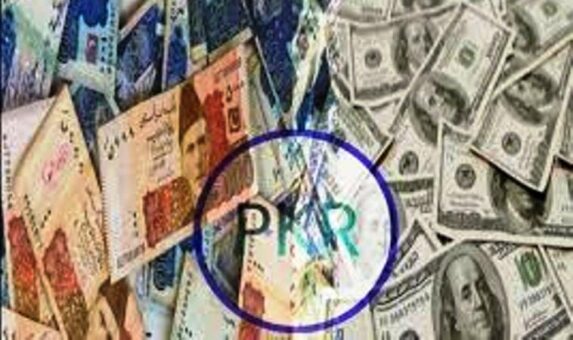
    KARACHI: The losing streak of Pakistan Rupee (PKR) against dollar for the seventh consecutive session on Tuesday as the foreign currency hit another high of Rs181.73 in the interbank foreign exchange market.

    In today’s trading the rupee fell 48 paisas against the dollar from previous day’s closing of Rs181.25 in the interbank foreign exchange market.

    READ MORE: Rupee collapses to dollar at record low Rs181.25

    The local currency depreciated by Rs3.22 or 1.80 per cent during the past seven trading sessions.

    Currency experts said political uncertainty, current account deficit and trade deficit put pressure on the rupee value.

    They said that a no-confidence motion moved against the prime minister by the opposition parties had resulted in negative sentiments in the market.

    READ MORE: Dollar continues to make historic high; hits Rs180.57

    The dollar demand was also rising due to import of commodities related to the holy month of Ramzan.

    The local forex market is also uncertain due to volatile oil prices in the international markets.

    Further, the external payments, foreign exchange reserves declined and it pushed the rupee to fall sharply.

    READ MORE: Dollar climbs new peak PKR 180.07 at interbank closing

    The foreign exchange reserves of the country fell by $386 million to $22.283 billion by the week ended March 11, 2022 as against $22.669 billion a week ago. The official reserves of the State Bank fell by $381 million to $15.831 billion by the week ended March 11, 2022 as compared with $16.212 billion a week ago.

    READ MORE: Dollar advances to fresh high at Rs179.44

    The country spent $11.69 billion for the import of petroleum products during the first seven months (July – February) 2021/2022 as compared with $5.64 billion in the corresponding period of the last fiscal year, showing an increase of 107 per cent.

  • SBP launches challenge fund for SMEs

    SBP launches challenge fund for SMEs

    KARACHI: The State Bank of Pakistan (SBP) on Monday March 21, 2022, launched challenge fund for Small and Medium Enterprises (SMEs) to support innovative solutions for SME banking in the country.

    The central bank through a circular issued procedure for the challenge fund for SMEs (CFS).

    This fund in form of grant will facilitate banks in developing innovative technological solutions to cater the banking needs of SME sector.

    READ MORE: Meezan Bank starts Islamic financing scheme for SMEs

    This will also enable to increase the access and usage of digital financial services by SME sector.

    The scope of CFS will focus, however, it will not be limited to the following areas:

    i. Developing SME banking solutions

    ii. Developing digital payment solutions for SMEs

    iii. Developing E-Commerce / market place

    iv. Digitizing loans application and credit management

    READ MORE: Computation of income tax on profit and gains for SMEs

    The SBP said that commercial banks (conventional & Islamic) are eligible to apply for grant under CFS. Banks can also apply in partnership with Non-banking financial Institutions (NBFIs), Fintechs, Electronic Money Institutions (EMI) and software houses. However, lead responsibility will rest with the applicant bank.

    The SBP said that grant size will be determined according to the financing requirements of the proposal under consideration. However, each grantee will contribute 15 per cent of the total cost. Depending upon the quality and innovations of proposal, the grant size can vary, however one bank will get only one grant. The duration of the projects to be implemented through CFS grant should not exceed 8 months.

    SBP invites interest of banks through Expression of interest (EOI) placed at Annexure A for availing grant under CFS to improve their SME financing portfolio. Banks proposals will be evaluated as per technical criteria developed by SBP.

    Banks are encouraged to apply as per EOI on prescribed format placed at Annexure-B to SBP latest by April 18, 2022.

  • Rupee collapses to dollar at record low Rs181.25

    Rupee collapses to dollar at record low Rs181.25

    KARACHI: The Pakistan Rupee (PKR) collapsed against dollar for sixth consecutive sessions on Monday and fell to new record low at Rs181.25 to the dollar.

    The rupee lost 68 paisas against the dollar from last Friday’s closing of Rs180.57, which was the previous record low of the rupee against the dollar, in the interbank foreign exchange market.

    READ MORE: Dollar continues to make historic high; hits Rs180.57

    Currency experts said that external payment pressure had kept pressure on dollar demand.

    The massive outflows of the dollar had resulted in over $12 billion current account deficit during first eight months of the current fiscal year.

    Further, the external payments, foreign exchange reserves declined and it pushed the rupee to fall sharply.

    READ MORE: Dollar climbs new peak PKR 180.07 at interbank closing

    The foreign exchange reserves of the country fell by $386 million to $22.283 billion by the week ended March 11, 2022 as against $22.669 billion a week ago. The official reserves of the State Bank fell by $381 million to $15.831 billion by the week ended March 11, 2022 as compared with $16.212 billion a week ago.

    READ MORE: Dollar advances to fresh high at Rs179.44

    The oil prices in the international markets are highly volatile since the Russia-Ukraine war began on February 24, 2022. The benchmark Brent crude is currently trading at around $108 per barrel (March 18, 2022 at 4:30 PM PST), which fell below $100 per barrel a few days ago, after making $140 per barrel.

    The country spent $11.69 billion for the import of petroleum products during the first seven months (July – February) 2021/2022 as compared with $5.64 billion in the corresponding period of the last fiscal year, showing an increase of 107 per cent.

    READ MORE: Dollar makes new record high at PKR 179.22

    Similarly, dollar demand will rise due to imports related to holy month of Ramzan. The country usually imports palm oil and soybean oil for domestic consumption. The edible oil has also witnessed a sharp increase in prices during past few months.

  • Withholding tax should be on income: FBR Chairman

    Withholding tax should be on income: FBR Chairman

    Karachi, March 14, 2022 – The Chairman of the Federal Board of Revenue (FBR), Dr. Muhammad Ashfaq Ahmed, emphasized the need for a shift in the approach to withholding tax (WHT), suggesting that it should be levied on income rather than transactions. He made these remarks during an address at the Karachi Chamber of Commerce and Industry (KCCI) on Monday.

    (more…)
  • Pakistan signs deal to explore largest gold reserves

    Pakistan signs deal to explore largest gold reserves

    ISLAMABAD: Pakistan on Sunday signed a new agreement on a framework to reconstitute the Reko Diq project and a pathway for Antofagasta to exit the project.

    Finance Minister Shaukat Tarin said at a press conference. He said Governments of Pakistan and Balochistan, Antofagasta plc, and Barrick Gold Corporation have reached agreement in principle on a framework to reconstitute the Reko Diq project, and a pathway for Antofagasta to exit the project.

    Addressing a hurriedly called press conference along with the Energy Minister Hammad Azhar and Chief Minister Balochistan Mir Abdul Quddus Bizenjo here, the minister said after the new development, Pakistan would not only avoid the $11 billion penalty but also get an opportunity of exploring the world’s largest gold and copper reserve.

    READ MORE: Pakistan’s CAD mounts to $12 billion in eight months

    He said some $10 billion would be invested under this project which would create 8000 new jobs for locals.

    The minister said as per the new agreement, Barric Gold would retain 50 per cent share, while government of Balochistan would get 25 per cent share, and the rest 25 per cent share would be attributed to the State Owned Enterprises Oil and Gas Development Company (OGDCL), Pakistan Petroleum Limited (PPL), and Government Holdings Pakistan (GHPL).

    Tarin said an agreement was signed in 2006 among a Canadian Company Barrick Gold, a Chilean company Antofagasta plc, and governments of Pakistan and Balochistan to extract gold and copper from the Reko Diq minses reserve.

    READ MORE: Foreign investment into Pakistan surges by 131%

    As per the old agreement, 37.5 percent share each was given to the two foreign companies and 25 percent share was to given to Goverment of Blochistan.

    The agreement was suspended in 2011 due to a dispute over the legality of its licensing process. As a result the International Court of Arbitration leveled $6.4 billion award on government of Pakistan while on the same time the London Court of Arbitration was also imposing another $4 billion fine on Pakistan.

    He said soon after taking over the charge, Prime Minister Imran Khan aggressively pursued the case and directed to draw a suitable solution as early as possible.

    As a result an agreement was settled today under which Antofagasta decided not to participate in the reconstituted project and withdrew from its claim of $3.9 billion in place of $900 million.

    He informed that the $900 million would be paid by the three SOEs and in return they would get the 25 per cent share of the project.

    Had the PM not taken his personal interest in the case, Pakistan would have to pay the huge amount of $11 billion as a penalty, he added.

    Shaukat Tarin said Pakistan and Balochstan would be benefited for over 100 years from this project and the total worth is estimated to be over $100 billion.

    Terming the new agreement as a land mark achievement for Pakistan, Hammad Azhar said it was a historic day as it had not only avoided $11 billion worth of penalty but also created a new opportunity for Pakistan.

    He said this was not for first time the PTI government had achieved the landmark success, but it had also avoided the country from moving to FATF black list by implementing 32 out of 35 conditions. The government also saved billions of dollars by renegotiating the costly IPP agreements.

    The minister informed that according to the Barrick Gold, Reko Diq was the only one part with such huge gold and copper reserves. There were also other reserves in the area.

    So a lucrative mining cluster is going to be developed in Pakistan, he added.

  • UAE favorite hiding for Pakistan assets: Dr. Ashfaq

    UAE favorite hiding for Pakistan assets: Dr. Ashfaq

    Dr. Muhammad Ashfaq Ahmed, the Chairman of the Federal Board of Revenue (FBR), has drawn attention to the United Arab Emirates (UAE) as a preferred destination for parking offshore undisclosed funds by Pakistan nationals.

    (more…)
  • FBR explains cash discount under sales tax laws

    FBR explains cash discount under sales tax laws

    ISLAMABAD: The Federal Board of Revenue (FBR) has explained cash discount related to invoices issued through Point of Sale (POS) by Tier-1 retailers.

    The FBR explained through an official note dated March 17, 2022 that cash discount has been allowed in the form of reduction of prices in seasonal sales / sales and the consideration in money is received after cash discount has been allowed.

    It is clarified that the value of supply for sales tax purpose is the actual value received in monetary terms excluding the amount of sales tax and not the gross value. “Hence, the sales tax will be calculated and charged on the actual or discounted price accordingly,” the FBR added.

    The FBR previously issued clarification in this regard through the official order dated October 13, 2021 on the standardized format of the sales tax invoice notified through SRO 1006(I)/2021 dated August 09, 2021.

    The revenue body said that representations from the taxpayers and bar councils were received seeking further clarification of the ‘trade discount’.

    It said that value of supply as per section 2 (46) of the Sales Tax Act, 1990 in respect of taxable supply means the consideration in money which the supplier receives from the recipient for that supply but excluding the amount of tax.

    In the previous explanation dated October 13, 2021, the FBR clarified that the discount if any to be given by a retailer has to be depicted on the invoice horizontally i.e. from left to right.

    READ MORE: Trade discount should be displayed on invoice: FBR

    “The captions such as total, sales tax, discount allowed appearing at the bottom of the invoice are standalone notations and do not necessarily add or subtract one another.”

  • Foreign investment into Pakistan surges by 131%

    Foreign investment into Pakistan surges by 131%

    KARACHI: The total inflows of foreign investment into Pakistan has increased by 131 per cent to $1.85 billion during first eight months (July – February) 2021/2022, State Bank of Pakistan (SBP) said on Friday.

    The net inflow of the foreign investment into Pakistan was $799 million in the same months of the last fiscal year.

    READ MORE: Foreign investment surges by 176% during July – January

    The foreign public investment increased around eight times during the period under review due proceeds received under Sukuks. The inflows under debt securities jumped up to $905 million during July – February 2021/2022 as against outflow of $132 million in the same period of the last fiscal year.

    READ MORE: Pakistan’s foreign investment surges by 73% in 5 months

    Total foreign private investment is flat at 1.2 per cent to $943 million during first eight months of the current fiscal year as compared with $931 million in the corresponding months of the last fiscal year.

    Total foreign direct investment (FDI) into Pakistan has posted an increase of 6.1 per cent to $1.26 billion during first eight months (July – February) 2021/2022. The flow of FDI was $1.19 billion in the corresponding period of the last fiscal year.

    READ MORE: Carrefour enhances Pakistan investment to Rs10.5 billion

    The portfolio investment recorded a 24 per cent increase in outflows to $315 million during first eight months of the current fiscal year as compared with the outflow of $254 million in the corresponding period of the last fiscal year.

    READ MORE: Jazz’s investment in Pakistan crosses $10 billion